After 5 years of operations Transportes Aéreos Ejecutivos (TAESA) had appeared to carve itself a strong and profitable position in both the Mexican domestic scheduled and international charter markets. It was a well run airline with a large modern fleet that was going places. Unfortunately events outside of its control would lead to drastic retrenchment and a fight for survival, but not before it attempted a crazy transpacific gamble.
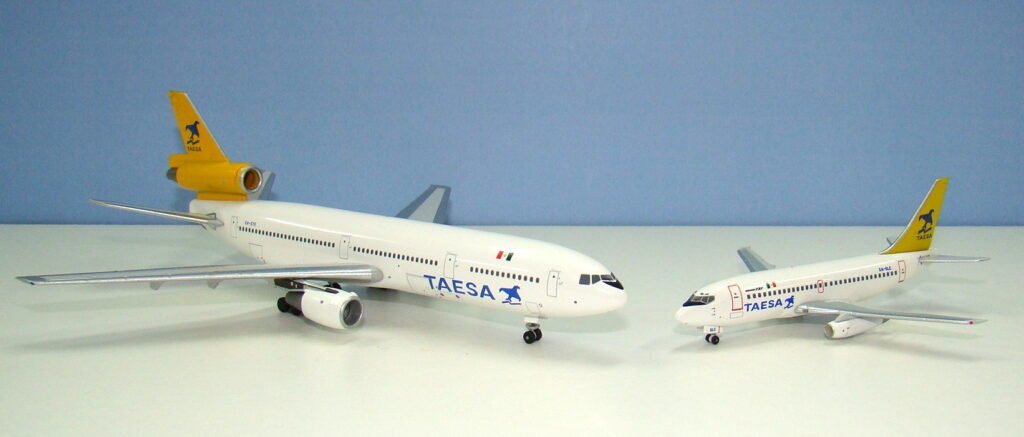
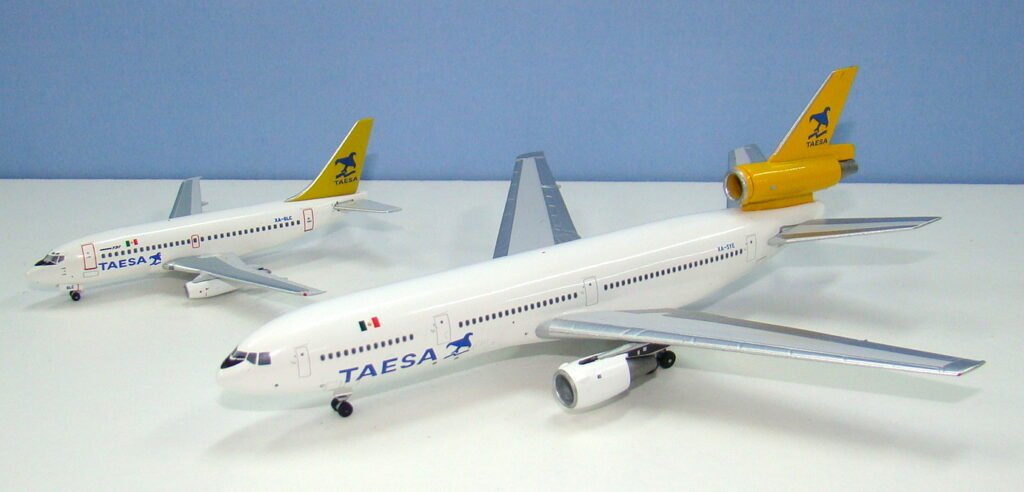
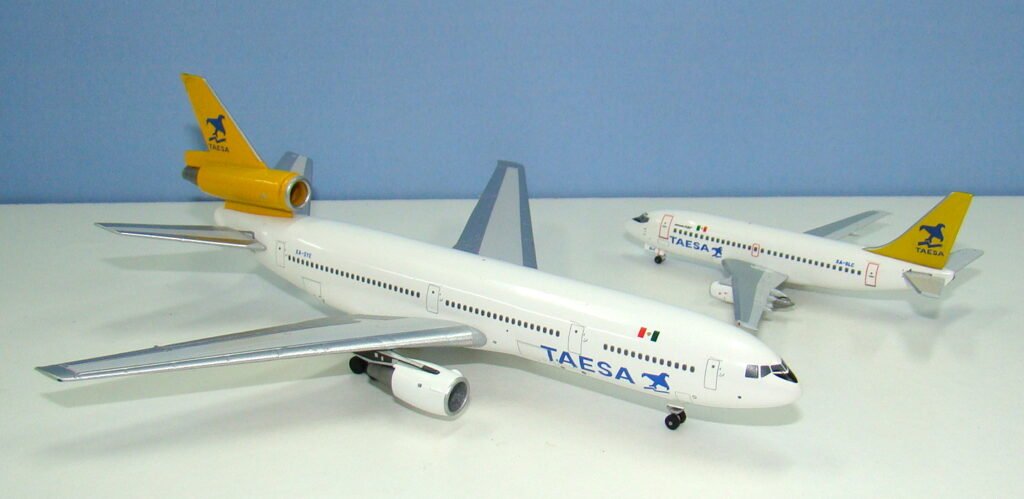
TAESA DC-10-30 and B737-200 Aeroclassics 1:400 Scale Model Airliner
Into 1993 the TAESA fleet continued to expand. Several of the passenger 727-100s left the fleet but new additions included 3 737-200s, 7 737-300s and 3 757-200s. Expansion continued into 1994 and by the end of the year the fleet stood at:
7 727-100 (mostly freighters)
1 727-200
3 737-200
13 737-300
5 737-500
6 757-200
1 767-300
TAESA's Boeing 737-200 fleet
The economic crisis that befell Mexico in 1994 hit TAESA’s profitability hard. Worst it found it hard to afford the lease payments in USD to foreign leasing companies (mainly Guinness Peat Aviation) whose relative value had increased significantly due to the devaluation of the Mexican peso. The debts began to mount and the only solution available to TAESA was to return the flashy new fleet and live within its means.
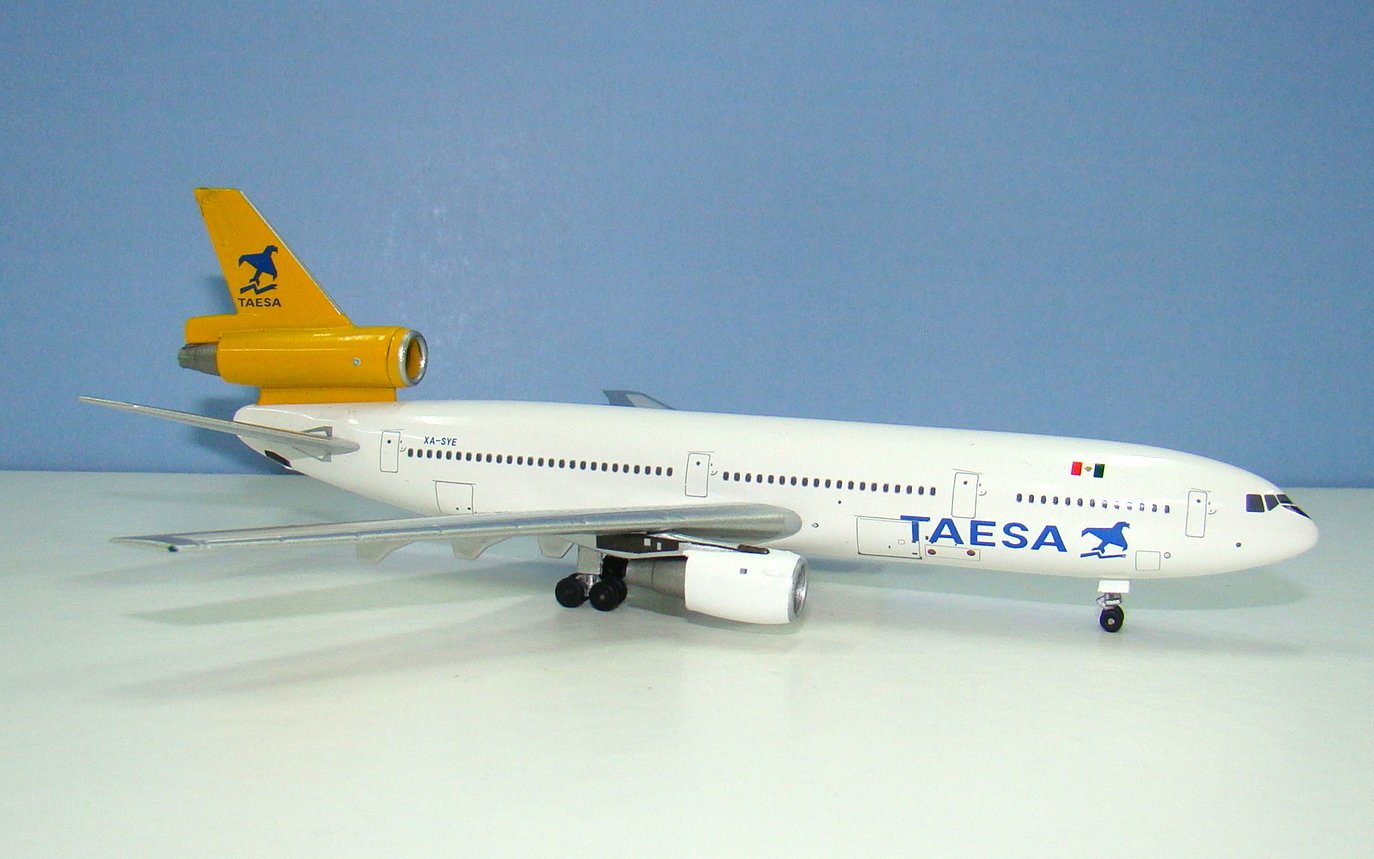
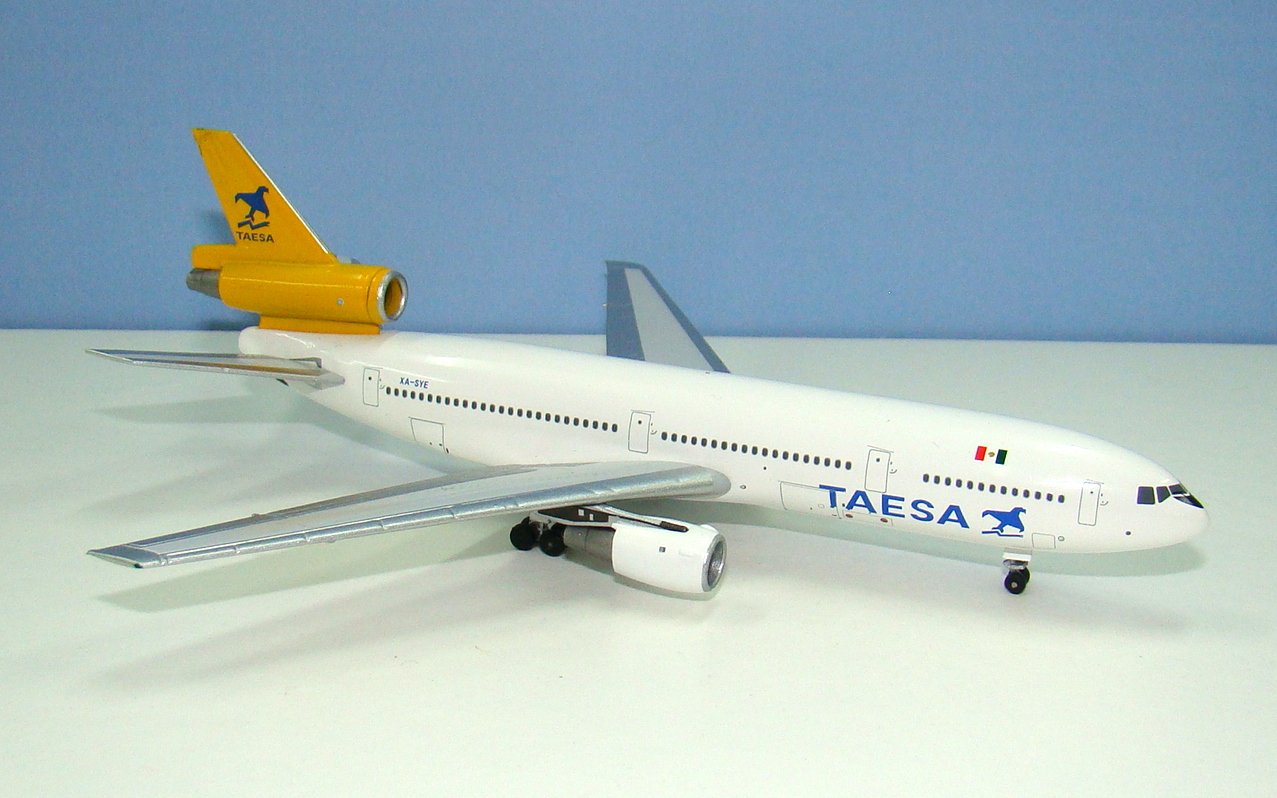
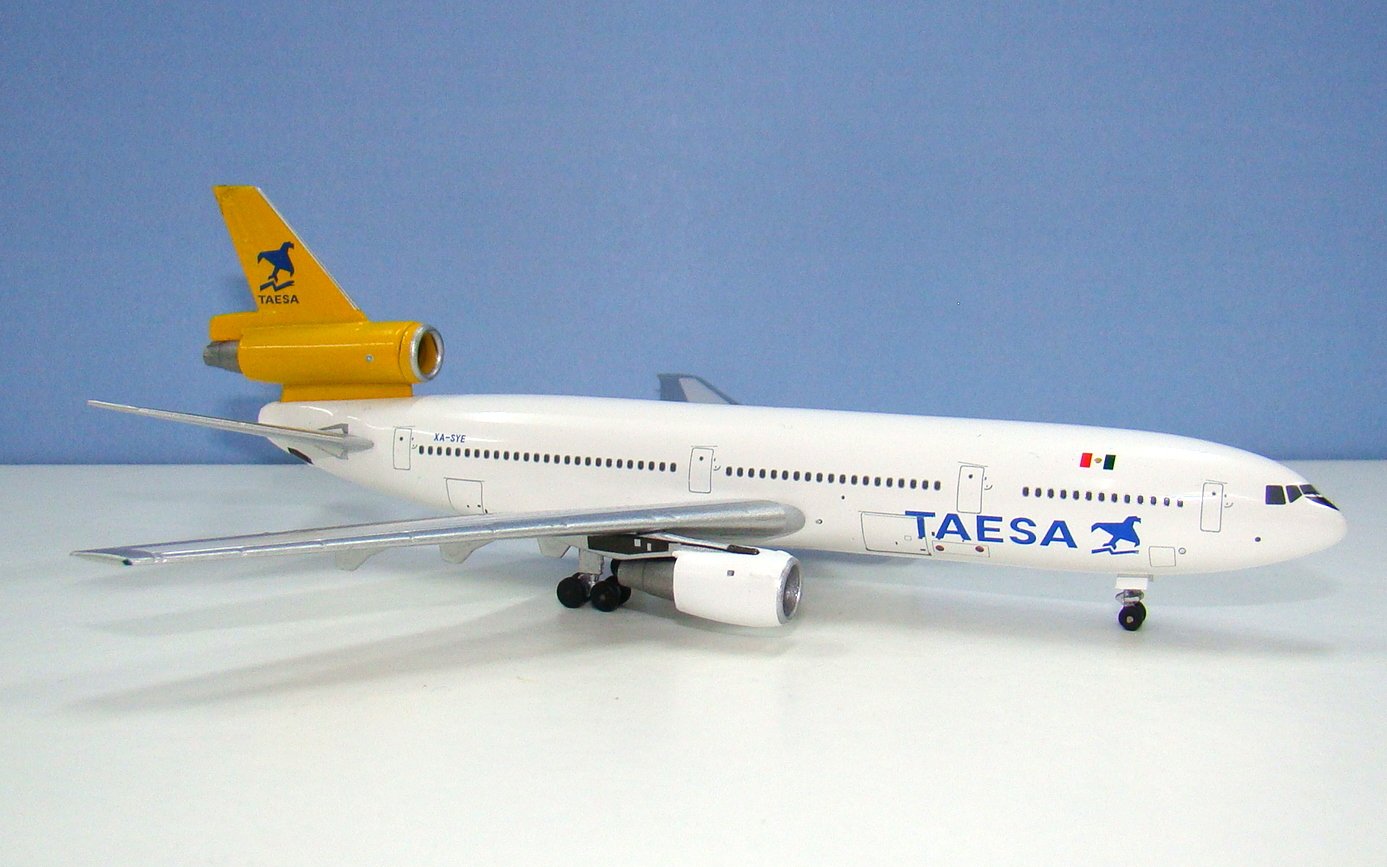
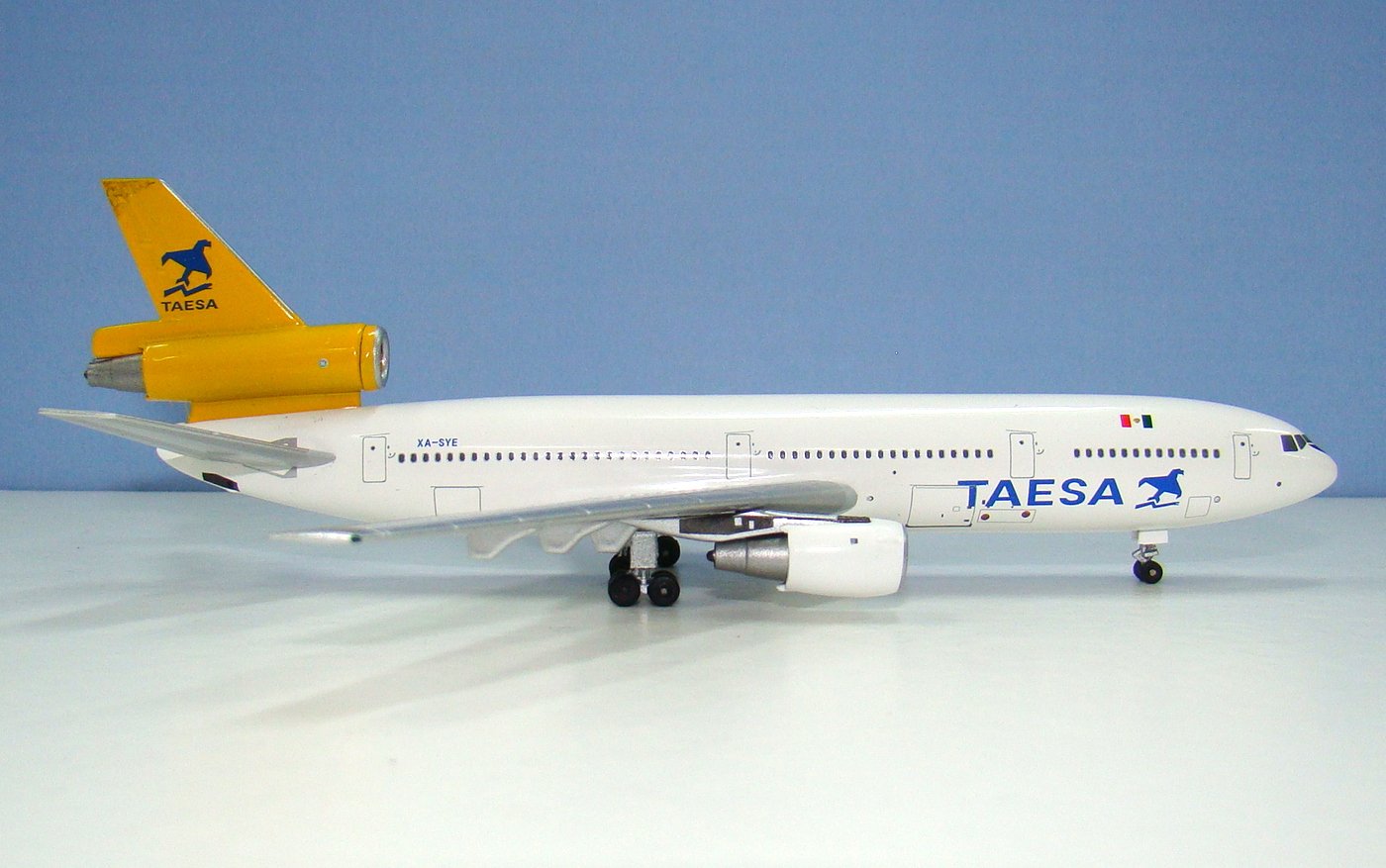
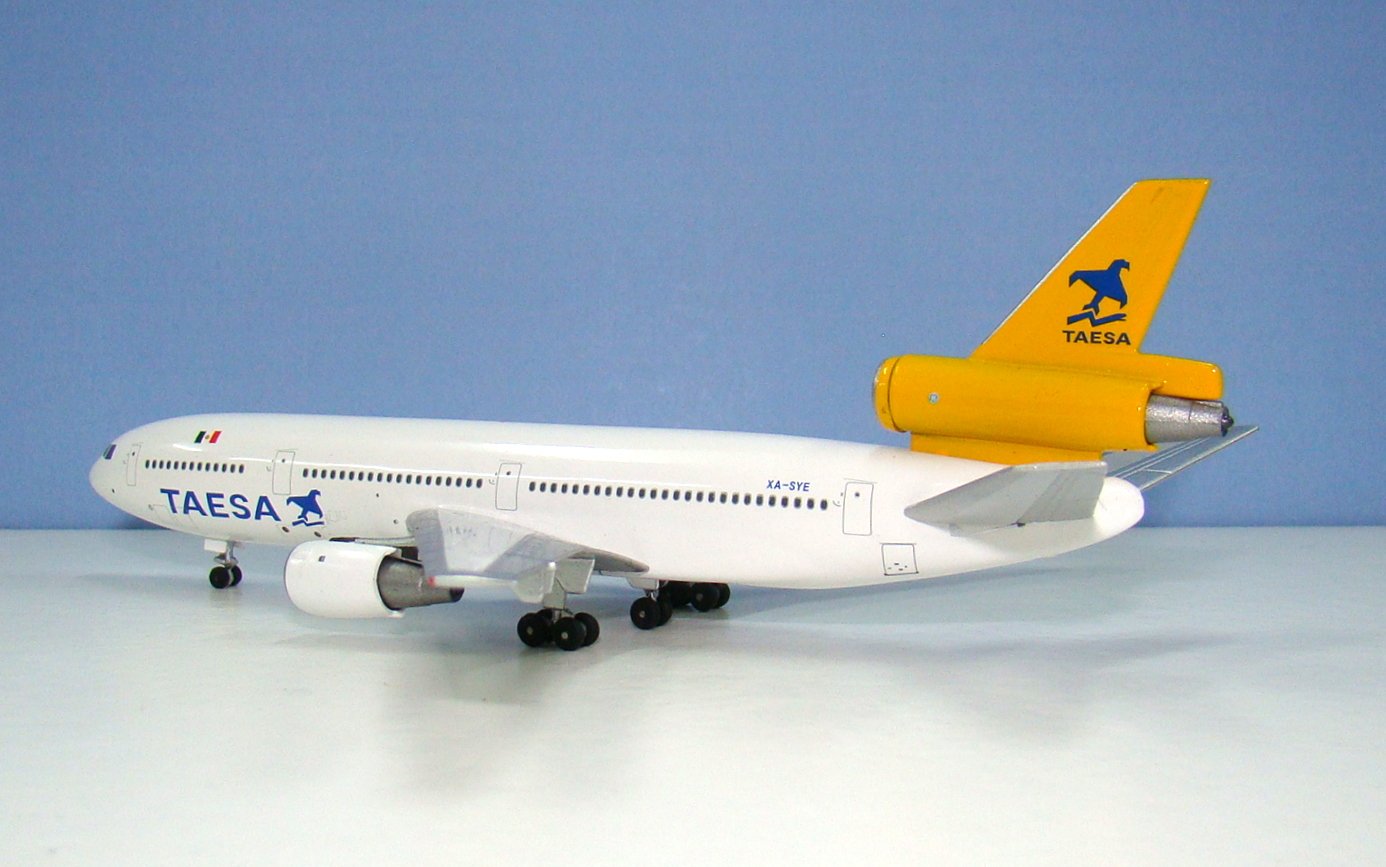
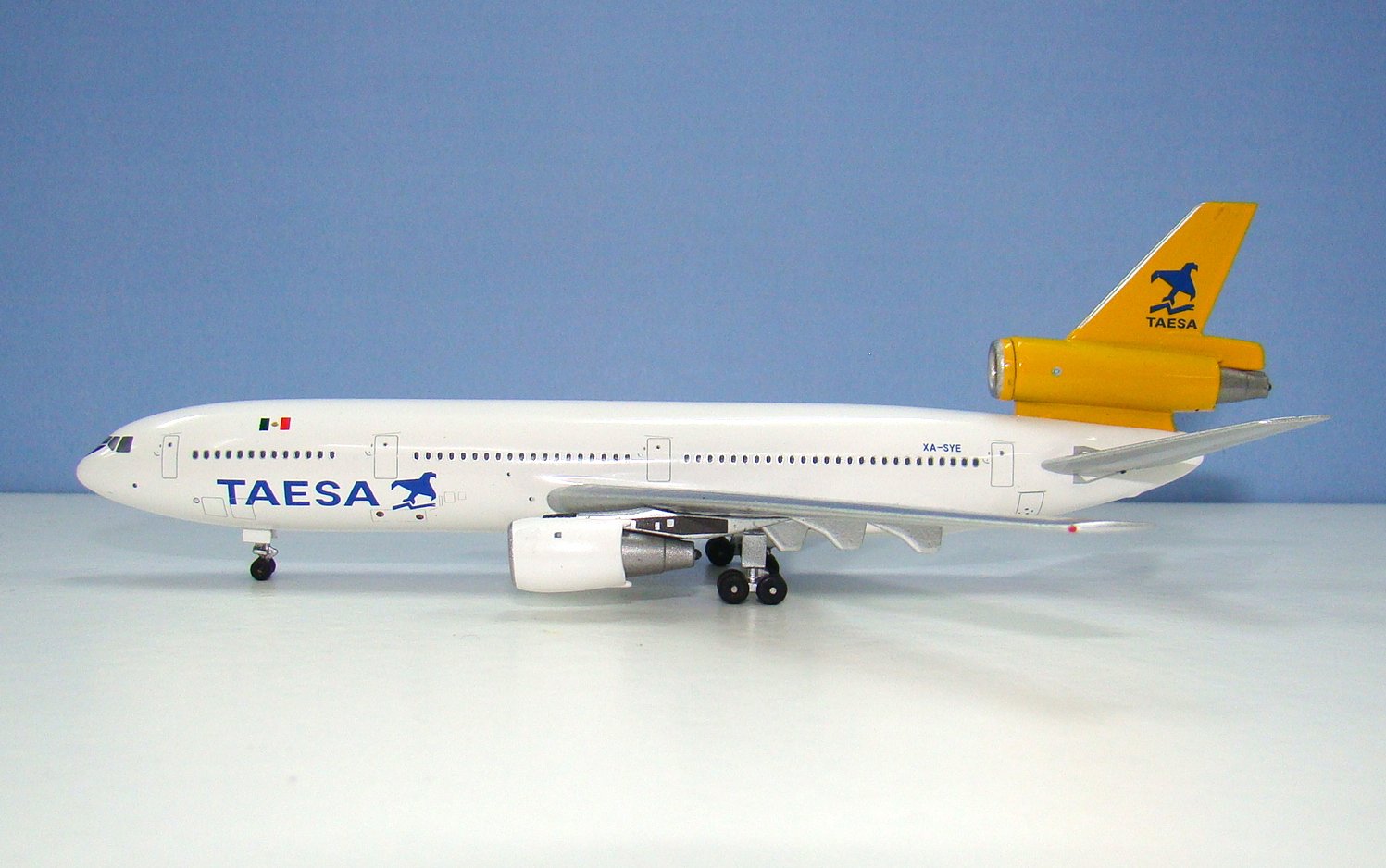
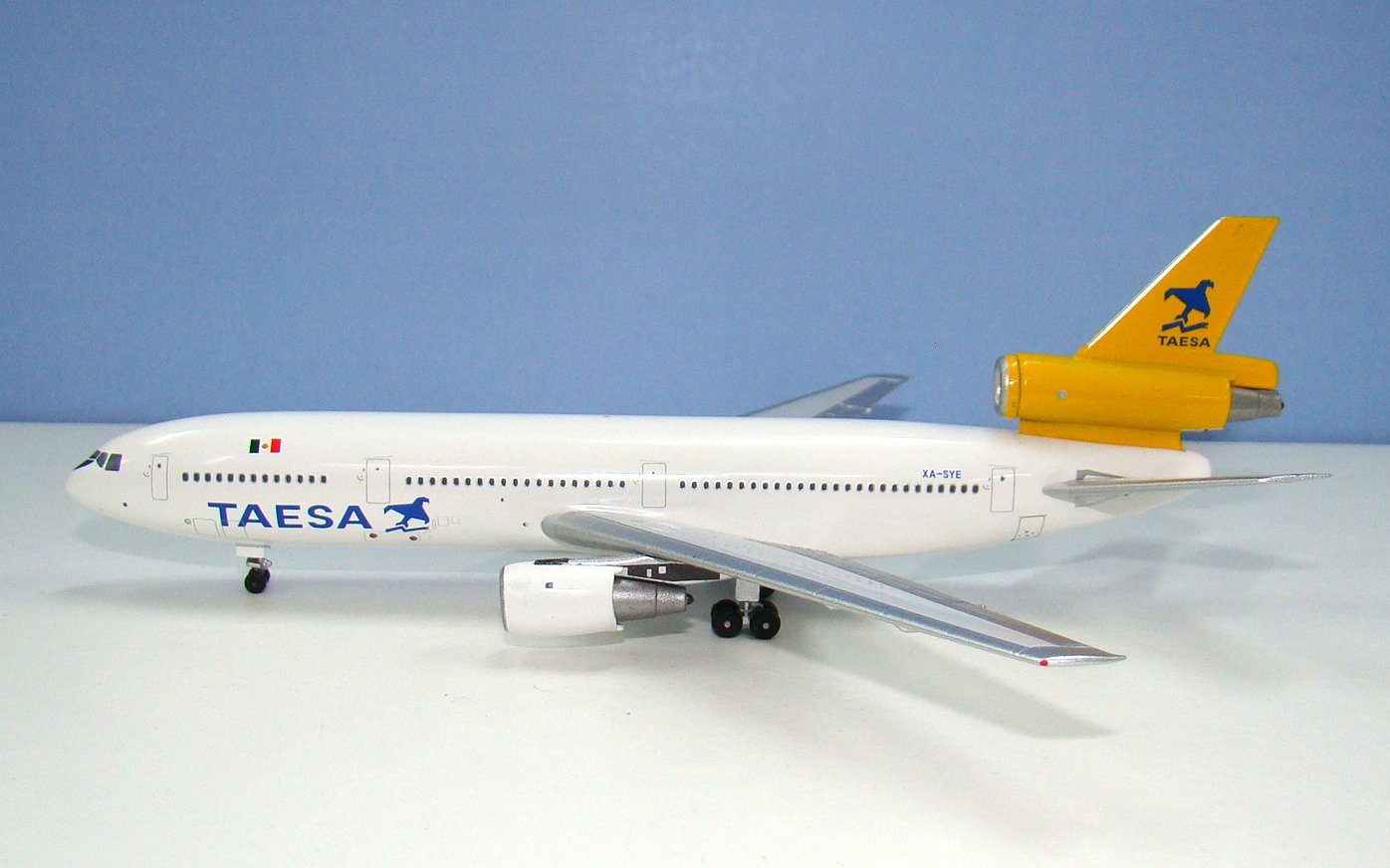
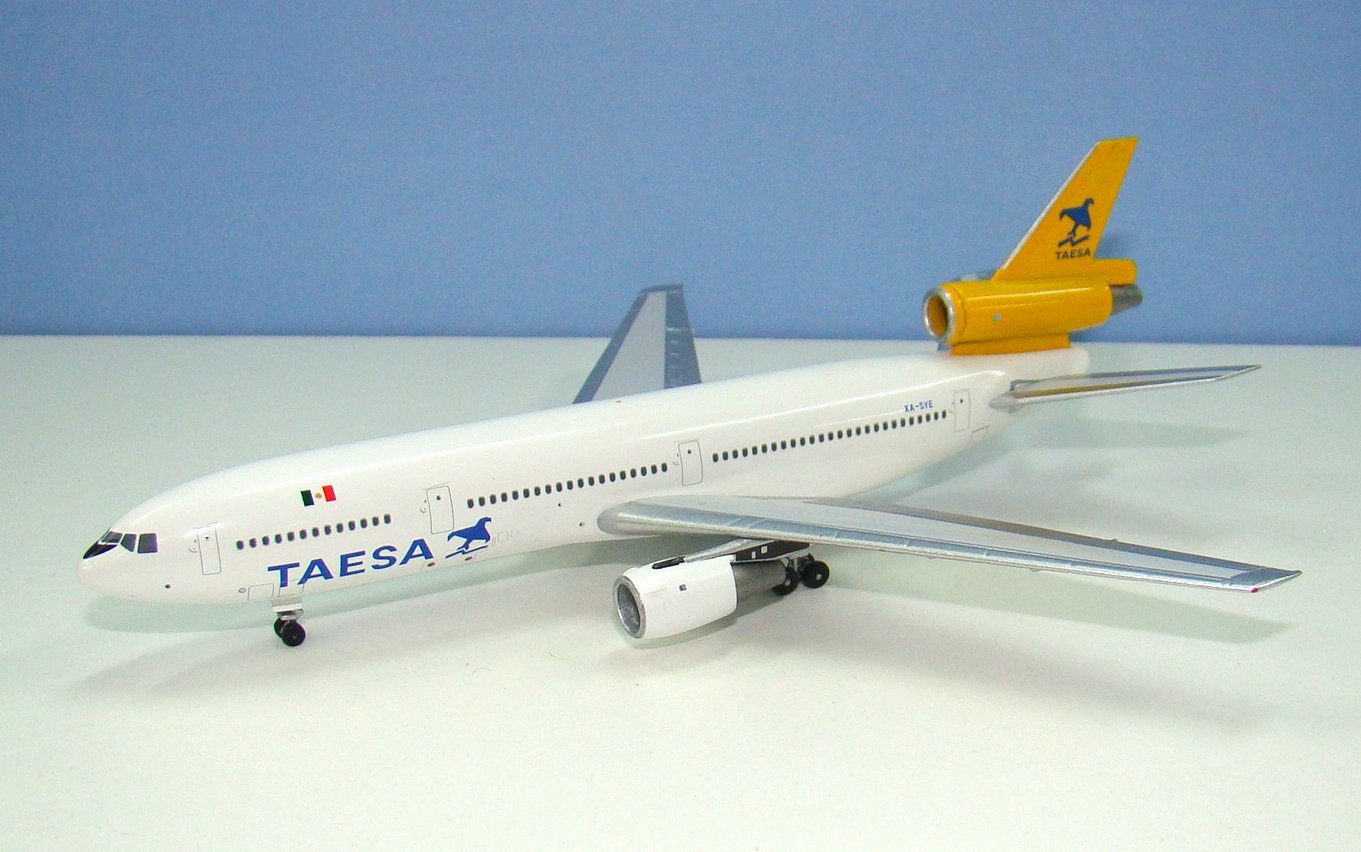
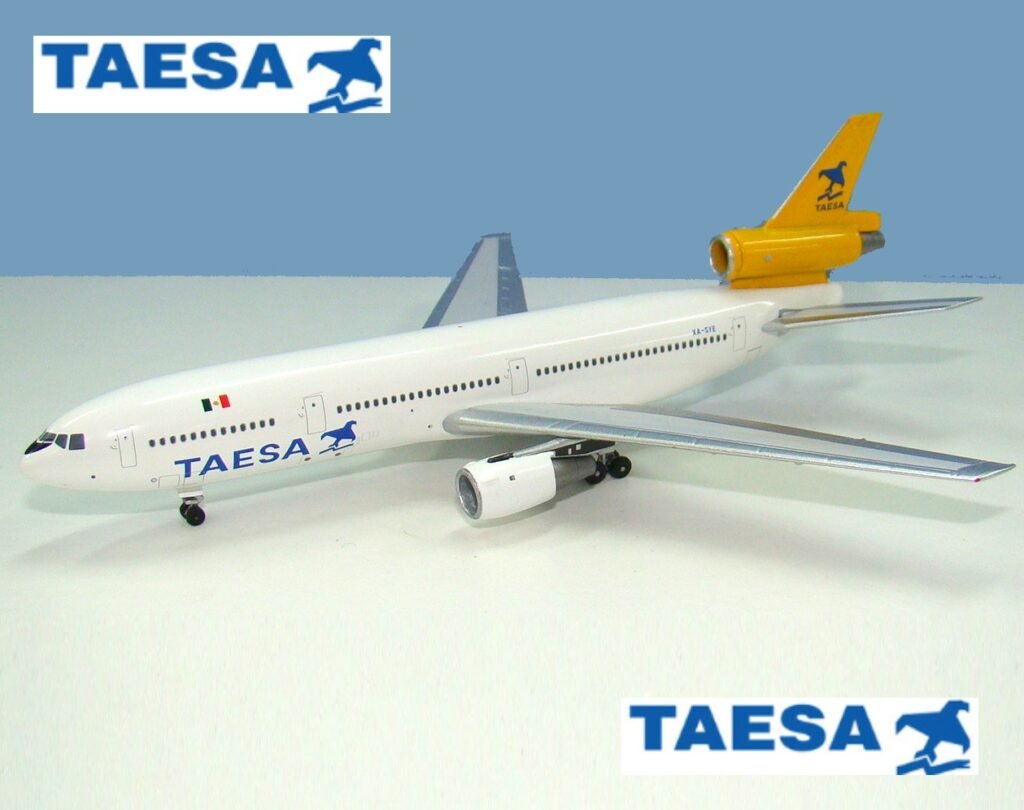
TAESA McDonnell Douglas DC-10-30 XA-SYE Aeroclassics 1:400 Scale Model Airliner
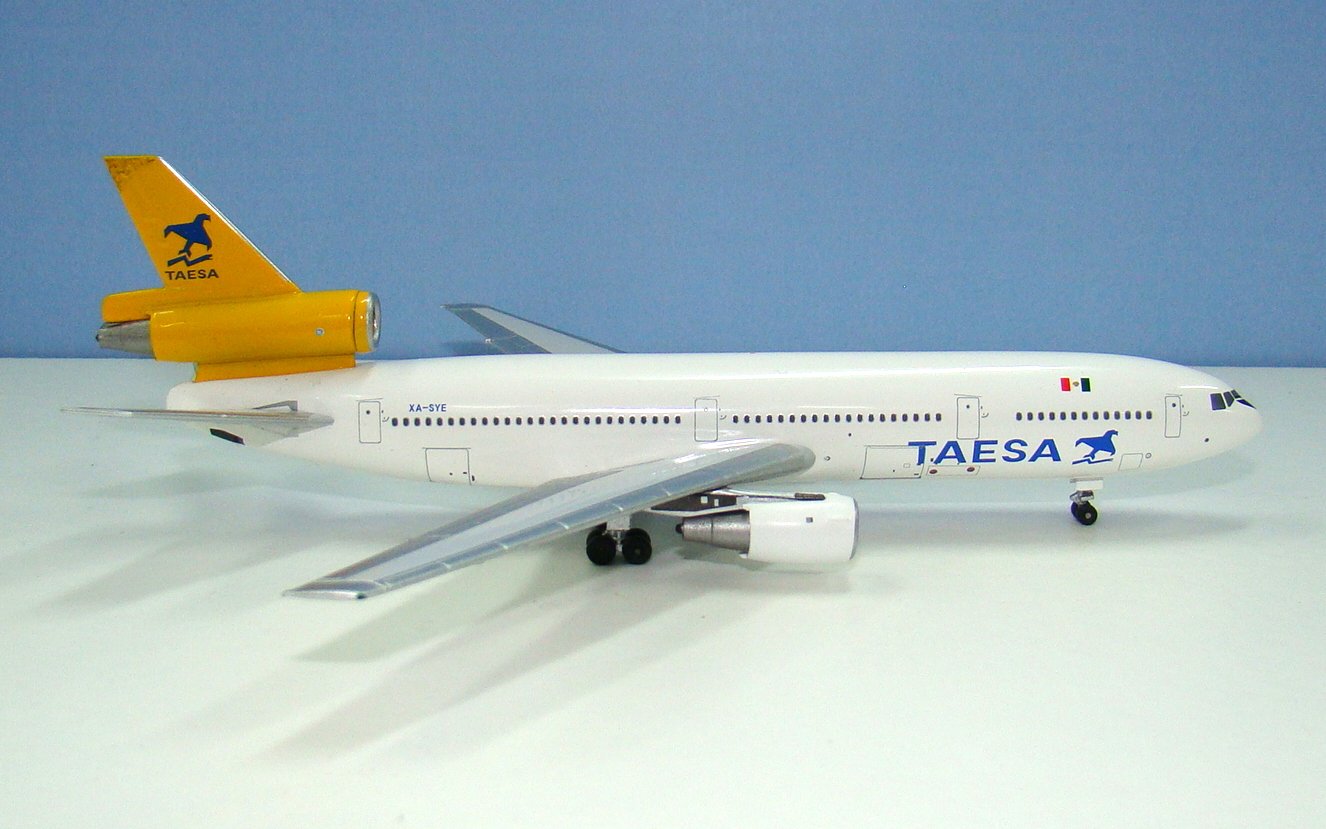
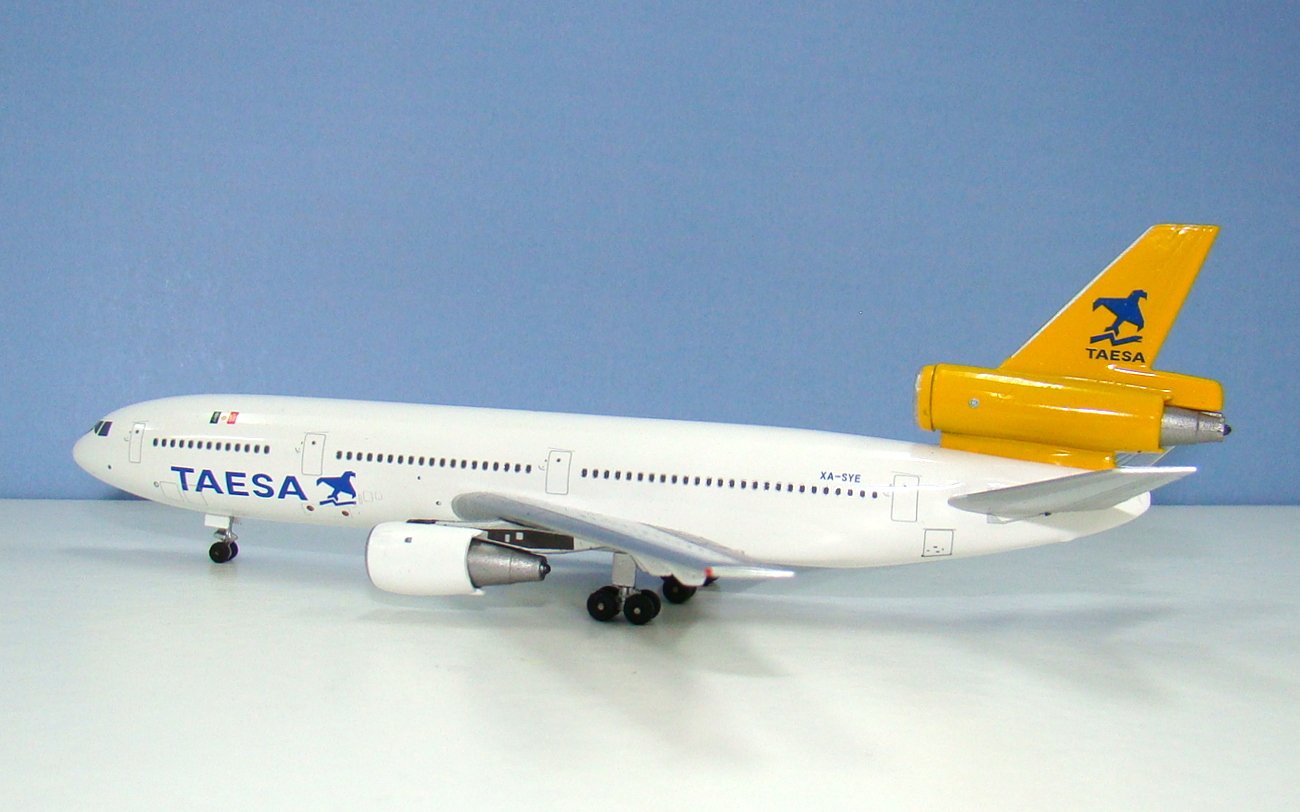
TAESA McDonnell Douglas DC-10-30 XA-SYE Aeroclassics 1:400 Scale Model Airliner
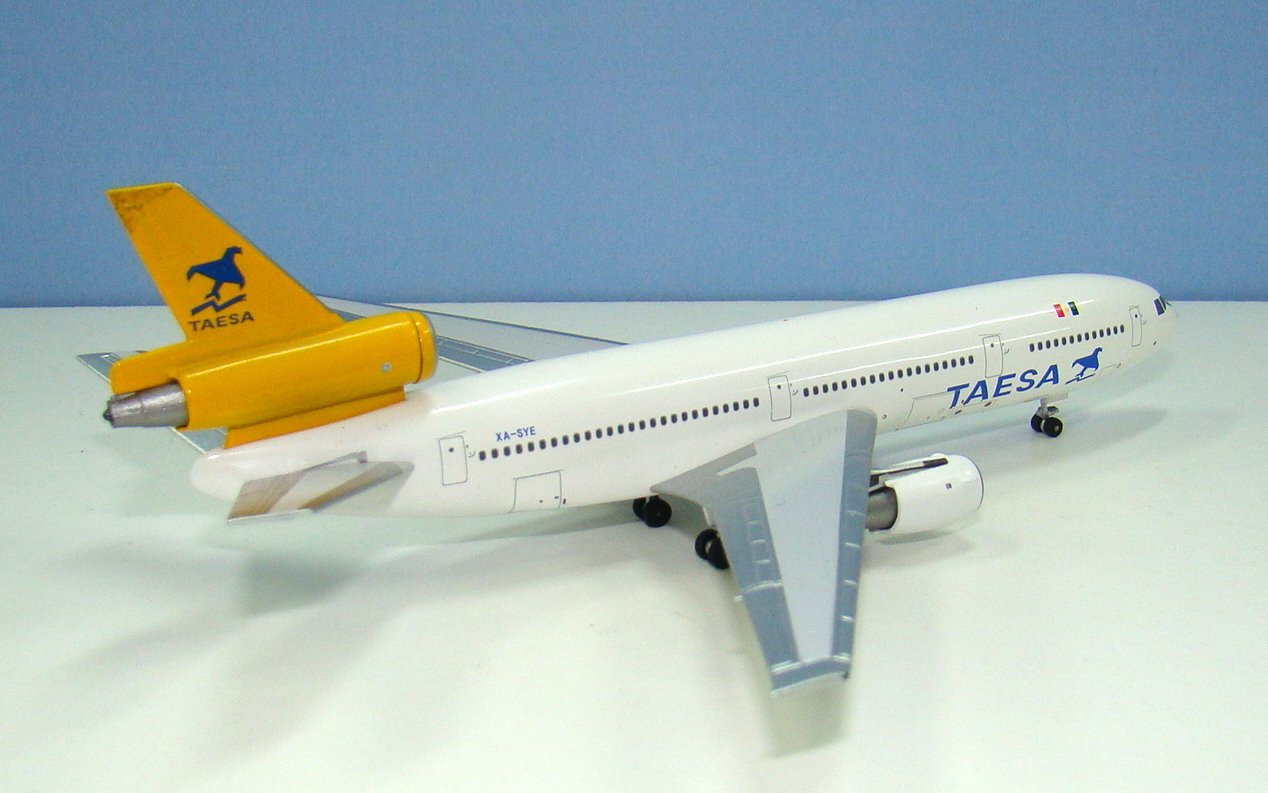
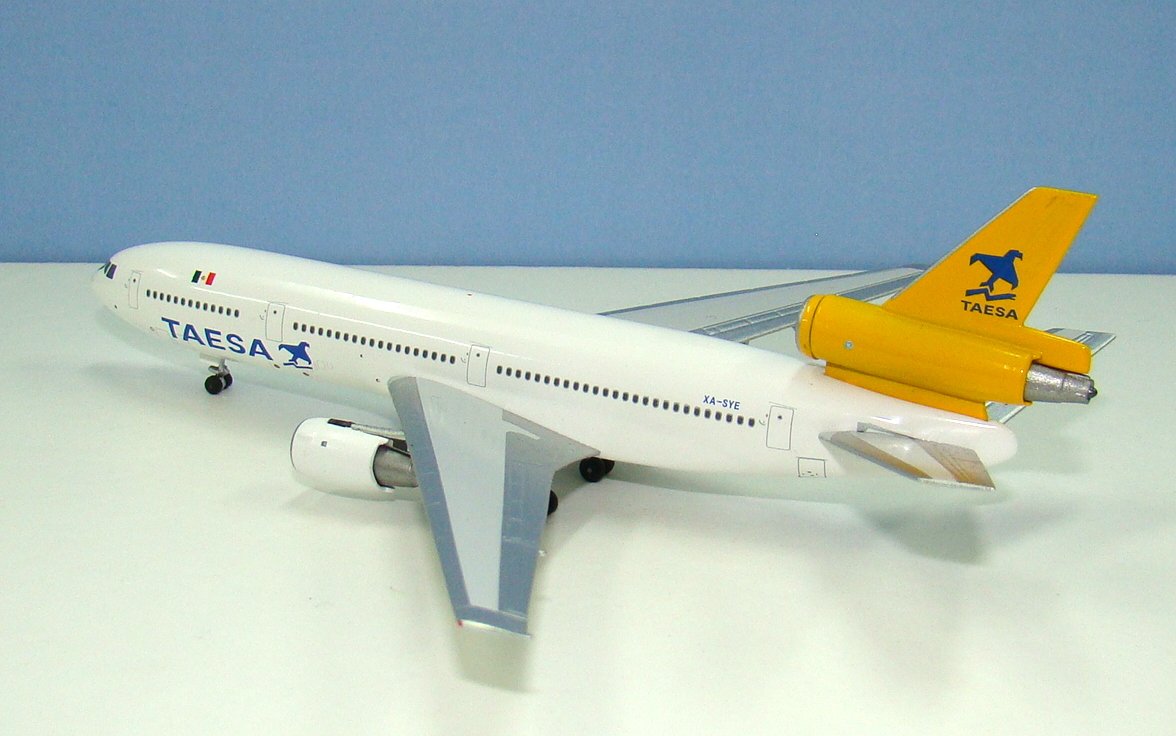
TAESA McDonnell Douglas DC-10-30 XA-SYE Aeroclassics 1:400 Scale Model Airliner
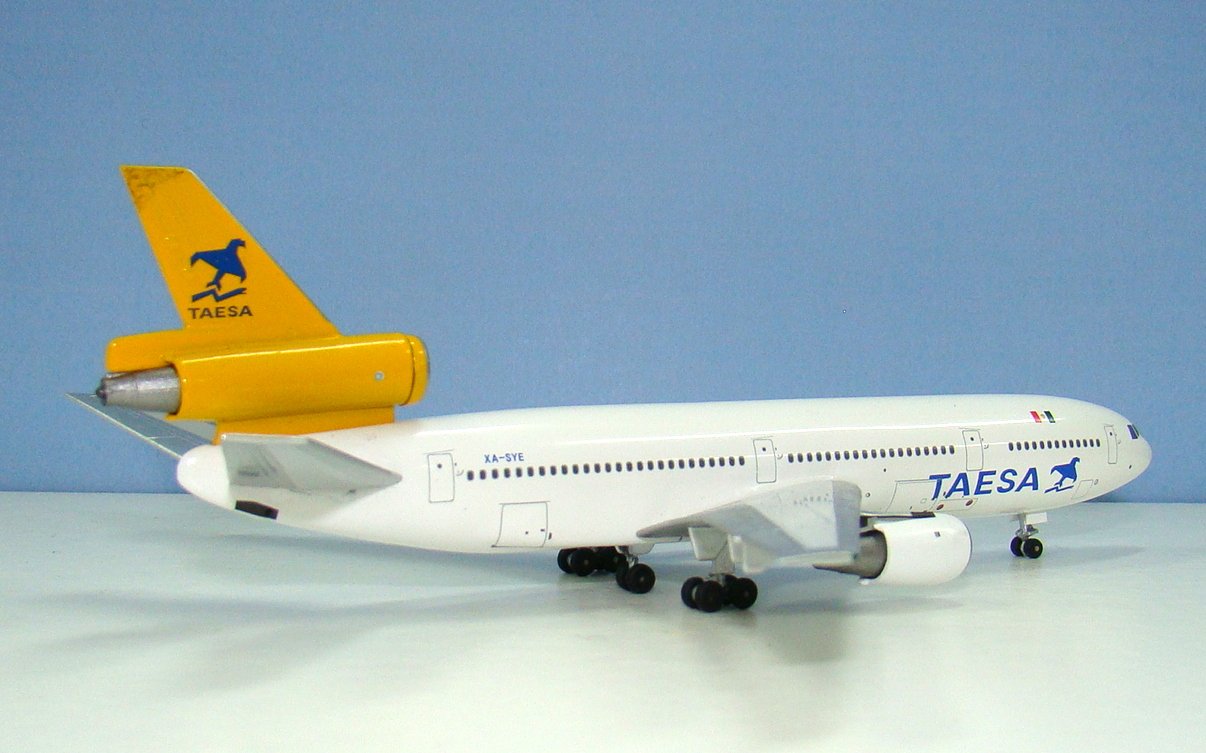
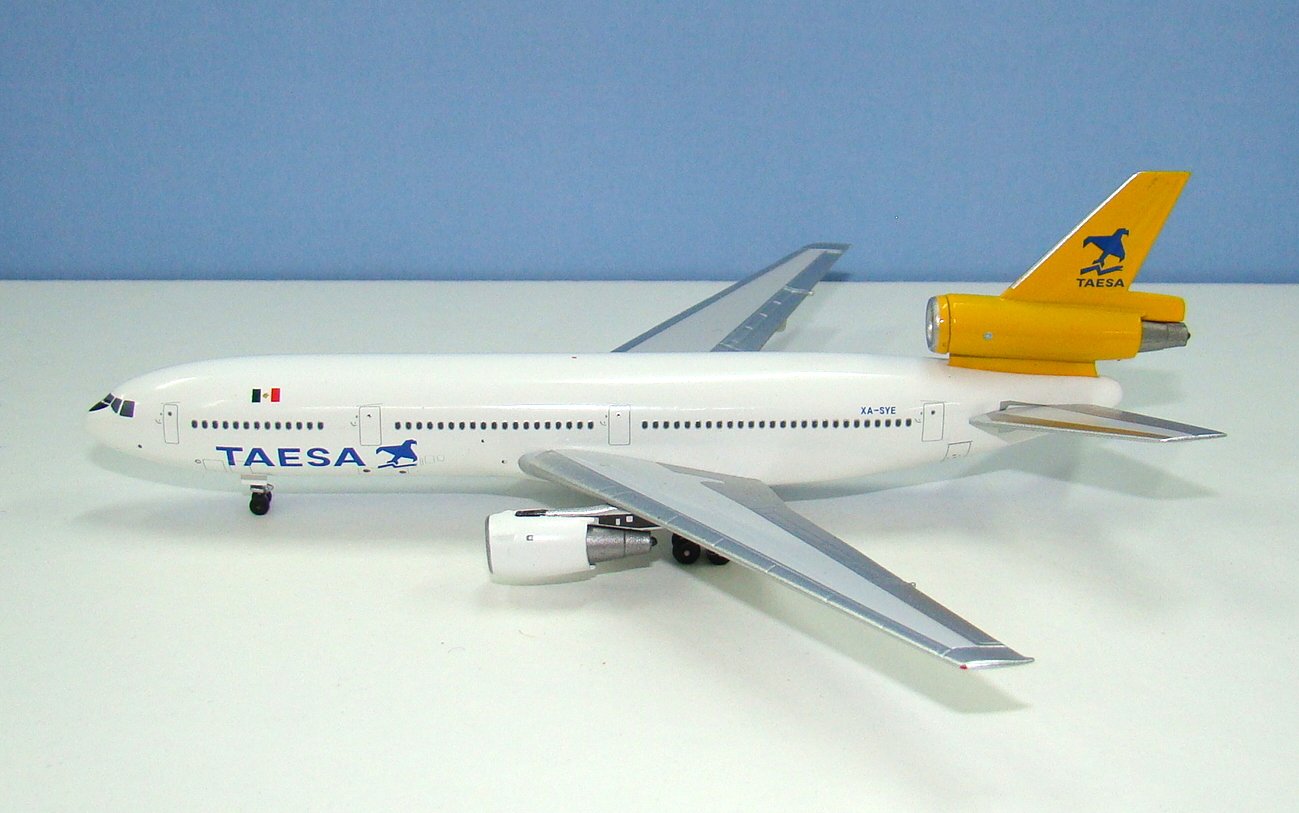
TAESA McDonnell Douglas DC-10-30 XA-SYE Aeroclassics 1:400 Scale Model Airliner
TAESA McDonnell Douglas DC-10-30 XA-SYE Aeroclassics 1:400 Scale Model Airliner
TAESA McDonnell Douglas DC-10-30 XA-SYE Aeroclassics 1:400 Scale Model Airliner
TAESA McDonnell Douglas DC-10-30 XA-SYE Aeroclassics 1:400 Scale Model Airliner
TAESA McDonnell Douglas DC-10-30 XA-SYE Aeroclassics 1:400 Scale Model Airliner
TAESA McDonnell Douglas DC-10-30 XA-SYE Aeroclassics 1:400 Scale Model Airliner
TAESA McDonnell Douglas DC-10-30 XA-SYE Aeroclassics 1:400 Scale Model Airliner
TAESA McDonnell Douglas DC-10-30 XA-SYE Aeroclassics 1:400 Scale Model Airliner
TAESA McDonnell Douglas DC-10-30 XA-SYE Aeroclassics 1:400 Scale Model Airliner
TAESA McDonnell Douglas DC-10-30 XA-SYE Aeroclassics 1:400 Scale Model Airliner
TAESA McDonnell Douglas DC-10-30 XA-SYE Aeroclassics 1:400 Scale Model Airliner
That didn’t stop the carrier from one last flourish however. In June 1995 a well travelled (ex-Singapore, Wardair, Canadian Airlines, AOM) DC-10-30 registered XA-SYE joined the fleet. The airline became the first in Mexico to start scheduled services to Tokyo from Mexico City. By this time the airline was haemorraghing cash and what would have been a challenging service at the best of times lasted only for 4 months. The DC-10 was leased out to Dominicana and served most of its two year tenure with TAESA on lease elsewhere.
TAESA DC-10-30 and B737-200 Aeroclassics 1:400 Scale Model Airliner
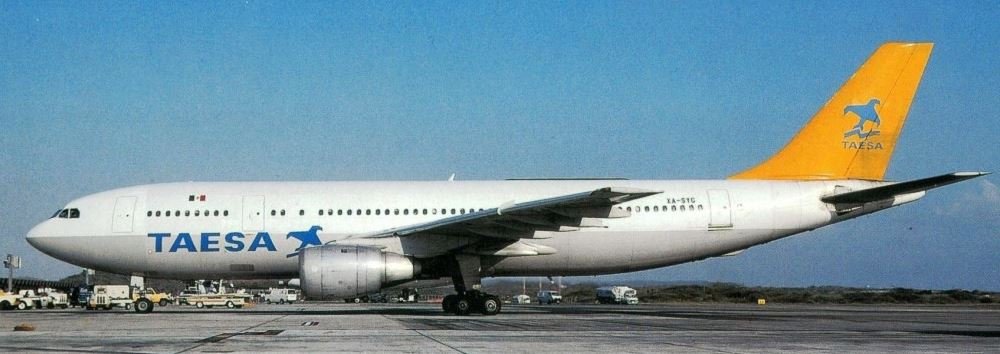
TAESA Airbus A300 XA-SYG (ex N229EA and N14973)
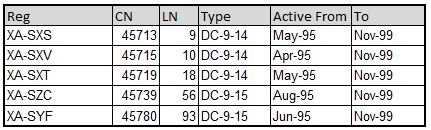
By mid-1996 the TAESA fleet looked very different with older second-hand aircraft replacing the new Boeings. A pair of ex-Eastern/Continental A300s were leased in mid-1995 but they only lasted until August 1996. The most obvious additions were 5 elderly short DC-9s. The fleet in June 1996 looked as follows:
1 A300
8 727-100
2 737-200
7 737-300
1 757-200
5 DC-9-14
1 DC-10-30 out on lease
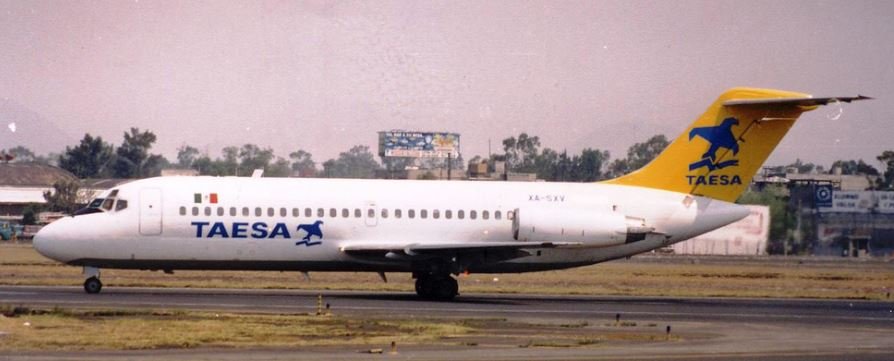
TAESA's short DC-9 fleet
TAESA DC-9-14 XA-SXV
Nonetheless Alberto Abed could point to an operating profit of nearly $20 million for 1996 even though the airline was still making an overall loss that year. TAESA’s debt stood at around $330 million but external investment by a Singapore based consortium called International Air Finance in May 1997 helped save the carrier. They injected $10 million in exchange for a 15% stake. Deals with the mainly Mexican banks that were TAESA’s major creditors became highly political at a time when Mexico faced with losing its 3rd airline was allowing common ownership of Aeromexico and Mexicana.
TAESA DC-10-30 and B737-200 Aeroclassics 1:400 Scale Model Airliner
Despite several years of difficulties it appeared that TAESA would nonetheless be able to survive and flourish as the Mexican economy recovered. In part 3 we’ll investigate TAESA’s final fight for survival.