Updated: September 2025

Despite the flood of 787s and A350s, the 777-300ER continues to be an important component of long-haul fleets and a centre of strong competition in 400 scale. So much so in fact, that there have been two new moulds this year alone. Aviation400 have debuted their version of their 2019 mould with magnetic detachable gear, while NG Models 2025 edition has an all new fuselage, with significant changes at the nose, tailcone and underside.
My last version of this review was undertaken in 2020, before the first version of NG’s mould was even out. At the time I had discounted the seamed Gemini Jets mould and that now thankfully is a casting from the distant past that Gemini hasn’t used since 2020. They have now transitioned fully to the JC Wings mould.
Another possibility in 400 scale is Jet Hut who have upgraded their own 777-300ER mould with new gear and aerials. This has been used recently by GeminiStar, but the mould is a cheaper option, not designed to compete directly with standard 400 scale releases. I don’t own a copy and so will exclude it from this review.
With so much change in the 77W space, which is the best mould available in late 2025?

The models and moulds to be compared in this detailed comparison will be the following four from my collection:

The review will take the form of a comparison of various areas of each mould to the real aircraft, with a score out of 5 alotted for each mould for each area. Adding the combined scores together gives you the winner.
Scoring
NOSE / NOSEGEAR


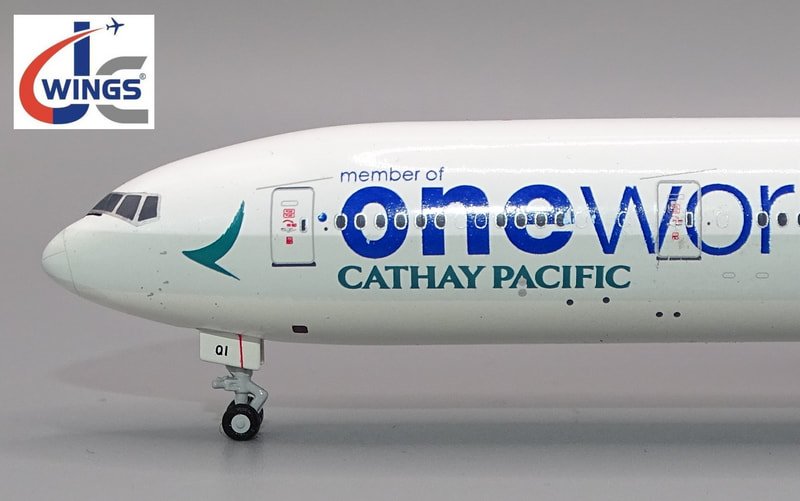
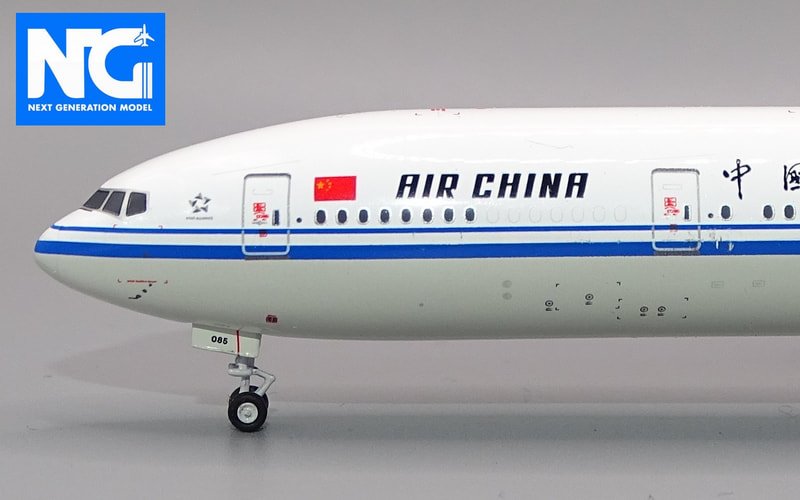

NOSEGEAR: The Phoenix landing gear is a little too short and the gearleg is rather simple in terms of detailing. The JC Wings gear has an accurate height but is not as detailed as that of the AV400 mould. The AV400 has the best detailing of the steering actuators (the two forward facing prongs) and also has the metering valve module atop it. Both the AV400 and JC nosegear has the actuators a little low on the gearleg, partly because the maingear door is a little too deep. The NG has a better proportioned gearleg with the actuators smaller and higher, and the best nosegear door. The actuators on the NG do lack some detail and are a little too short, but the rear torque link is better angled.


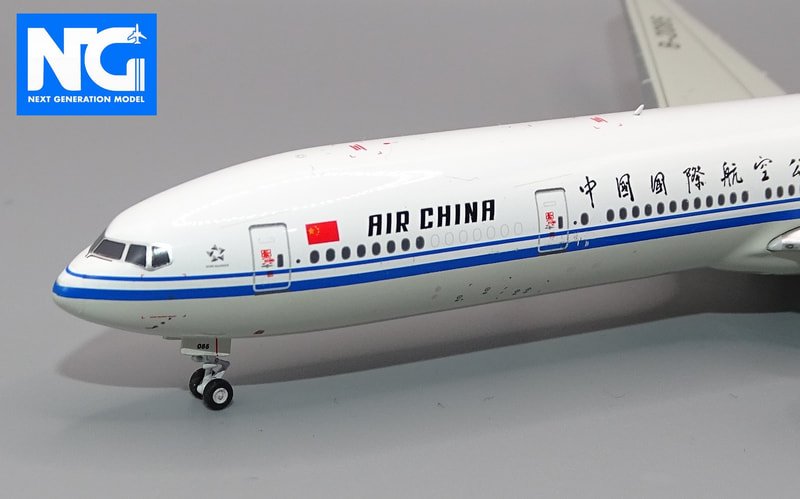

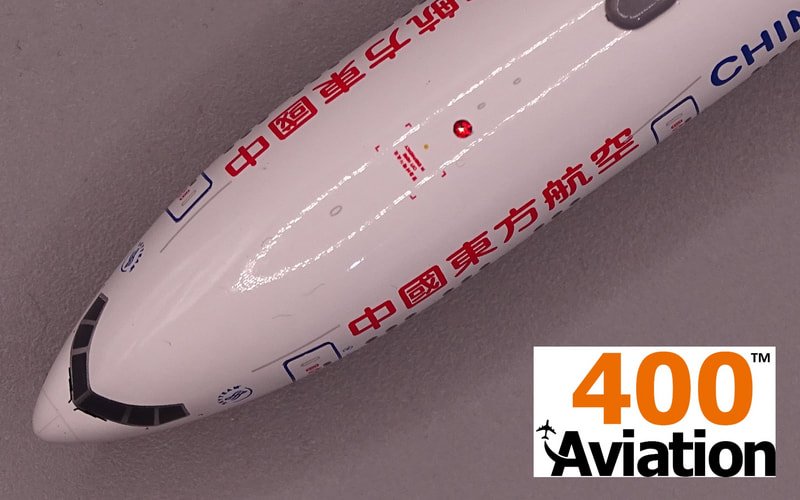
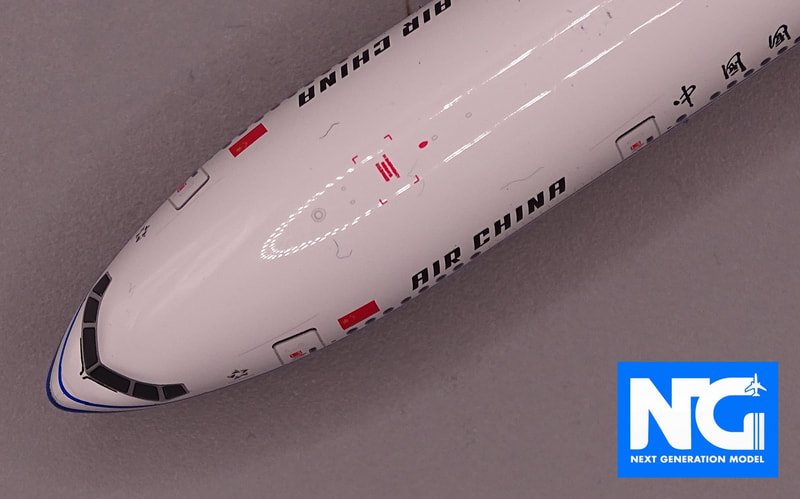
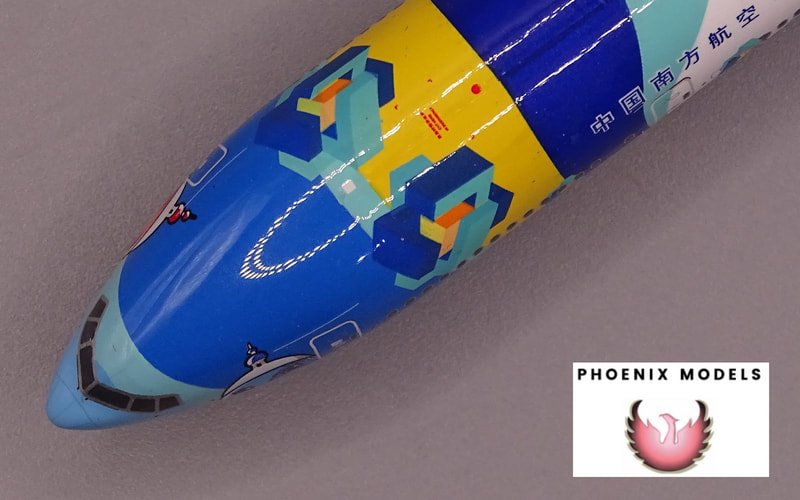
NOSE: From the side none of the moulds have issues at the cockpit and nose, however from a quarter on and top down angle things change. NG has had issues with its 777 noses, which is one of the major reasons why they have produced a new fuselage casting for this second version. This has had an impact on cockpit window placement, which has been variable. The new NG nose section is an improvement over the previous, which was too narrow from above and had a rather sharp rooftop line. Even so, from some angles it can still look a little blocky above the cockpit. Of the four I prefer the Aviation400 and JC Wings editions, but none of the four are bad. Cockpit printing can have a major impact on the look of the finished product.
Additionally, there has been discussion of the width of the fuselage barrel on the moulds. Depending on the source you use the 777 fuselage is 6.19-6.21m wide. In 400 scale that equates to around 15.47mm. None of the four quite match that however both the JC Wings and Phoenix measure 15.4. The AV400 comes in slightly under at 15.26. The NG slightly is over at 15.7 (across the top) and then under at 15.3, from the side. The others measure the same top and side on. At less than a mm of difference between them I don’t think this is an issue myself.


ENGINES & PYLONS / MAINGEAR

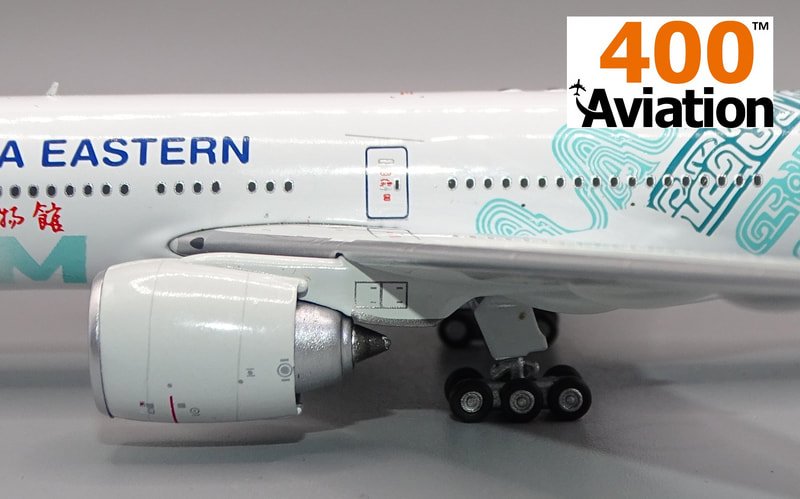

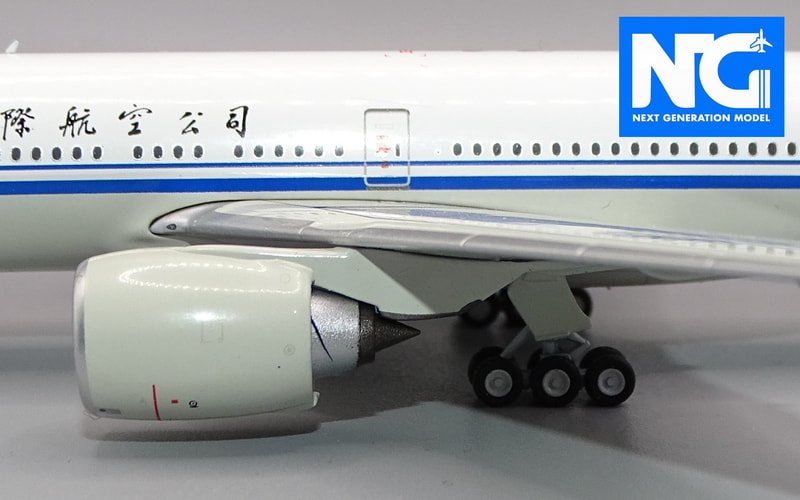
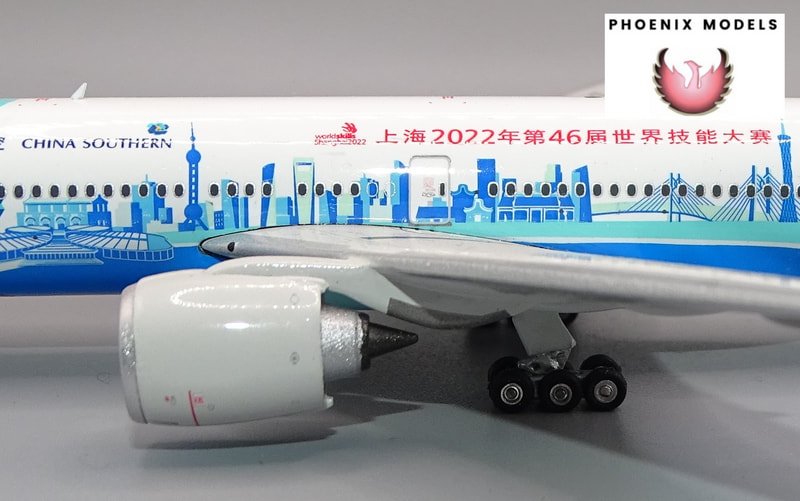
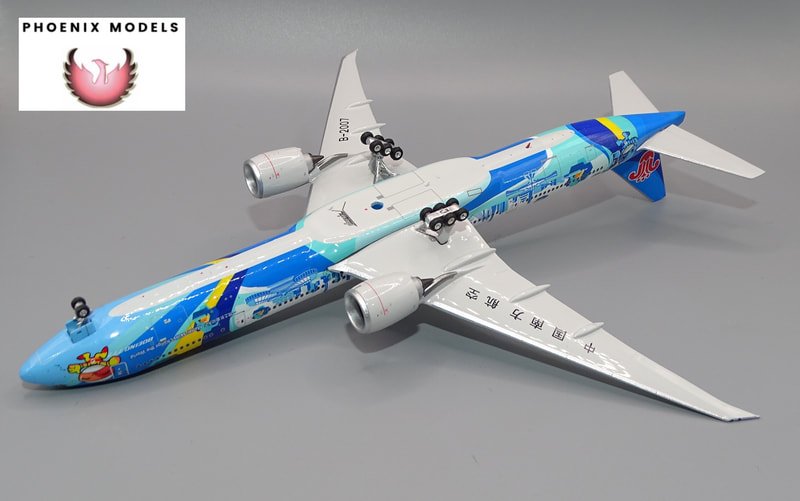
NACELLES & PYLONS: The Phoenix mould has been criticised for the smaller size of its engines and they are distinctly smaller than on the other moulds. The Phoenix also has by far the worst engine pylons. They are no way near deep enough under the wing and don’t meet the engine hot section properly. The other three moulds pylons are better with probably the NG and AV edging out the JC. All have decent engine exhausts but the NG’s are sharpest and the PH the weakest for me.
At the other end of the nacelles only the NG has solid core fans and that means the other three have the rims as separate pieces to allow the fitting of the hollowcore fans. Depending on QC this can have an impact, but in general they all look good with the Phoenix once again being the weakest and the NG the best.


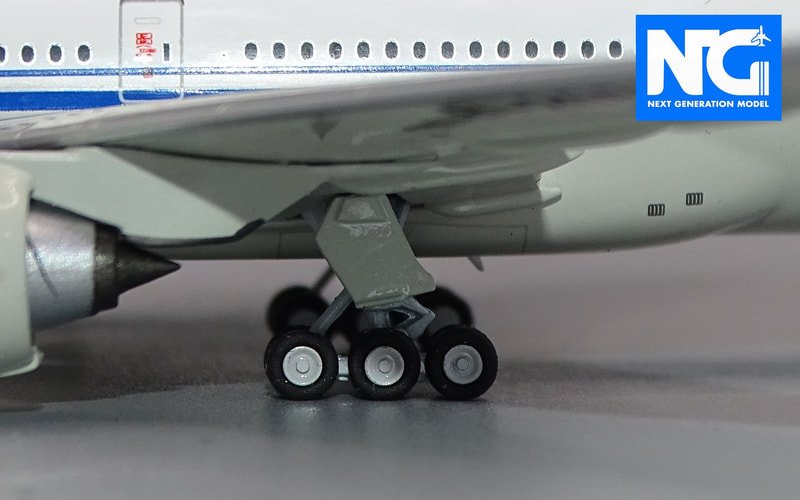

MAINGEAR: The difference between the landing gear of a 777-300ER and other variants is the presence of an additional hydraulic actuator attaching to the forward part of the bogey. For brands that have pivoting maingear elements (AV, JC and PH) this can prove a challenge to model. NG’s maingear bogeys are static so don’t have an issue with the connection of this actuator. JC Wings basically ignore the actuator’s existence, while Phoenix and AV400 model it in as best they can without harming the gear pivot. NG has it loud and proud, but the actuator is a little too large and connects too highly up the gear leg. Gear leg detailing on the Phoenix isn’t great.
In terms of maingear doors, the shape of the Phoenix gear doors, while broadly accurate, lack the notch at the lower rear margin, the small splayed out portion on the lower margin and the extra element at the top. All of these extras are present on the other three versions, but probably best modelled on the NG. The new AV400 maingear fixes the previous mould’s issue with the size of the maingear door being too small. Only the JC Wings version has the small triangular inside doors present.

FANBLADES


FANBLADES: NG has in recent times eskewed hollowcore fans and aimed for ultra-realistic solidcore blades with a lot of detail. They are easily the best of the fan blades on offer here. There are 22 blades on the GE90-115 engine. NG has 20 in its engine and the fans have a great thickness and 3D look to them. Brands that aim for hollowcore engines can’t match that level of realism. This means there are only 13 blades in the Phoenix engine and 16 in the JC engine. AV400 have 18 blades in their engine.

TAIL & TAILCONE





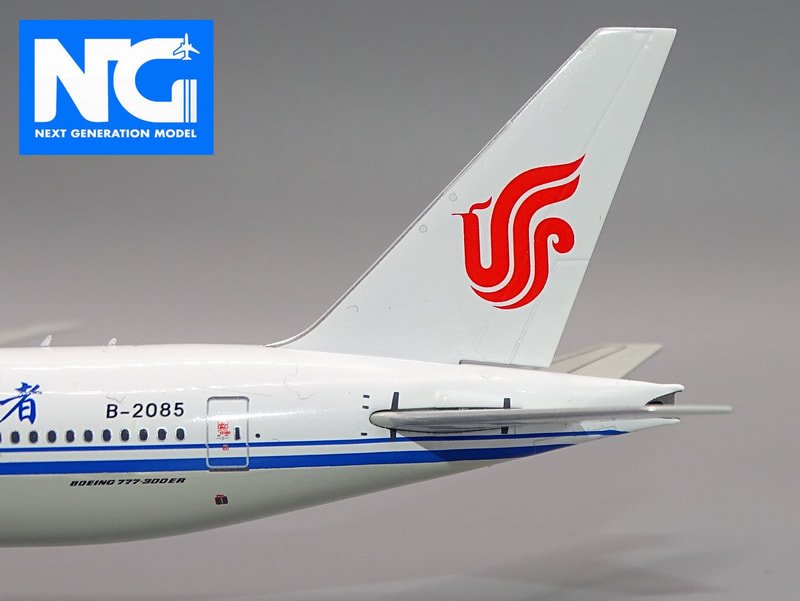
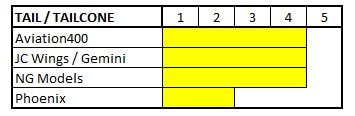
TAIL & TAILCONE: One of, if not the most, recognisable parts of a 777 is the tailcone with APU exhaust on the left. There has been discussion about whether it is appropriate to model in the small upper and lower lights but 3 out of the 4 moulds attempt it. The one that doesn’t is the older Phoenix, which mould goes for a simple wedge shape with none of the finer detail. Even if you prefer it without the lights I am not particularly fond of the shaping. The other three are quite similar and although the lights are out of proportion I prefer the added detail myself.
The vertical stabiliser the Phoenix mould has a large attachment point the whole width of the tail and a rather curvy top line. The other three attach the tail forward of the rudder only, giving the look of a moveable rudder surface not attached to the fuselage. The gap between the stab and fuselage is a wider in the NG (seen from the side). The JC Wings 777 has a more prominent join to the fuselage at the forward margin, which doesn’t look as nice as the AV400 or NG editions from above.



FUSELAGE DETAILING & EXTRAS
The underside of the fuselage between the wings isn’t as well shaped on the Phoenix mould, with either end of the fairing being rounded off. Typically Phoenix printing isn’t as detailed as the other brands as well (noticeable here with the maingear doors). The JC Wings mould actually has moulded in maingear doors, which is a nice tough. All four moulds come with a nice selection of aerials and domes. The AV400 mould adds their well known navigation beacons above and below.


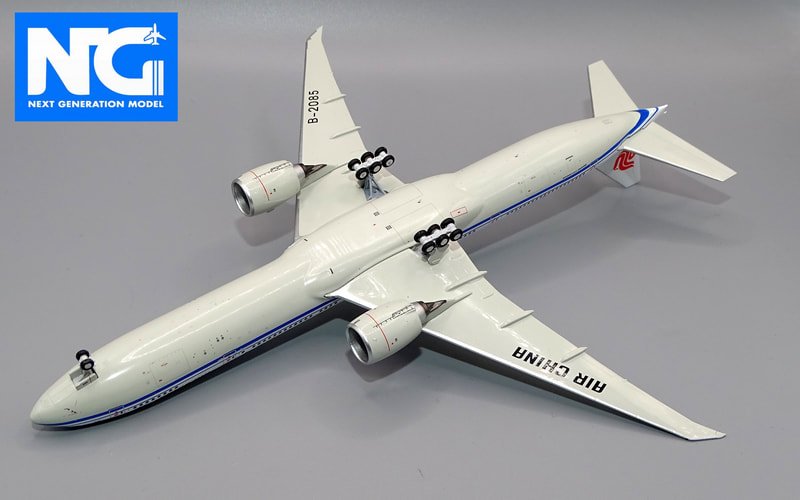
Both the JC Wings and Aviation400 moulds offer extra features. As you can see with the JC example here, this mould comes with a flaps down variant, which is very nice. Aviation400 now offers magnetic detachable landing gear, which is once again very well designed and looks great. Both of these features enhance the playability and display potential of the moulds. Although neither are 100% necessary they do have merit and deserve praise. It is worth pointing out that the new NG 777s do not have a standhole any longer, since the new NG stands attach across the wings. This could be seen as either a plus or minus, but clearly NG has been moving in the opposite direction to AV400 by adopting static gear bogies, solid fans etc, to promote realism, whereas AV400 tends to add extras that enhance display.

Summary
It is no surprise that there is such a distance between the Phoenix 777 and the other 3 moulds in this review. The Phoenix is over a decade older than its nearest competitor and no mould that old should be beating a modern-era casting. It is no shame on the Phoenix mould that it loses. It is still a decent mould, but there is no doubt that the other moulds are superior as a whole unit.
Among the other three they are very close to each other, indeed the Aviation400 and JC Wings versions score the same in each category, albeit often for different reasons. The NG Models mould just pips the other pair as they have actively striven for detail accuracy. Then again, the scores are easily within the margin of error and you may well score differently to me.
In summary all of three newer 777s are excellent and worthy of acquisition. Which you prefer will likely depend on which features you value the most. I am happy to own all 4 of the above moulds, and the flaps down and mag gear features enable good variety within your collection.
