
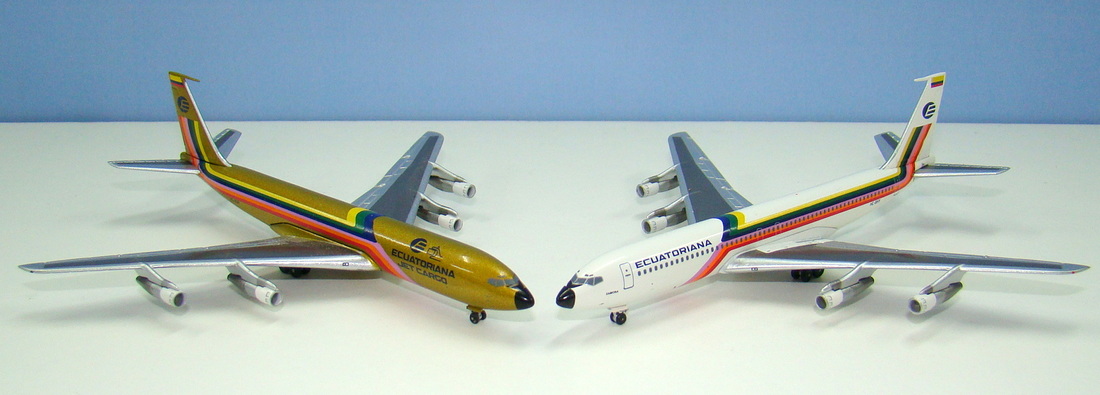
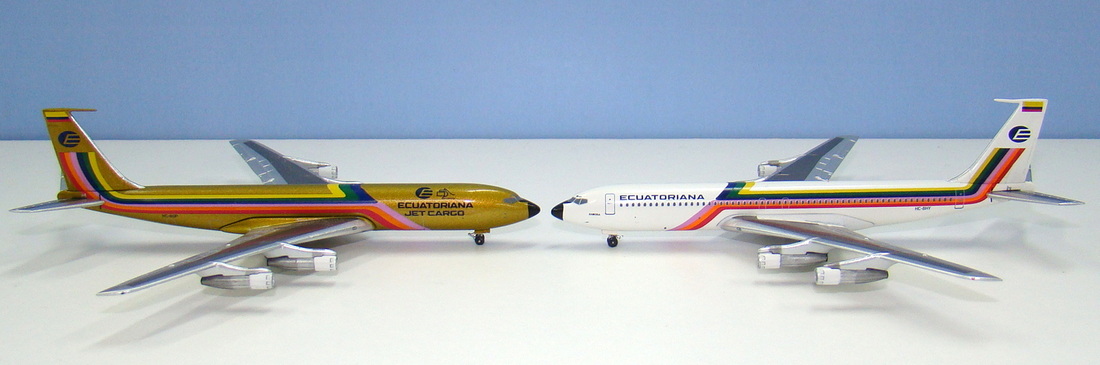
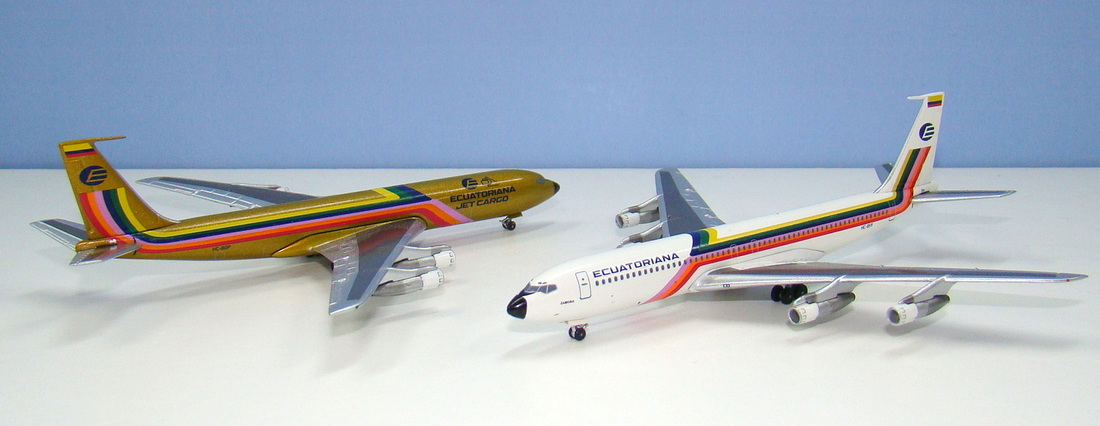
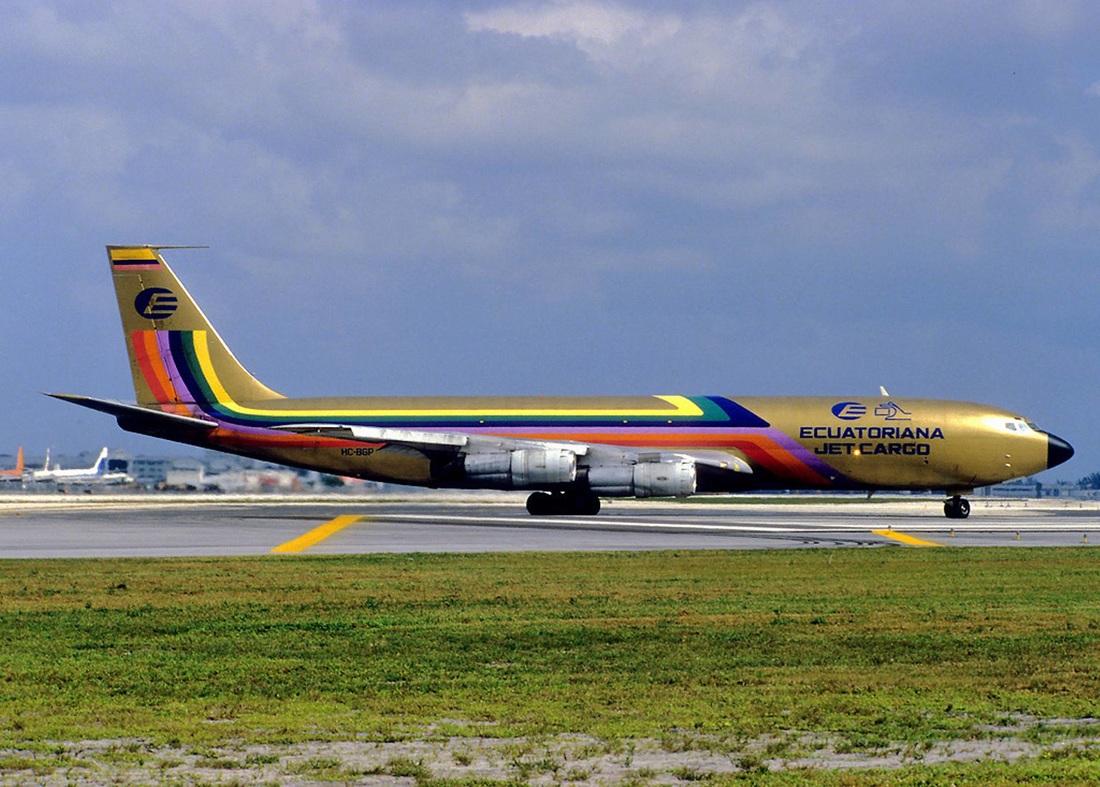
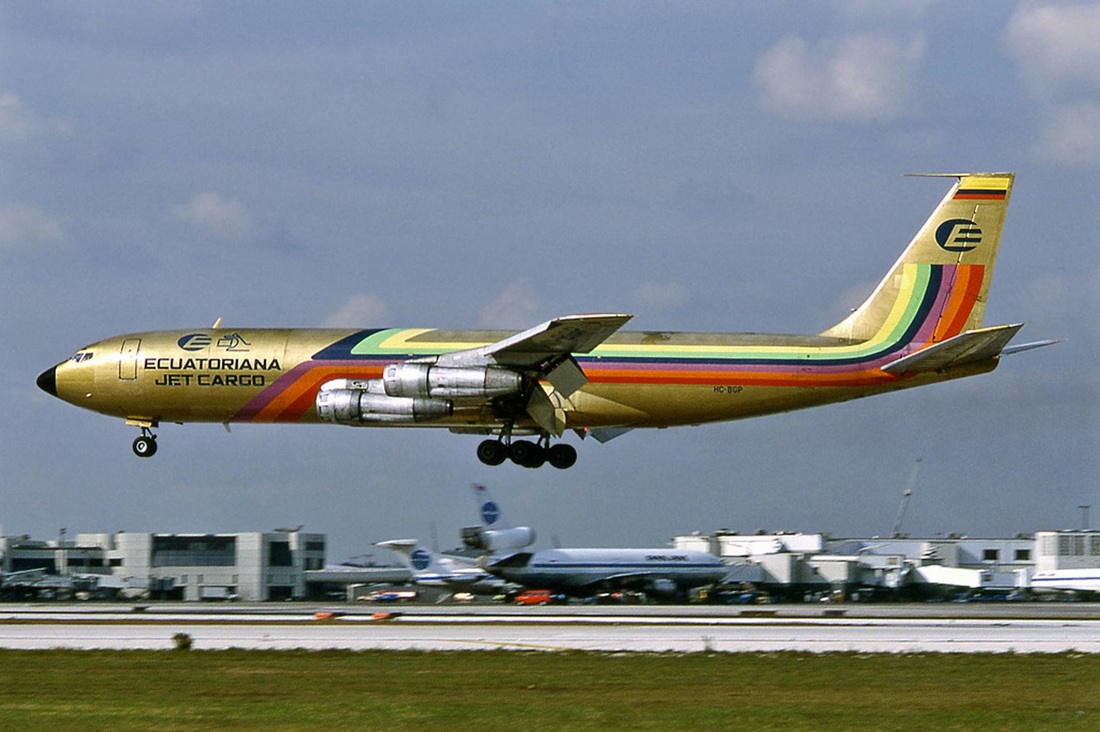
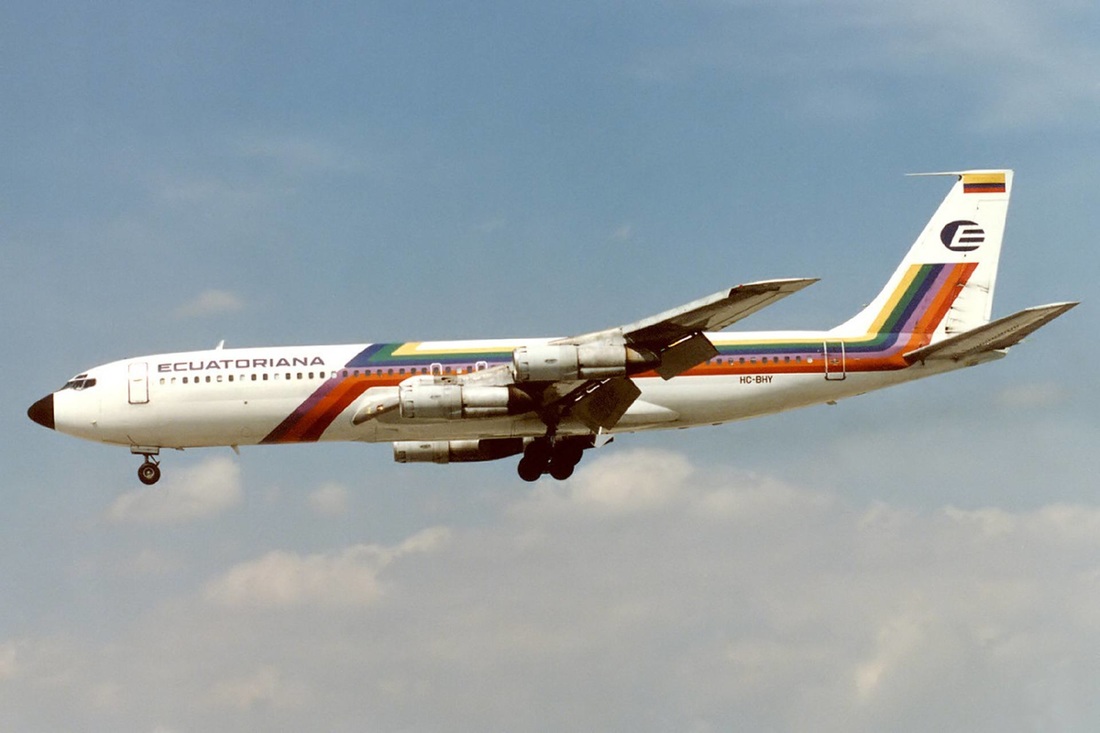
 In May 1979 the five passenger 720s/707s, one of which was a Combi often used as a freighter, were joined by a full freighter configured 707 registered HC-BGP. This introduced a new stunning scheme, which, with some modifications, was to become the new standard colours of the airline. What really made the cargo 707's livery stand out wasn't just the rainbow striping but also the golden fuselage. As with all of Ecuatoriana's 707s this aircraft was also of Pan Am heritage having joined PA as N451PA 'Clipper Union' on May 31, 1967. Prior to her lease to Ecuatoriana she had been N451RN with Iran Air. Named 'Manabi' she operated an all cargo service from Quito to Miami, Panama City and New York JFK. As you can see the livery involved six colourful bands - yellow, green and dark blue at the top and magenta, orange and red at the bottom. Along with the airline's traditional E logo this aircraft also gained a new freight motif, which to me looks like a stylised hand moving a cargo container.
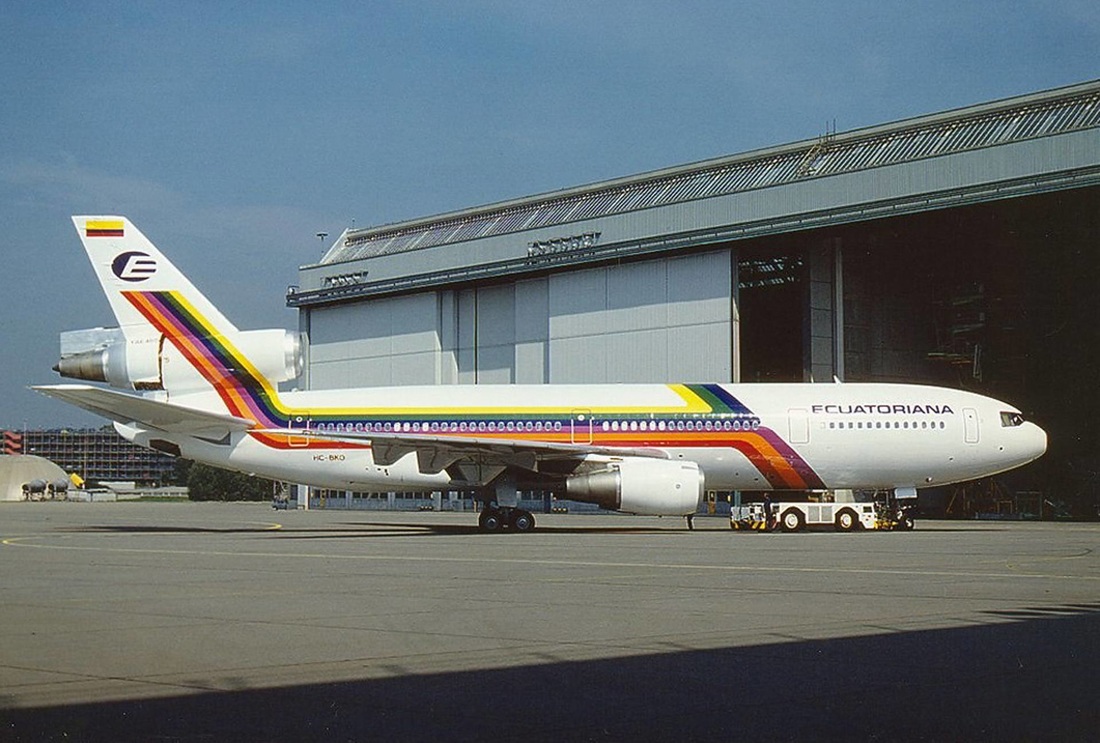
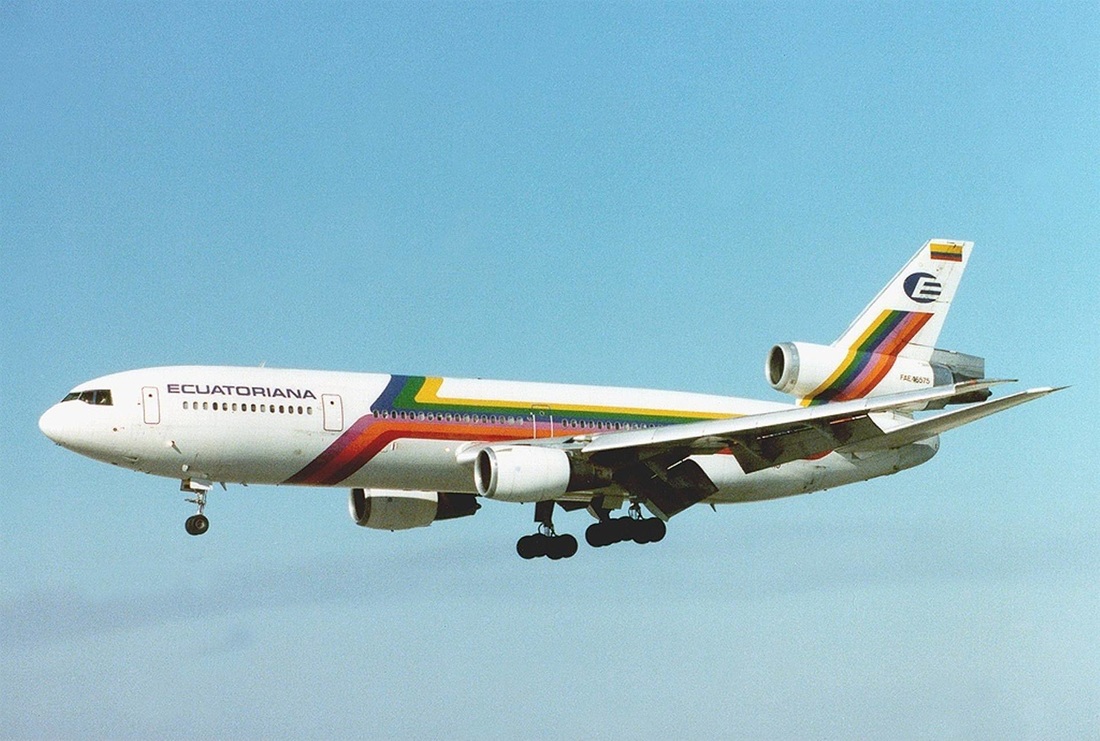
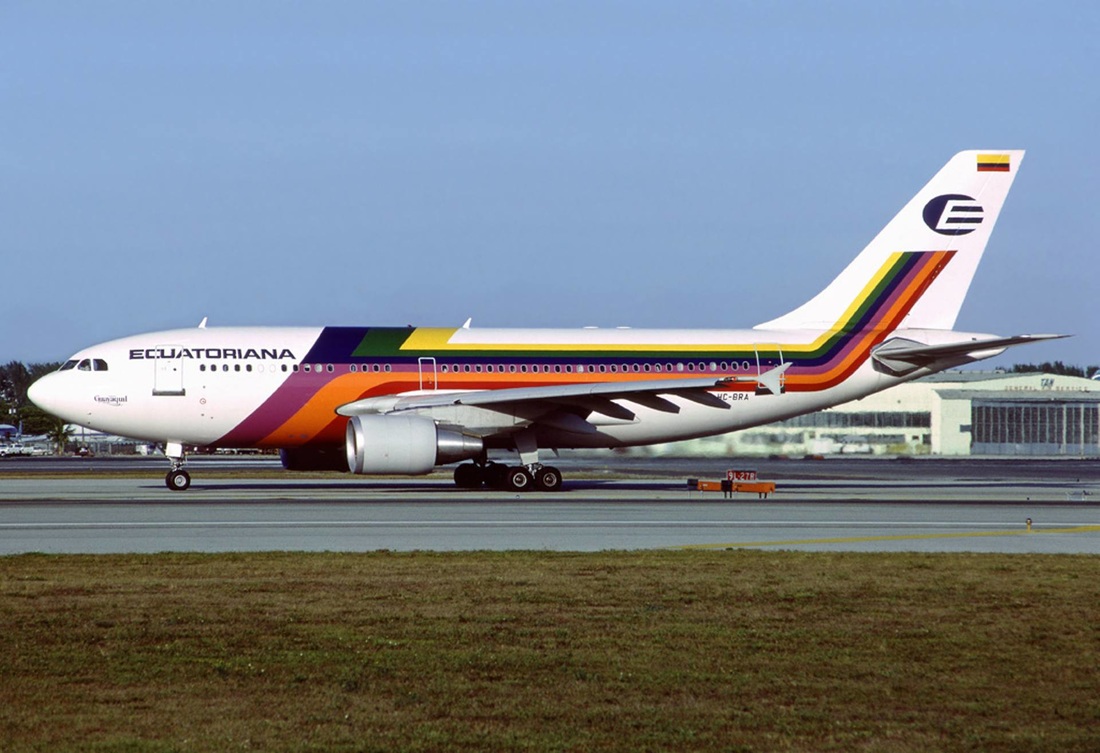
 Ecuatoriana gained its first widebody in 1983 when it purchased an ex-Swissair HB-IHA ‘St Gallen’ which had originally been delivered to Swiss in November 1972. She became HC-BKO / FAE46575 and enabled the airline to operate long-haul non-stop services to destinations in Canada and Spain for the first time. The Boeing 720s had all left the fleet by 1987 and in 1991 a pair of Airbus A310-300s arrived on lease.
Unfortunately corruption and poor management blighted the airline in the late 80s and early 90s. Its operations became increasingly unreliable, while it also suffered in the face of competition from its Ecuadorean competitor SAETA and US Airlines (American and Continental). A combination of these factors and economic problems in South American in general led to the airline ceasing operations altogether in 1993.
3 Comments
BWI-ROCman
7/6/2016 07:33:29 pm
Did Ecuatoriana have some sort of relationship with VASP at the end? Aeroclassics makes an Ecuatoriana DC-10 in a basic VASP 1990's paint scheme.
RStretton
8/6/2016 02:17:31 am
All will be revealed in part 3 my friend :). Scheduled for the next day or two Leave a Reply. |
AuthorI'm Richard Stretton: a fan of classic airliners and airlines who enjoys exploring their history through my collection of die-cast airliners. If you enjoy the site please donate whatever you can to help keep it running: Archives
July 2024
Categories
All
|

 RSS Feed