Ozark was St Louis’s hometown airline and as with many of the local service airlines was a true pioneer of service for the regional customer. A well run and well equipped airline that proudly wore its three swallows for forty years. Its story started in 1943 when four local businessmen (two bus line operators and two attorneys) from the Ozark region of mid-west America came together to try and acquire one of the new licenses being offered by the CAB for feeder airline services.
Service for the newly incorporated Ozark Air Lines began on Jan 10th 1945 with three Beech 17s on a triangular routing linking Springfield, St Louis and Kansas City. Sadly it became clear the CAB wasn’t going to issue any licenses until 1947 at least and since the airline was losing money it ceased operations on November 3rd 1945.
Despite proving itself able Ozark was trumped when the licenses were eventually given out to Parks Air Lines, which despite being run by the well known Oliver Parks, struggled to launch services. Eventually pressure from the under-served communities forced the schedule to be re-distributed to Ozark, which finally restarted service on Sep 26th 1950. The airline had 40 employees and 4 DC-3s – most of both being taken from Parks. The first flight started with only one passenger onboard! Entertainingly the carrier also painted its DC-3s differently so people would know it had more than one plane.
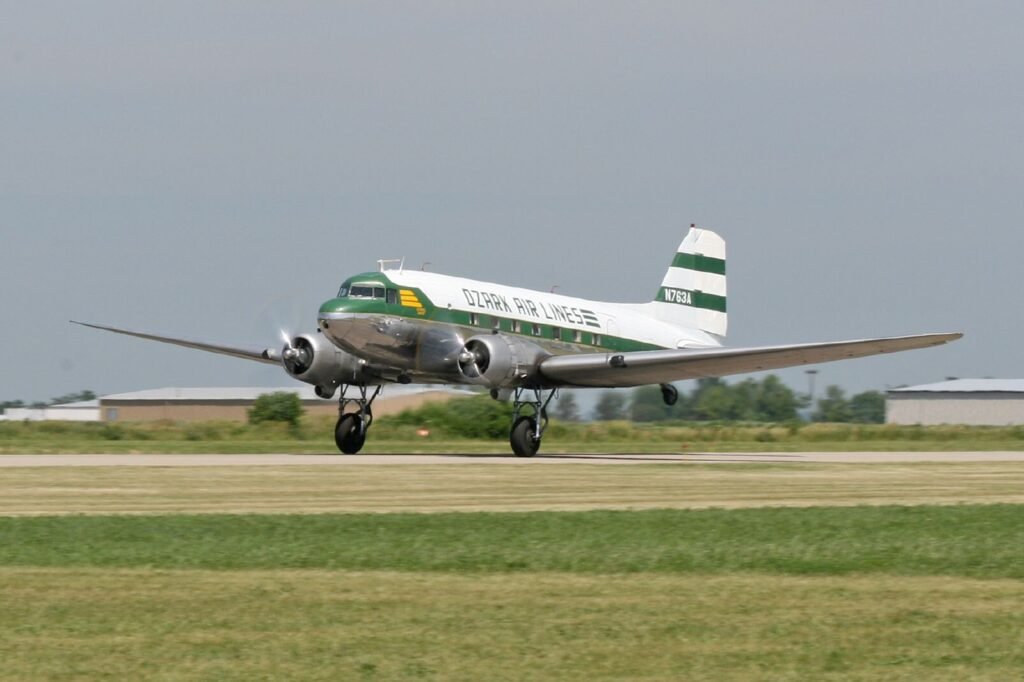
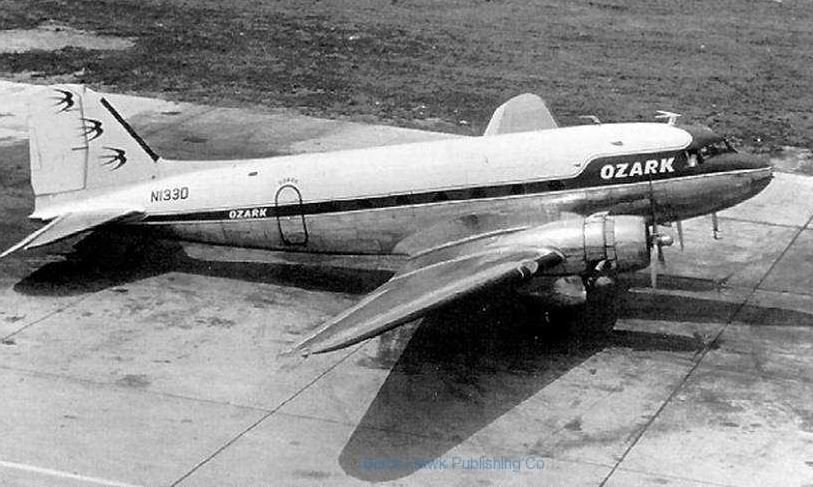
This DC-3 never actually flew with Ozark but illustrates its early scheme. By D. Miller from IL. USA (DC3 - Ozark Airlines) [CC BY 2.0 (https://creativecommons.org/licenses/by/2.0)], via Wikimedia Commons
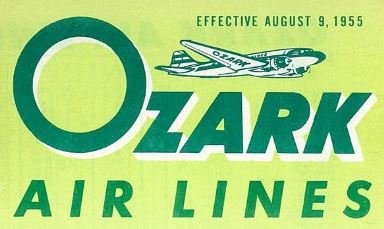
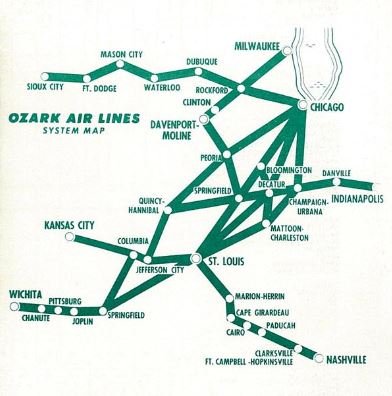
Ozark’s first president was Laddie Hamilton and he helped the company grow so that by 1954 it was carrying over 156,000 passengers a year to 16 destinations. By 1952 Ozark had adopted its first trademark with a large O complete with DC-3 flying out of it. 1955 was a major growth year as 11 new stations came online and the DC-3 fleet increased to 15 (by 1959 there would be 29).
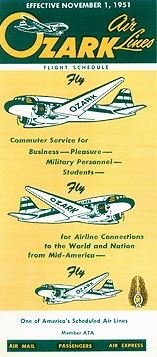
Timetable images above are from the collection of Bjorn Larson from http://www.timetableimages.com/ttimages/oz.htm
From 1956 the airline modified its DC-3s to make them faster – with new wheel well doors, drag reducing oil cooler scoops and other aerodynamic improvements. However Ozark needed a new machine to help it grow and in 1958 it ordered 3 40 seat Fairchild F-27s. Sadly the next year Hamilton stepped down due to ill-health and his place as president was taken by Joseph H Fitzgerald the companies vice president who had joined in 1958 from the CAB.
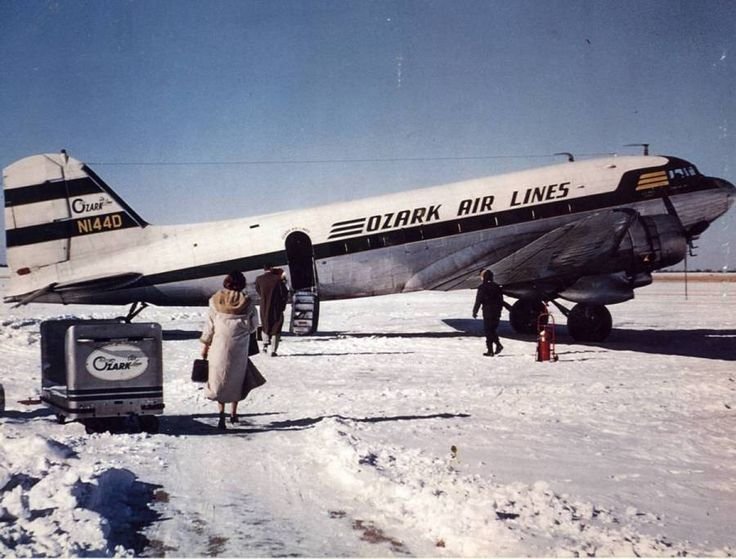
N144D here on a snowy day. She survived in the fleet until December 1967 but here still wears her 1950s scheme. She also shows the 1956 modifications to the Daks most obviously the new wheel well doors
The cities of Omaha, Madison and Iowa City were added in 1959 and the two millionth passenger carried on June 26th. This was only just over two years since the millionth passenger had been carried on January 19, 1957.
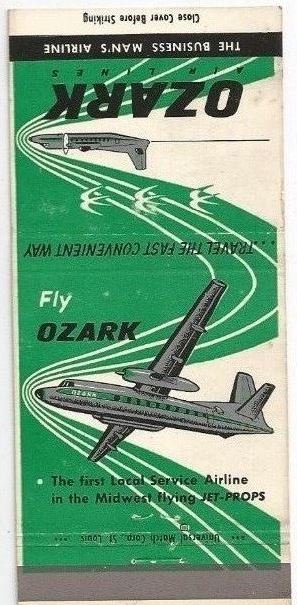
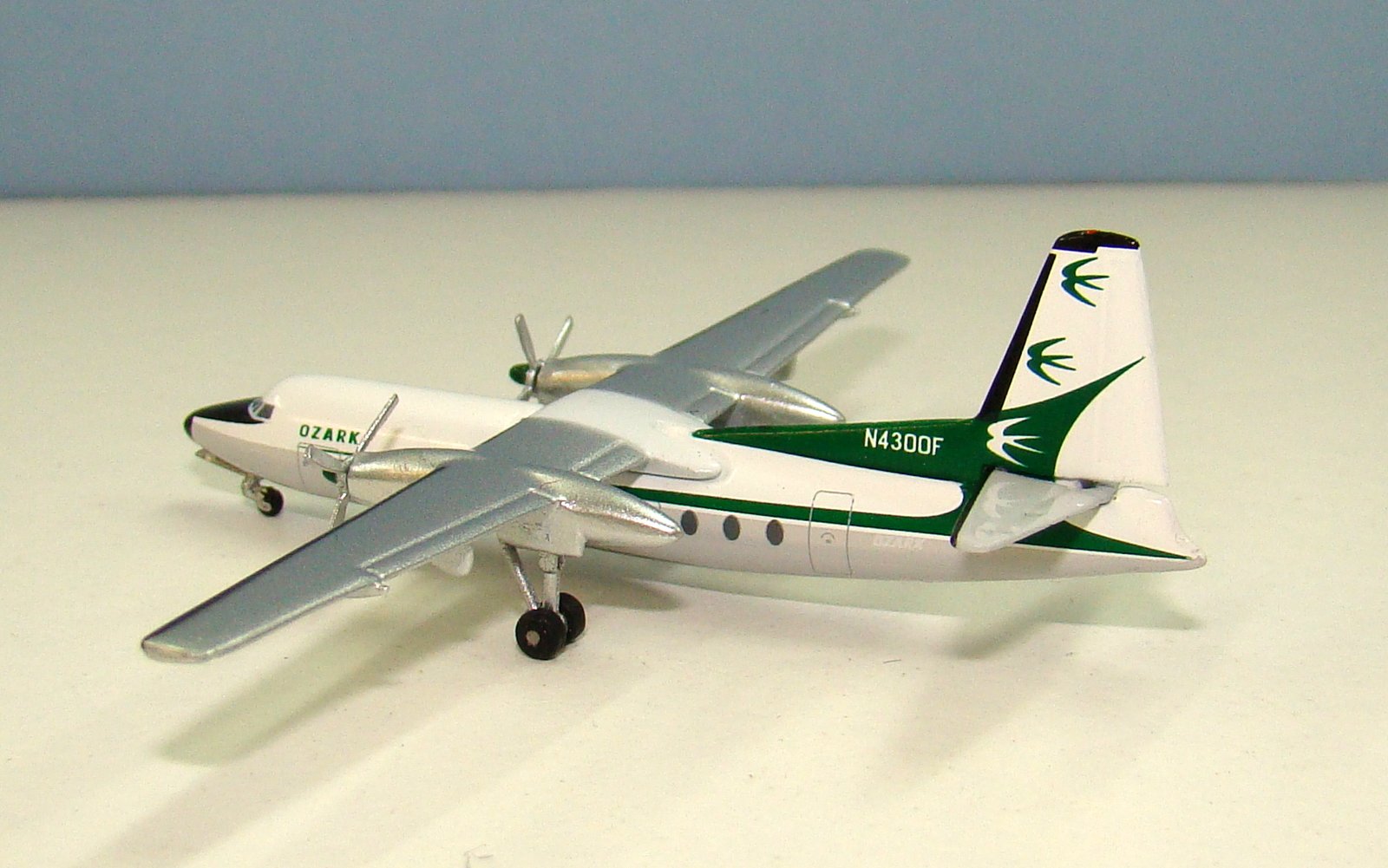
The arrival of N4300F on July 16th 1959 signalled the start of the jet-age for Ozark and the arrival of their first ever new airplane. The prop-jet Fairchild F-27s were a major improvement over the DC-3s in everyway. They seated 13 more passengers (40 compared to 27), were quieter, a smoother ride, faster and had excellent views due to large windows and a high wing.
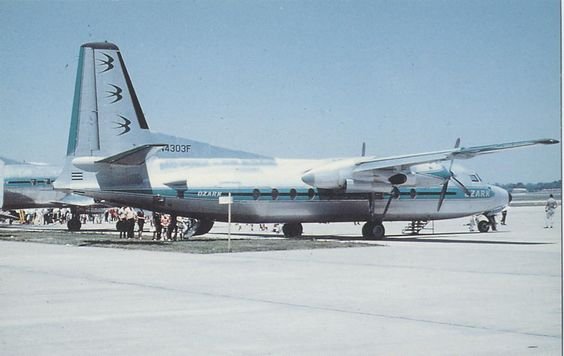
They also introduced the first livery that used what would become Ozark’s trademark – the 3 swallows. Initially this was a silver scheme with a green and black cheatline.
The F-27s went into service in January 1960 on Ozarks prime routes linking St Louis to Chicago at a time when the trunks themselves were only just acquiring jets.
N4303F here shows off the first F27 scheme from 1959 with silver body and green and black cheatline.
Despite the F-27s excellent credentials they were expensive and in 1961 Ozark bought 4 CV-240s from Condor Flugdienst. Unfortunately this proved to be a mistake as each unexpectedly required costly overhauls which delayed their service entry until late 1962. In 1961 the airline carried its 3 millionth passenger and grew by taking over routes previously flown by American, TWA and Braniff. The trunks were looking to shed annoying multi-stop routes and Ozark was only to eager to take them off their hands. This gave it services like St Louis and Chicago via Springfield and Peoria.
The DC-3s also received the updated three swallows but kept their old cheatline. Here is N133D, a C-49E that lasted until late 1968 with Ozark.
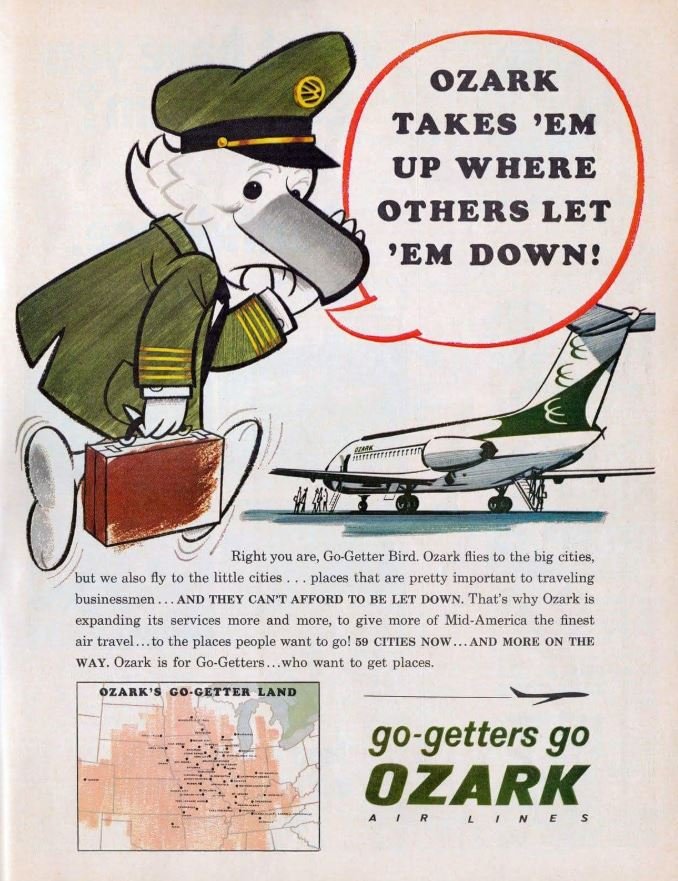
As the airline grew it began to spend more money on its image. The silver finish was replaced by all white and in 1964 the St Louis advertising agency D’Arcy created the new slogan ‘Go-Getters Go Ozark’ which would be used for 7 years. Meanwhile a new President arrived in early 1964 in the form of Thomas L. Grace formerly of Northeast and Slick. Within a year he almost doubled the size of the fleet when he audaciously swapped Ozark’s Convairs with Mohawk in exchange for their 14 martin 4-0-4s and bought 4 more F-27s.
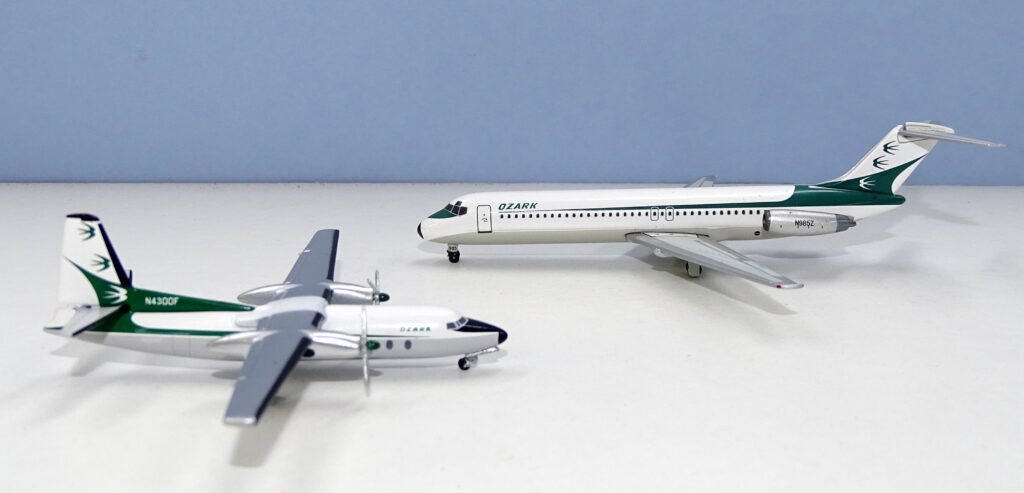
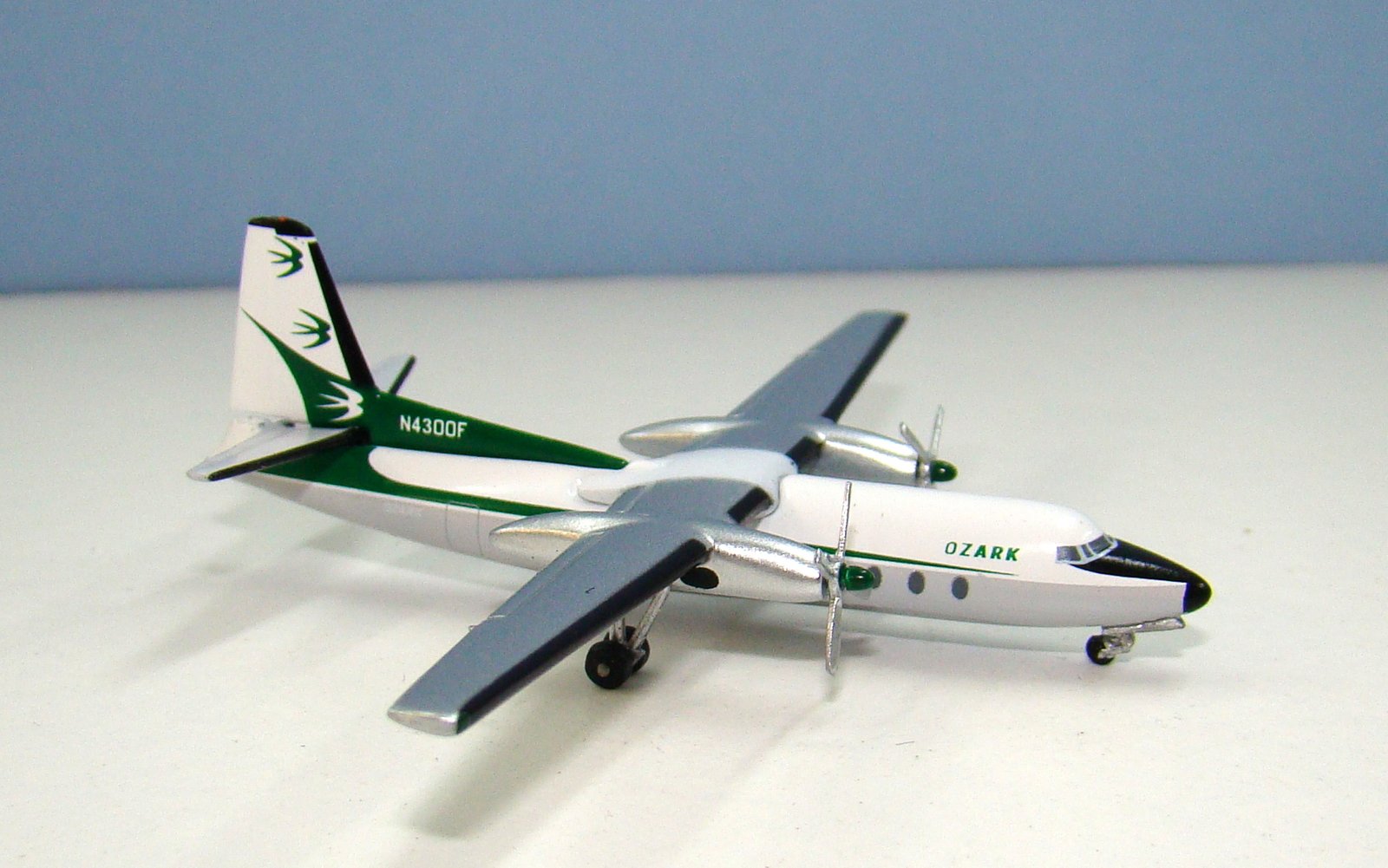
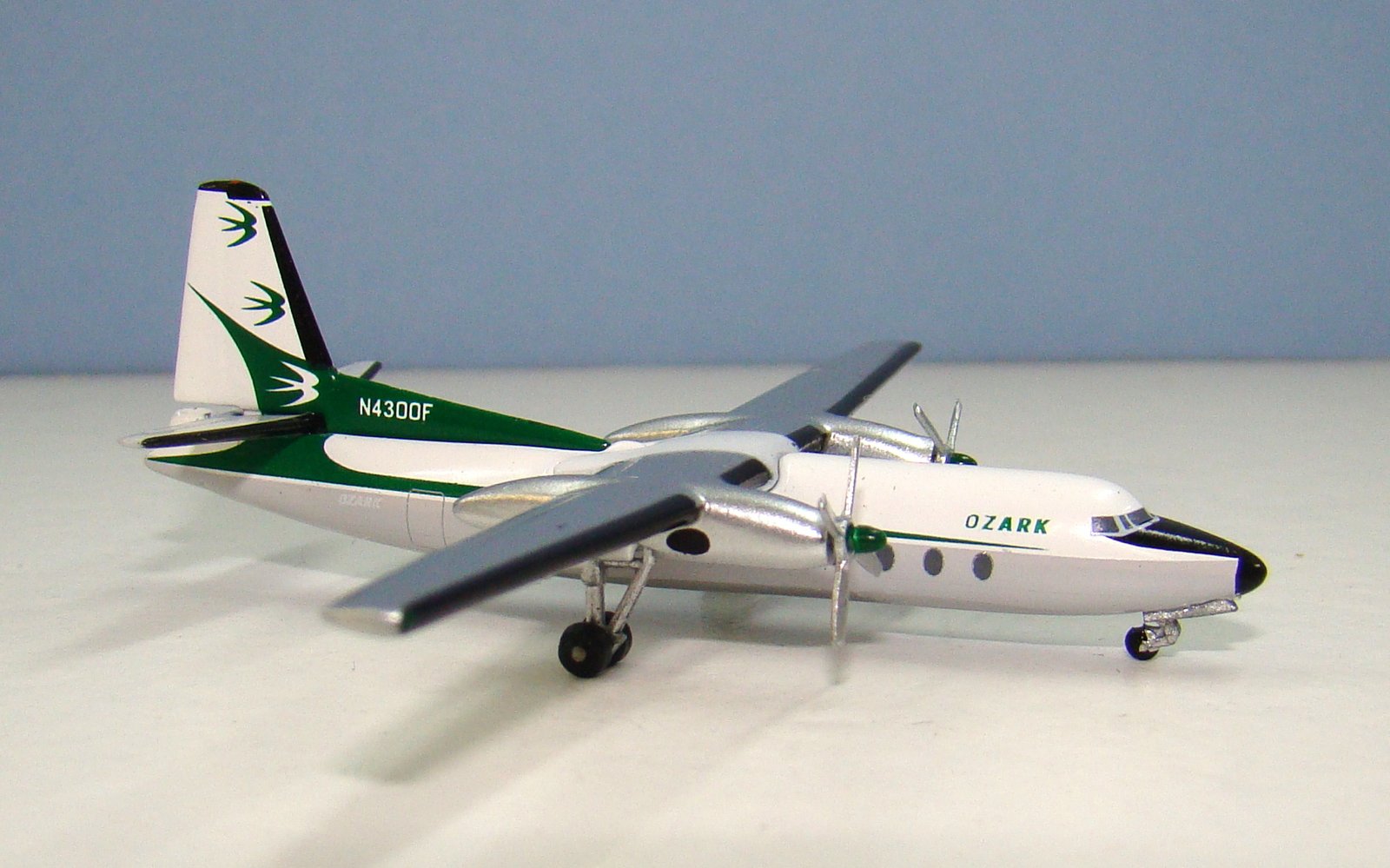
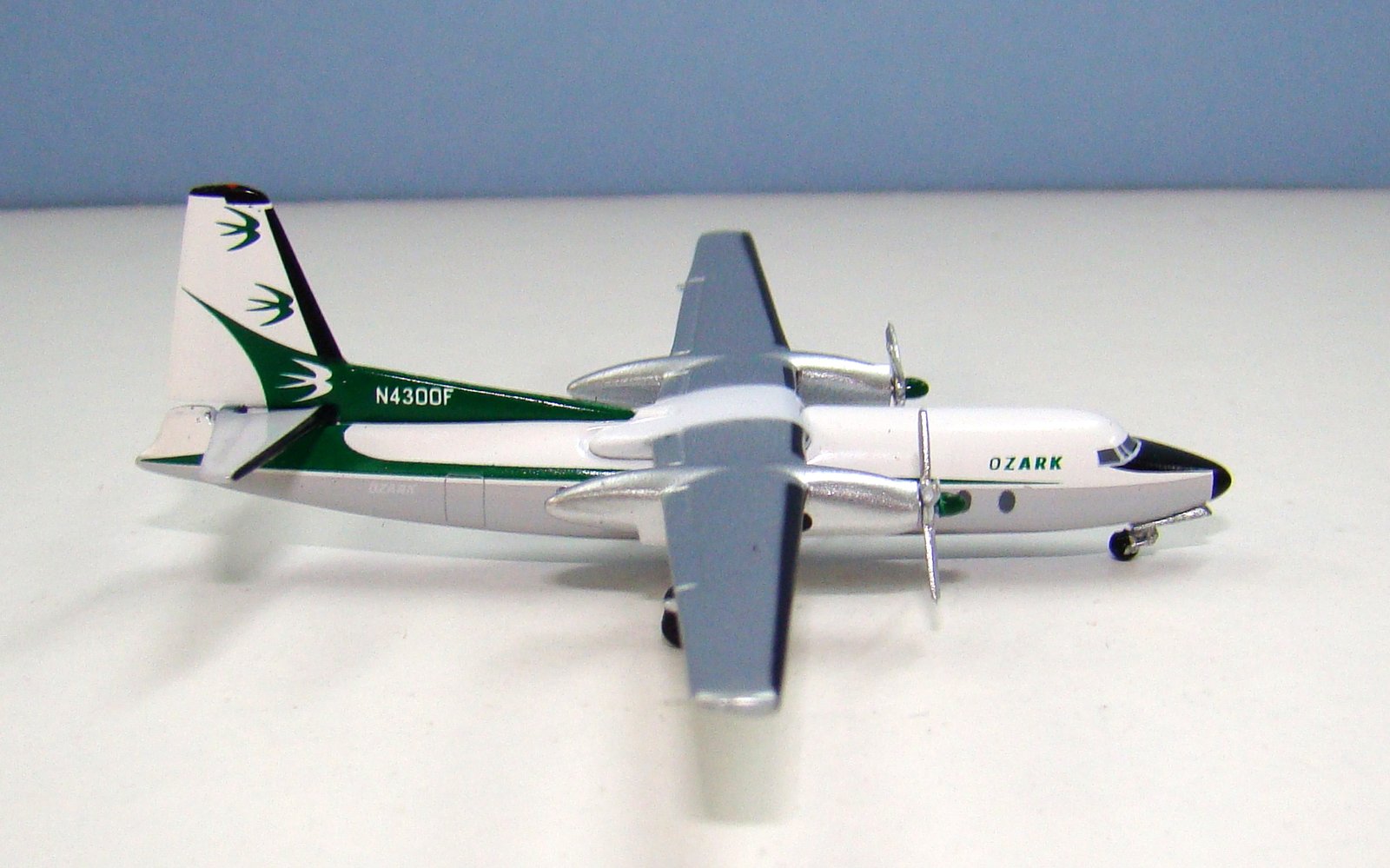
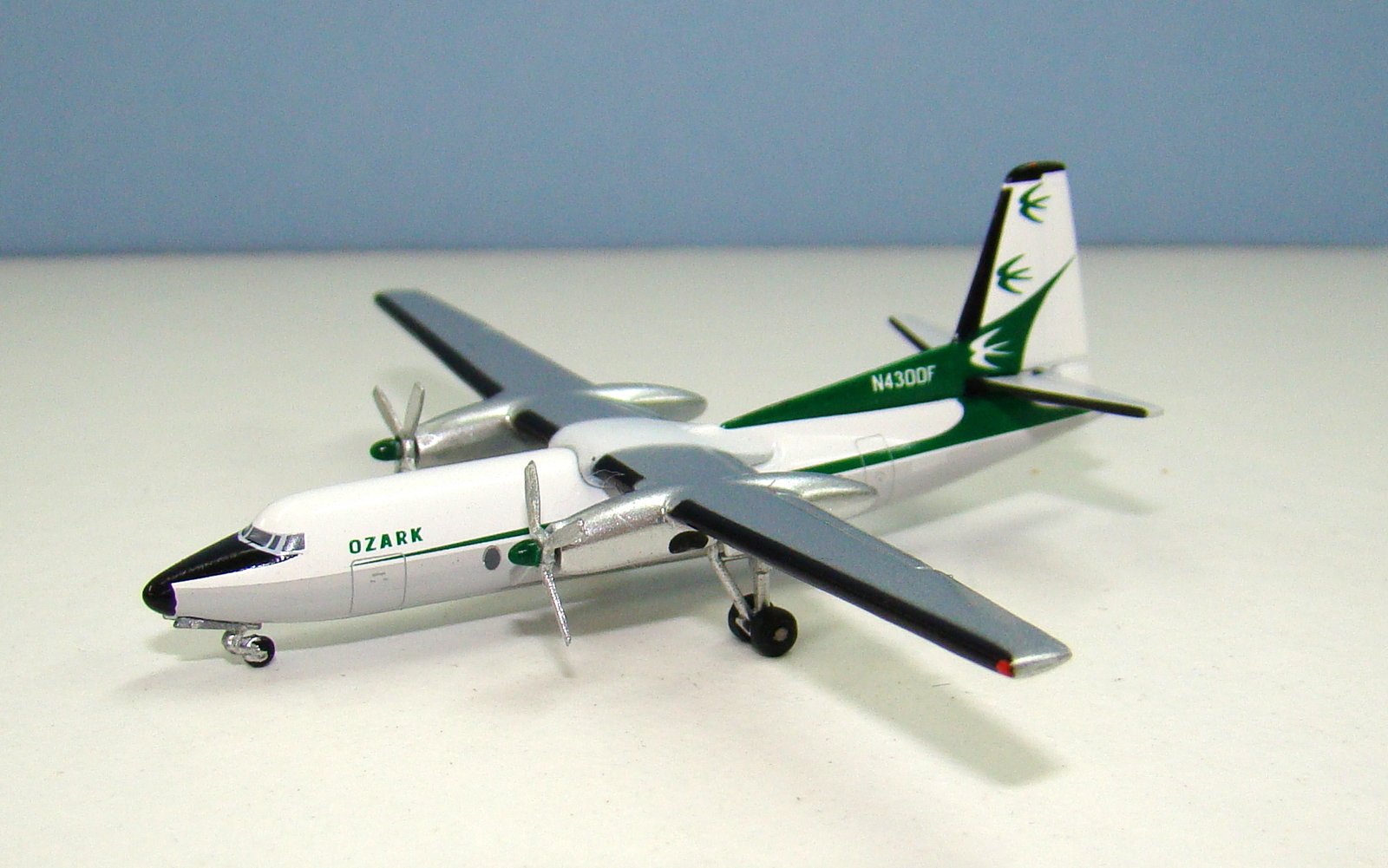
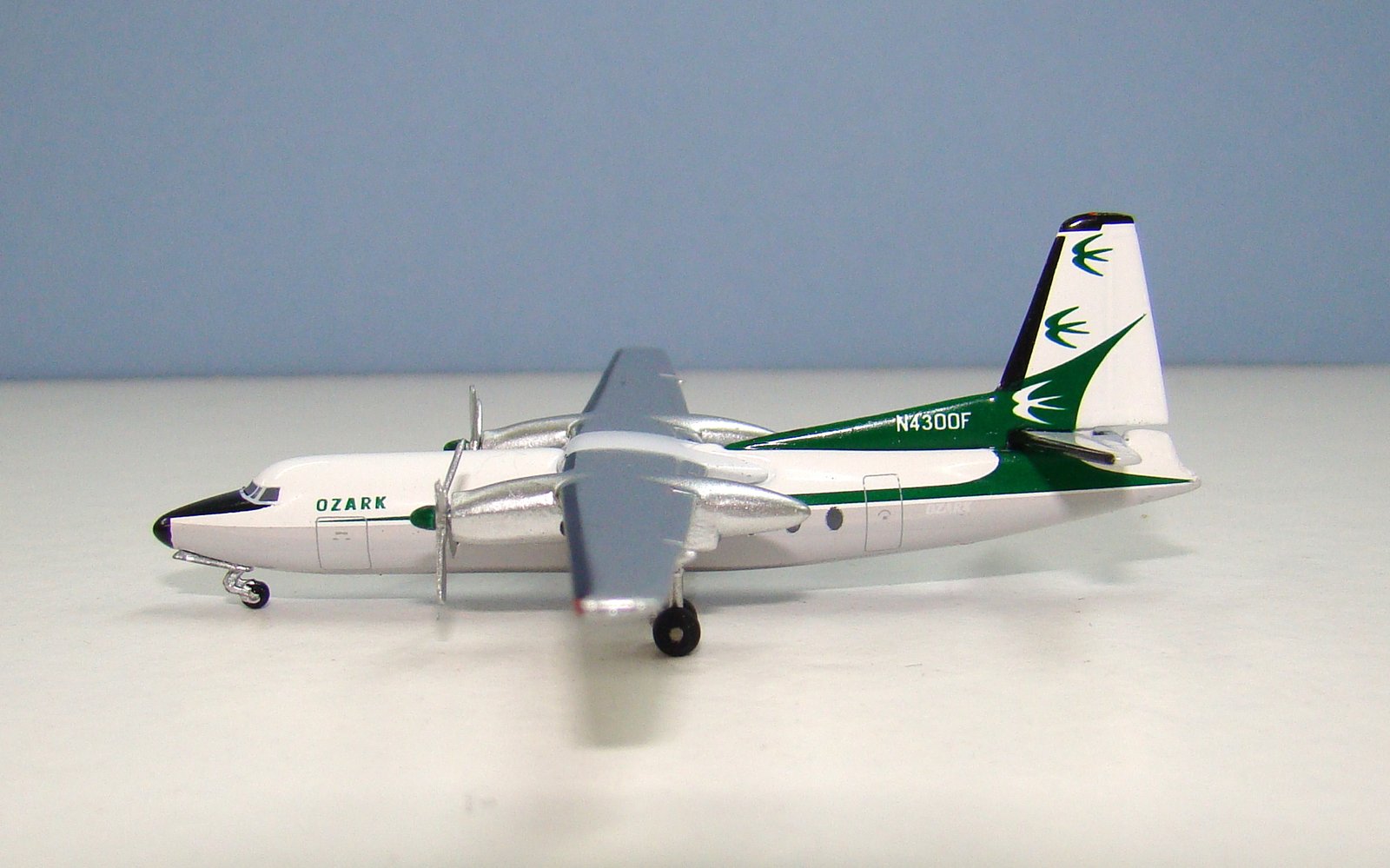
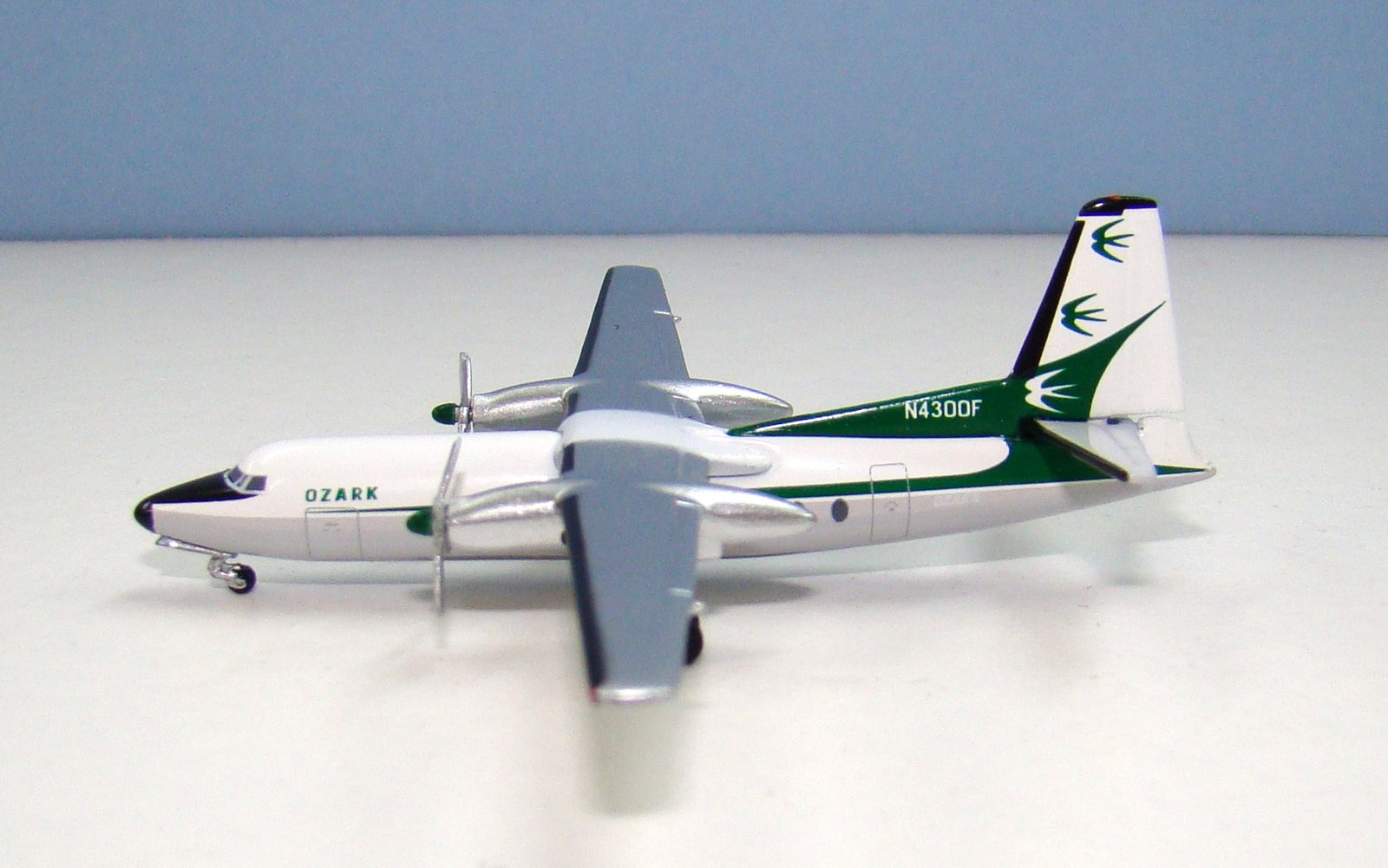
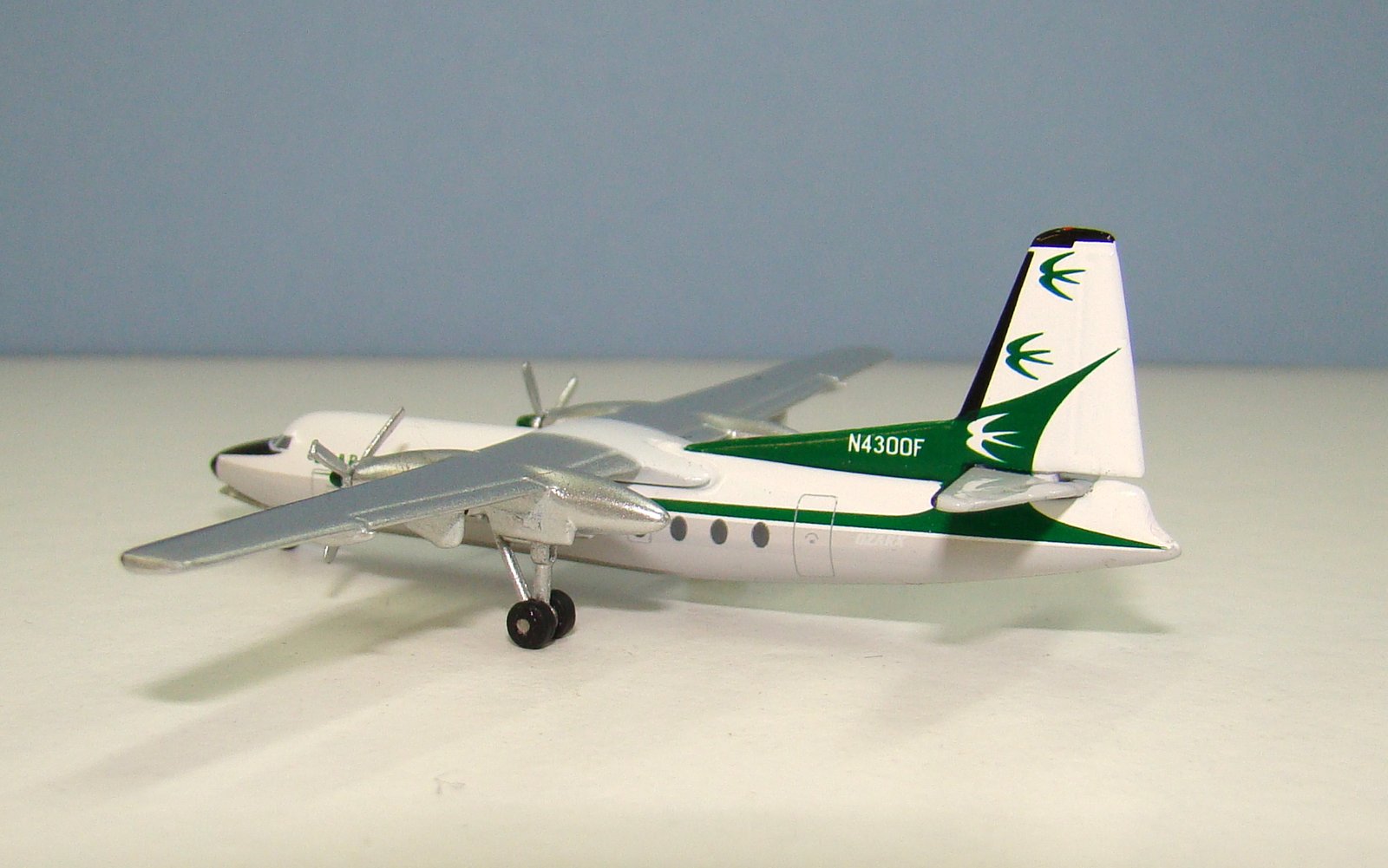
The model below made by Aeroclassics wears the 1966 pure-jet scheme introduced with the first DC-9s:
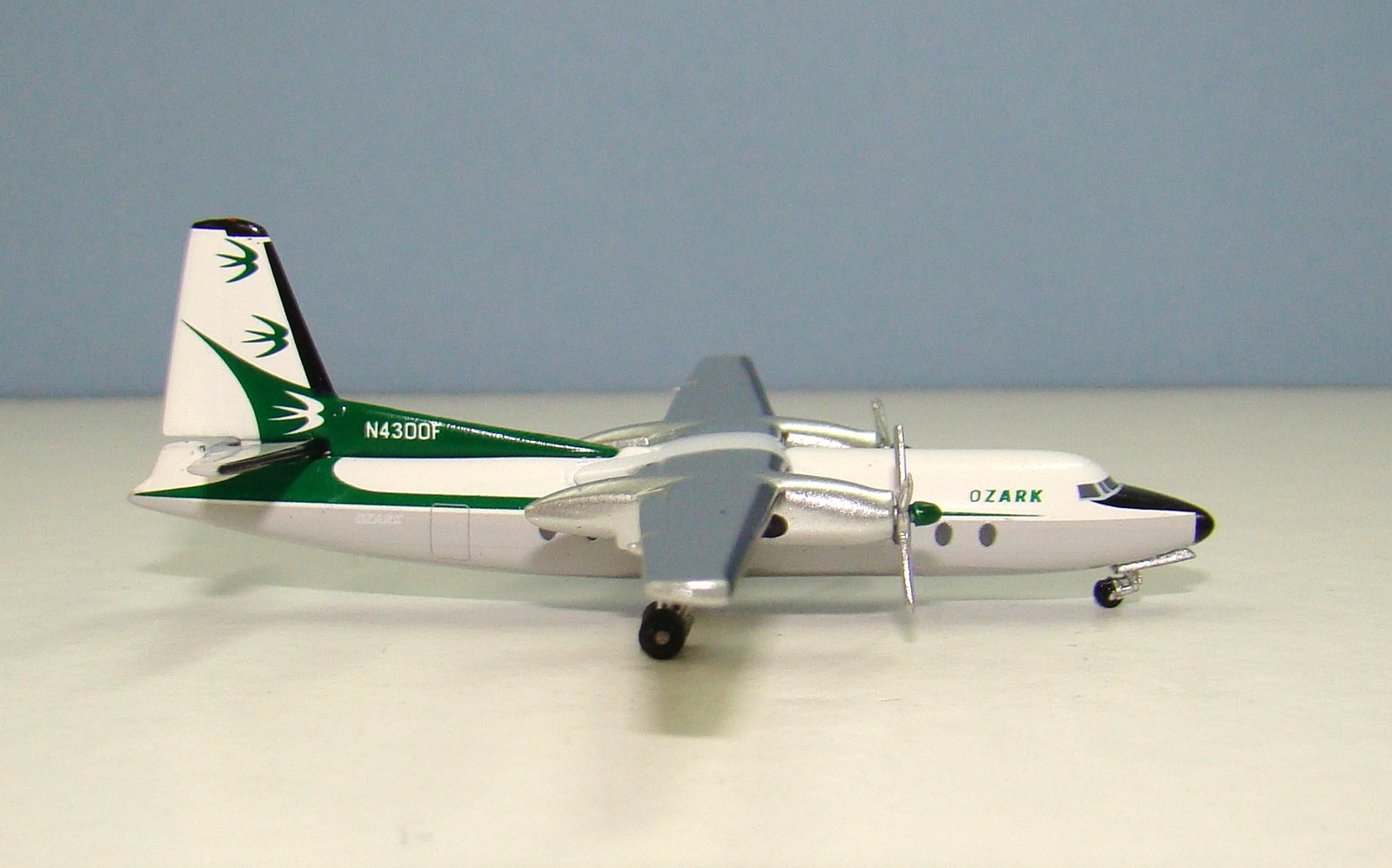
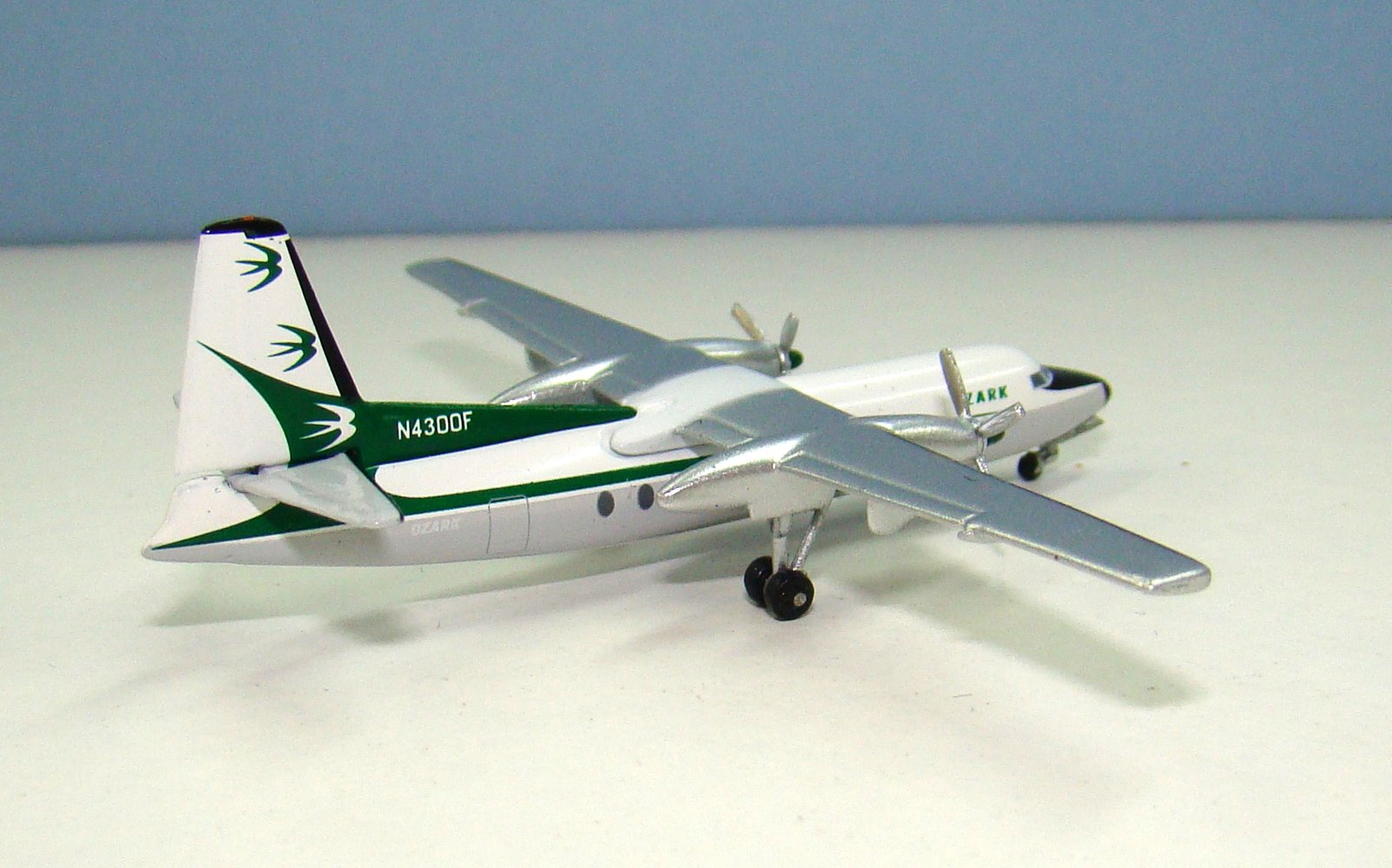
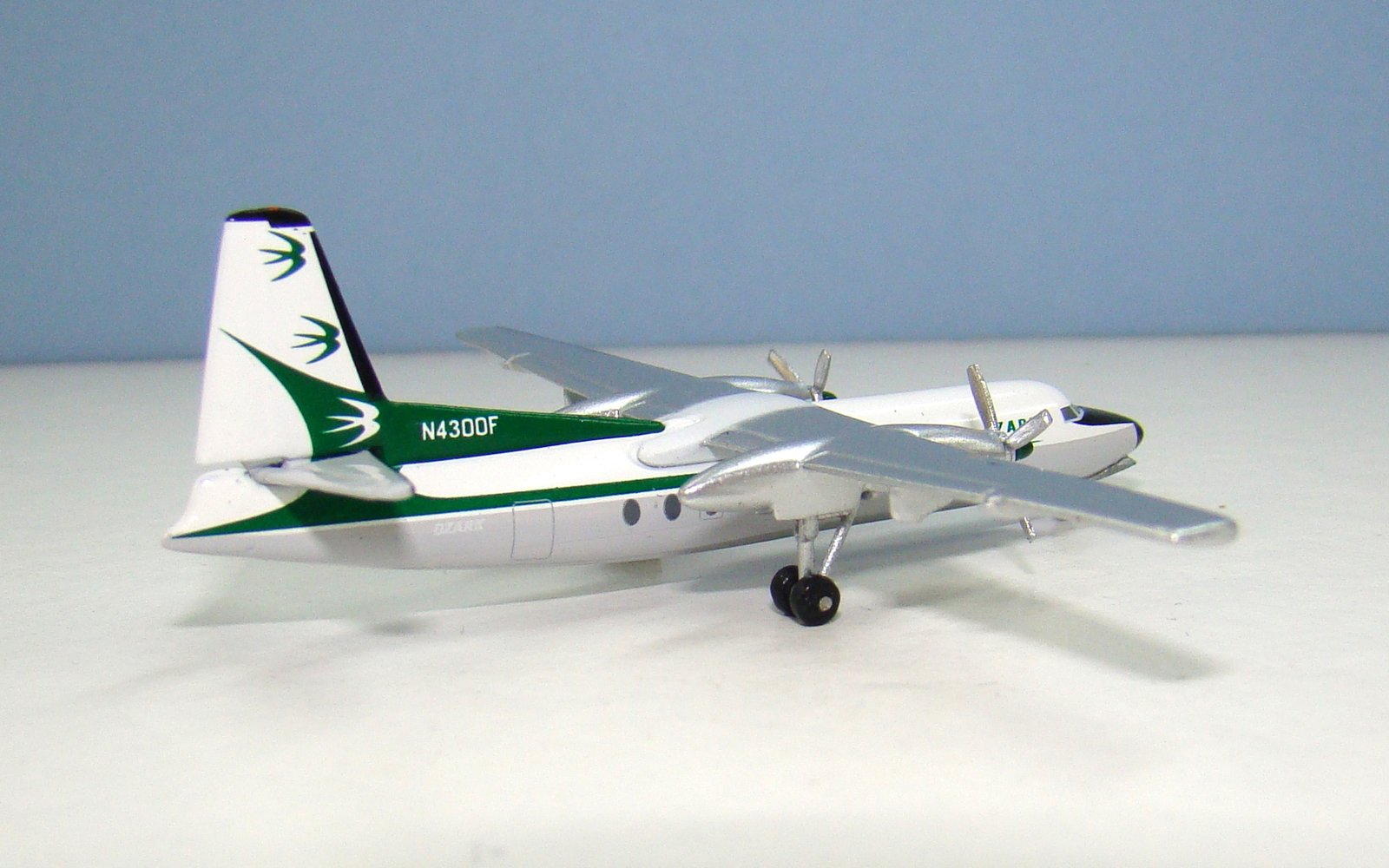
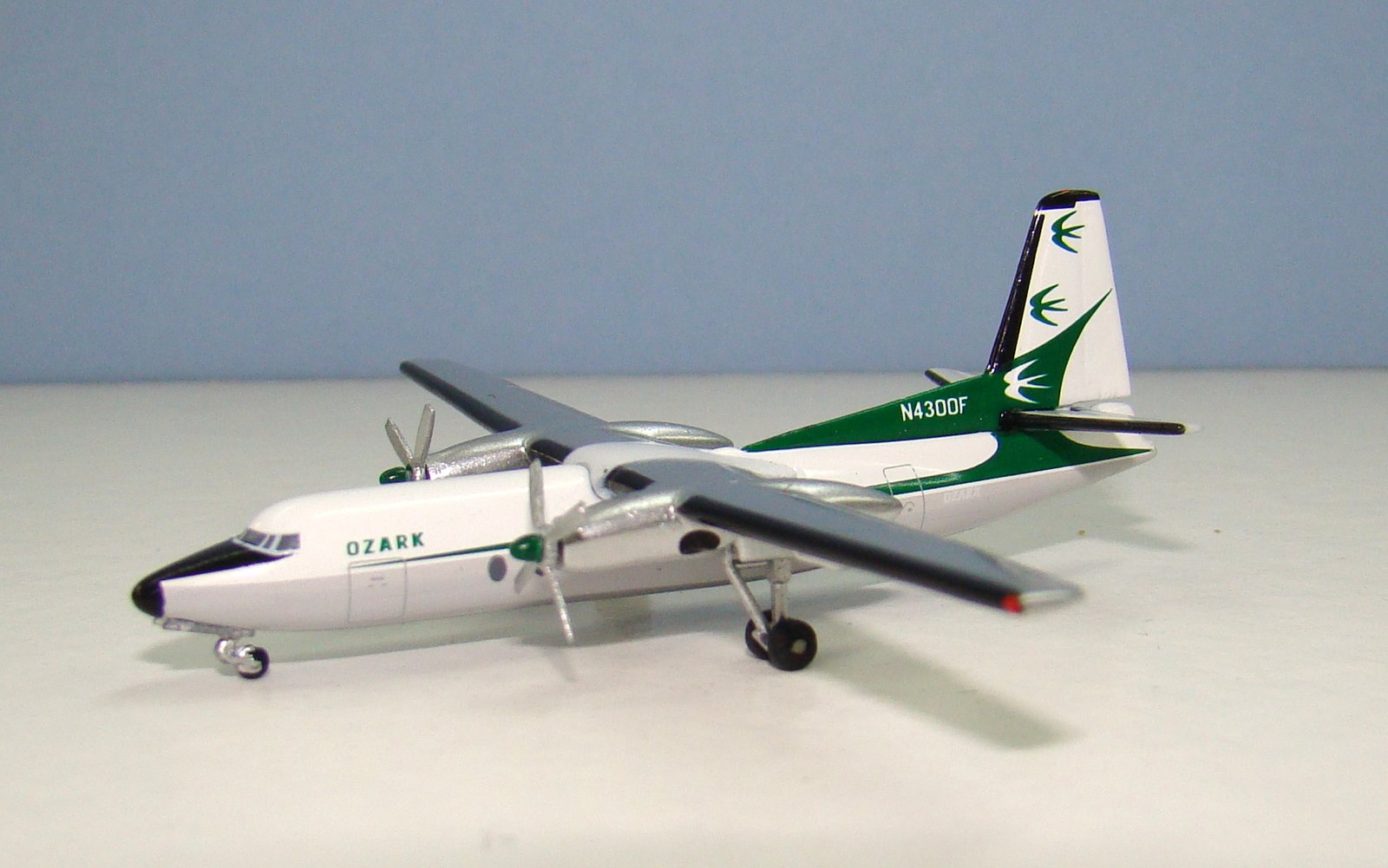
Ozark Air Lines Fairchild F-27 N4300F Aeroclassics 1:400 Scale Model Airliner
Ozark Air Lines Fairchild F-27 N4300F Aeroclassics 1:400 Scale Model Airliner
Ozark Air Lines Fairchild F-27 N4300F Aeroclassics 1:400 Scale Model Airliner
Ozark Air Lines Fairchild F-27 N4300F Aeroclassics 1:400 Scale Model Airliner
Ozark Air Lines Fairchild F-27 N4300F Aeroclassics 1:400 Scale Model Airliner
Ozark Air Lines Fairchild F-27 N4300F Aeroclassics 1:400 Scale Model Airliner
Ozark Air Lines Fairchild F-27 N4300F Aeroclassics 1:400 Scale Model Airliner
Ozark Air Lines Fairchild F-27 N4300F Aeroclassics 1:400 Scale Model Airliner
Ozark Air Lines Fairchild F-27 N4300F Aeroclassics 1:400 Scale Model Airliner
Ozark Air Lines Fairchild F-27 N4300F Aeroclassics 1:400 Scale Model Airliner
Ozark Air Lines Fairchild F-27 N4300F Aeroclassics 1:400 Scale Model Airliner
Ozark Air Lines Fairchild F-27 N4300F Aeroclassics 1:400 Scale Model Airliner
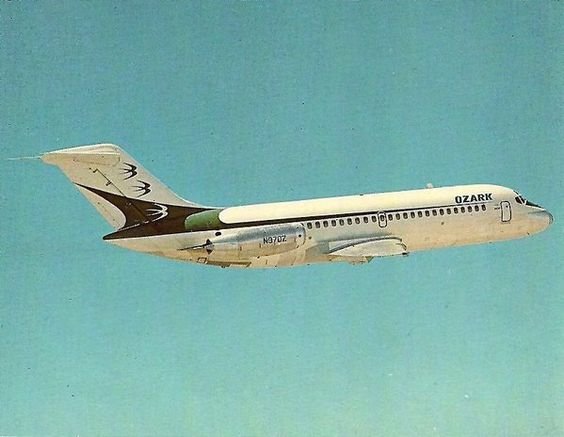
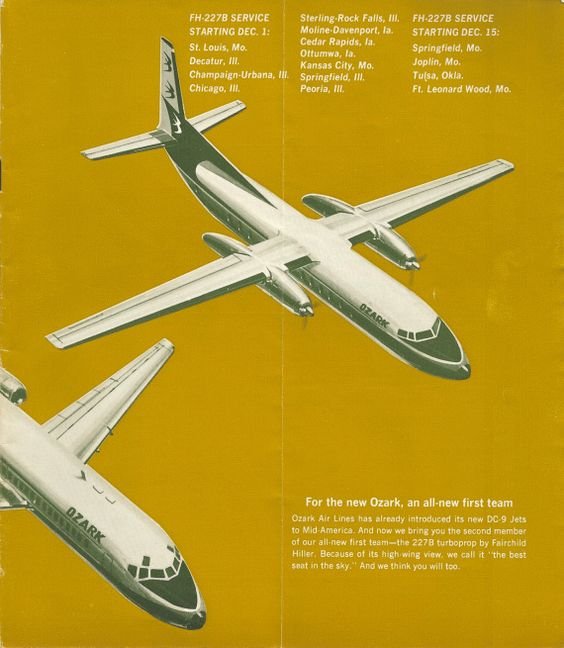
The next year in 1965 Grace ordered aircraft with which he would replace the entire fleet in the shape of 21 FH-227Bs and its first true jets (DC-9-10s). 6 were ordered by July and 3 stretched series 30s in November. By the end of 1965 the airline had carried over 1 million passengers in a year for the first time ever.
N970Z was Ozark's first DC-9-15
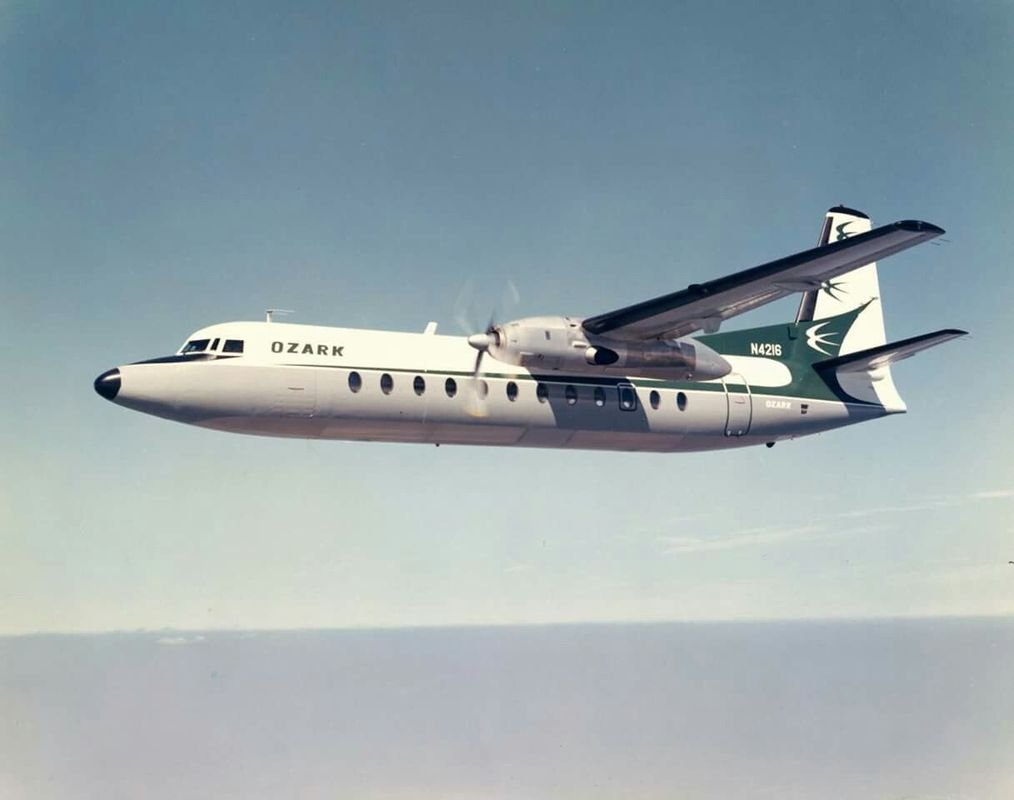
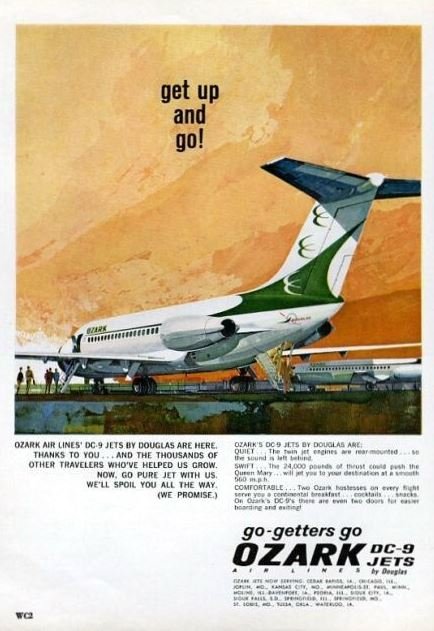
The first DC-9 arrived on May 28th 1966 followed by the first FH-227 in December. By the end of the year nearly 1.5 million passengers had been flown to 58 cities in 11 states. The fleet consisted of 10 DC-3s, 14 Martin 4-0-4s, 6 F-27s, 6 FH-227s and 3 DC-9s. In 1967 the Martins and F-27s left the fleet but 3 DC-3s soldiered on for airports that lacked facilities for jets.
Fairchild FH-227s, like N4216 here, helped replace the F-27s
In that year the airline was running a new campaign with its Go-Getter Bird and ‘Get Up and Go’ buttons.
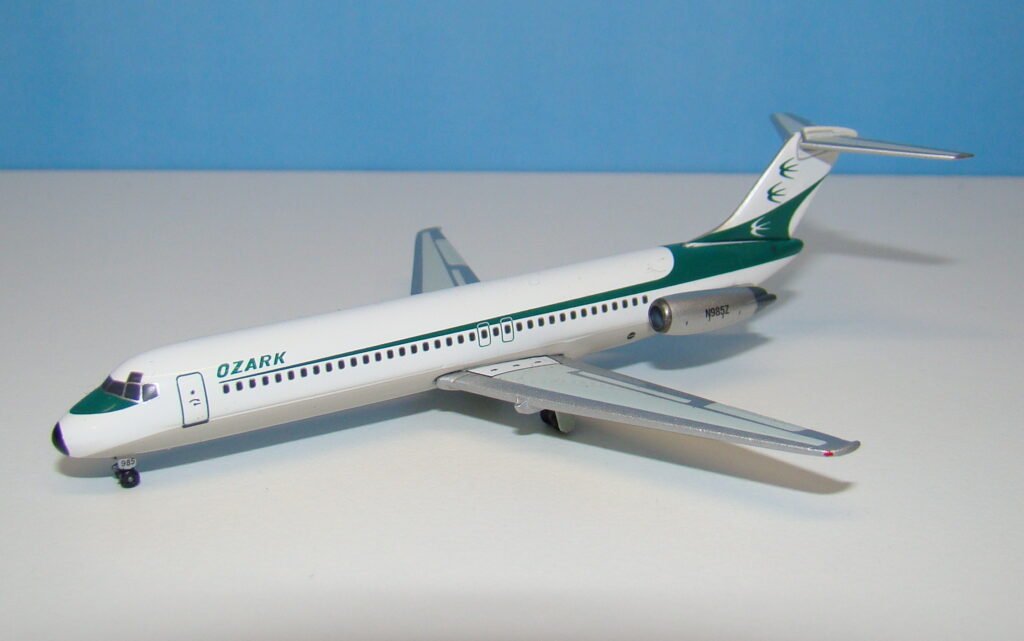
The DC-9 fleet had originally been configured in an all first-class 78 seat configuration but in June 1968 Ozark switched to a two class layout with 14 first class and 60 coach seats. A ‘Weekend Unlimited’ fare was also introduced allowing passengers to fly as much as they wanted on the weekend for just $30.
Ozark Air Lines Douglas DC-9-30 N985Z Phoenix 1:400 Scale Model Airliner
The first stretched DC-9-30s joined the fleet from February 1968 (in two class layout of 14 first class and 85 coach seats). A further three were ordered in September. The FH-227s continued to replace the remaining DC-3/C-47s with a pair used for night-time freight operations replacing the trusty Daks. October 26, 1968 saw the completion of a new regional airport to serve Columbia and Jefferson City. Along with other runway extensions this meant the DC-3s were no longer required and N136D made the last flights of the type in Ozark service. Finally Ozark was an all turbine operation.
The end of the 1960s continued to be kind to Ozark and the airline was able to ad dboth Washington and New York to its schedule allowing it to boast that it was ‘2/3 Transcontinental’. By the end of the decade the airline served 49 stations with a fleet of 16 DC-9s and 21 FH-227s. Annual boardings had surpassed the two million mark and the three swallows were definitely going places.
In part 2 we’ll track Ozark through the 1970s and into the 1980s.