Pacific Southwest Airlines, or PSA for short, was one of the great postwar US airline stories and it is forever associated with the smiles that adorned its aircraft from the late 60s onwards. The grinningbirds, as they were known, made travel throughout California affordable for millions, but prior to the smiles PSA had already shook up the airline scene on the US West Coast.
The immediate postwar era saw a huge surplus of both aircraft and aircrew that led to the formation of a large number of ragtag airlines – broadly termed non-skeds at the time since their operation was severely regulated by the Civil Aeronautics Board (CAB) that did its best to control the often unruly airlines and stop them competing against the licensed scheduled carriers.
Although the CAB was ruthless and aggressive it had no jurisdiction regulating air traffic inside US states, only between them. At the time there were few intra-state markets that could support much traffic, but California was an exception although the appearance of PSA was more out of desperation than optimism.
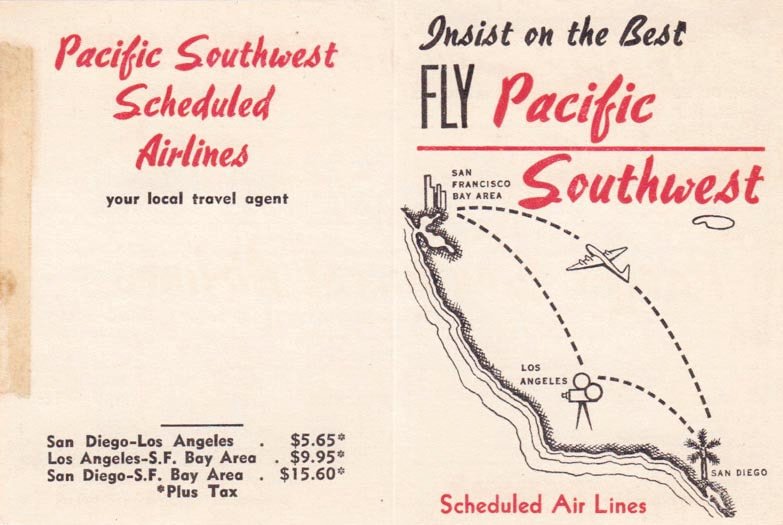
From the collection of Bjorn Larsson and timetableimages.com
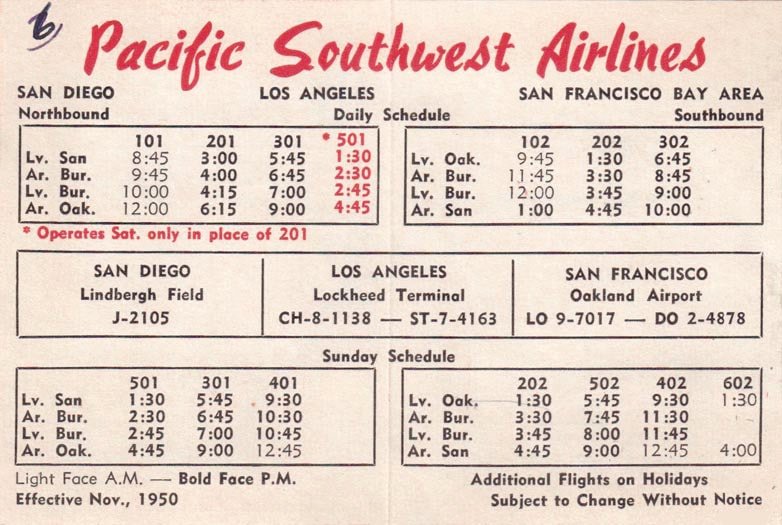
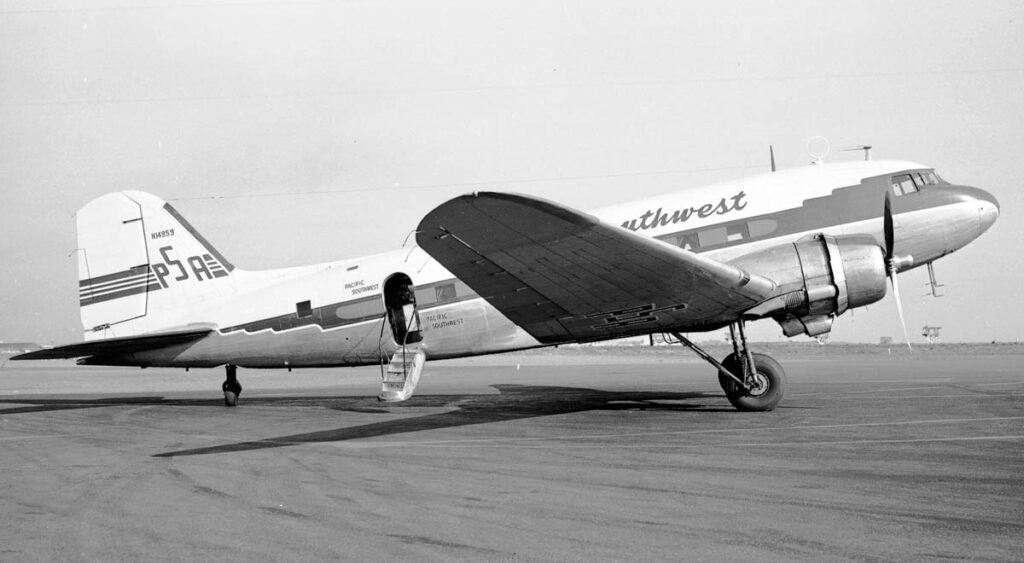
From the start PSA had an air of self-promotion. The name itself seems to have been an amalgamation of two existing airlines (Pacific Air Lines and Southwest Airlines (later West Coast) – both later part of Air West) in an attempt to confuse patrons to fly with this small outfit. The DC-3s were labelled ‘Luxurious Skyliners’ and PSA called itself ‘San Diego’s largest home-based airline’. It was San Diego’s only home-based airline!
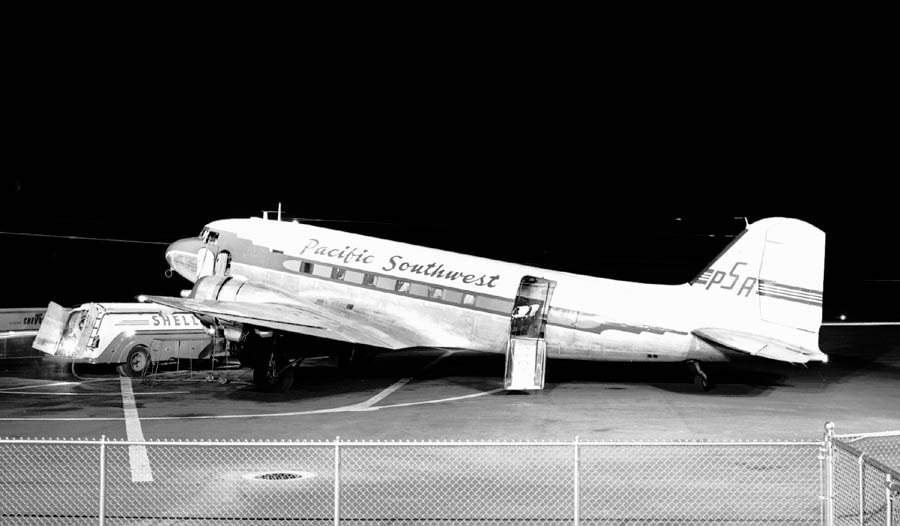
Surprisingly PSA quickly found a profitable niche. By the end of 1949 15,000 passengers had been carried, two DC-3s were in service and there were four flights a day. Friedkin focused his airline on cheap fares far cheaper than the competition. He charged $9.95 when the regular fare was $24. He could do this because although generally fares were highly regulated by the CAB, once again the CAB had no jurisdiction on flights that began and ended within California alone.
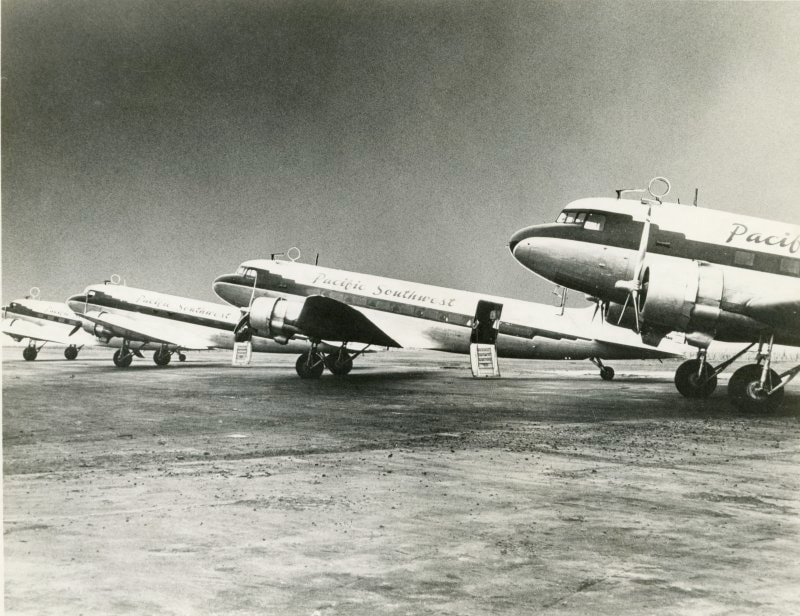
PSA’s growth and success continued in the 1950s. In July 1951 service to the new San Francisco Airport was added and in 1953 Long beach service began. The fleet grew to four DC-3s and the airline gained a reputation for reliability and good natured service. It flew so many navy personnel between the bases at San Diego and Oakland that PSA became an acronym for ‘Poor Sailor’s Airline’.
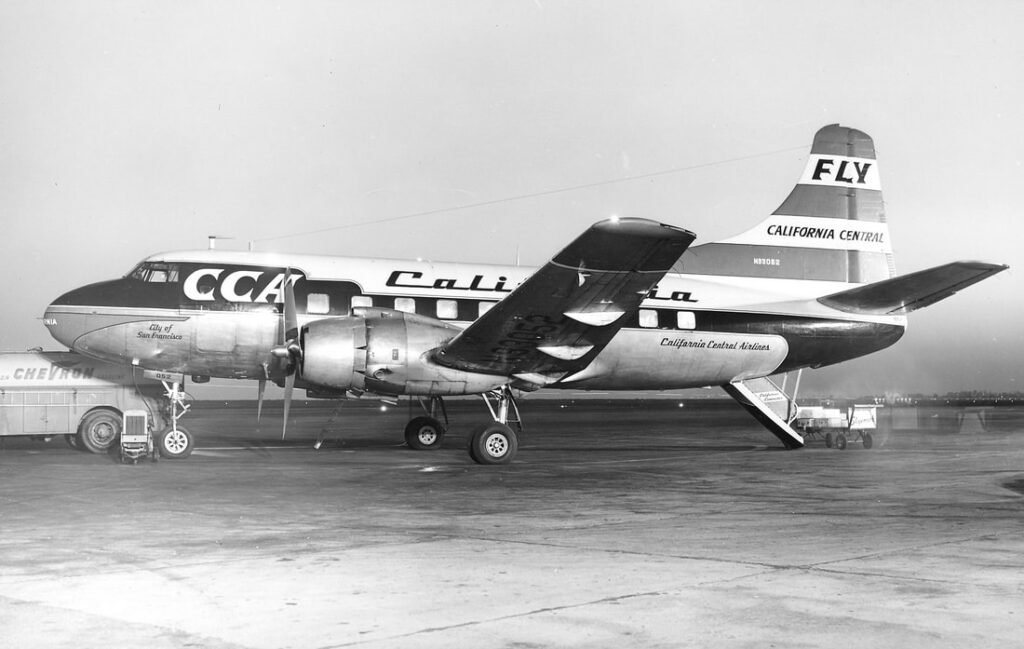
Competition inside California was heavy. PSA was up against the two big West coast Trunk airlines Western and United, but also faced intra-state competition from another upstart called California Central Airlines. In fact the latter was even more successul than PSA, but when it swapped its DC-3s and DC-4s for ex-Northwest Martin 2-0-2s it got itself in financial trouble and went out of business in February 1954.
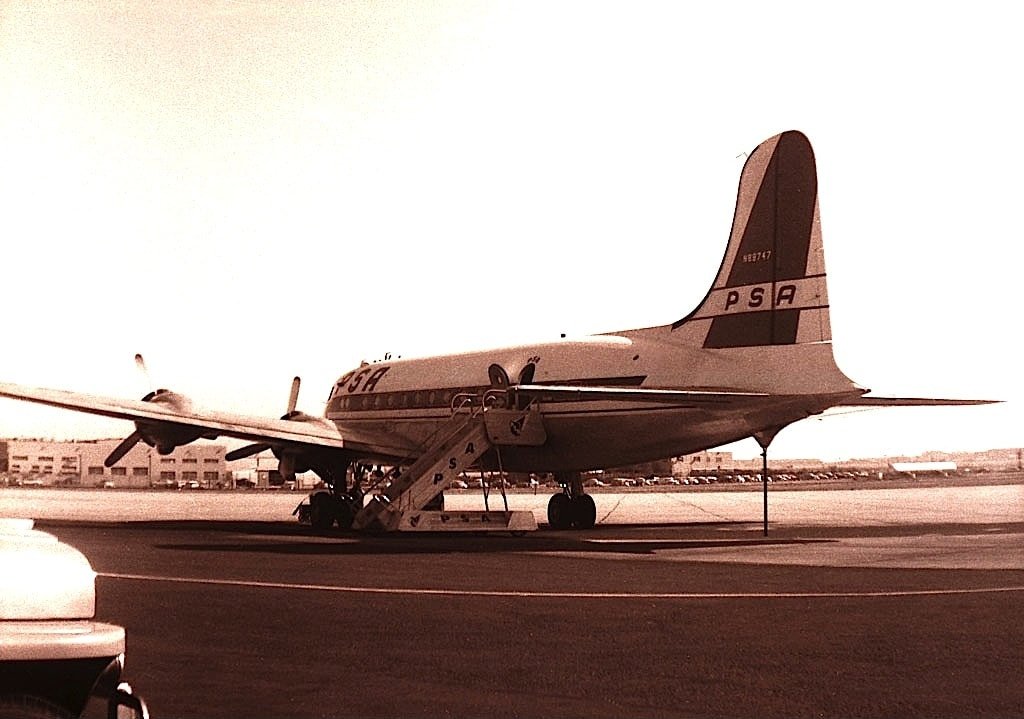
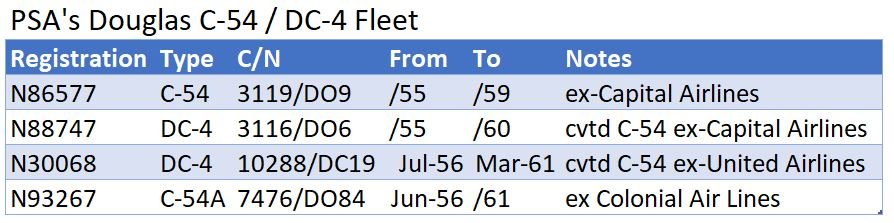
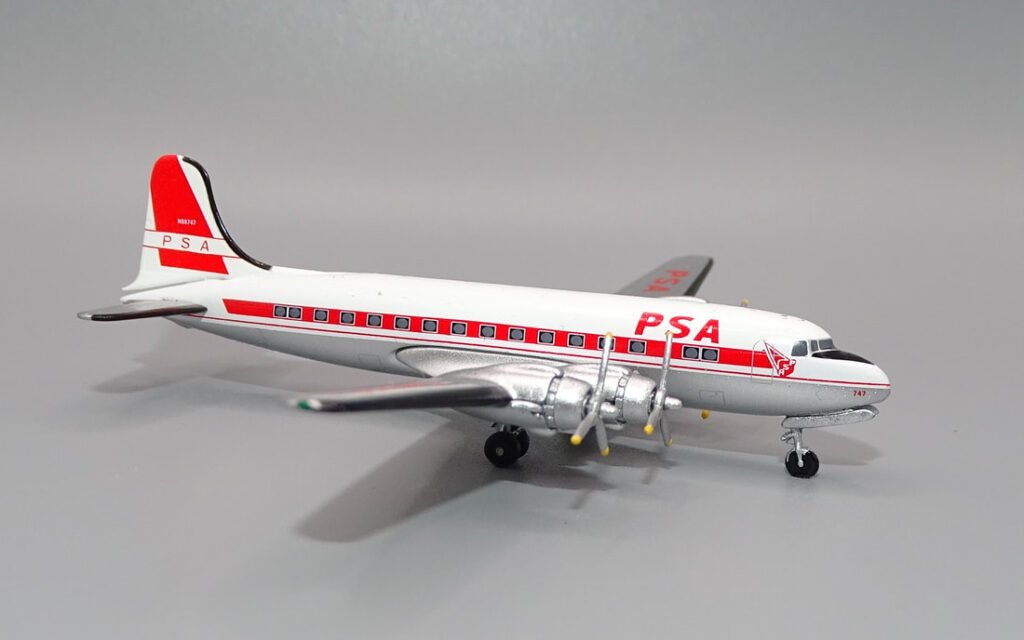
With PSA as the only remaining intra-state Californian operator it’s future looked a lot more secure. It redesigned its route network, dropping Oakland and Long-Beach and instead concentrated on flying the San Diego-Burbank-San Francisco triangle. In 1954, the last year of DC-3 only ops, just over 102,000 passengers were carried. In 1955 the DC-3s were replaced by a pair of 70 seater Douglas DC-4s acquired from Capital Airlines.
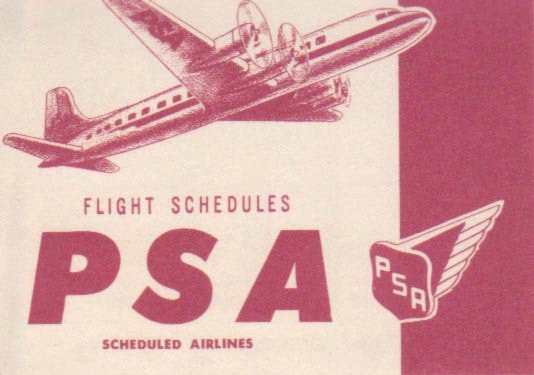
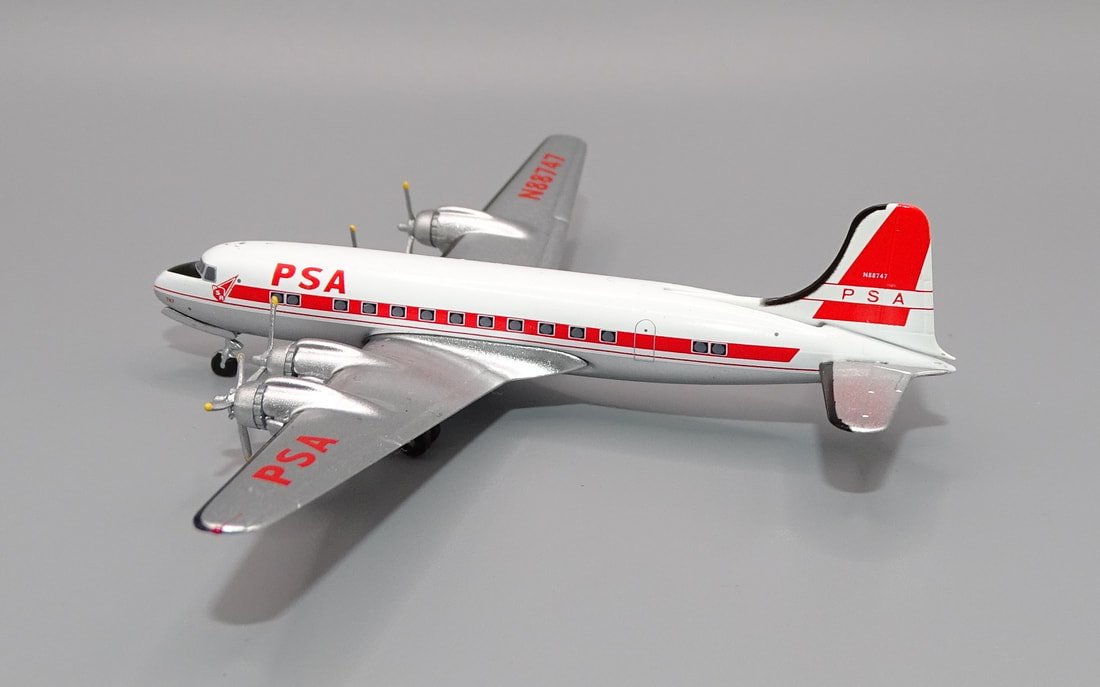
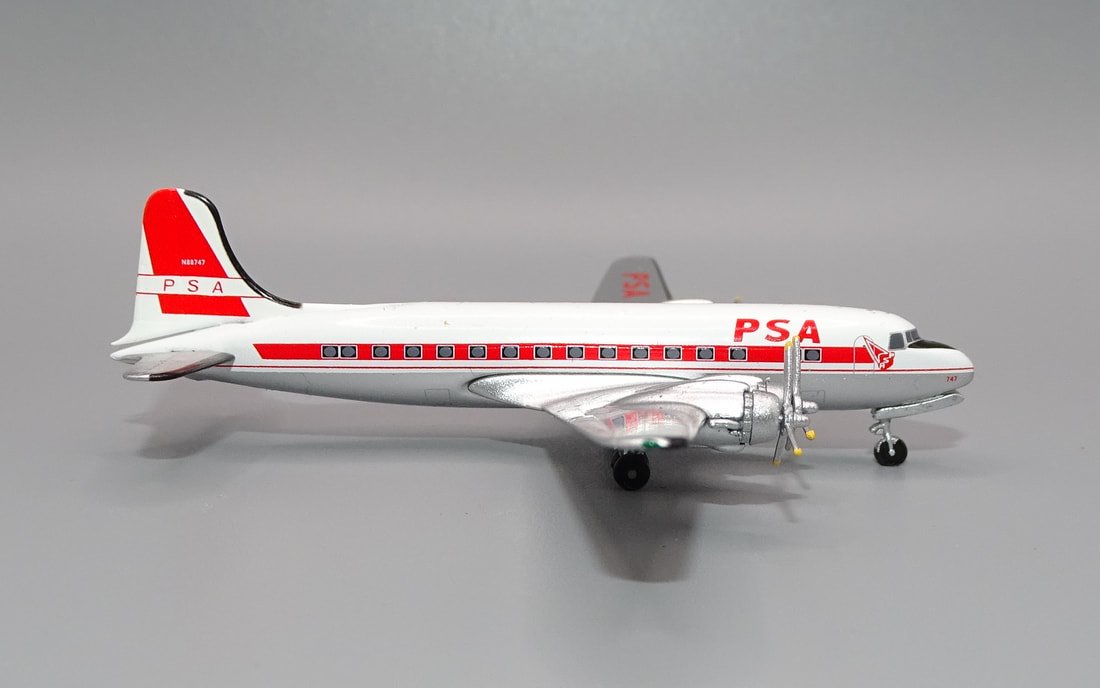
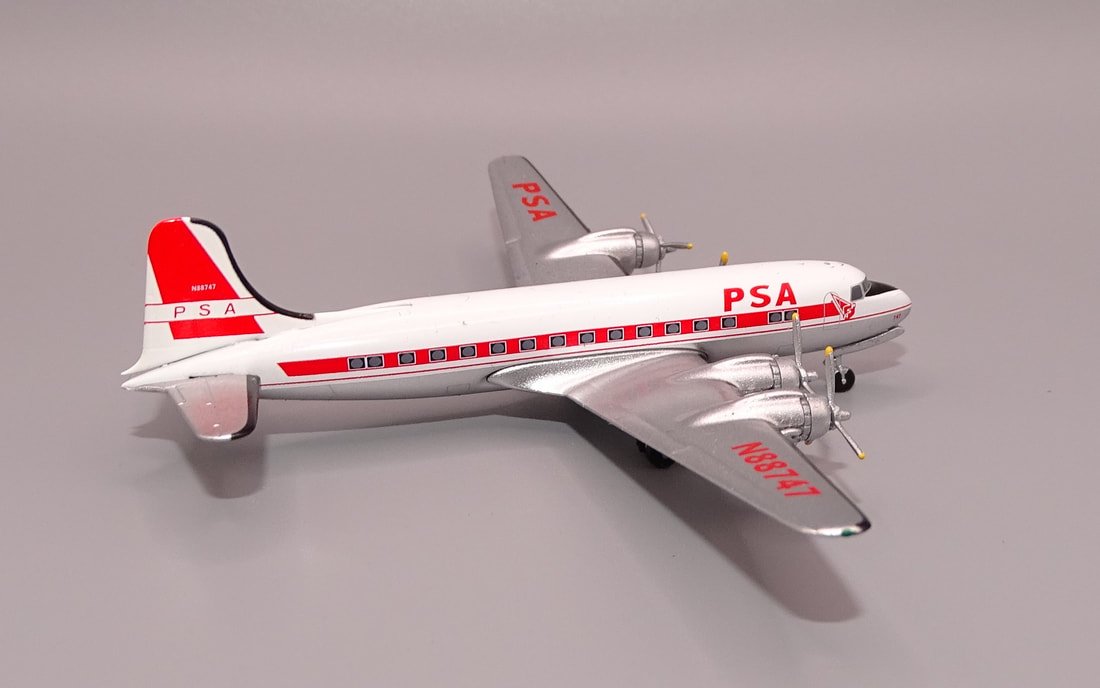
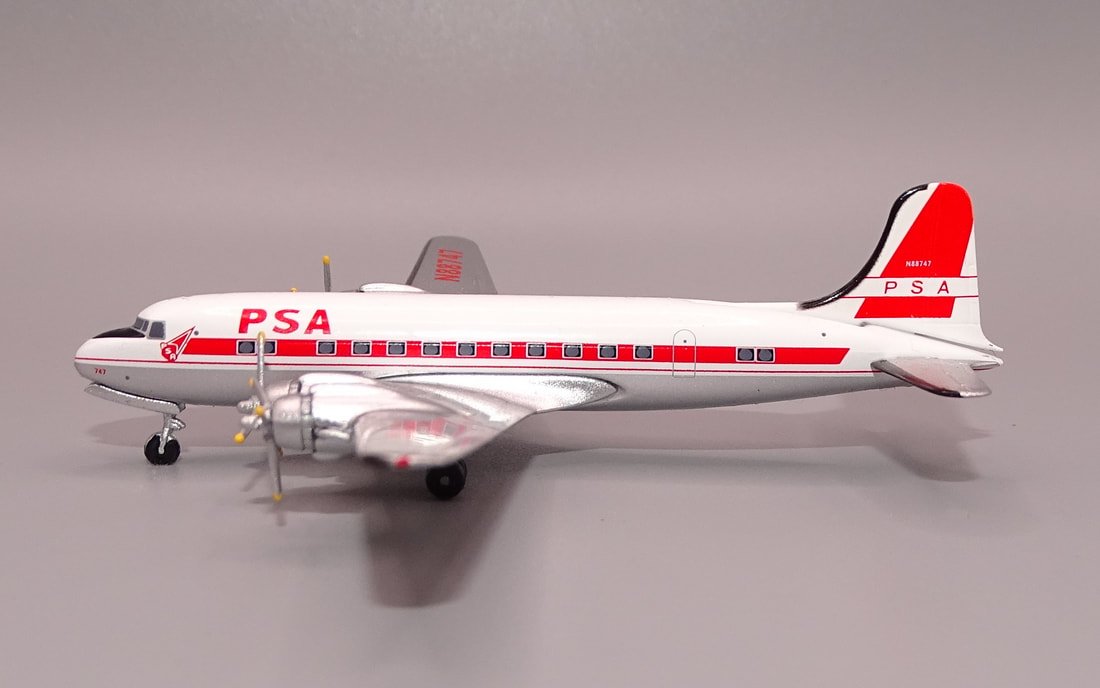
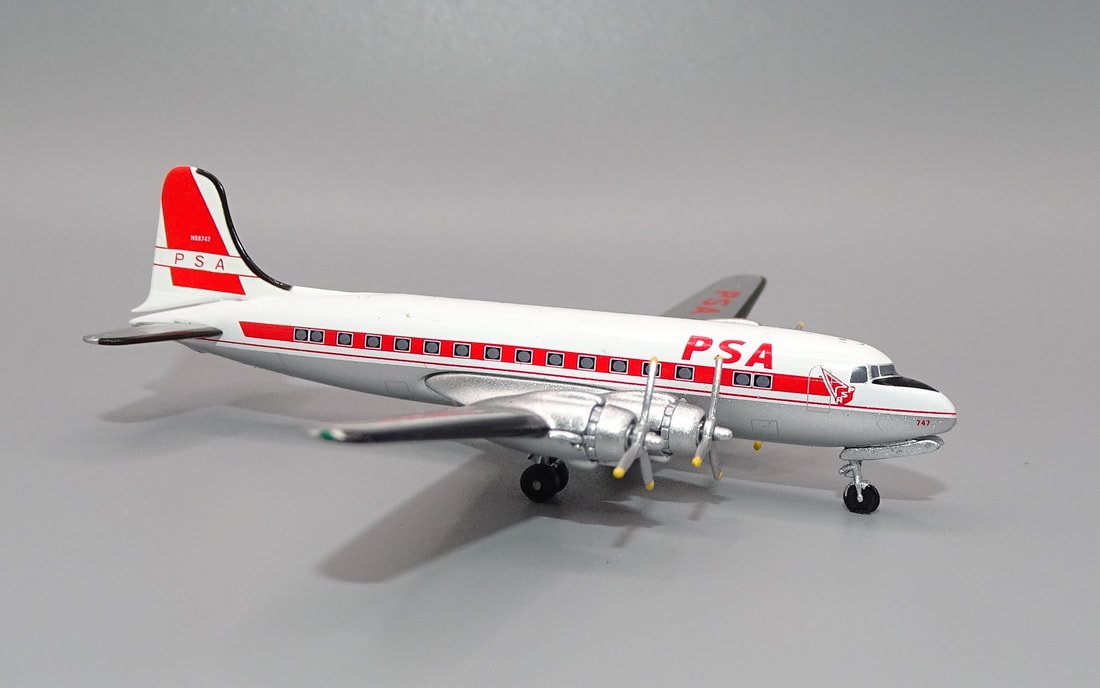
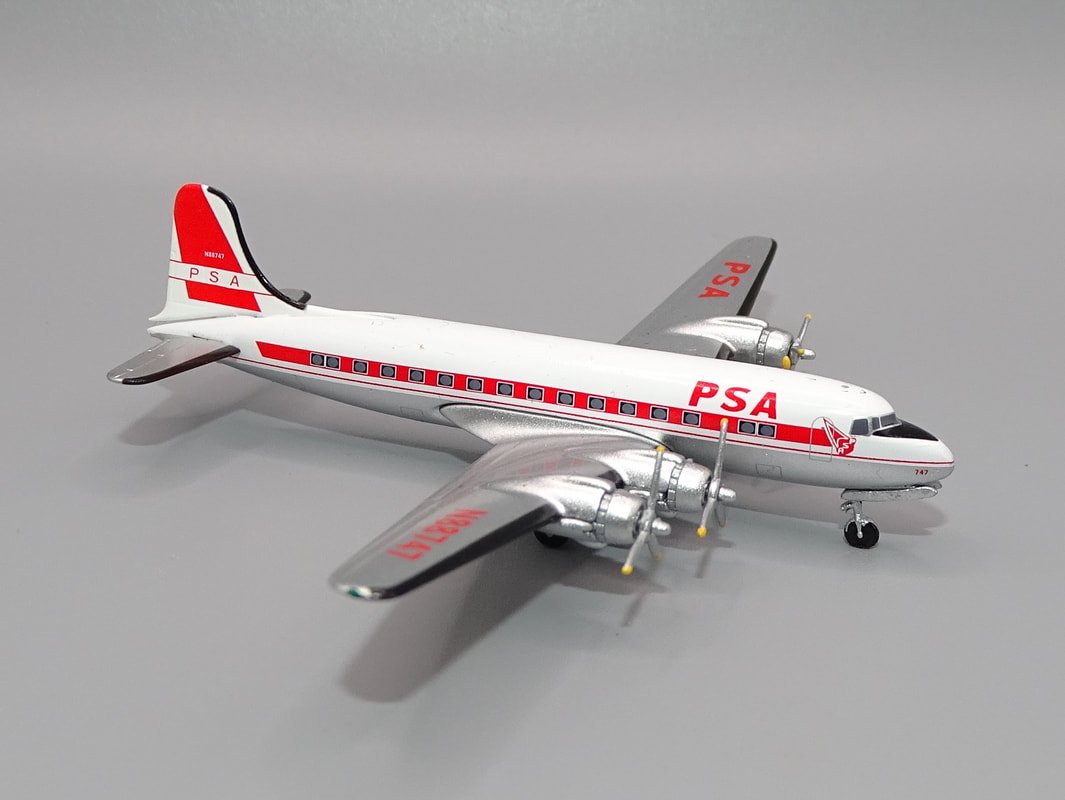
The DC-4s allowed fares to drop even further and by 1957 traffic had doubled. So had the fleet with 4 DC-4s flying with the airline in 1958 and Los Angeles being added that year too. Although Western and United were competing against PSA with faster DC-6Bs equipped in a coach class layout PSA’s DC-4s were only slightly slower and featured continental breakfast service, plus the same frequency levels as the trunks. In addition PSA painted squares around the windows of the DC-4s to fool people into thinking they were flying a DC-6!
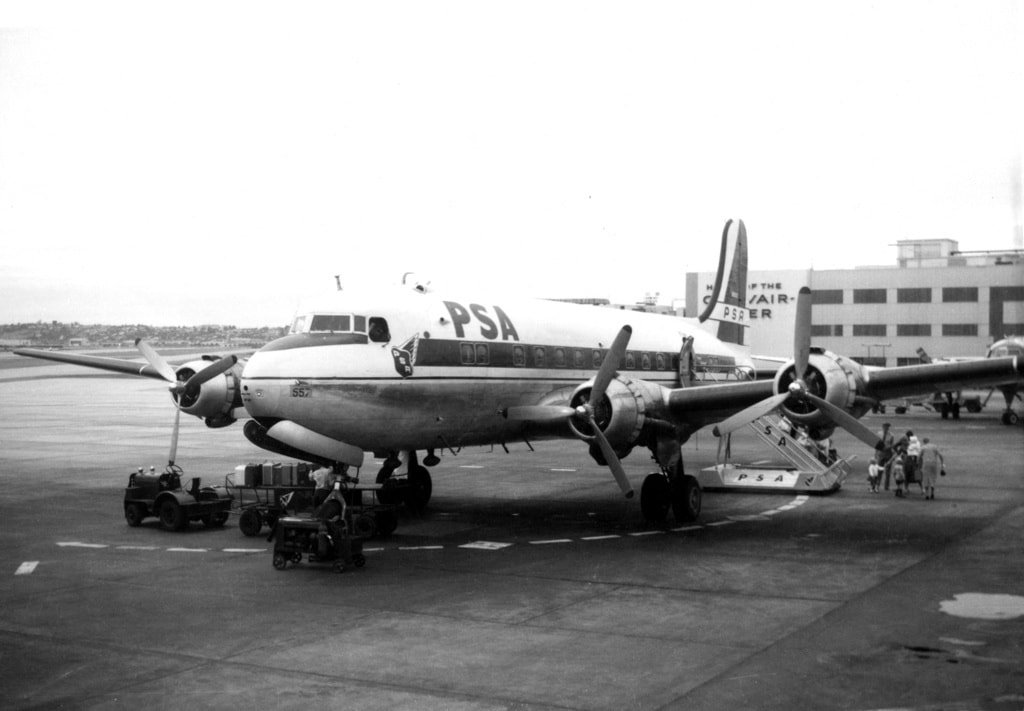
By 1957 PSA was a major force in the lucrative Californian market. It’s cheeky marketing, reliable friendly service and low fares had proven a successful combination and it was now time to look towards the jet-age, which will be covered in part 2.