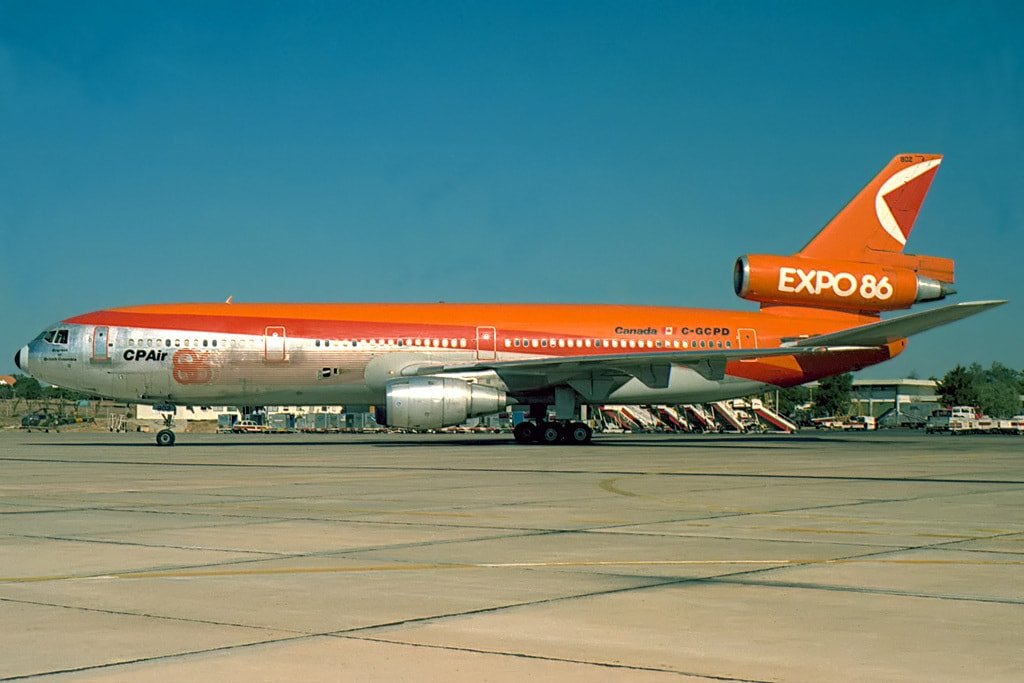
CP Air had been solidly profitable throughout the 1960s and first half of the 1970s, but in 1975 it recorded its first annual loss in 13 years. The carrier cut costs and focused on efficiencies, which included a fleet overhaul and rationalisation. In the long-haul department that would mean the McDonnell Douglas DC-10 would eventually become the only type in service. The big trijet would briefly take CP Air back into the Canadian Pacific era and then through to Canadian Airlines International.
CP Air had expanded its route network in the 1970s and added a quartet of Boeing 747-217Bs between November 1973 and the end of 1974. They operated alongside 5 Douglas DC-8-43s, 2 DC-8-50s and 5 DC-8-63s. As part of the fleet rationalisation that saw the departure of the Boeing 727s (see Chester & the Multi-Mark: Alaska’s Orange 727) and cancellation of its 767-200 order, CP Air also decided to retire the short DC-8s and replace them with new DC-10-30s.
Peter Bakema (GFDL 1.2 or GFDL 1.2 ), via Wikimedia Commons
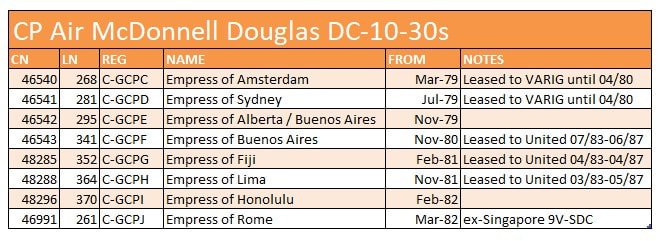
Three aircraft were ordered in 1977 for 1979 delivery, however the first pair were leased to VARIG until 1980 so it was the third aircraft, C-GCPE, that would be the first to enter service with CP Air – on November 17, 1979. The DC-10s saw service on European routes, such as Toronto-Milan, but also on services to Australia.
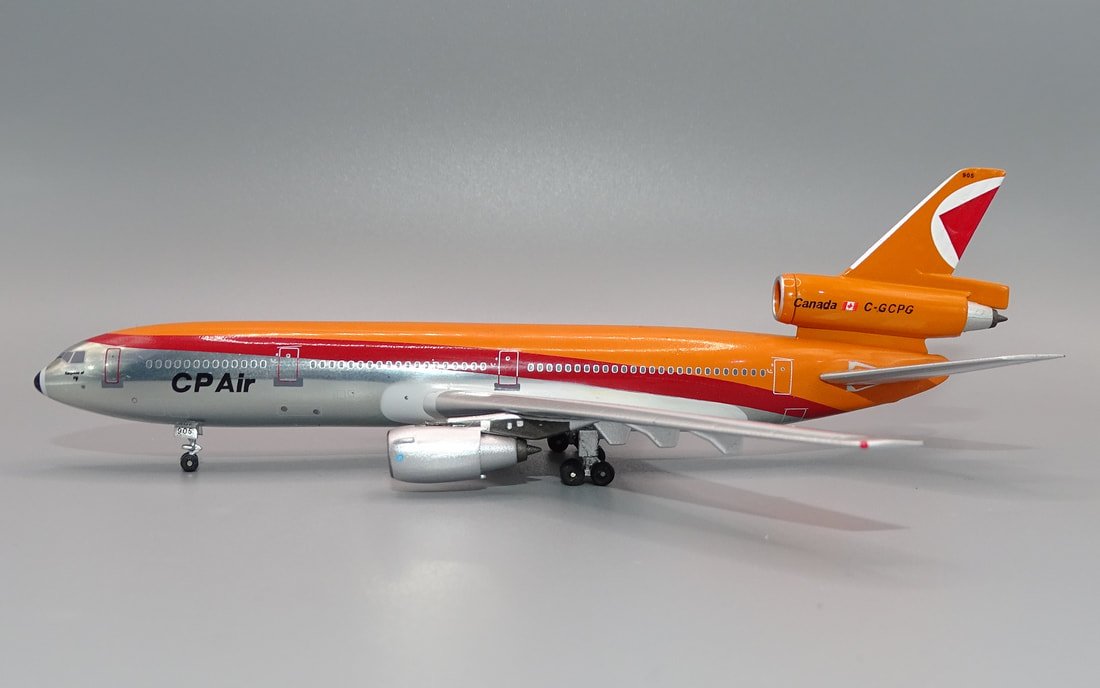
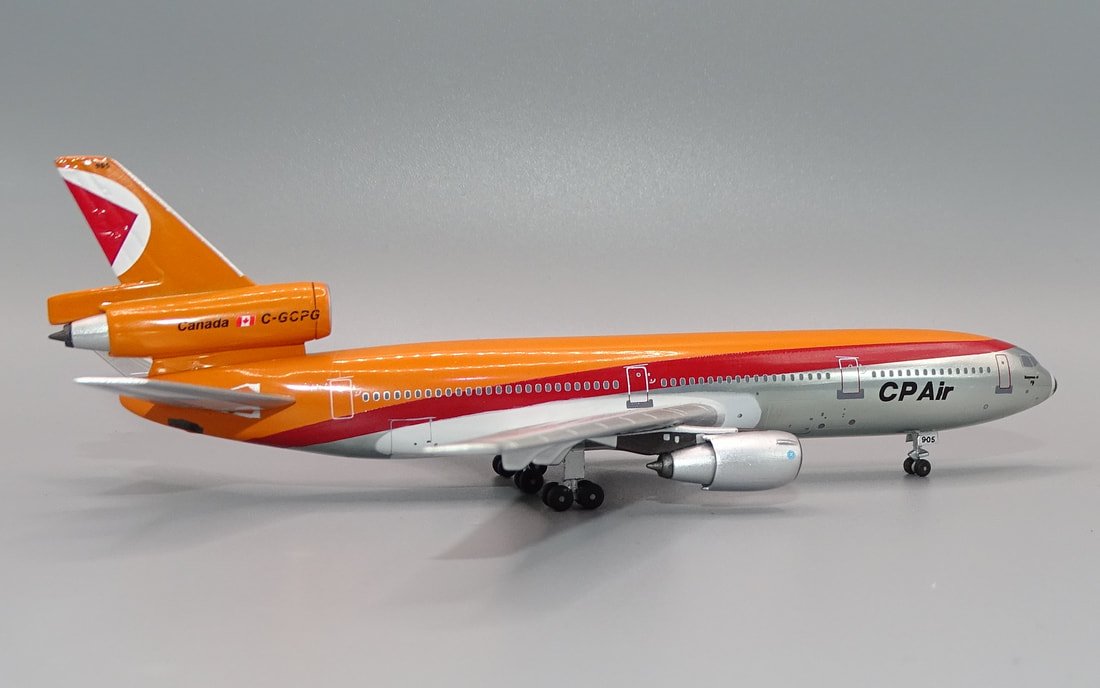
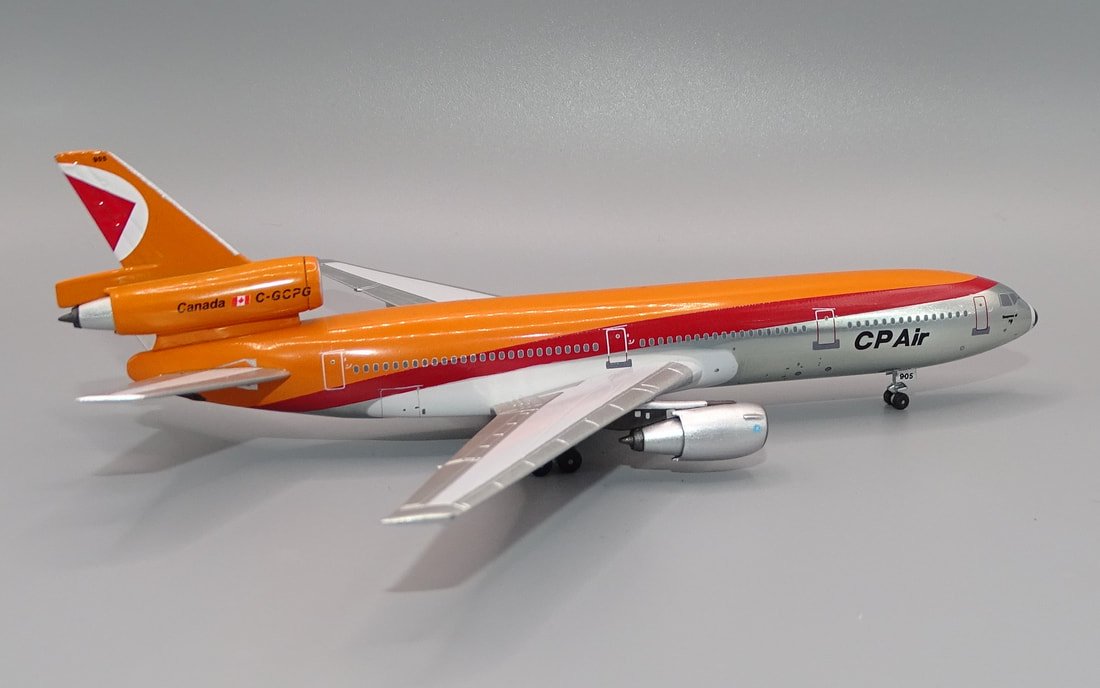
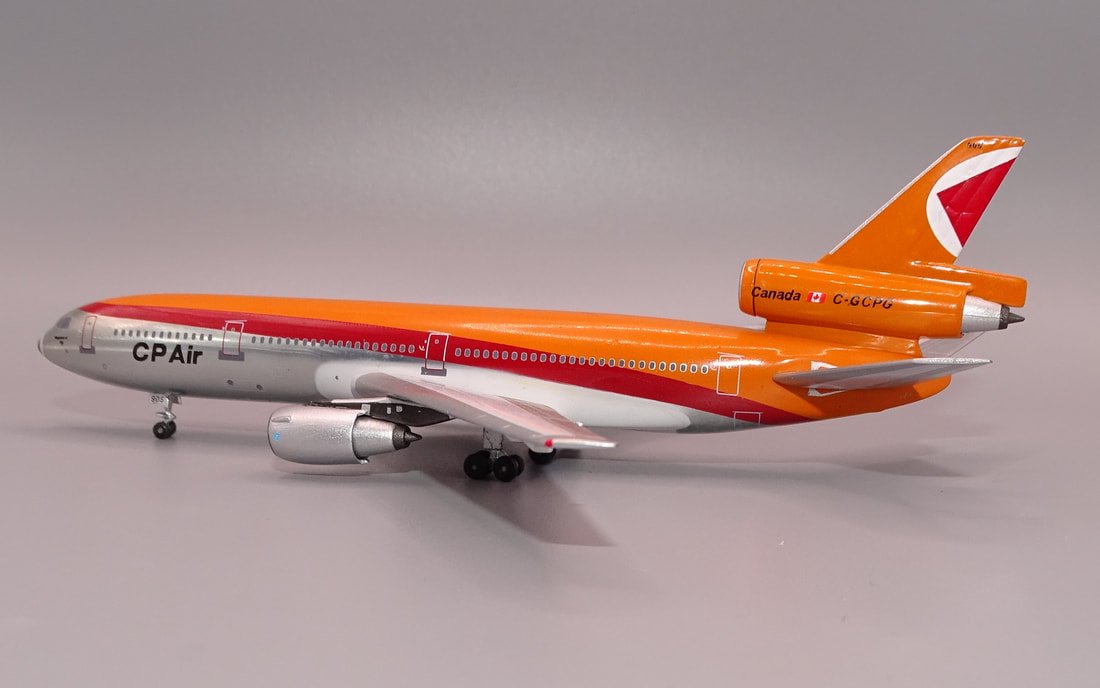
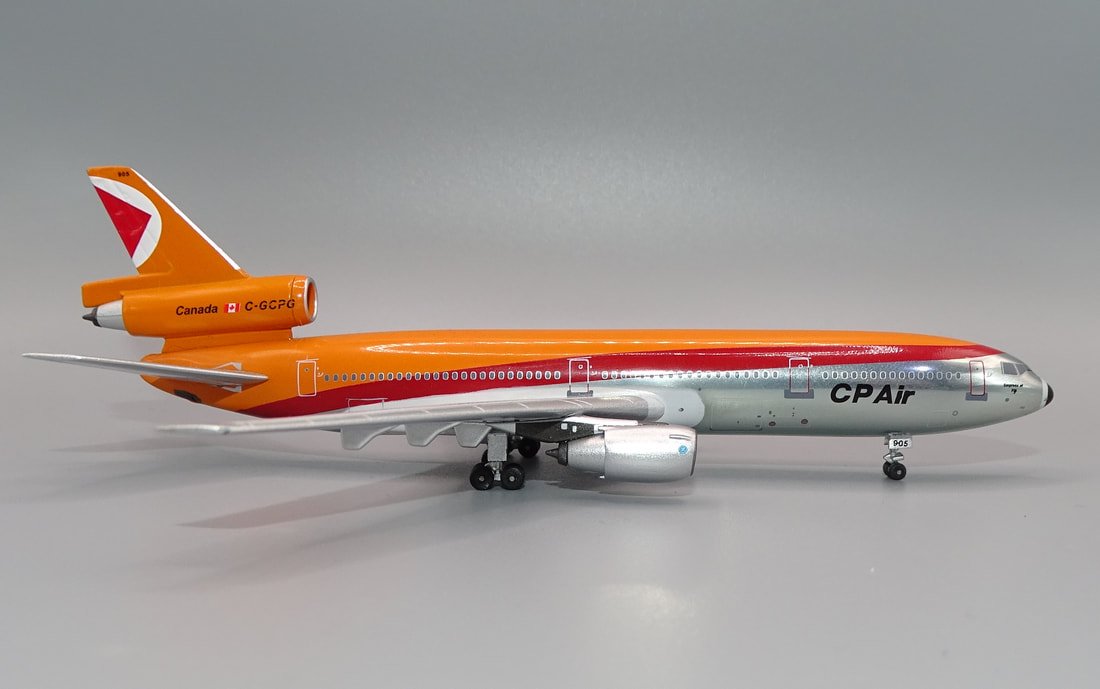
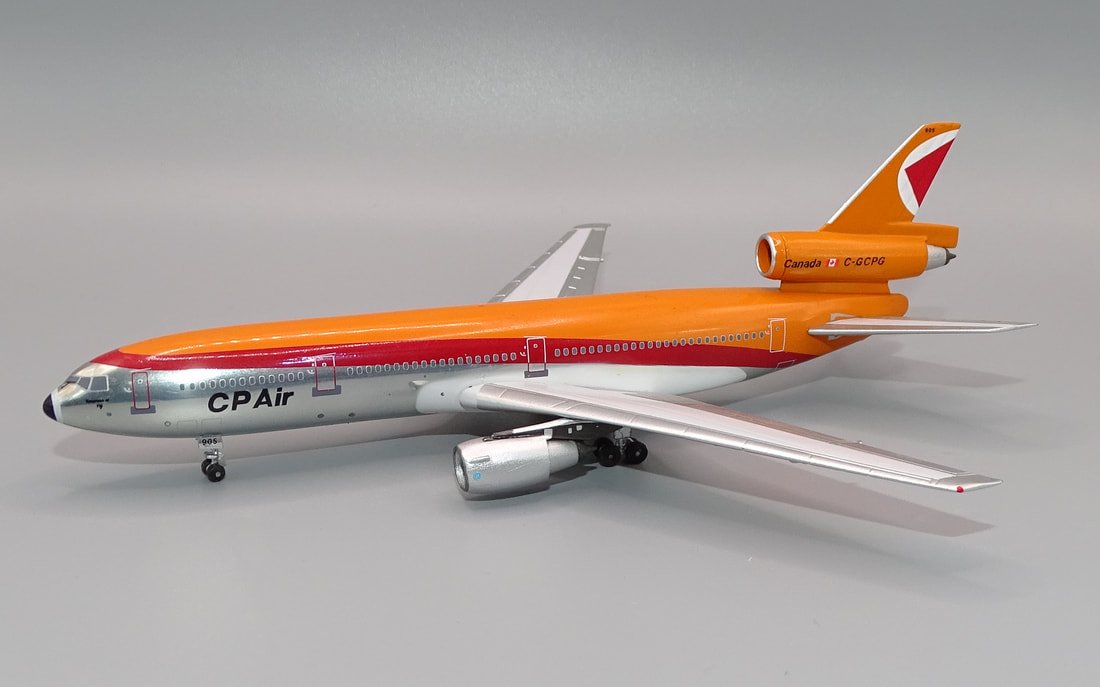
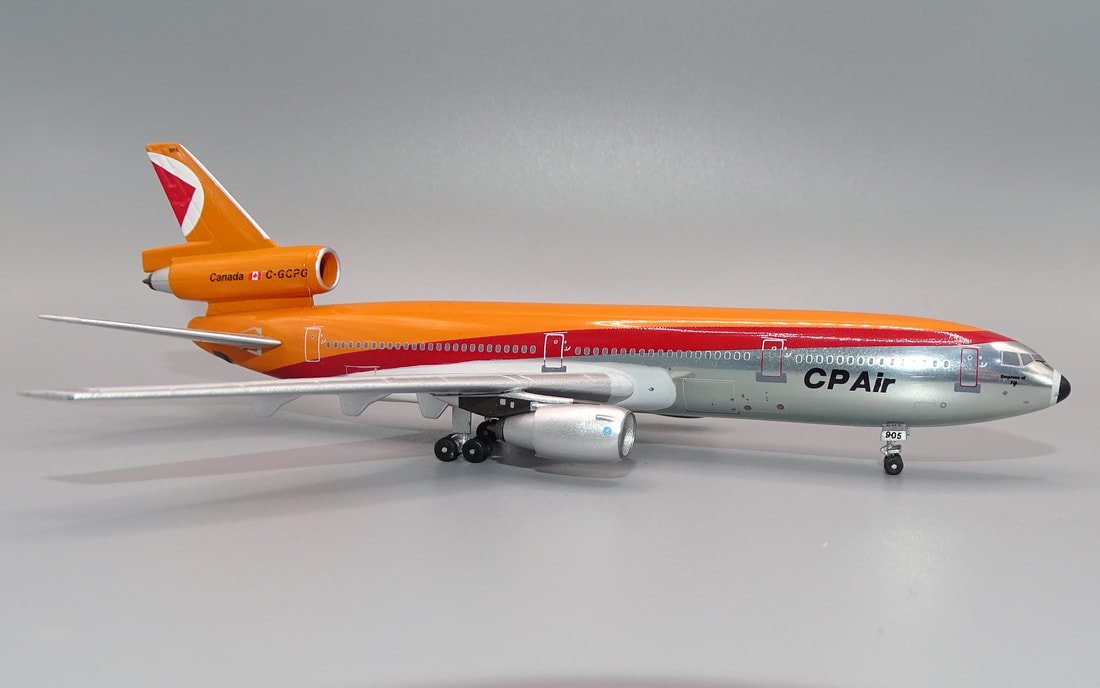
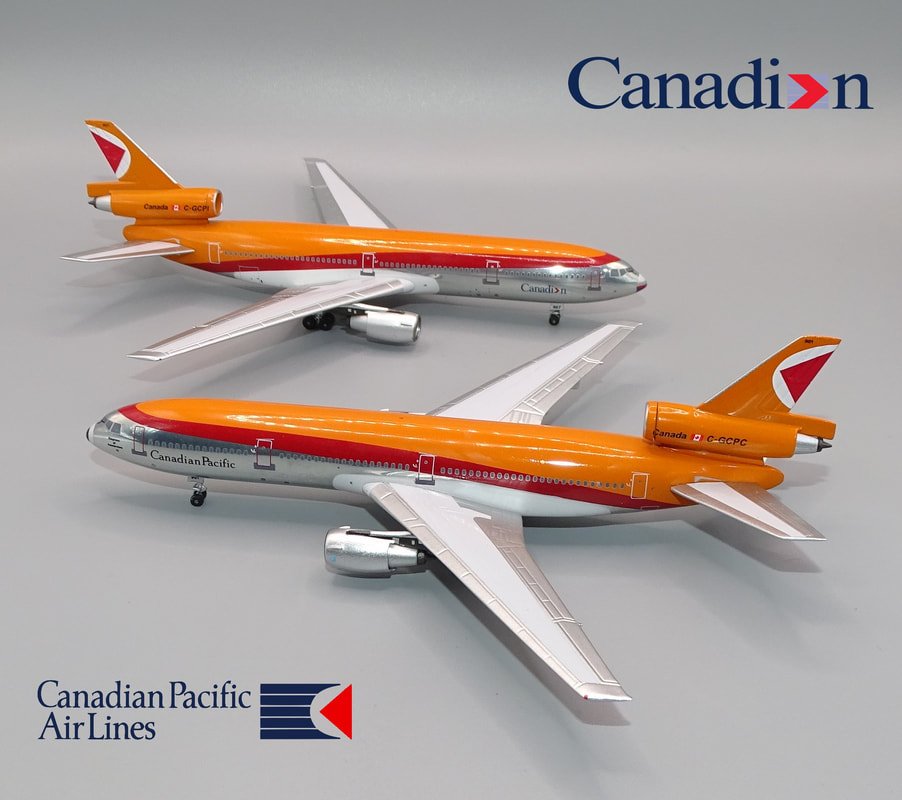
CP Air DC-10-30 C-GCPG Aeroclassics 1:400 Scale
CP Air DC-10-30 C-GCPG Aeroclassics 1:400 Scale
CP Air DC-10-30 C-GCPG Aeroclassics 1:400 Scale
CP Air DC-10-30 C-GCPG Aeroclassics 1:400 Scale
CP Air DC-10-30 C-GCPG Aeroclassics 1:400 Scale
CP Air DC-10-30 C-GCPG Aeroclassics 1:400 Scale
CP Air DC-10-30 C-GCPG Aeroclassics 1:400 Scale
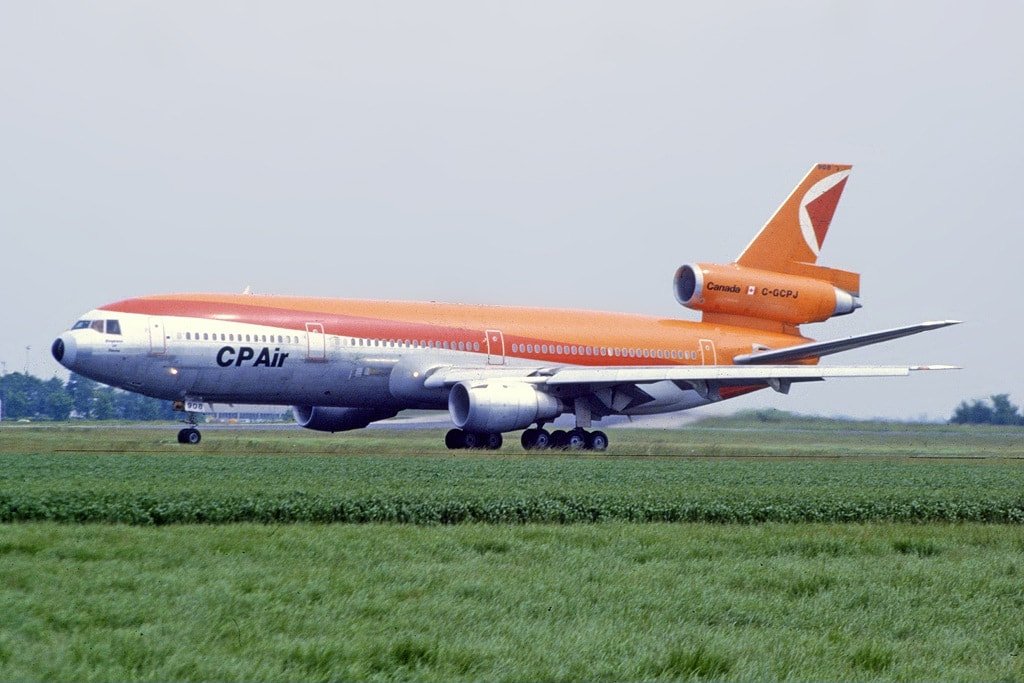
CP Air continued to expand it’s DC-10 fleet with the addition of C-GCPF-I between late November 1980 and the end of 1981. A ninth airframe was added from the secondhand market in March 1982. C-GCPJ was a naerly new ex-Singapore Airlines aircraft that had only been delivered originally in 1979.
Liberalisation of the air traffic market in 1979 and the early 1980s allowed CP Air to expand into new Asian markets and compete domestically with Air Canada for the first time, but that also meant strong competition from the flag carrier in return at the same time that Canada experienced its worst recession since the Great Depression of the 1930s.
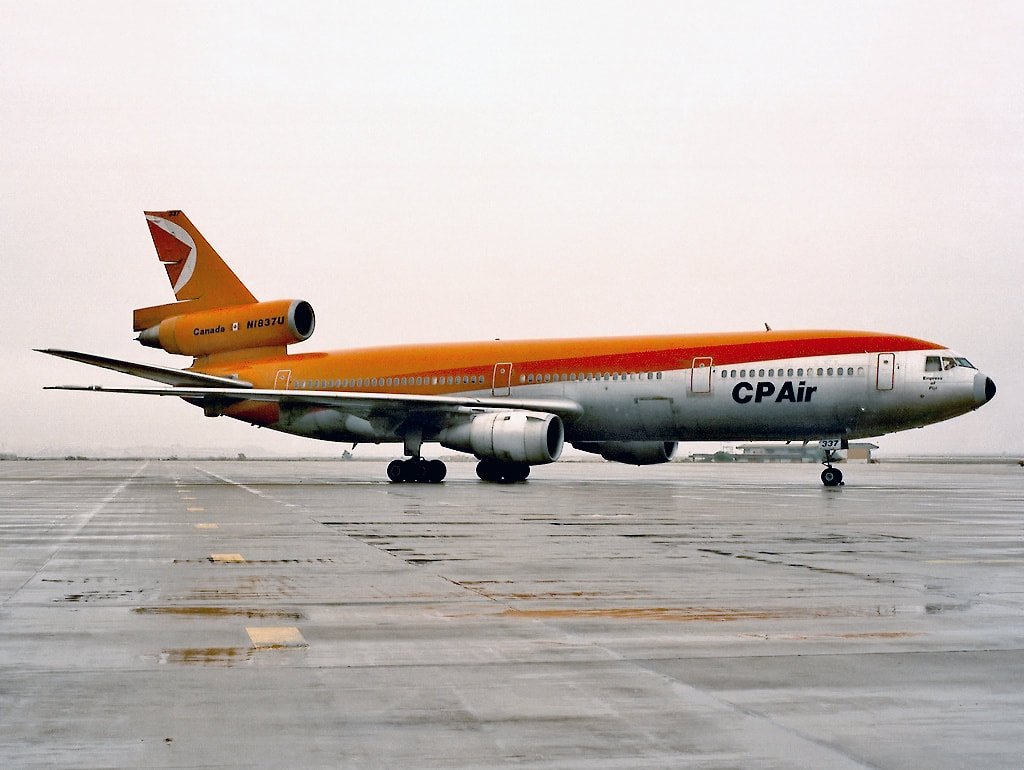
Below: N1837U – one of four United DC-10-10s that would see service with CP Air
Pedro Aragão, CC BY-SA 3.0 GFDL, via Wikimedia Commons
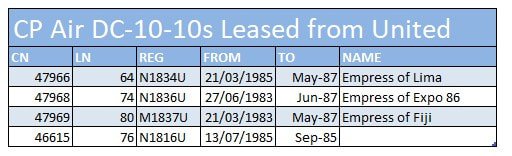
CP Air was hit hard and recorded huge losses in 1981 (C$22,781,000) and 1982 (C$39,214,000). CP Air’s recently recruited President Daniel A. Colussy radically changed CP’s business model, which also impacted the DC-10s. He orchestrated a lease-swap deal with United Airlines that saw 3 of CP’s DC-10-30s (C-GCPF, PG and PH) go to United in return for 3 shorter range DC-10-10s. The first of the United frames joined in June 1983 and stayed until mid-1987.
By 1985 Colussy had turned CP Air around and the carrier saw a profit of C$13,800,000, however he departed at the end of 1984 to be replaced by Donald J. Carty. The volatile Canadian market, plus acquisition of Eastern Provincial and Nordair, as well as several other failed ideas meant that the profit was short-lived. By 1986 the carrier was back in the red and facing renewed competition from airlines like Wardair.
Pedro Aragão, CC BY-SA 3.0 GFDL, via Wikimedia Commons
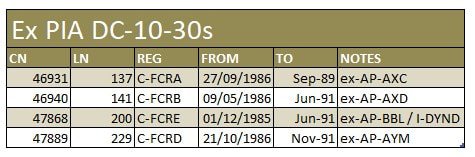
CP Air had retired its DC-8-63s in 1983 as the DC-10s took up the slack, but it still operated the 4 747s. Once again fleet rationalisation was on the cards and in 1985 a unique deal was agreed with Pakistan International whereby CP Air would swap its 747s for PIA’s four DC-10-30s. Three of these had been delivered new to PIA, in 1973, 1974 and 1976, while the other was a 1975 build ex-Alitalia frame PIA had acquired only in 1983. The deal made sense and allowed CP Air to standardise its long-haul fleet entirely on the DC-10s.
clipperarctic, CC BY-SA 2.0 , via Wikimedia Commons
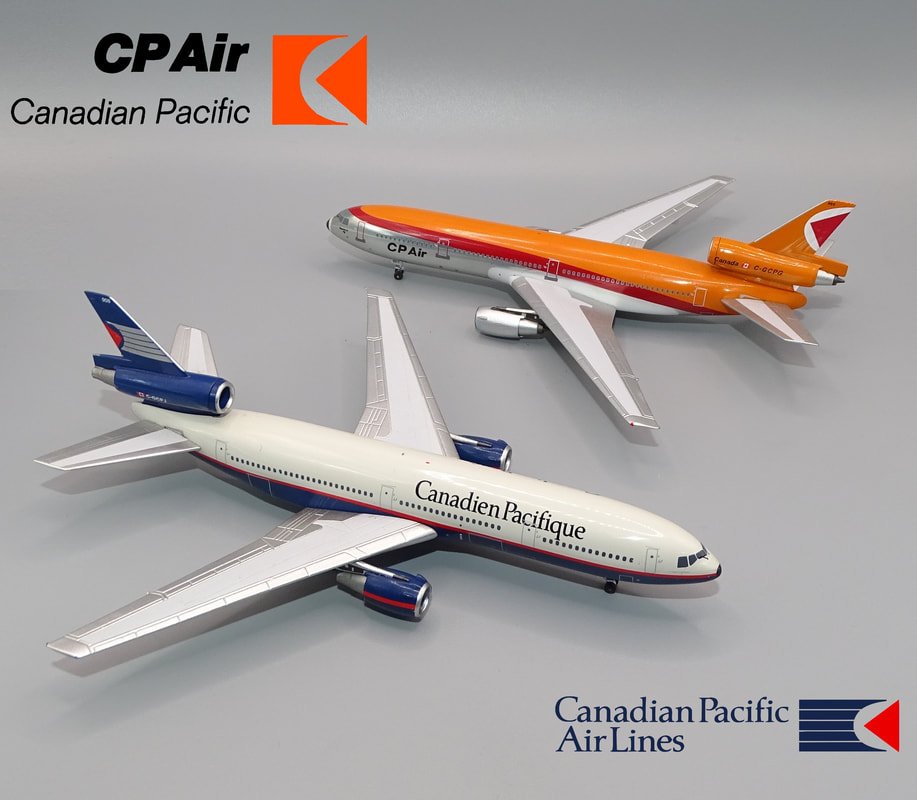
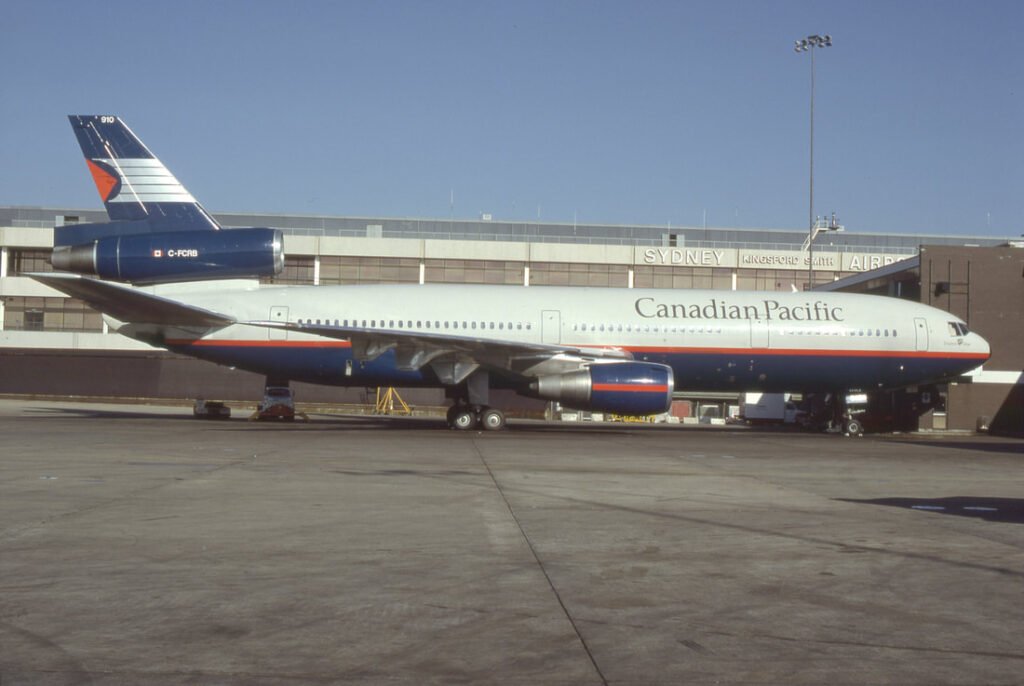
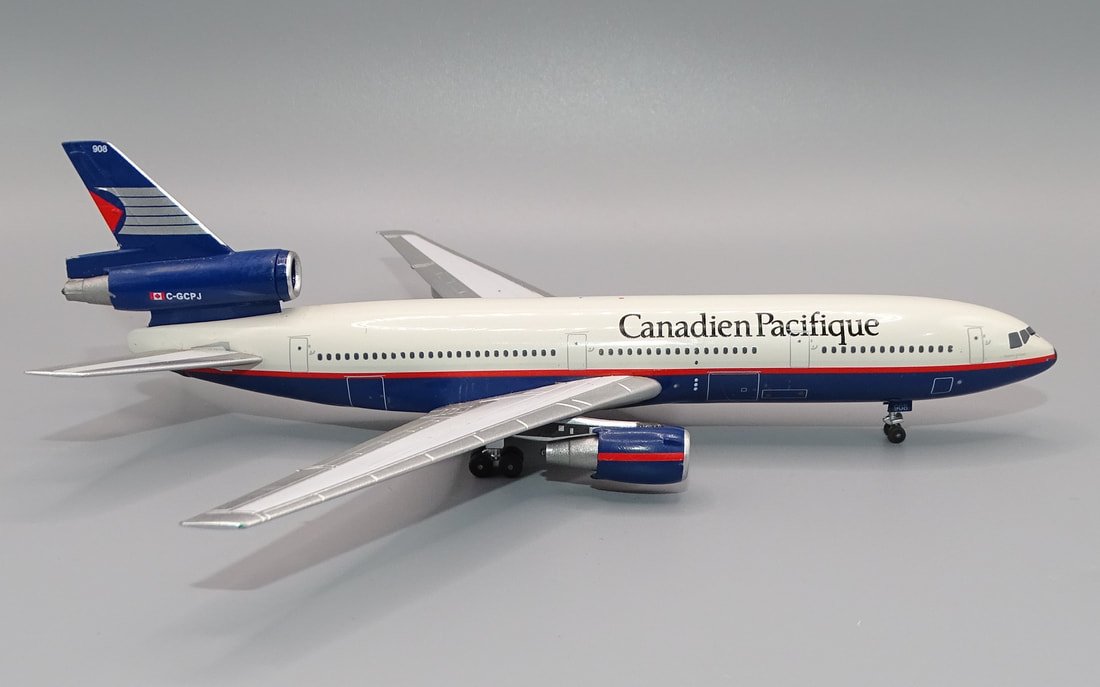
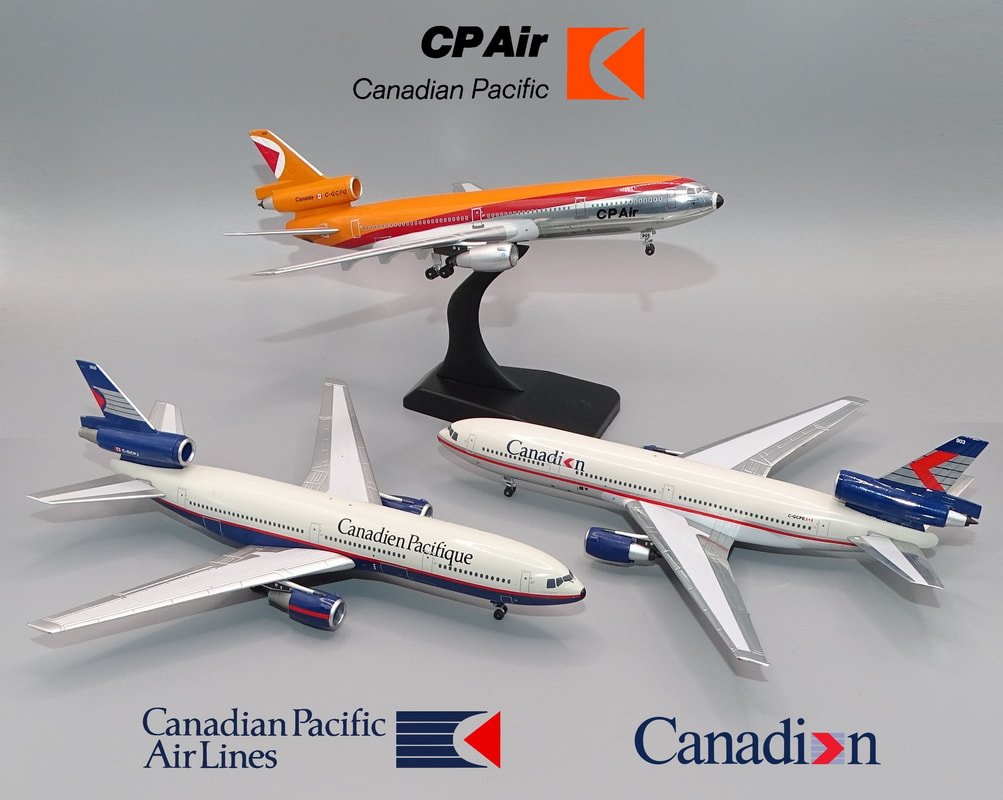
With the PIA swap deal the DC-10 fleet would grow to 12 made up of 9 series 30s and the 3 series 10s leased from United. However, the ‘new’ ex-PIA Tens would never wear the bright orange livery with the multimark logo. On December 17, 1985 CP Air announced it was to rebrand as Canadian Pacific Air Lines. When C-FCRE rolled out on January 12, 1986 she wore a brand new livery.
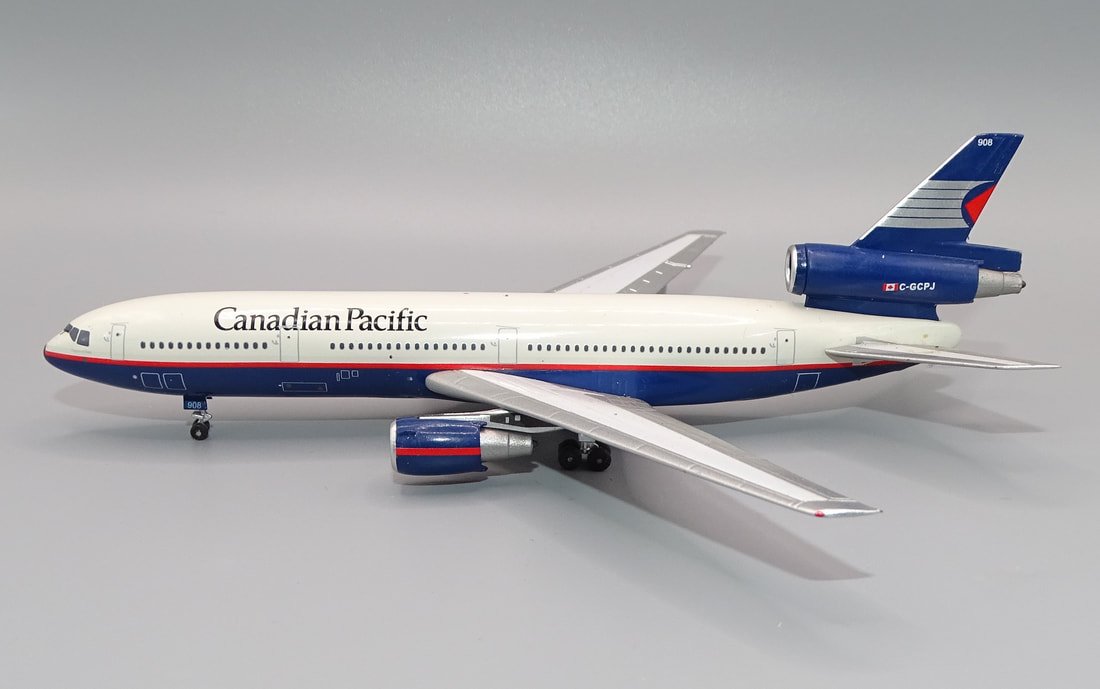
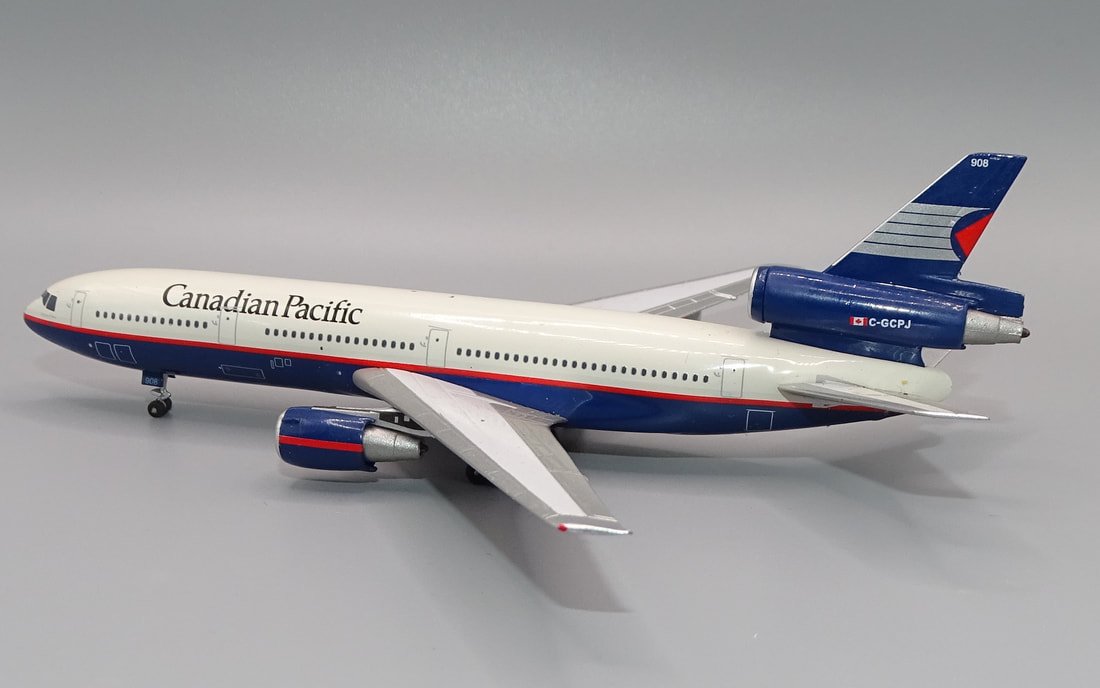
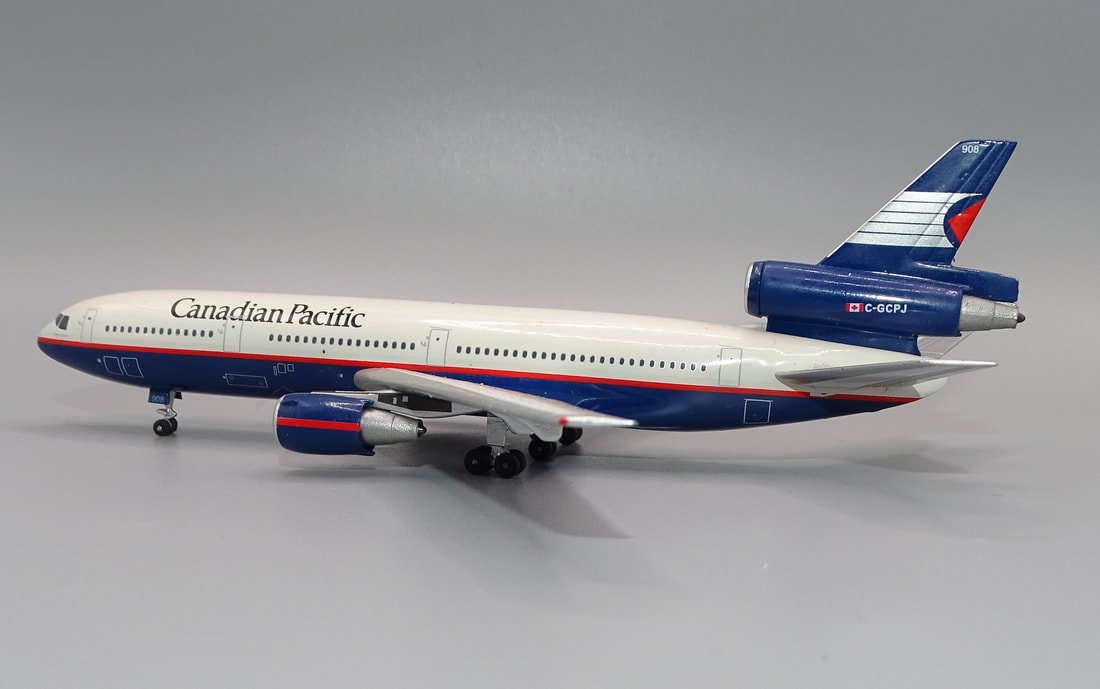
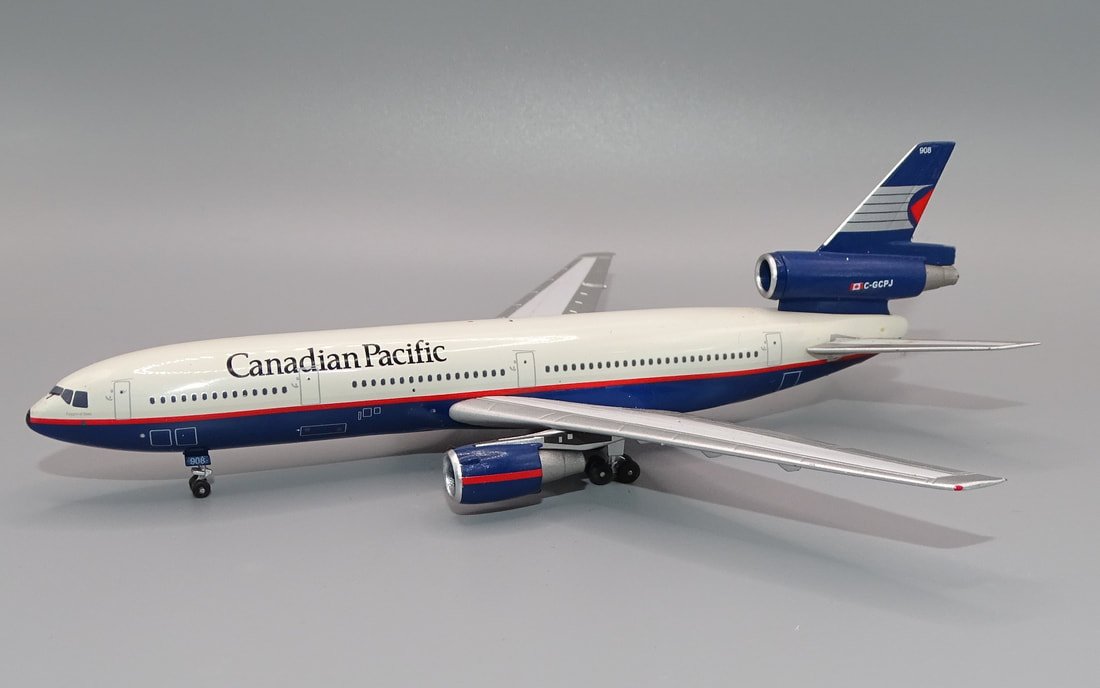
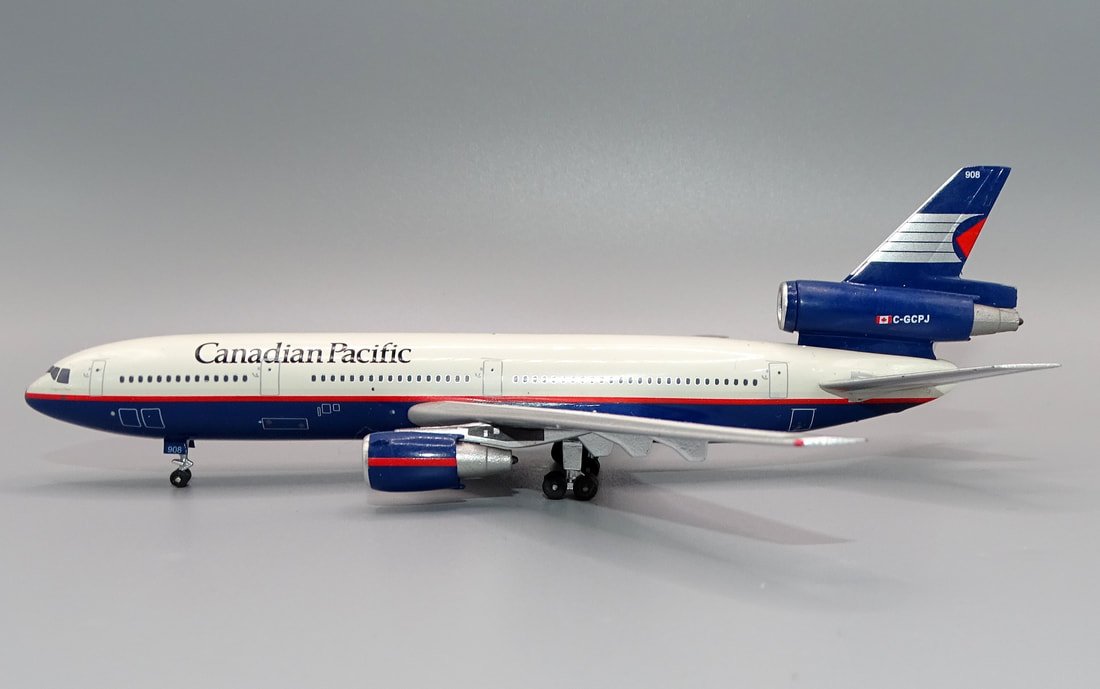
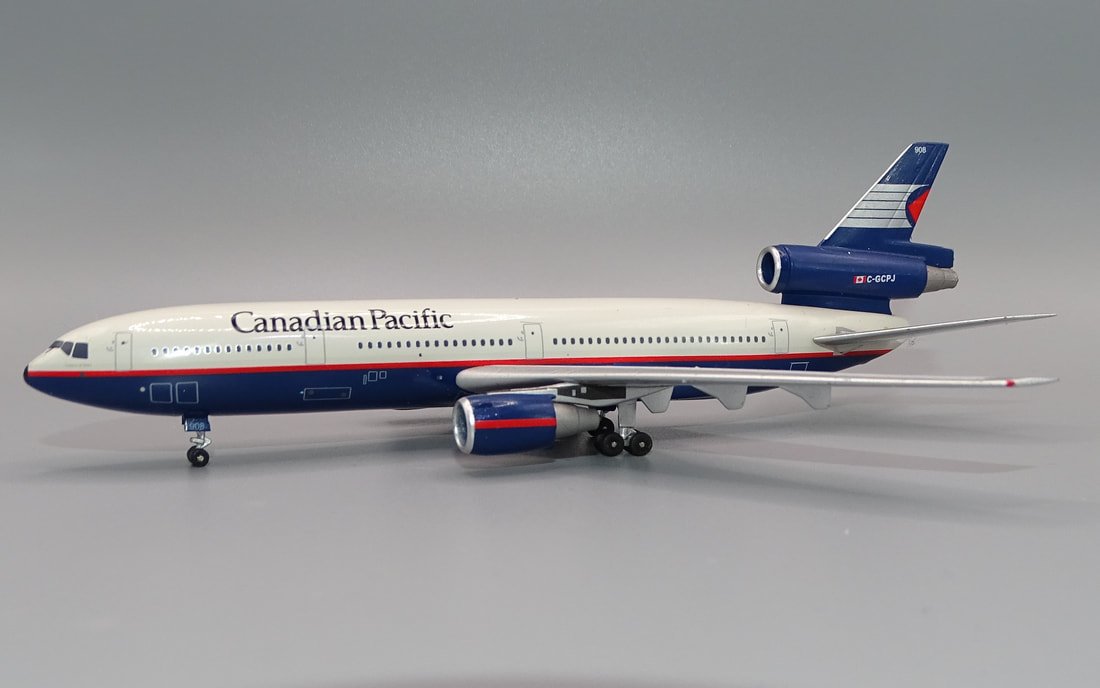
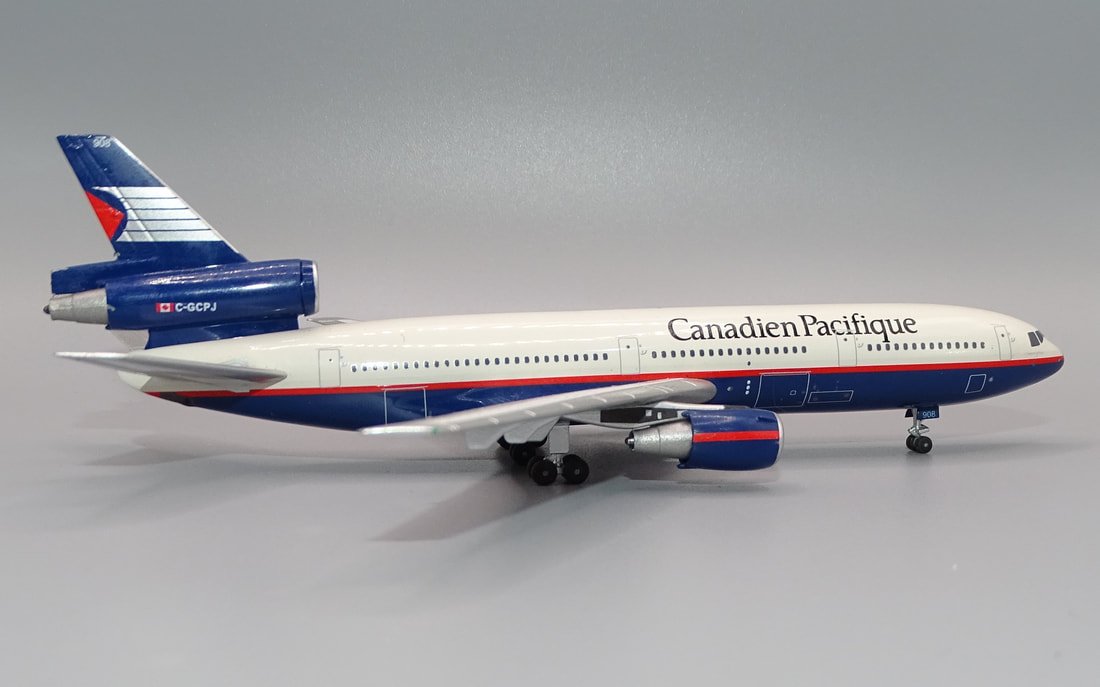
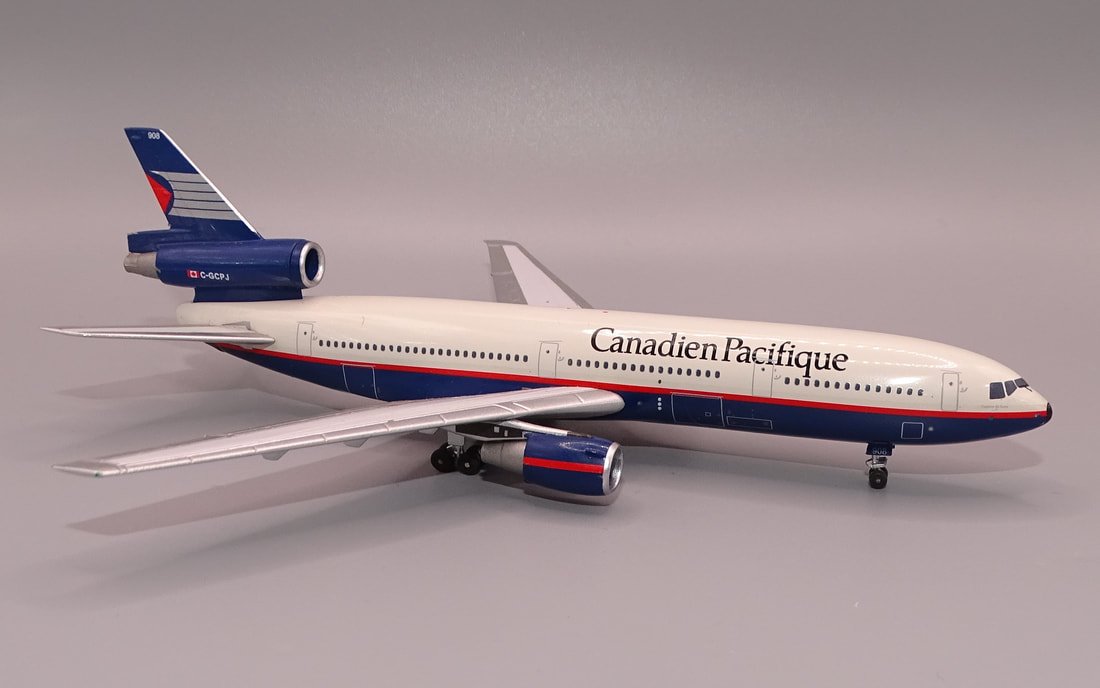
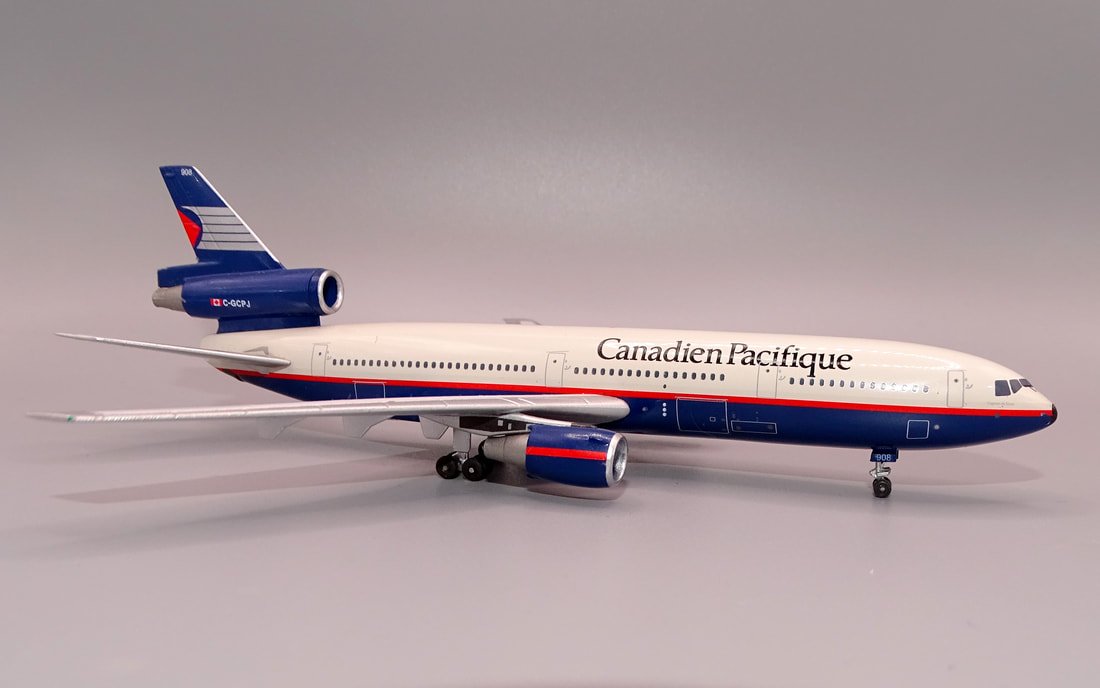
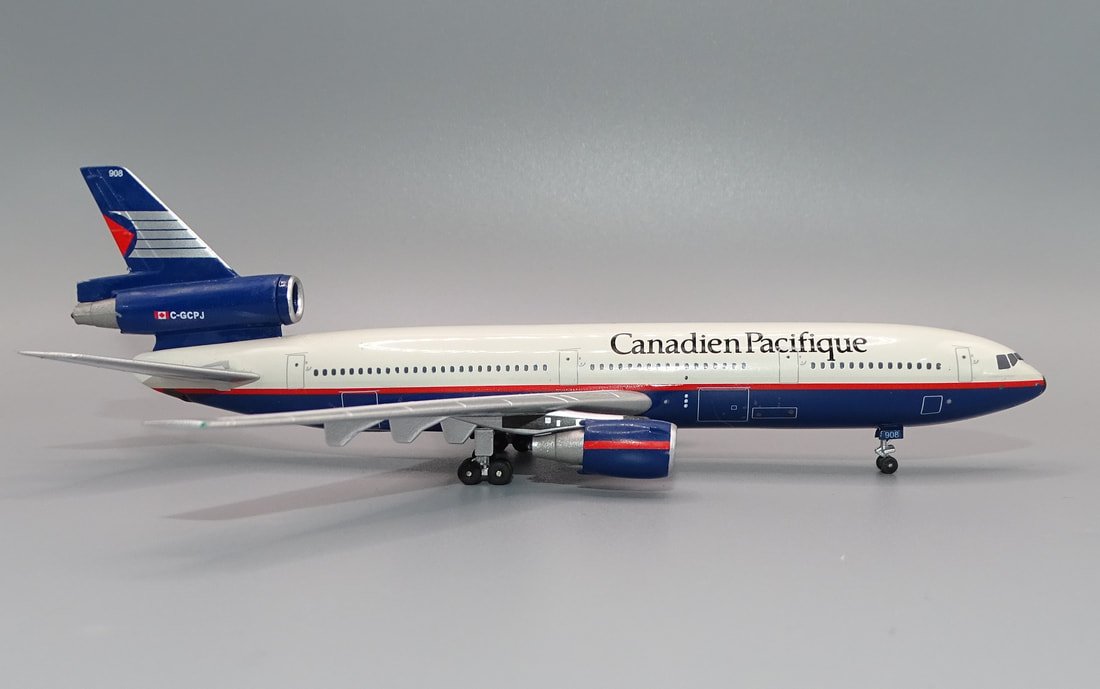
Canadian Pacific DC-10-30 C-GCPJ Aeroclassics 1:400 Scale
Canadian Pacific DC-10-30 C-GCPJ Aeroclassics 1:400 Scale
Canadian Pacific DC-10-30 C-GCPJ Aeroclassics 1:400 Scale
Canadian Pacific DC-10-30 C-GCPJ Aeroclassics 1:400 Scale
Canadian Pacific DC-10-30 C-GCPJ Aeroclassics 1:400 Scale
Canadian Pacific DC-10-30 C-GCPJ Aeroclassics 1:400 Scale
Canadian Pacific DC-10-30 C-GCPJ Aeroclassics 1:400 Scale
Canadian Pacific DC-10-30 C-GCPJ Aeroclassics 1:400 Scale
Canadian Pacific DC-10-30 C-GCPJ Aeroclassics 1:400 Scale
Canadian Pacific DC-10-30 C-GCPJ Aeroclassics 1:400 Scale
Canadian Pacific DC-10-30 C-GCPJ Aeroclassics 1:400 Scale
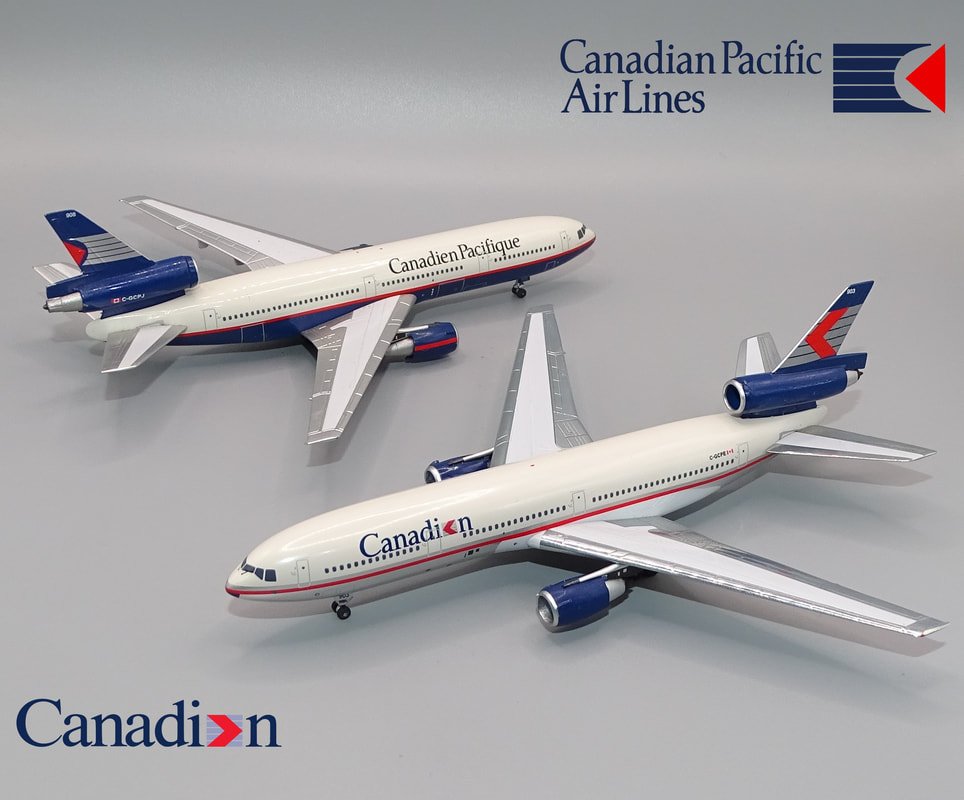
The new blue business-like livery was designed by Vancouver based West Graphika and modernised the Multimark into the Motionmark, now with five stripes representing the five continents operated to. The airline catered to Canada’s multi-lingual population by placing English Canadian Pacific titles on one side and French Canadien Pacifique on the other.
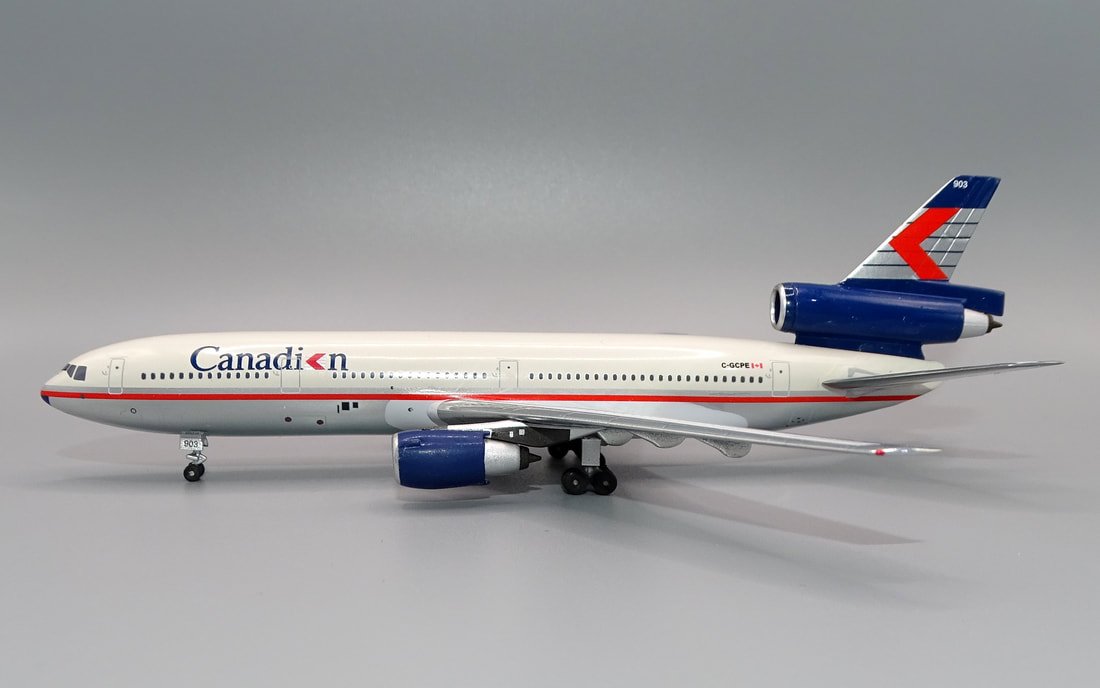
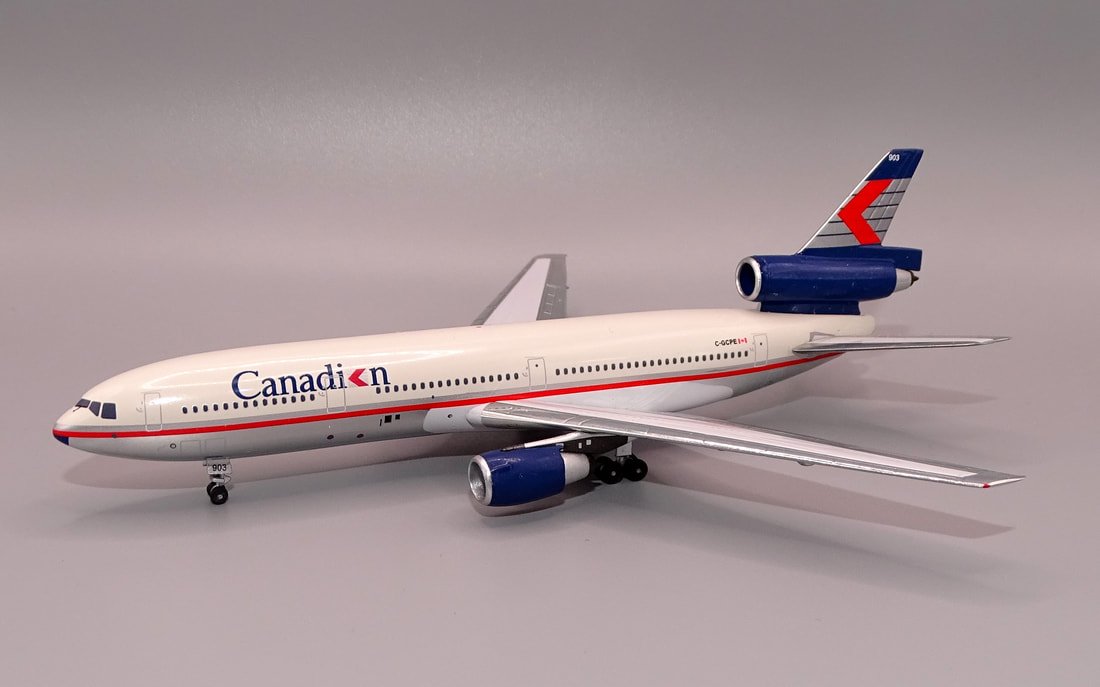
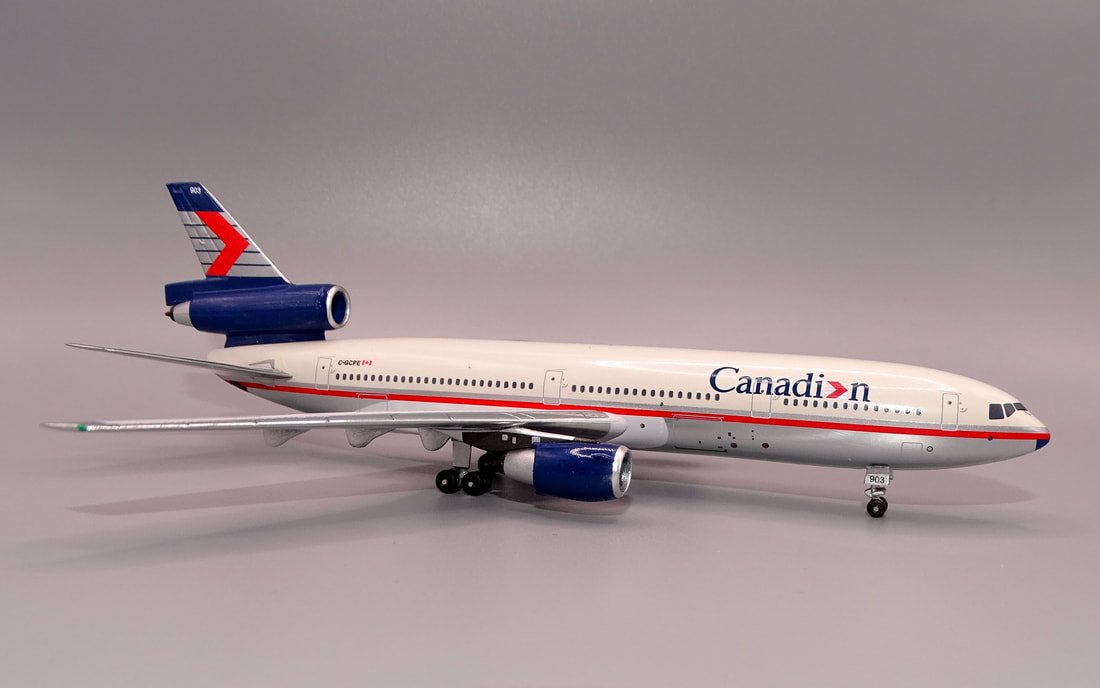
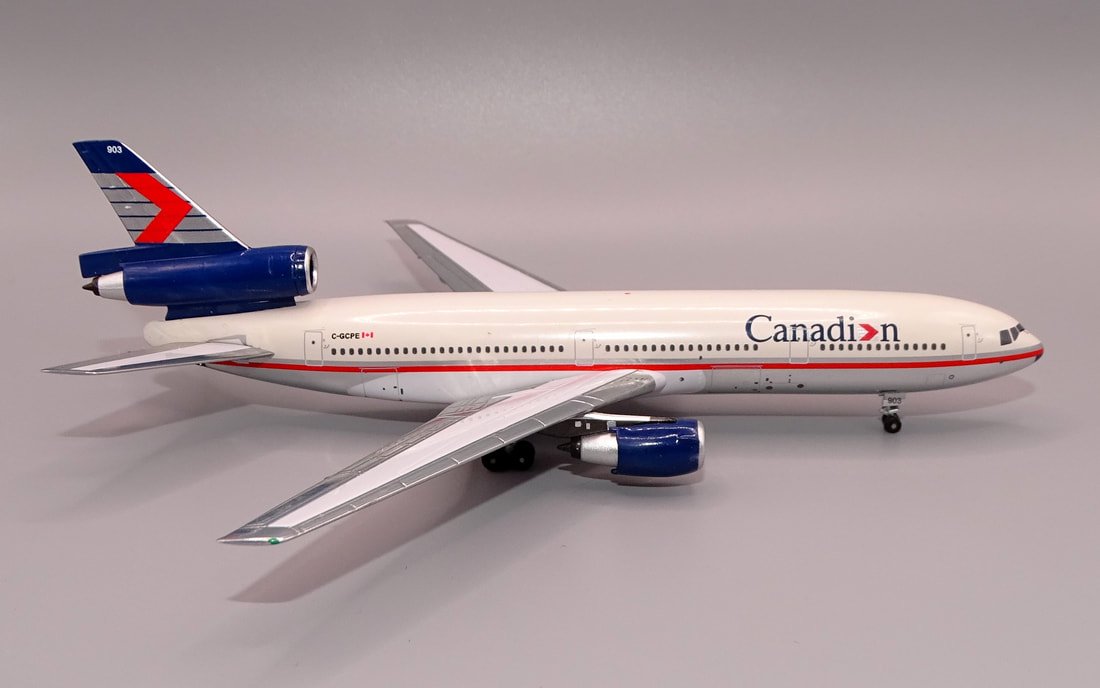
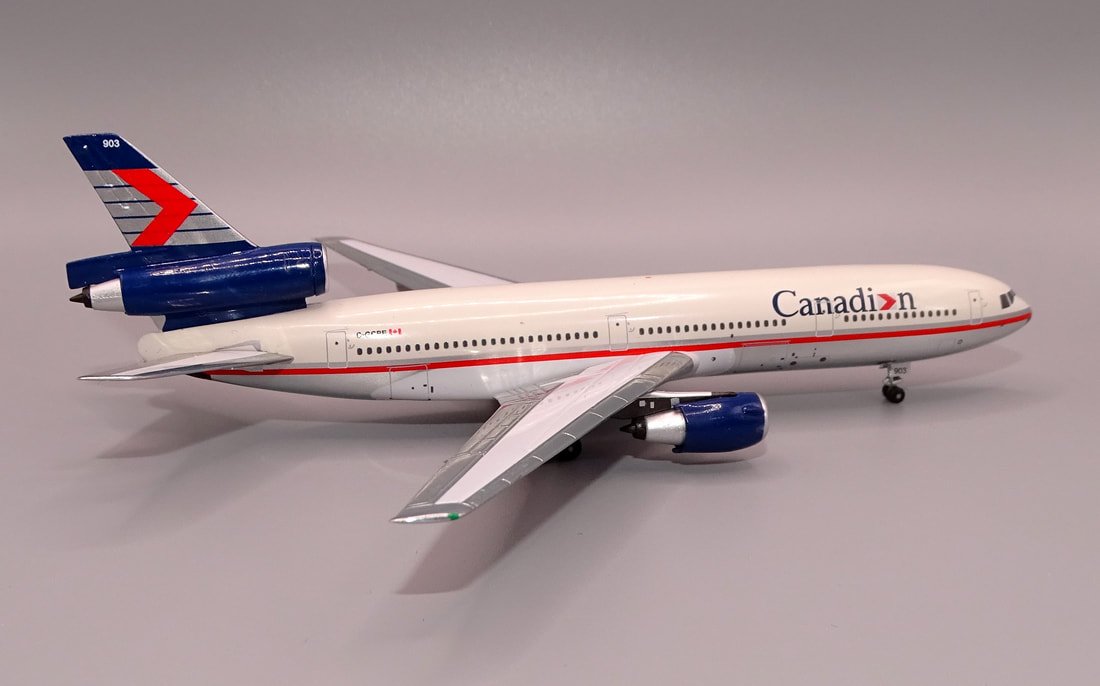
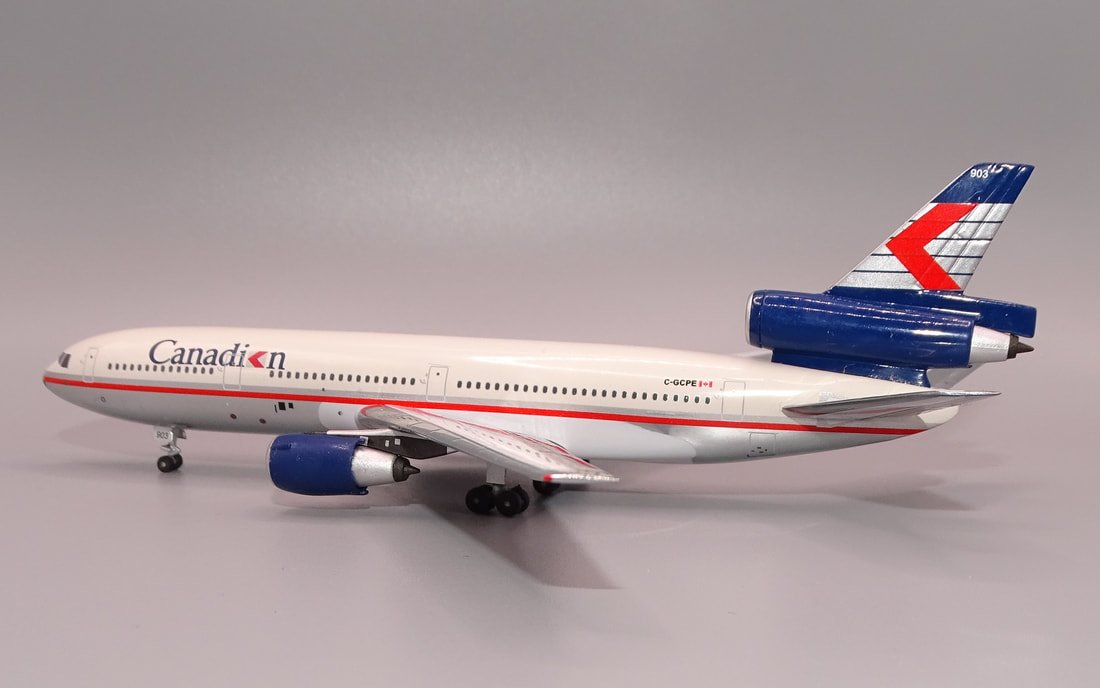
Despite the new coat of paint, CP’s fortunes weren’t improving and its parent company decided to get out of the airline business. In March 1987 the airline was sold to the successful Calgary-based Pacific Western Air Lines for C$300 million and at the end of the year the combined airline would be renamed Canadian Airlines International. The new titles cleverly used an updated motionmark logo (inspired by PWA’s own arrow logo) to cover for the different spelling of Canadian / Canadien in English / French.
Canadian Airlines DC-10-30 C-GCPE Aeroclassics 1:400 Scale
Canadian Airlines DC-10-30 C-GCPE Aeroclassics 1:400 Scale
Canadian Airlines DC-10-30 C-GCPE Aeroclassics 1:400 Scale
Canadian Airlines DC-10-30 C-GCPE Aeroclassics 1:400 Scale
Canadian Airlines DC-10-30 C-GCPE Aeroclassics 1:400 Scale
Canadian Airlines DC-10-30 C-GCPE Aeroclassics 1:400 Scale
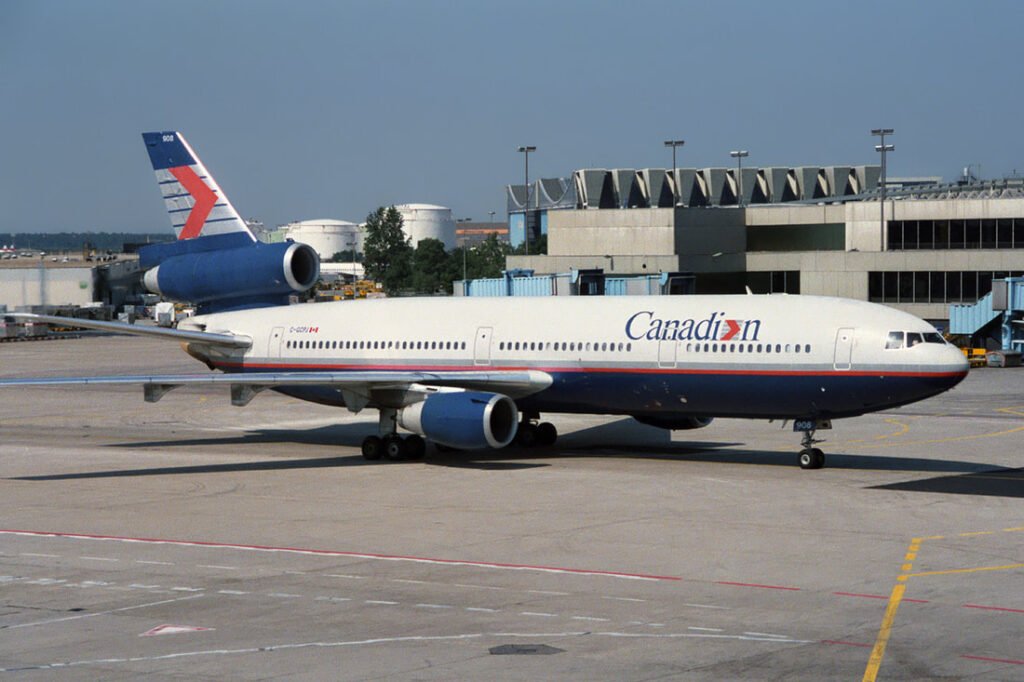
This quick change of identities meant that most of the DC-10s never wore the Canadian Pacific version of the scheme in full. Some simply gained new titles over their CP Air titles, be they Canadian Pacific or Canadian.
The end of the United lease agreement would see the return of the trio of DC-10-30s bringing the Canadian fleet up to 12 series 30s. The DC-10s would continue to be important components of the Canadian fleet until the late 1990s despite the arrival of a large fleet of Boeing 767-375ERs, from April 1988, and 5 Boeing 747-400s, from January 1990.
Jakob Dahlgaard Kristensen (GFDL 1.2 or GFDL 1.2 ), via Wikimedia Commons
The first aircraft to leave the fleet would be the four ex-PIA aircraft. Three went to VASP of Brasil in 1991 and the other to Aeromexico in 1989. The ex-Singapore aircraft, C-GCPJ, was sold to Continental in December 1996 also. That still left the 7 aircraft delivered directly to CP Air to continue in service and most of these were still with the airline when it was finally acquired by Air Canada in 2000.
References
2004. Giannico, P. Remembering Canadian Pacific. Airliners No 86 Canadian Pacific RZJets.net