I love the stories of the deregulated era US airline industry, and during the 1980s and 90s there were a large number of new startup airlines, most of which didn’t last long. The economic downturn of the early 90s, caused partly by the Gulf War, killed off several startups, such as the first Midway, as well as grand old names like Eastern and Pan Am, but this clearout just opened the door for a second tranche of startups in the mid-90s. Mostly these failed to live up to expectations too. One of the less successful was a company called JetTrain.
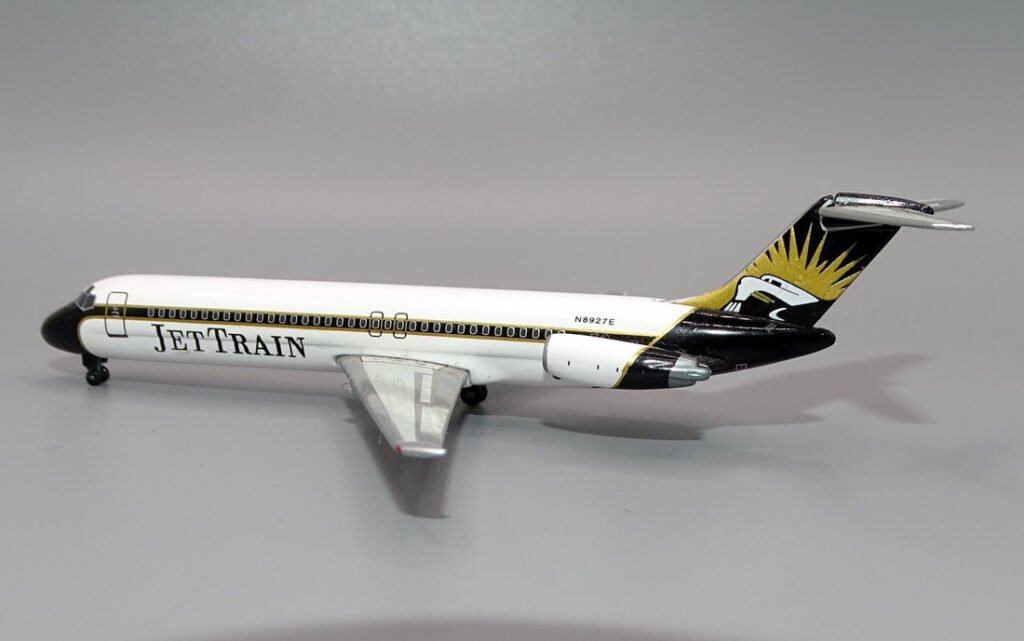
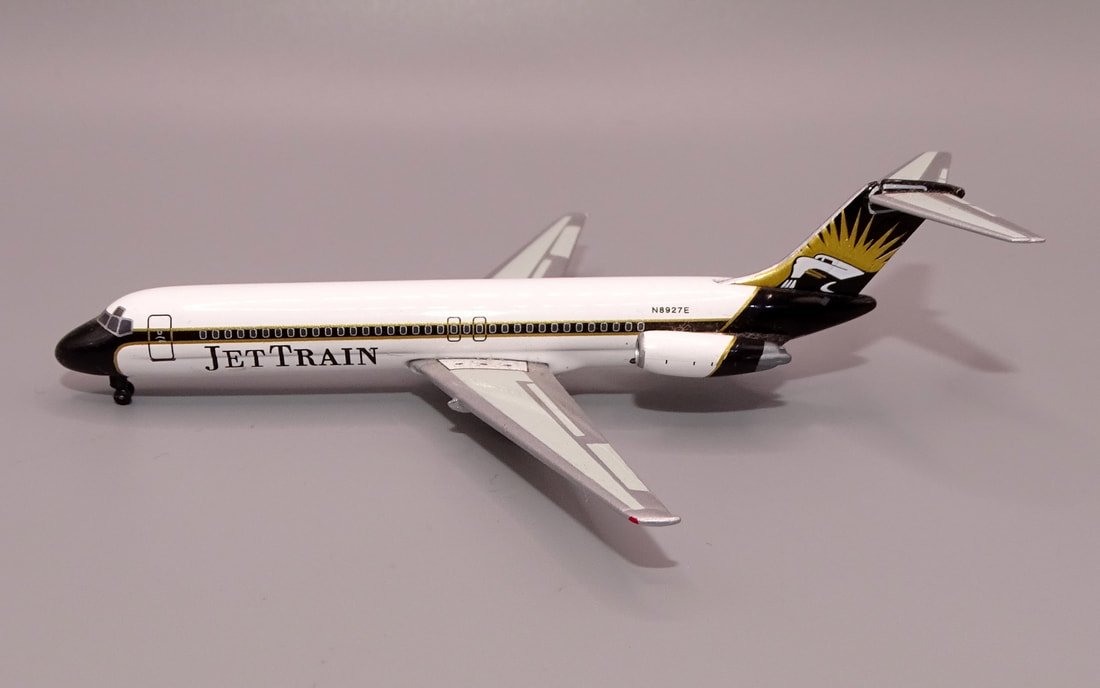
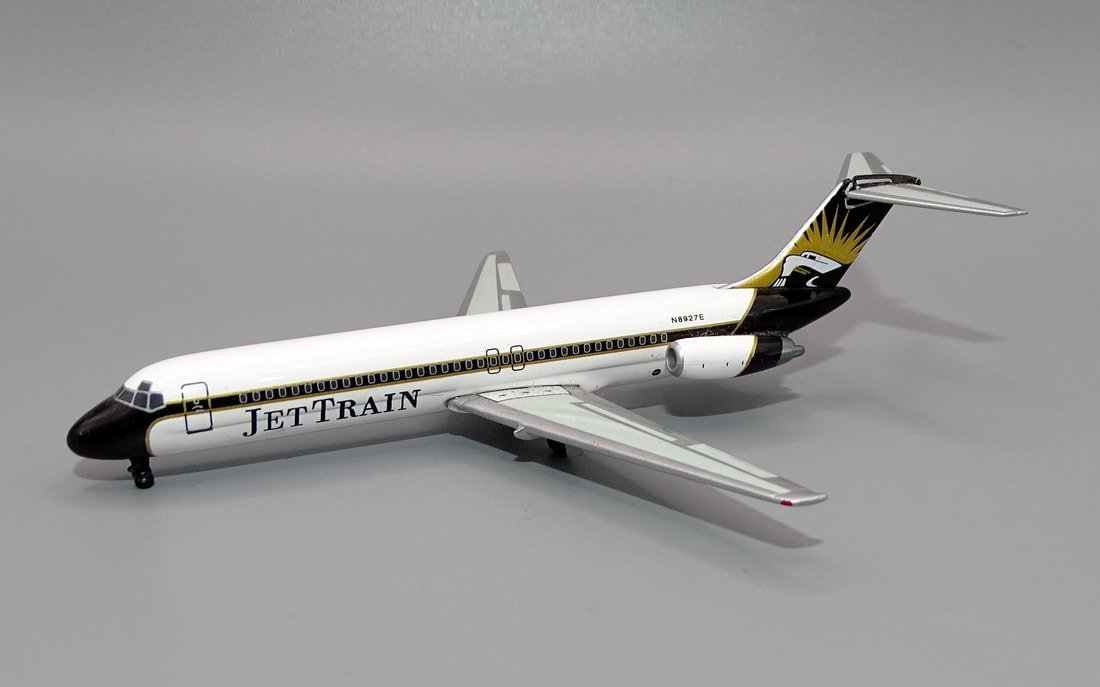
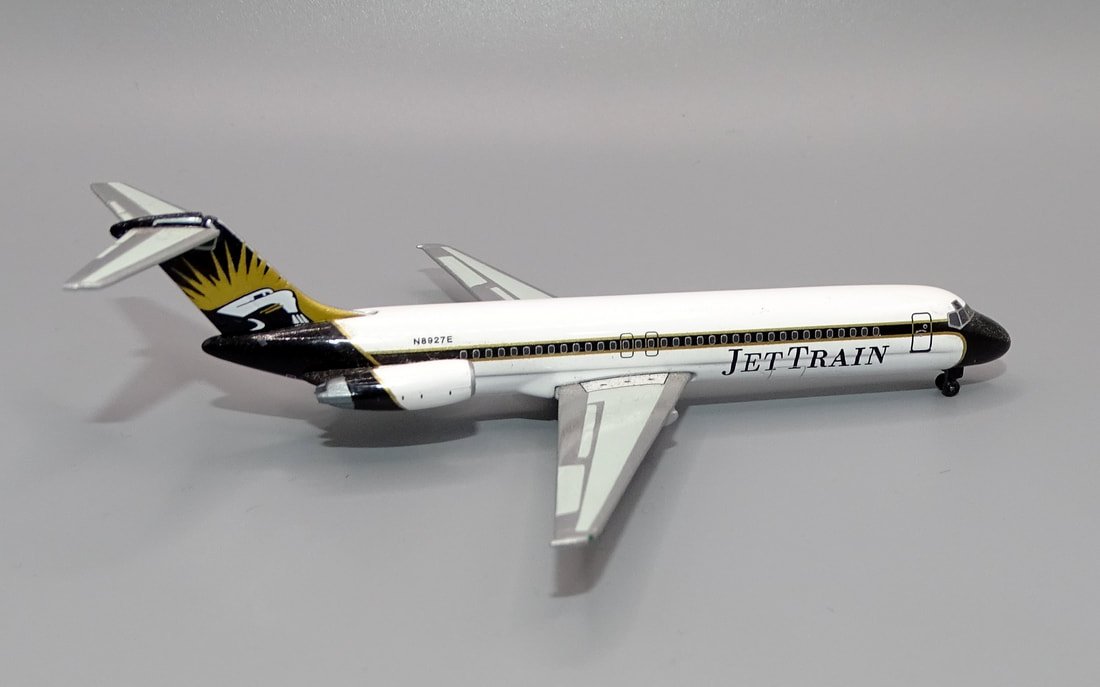
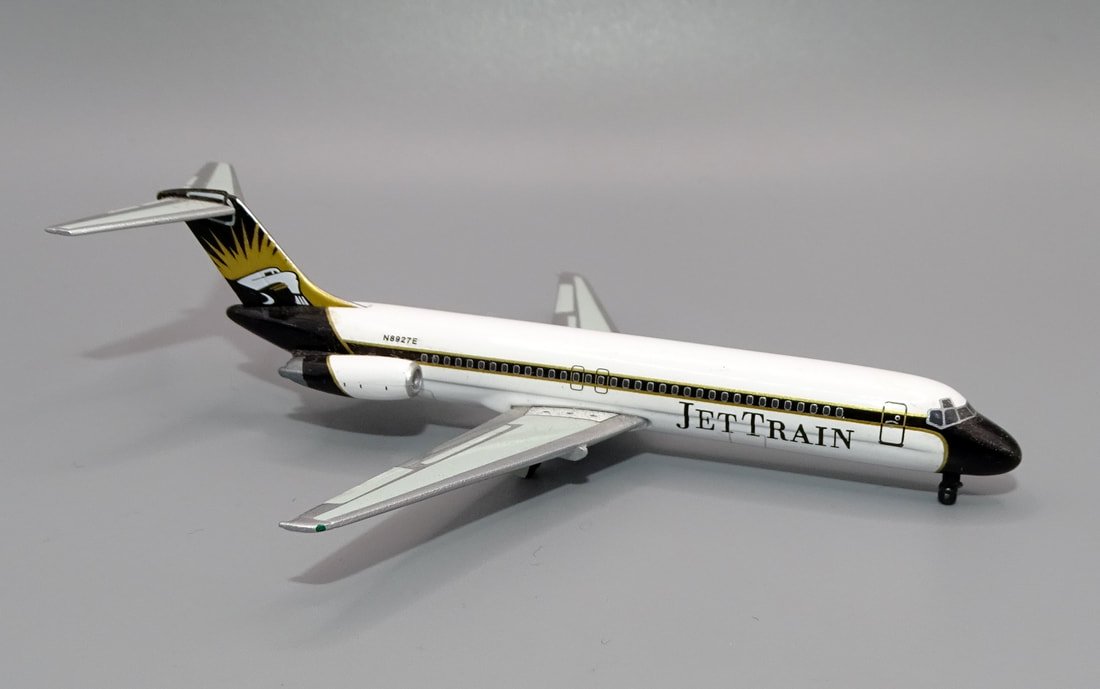
It is somewhat odd that there is a model of JetTrain in 400 scale given the airline’s short existence, but I’m very grateful there is even if it is on the not so great Gemini Jets / Phoenix mould. This release dates all the way from 2004 and was released by Phoenix, probably from stock originally earmarked for Tucano Line.
The turmoil in the US aviation sector at the start of the 1990s found many executives and pilots out of work. Their activity would lead to the creation of quite a selection of new airlines into the mid-90s. Many didn’t get far, some didn’t get off the ground at all and only a few, like Kiwi International and ValuJet, survived for any period of time that would make them at all memorable.
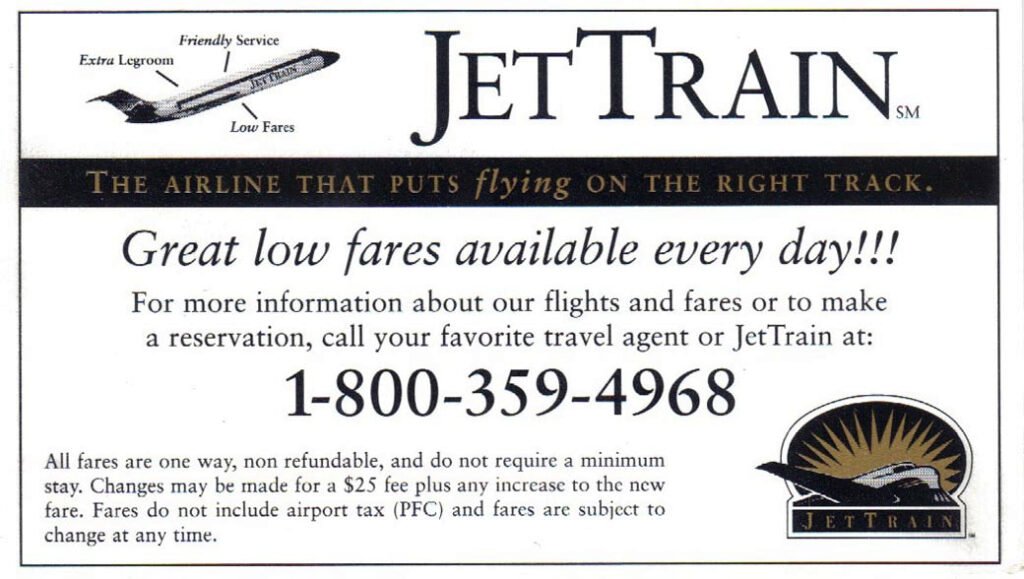
One of these new startups, formed in 1993, went by the name of AirTrain and was formed by ex-Wings West pilots and an air traffic controller called J Elliot Black. The plan was to operate low cost services, with ticketless travel and walk-up pricing, between Philadelphia, Pittsburgh and Detroit.
Unsurprisingly, and probably also a sign of underfinancing, it took 3 years to get the airline ready to go. By that time the name had been changed to JetTrain to avoid confusion with another startup, AirTran, although this was obviously late in the day since the first aircraft wore AirTrain titles before service entry.
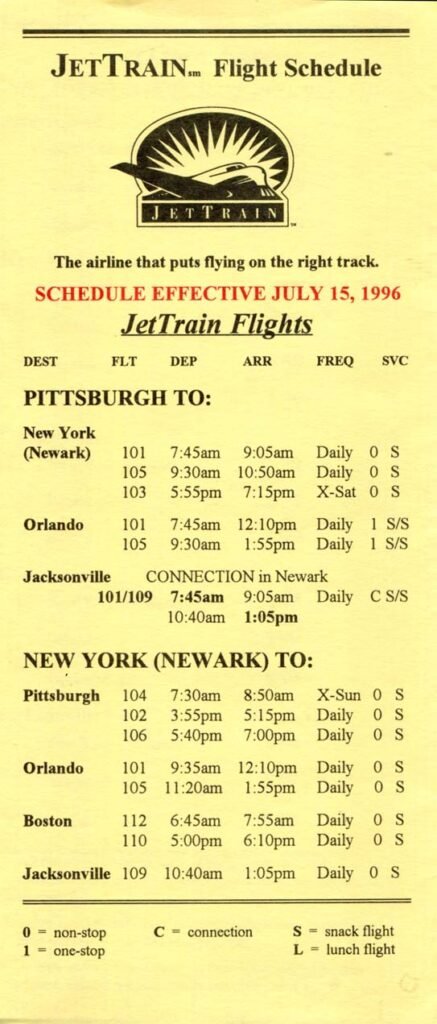
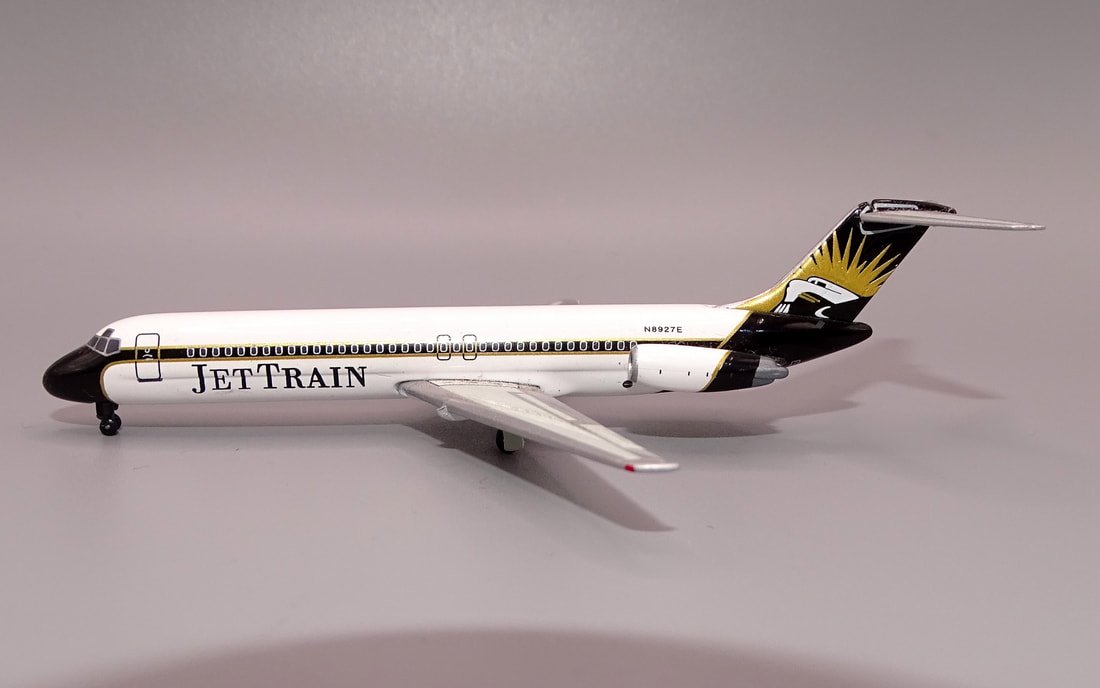
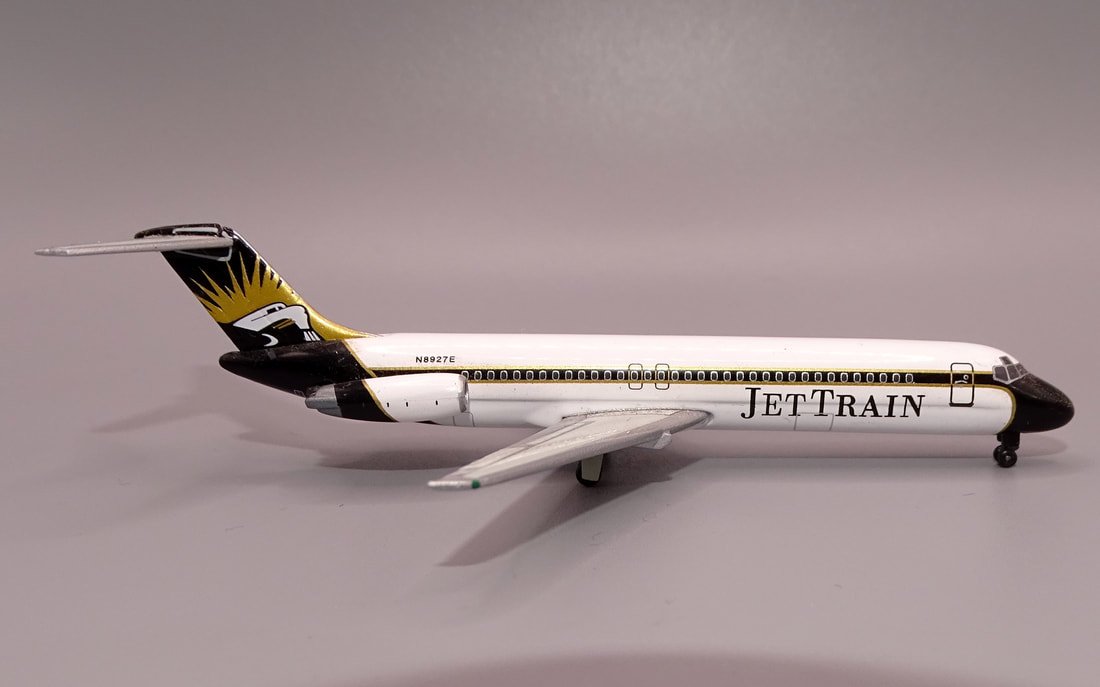
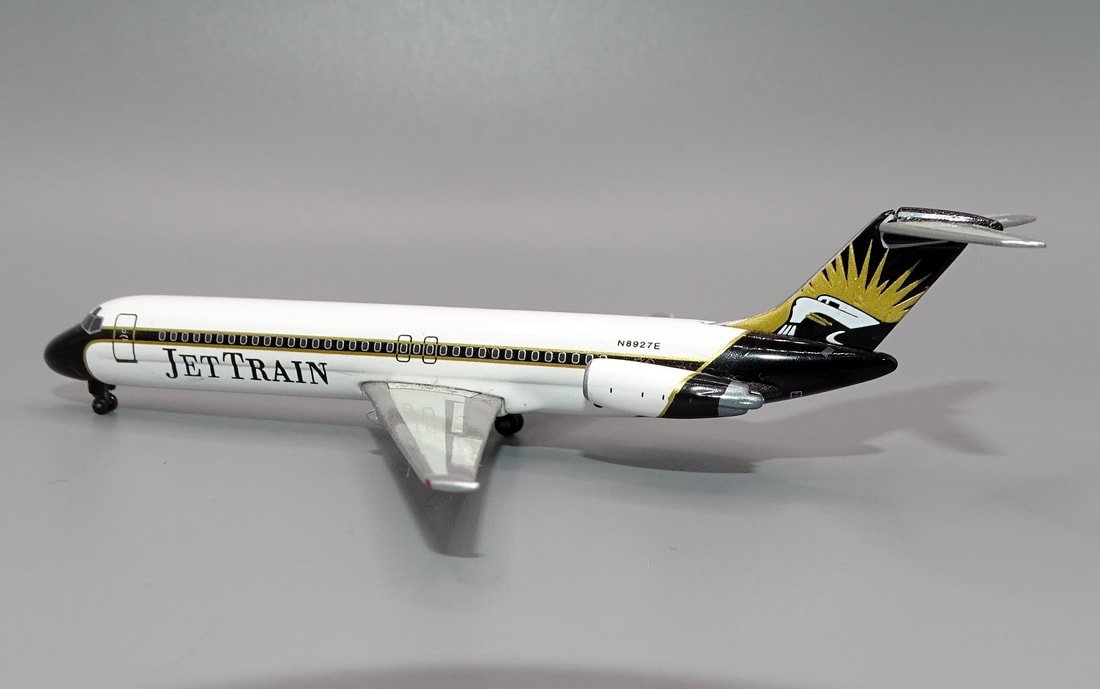
Based at Pittsburgh, at the time a major USAir hub, the first service was inaugurated between PIT-EWR-MCO. This was followed by a PIT-PHL schedule. The initial equipment was a single ex-Eastern DC-9-31 registered N8927E.
The livery was quite smart and consisted of a black cheatline flowing onto the nose. The winged train logo on the tail nonetheless gave it a rather old-fashioned look. A second DC-9-31 joined the fleet in April. This one was registered N937ML, showing its heritage of being ex-Midway Airlines (it had started life with Ansett of Australia in 1967 as VH-CZC).
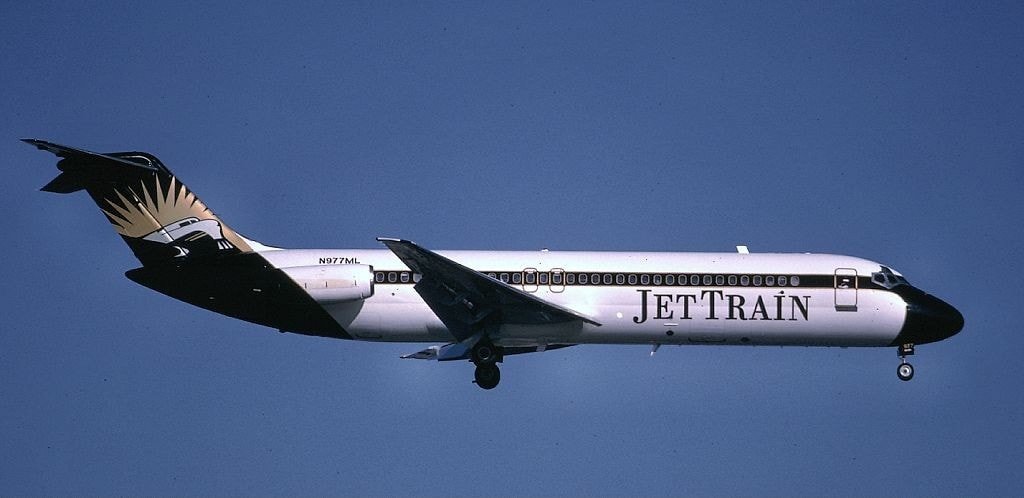
A third DC-9, N977ML, was also added at some point. This 1968 frame was both an ex-Midway and ex-Eastern bird. Both the ML registered DC-9s had seen service with Express One after there time with Midway ended.
Unsurprisingly for a new startup, with limited capital, operating into major hub airports and using relatively old and fuel thirsty equipment JetTrain found the going tough from the start. I can only imagine how USAir percieved this new startup trying to find a niche at two of its biggest hubs! I suspect they did everything in their power to squash it.
JetTrain Douglas DC-9-31 N8927E by Phoenix Models 1:400 Scale
JetTrain Douglas DC-9-31 N8927E by Phoenix Models 1:400 Scale
JetTrain Douglas DC-9-31 N8927E by Phoenix Models 1:400 Scale
JetTrain Douglas DC-9-31 N8927E by Phoenix Models 1:400 Scale
JetTrain Douglas DC-9-31 N8927E by Phoenix Models 1:400 Scale
JetTrain Douglas DC-9-31 N8927E by Phoenix Models 1:400 Scale
JetTrain Douglas DC-9-31 N8927E by Phoenix Models 1:400 Scale
To be fair they probably didn’t have to do much! JetTrain dropped the Newark and Orlando routes and replaced them with Boston-Philadelphia-Nashville but time was swiftly running out. The end came after only 10 months with operations suspended on November 12, 1996.
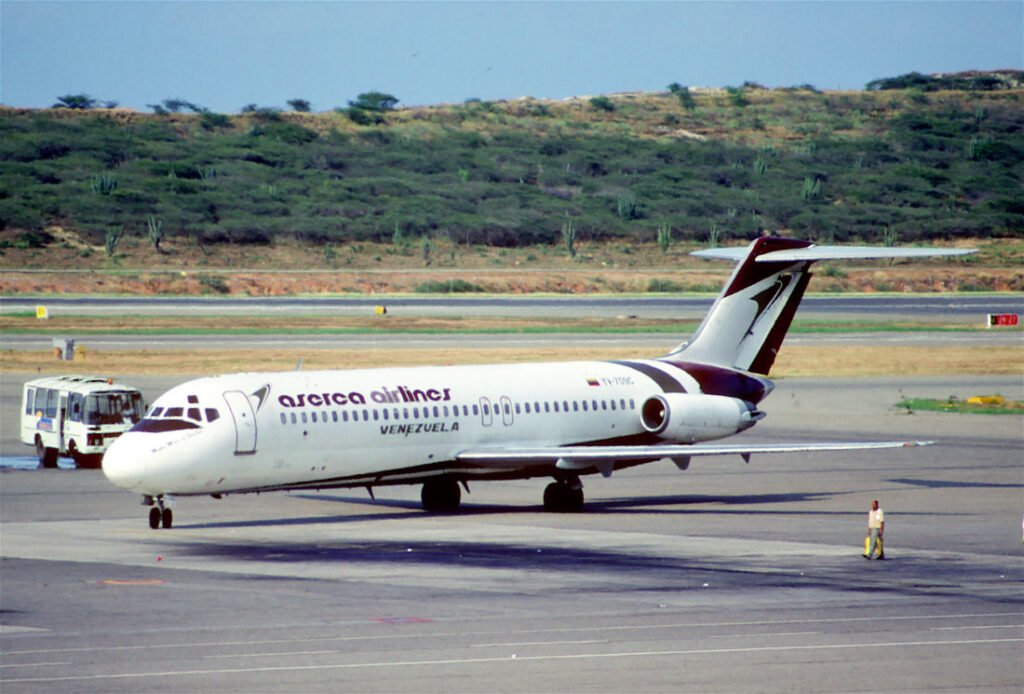
Below: N937ML would become YV-709C with Aserca of Venezuela in July 1997 and serve with them until April 2008.
Aero Icarus from Zürich, Switzerland, CC BY-SA 2.0 , via Wikimedia Commons
Two of the DC-9s would switch to Venezuela in mid-1997 and join Aserca, who flew them into the mid-noughties. The third DC-9, N977ML, joined the US Department of Justice and was withdrawn in December 1999. JetTrain was just one of tens of startup airlines from the US scene in the 1990s. It seemed to have one of the more joined up concepts, but in hindsight it seems bizarre that it thought it could fight it out with USAir in the markets it chose, given its own limited brand recognition, political clout and cashflow.