Updated: March 2026
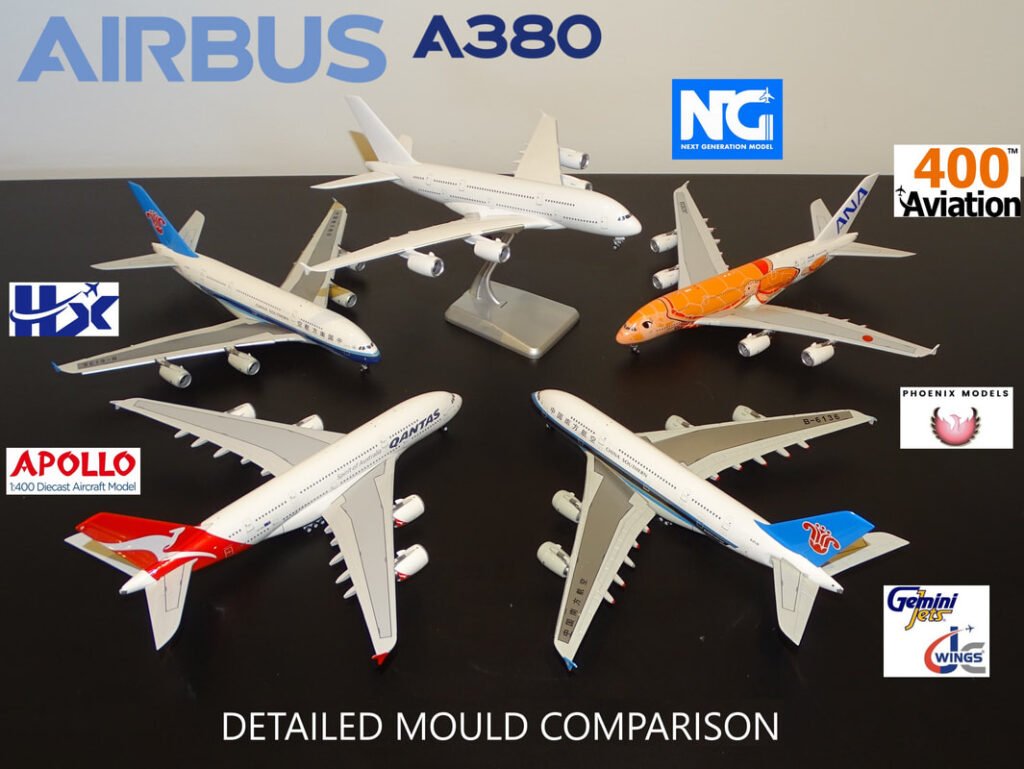
With the A380 ending production in 2021 it seemed like interest in the giant Airbus would also decline in 400 scale. but that has not been the case. Far from the number of A380s being produced decreasing between 2022 and now there have been 110 A380 releases in 400 scale plus 3 all new moulds for the type and the re-emergence of another older mould also. That makes it 6 different A380s that are available in 2026, finally providing some competition to the ancient Gemini Jets / JC Wings version and the well respected Phoenix edition. With NG Models now also getting in on the game it seems like a good time to compare all 6.

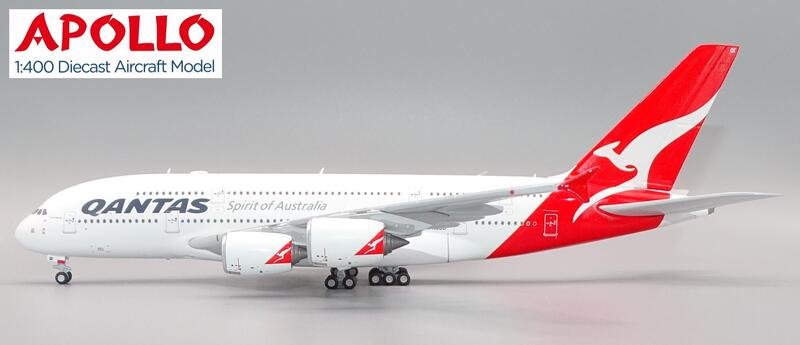
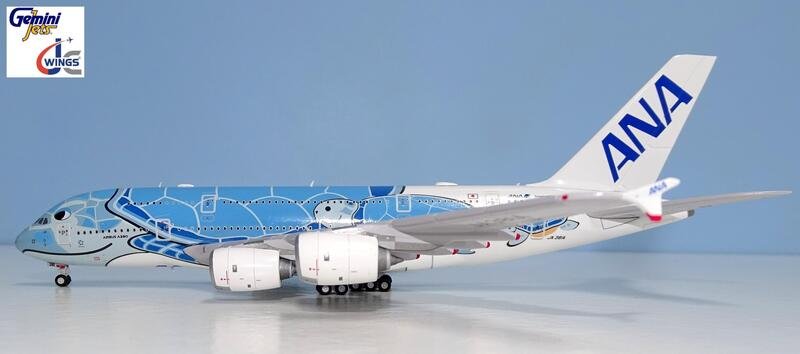
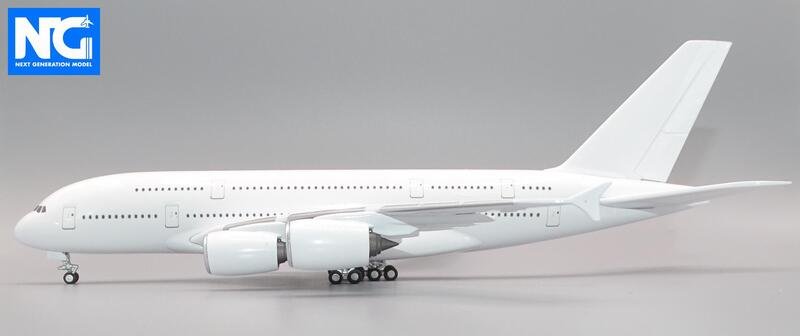
The moulds to be compared in this detailed comparison will be the following six from my collection (two of which I no longer own):

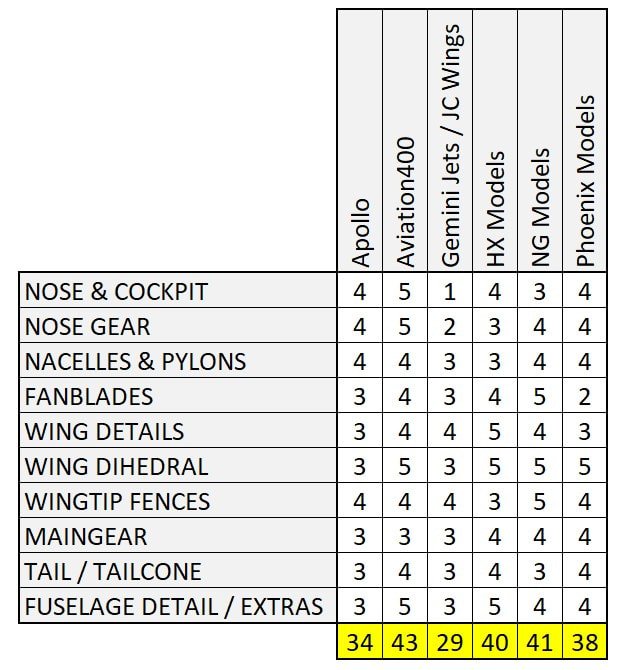
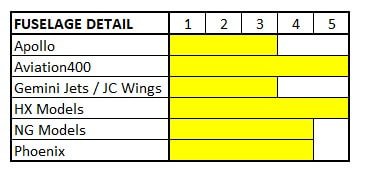
NOTE ON SCORING: The review will take the form of a comparison of various areas of each mould to the real aircraft, with a score out of 5 allotted for each mould for each area. Adding the combined scores together gives you the winner. I generally try and score by knocking a point off for each issue, sometimes two depending on my opinion of seriousness. No mould is perfect but these are 400 scale models, there are limits to how perfect a mass produced model can be.
Obviously this is my opinion, hopefully backed up by evidence. I don’t expect you to agree with everything so take the scoring as a guide – maybe try your own along the way and see what result you get?
Scoring
NOSE / NOSEGEAR
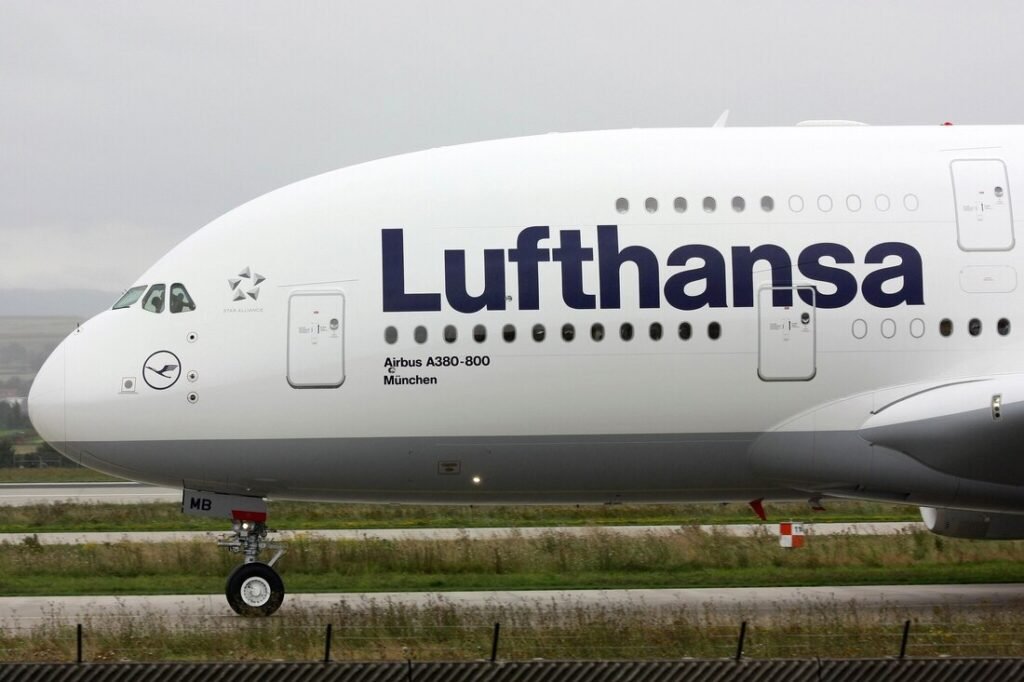
NOSE & COCKPIT: The clear outlier is obviously the Gemini Jets mould, which has never been accurate. The mould is 20 years old, but it is surprising that it has never been updated. The entire nosecone region is inaccurate and nowhere near chunky or round enough. The angle up to the roofline is also too shallow. The rest of the moulds are much better in this area. The Phoenix, despite being only one year younger than the Gemini, has always had a fine nose, although the cockpit window printing isn’t great. The old Witty Wings, now used by Apollo, also has an excellent nose region as does the HX. Minor refinements to the roundness of the nosecone at its lower margin on both could be made. The new NG could do with some modification to the depth of the curve on the underside and the cockpit windows. That leaves the Aviation400 as the best of the bunch with, to my eye, no changes needed at all.
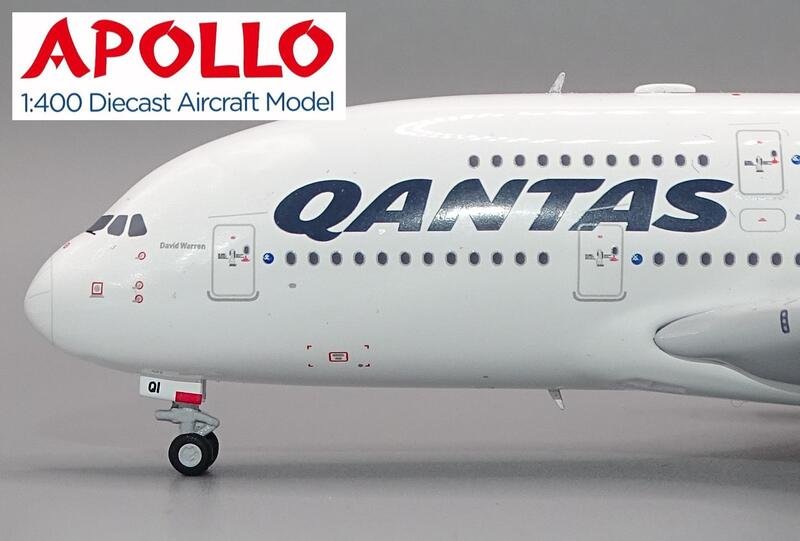
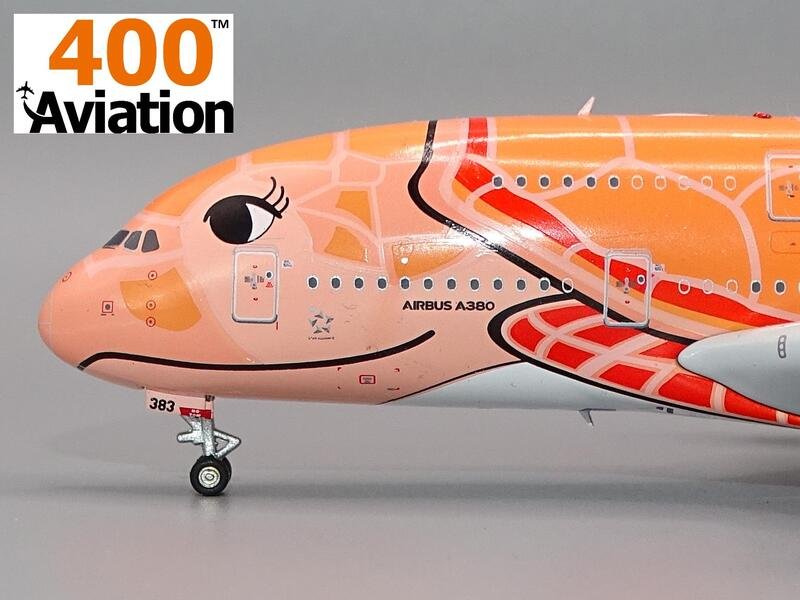
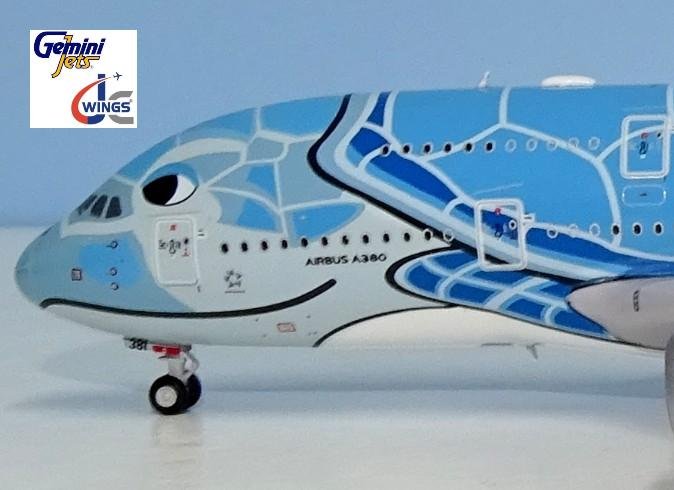

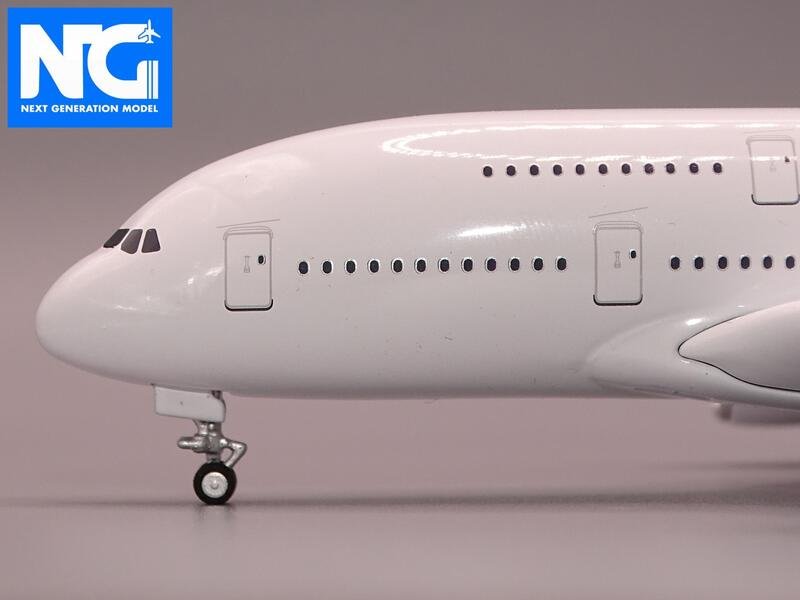

NOSEGEAR: The detailing and position of the rear torque link on the Gemini are poor, plus the geardoor is not tall enough. This leads to a slightly nosedown attitude. The Phoenix is better but the steering actuators are a little high on the gearleg. The Apollo gearleg is well proportioned and detailed as is the Aviation400. The HX gearleg is nicely detailed, but there is no gap between the rear torque link (also an issue on the Apollo) and most annoyingly the nosegear door is much too short ahead of the gearleg. The NG gearleg is excellent and would only be improved by better tyrehub detailing and the aforementioned change in the fuselage underside angle.

ENGINES (SIDE ON) & PYLONS
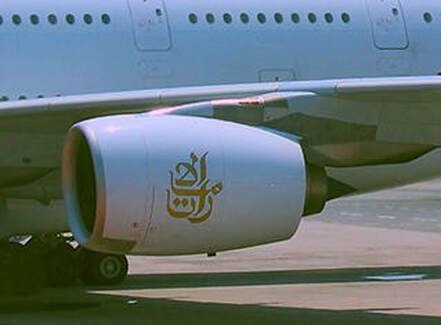

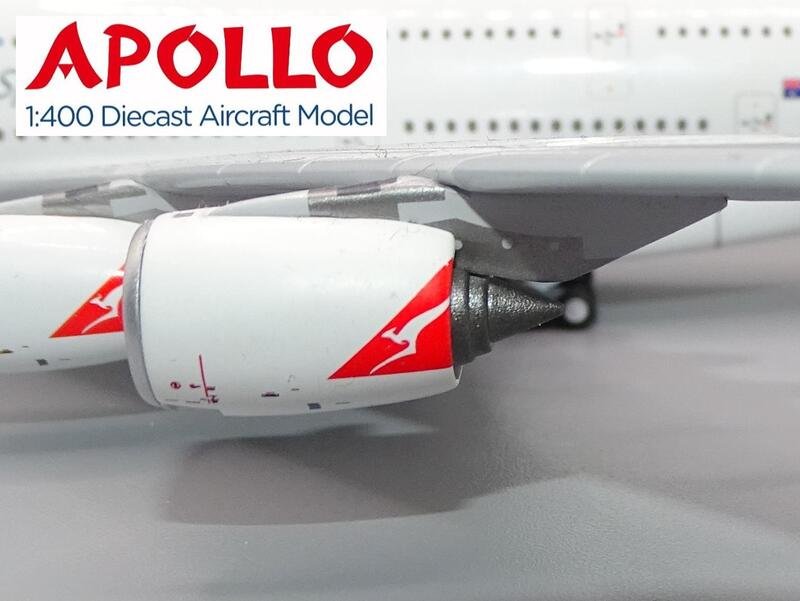

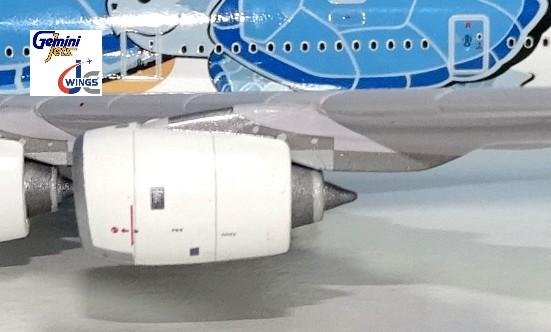


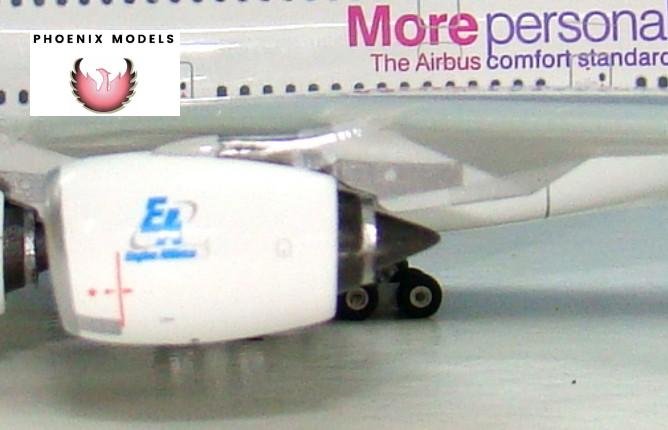
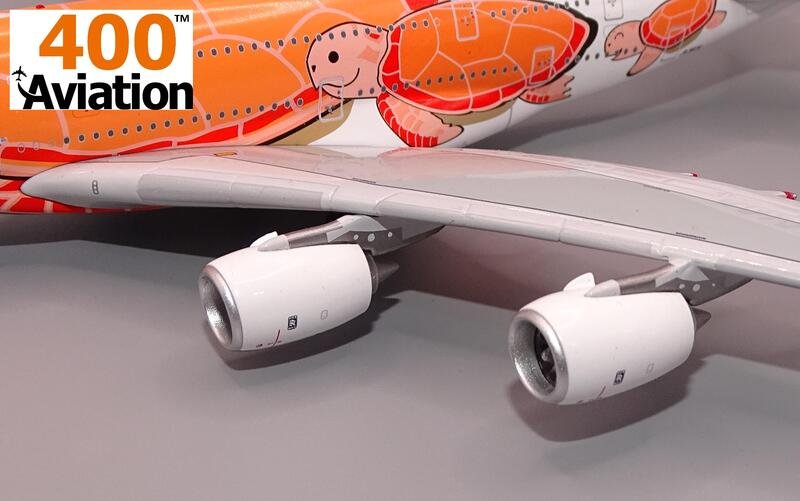
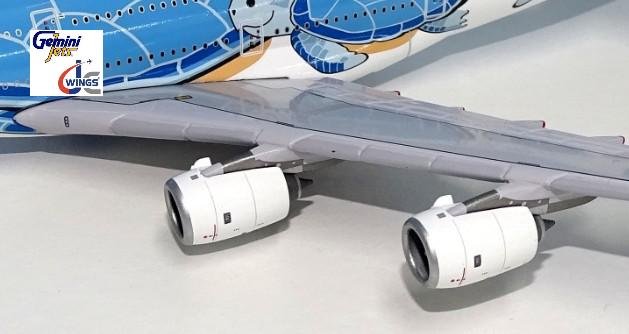
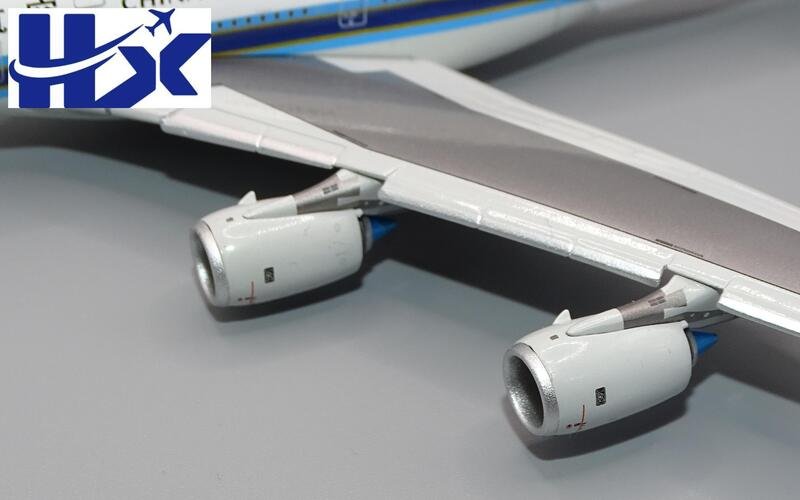
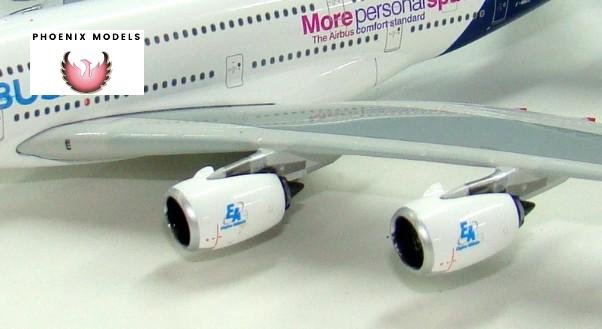
The side view of the engines and pylons is one of the strengths of the old Gemini mould. About the only issue is the size and sharpness of the shock cone at the exhaust. The Phoenix also has the same issue but unlike the Gemini the shock cone is too large rather than not large enough. The form of the underside pylon on the Apollo is incorrect and once again the sharpness of the shock cone lacking. The connection of the underside pylon to the engine hot section on the HX is poor and the shock cone is oddly squared off rather than pointed. Shock cone size is also an issue on the AV400, which is otherwise good. In this area the NG version shows exceptional shaping and is the best of the bunch. Four of the six moulds have separate engine rims, to allow for spinning fanblades.
Looking at the nacelle strakes / vortex generators on the side of the engine nacelles. They are a little large on the Gemini and NG versions, too small on the HX and just right on the Phoenix, AV400 and Apollo.


ENGINE FANS
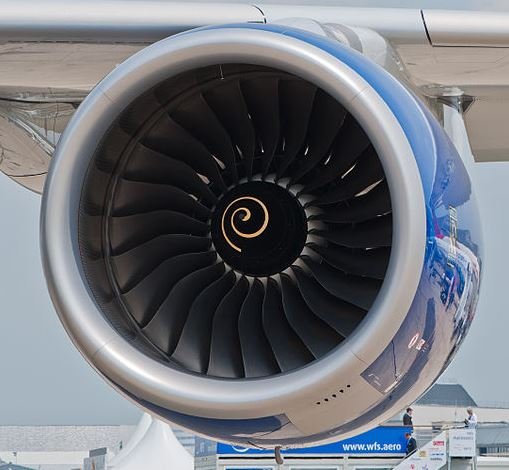
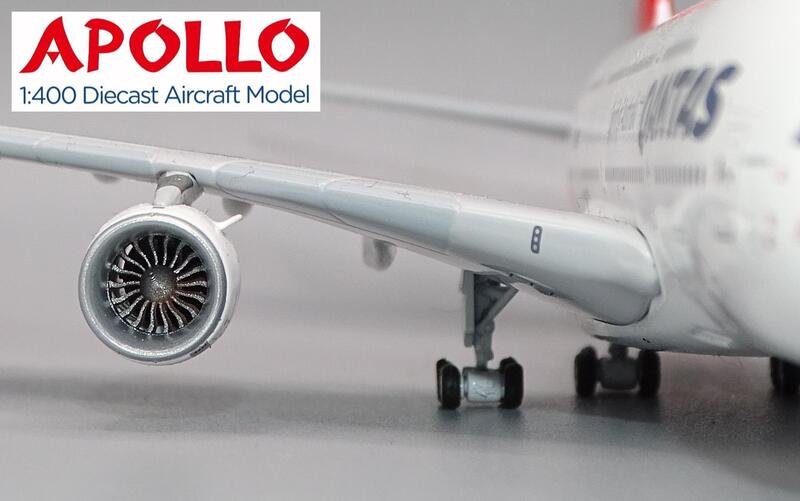

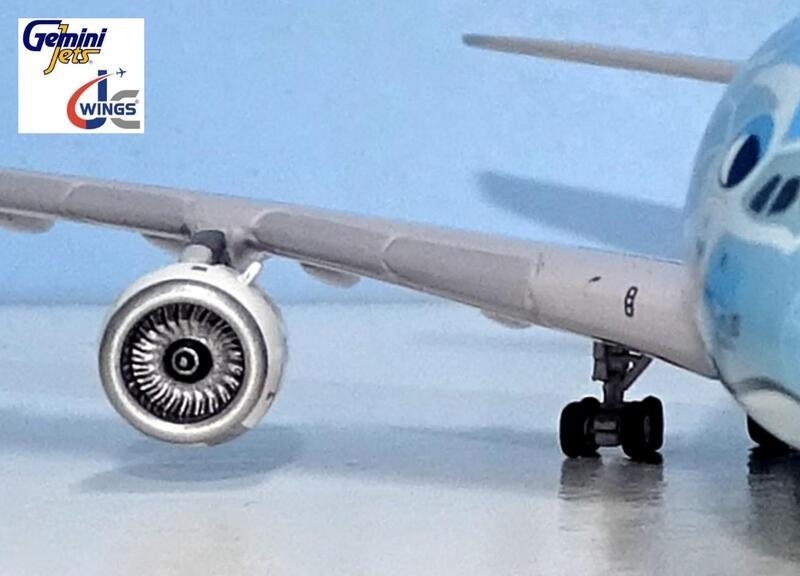
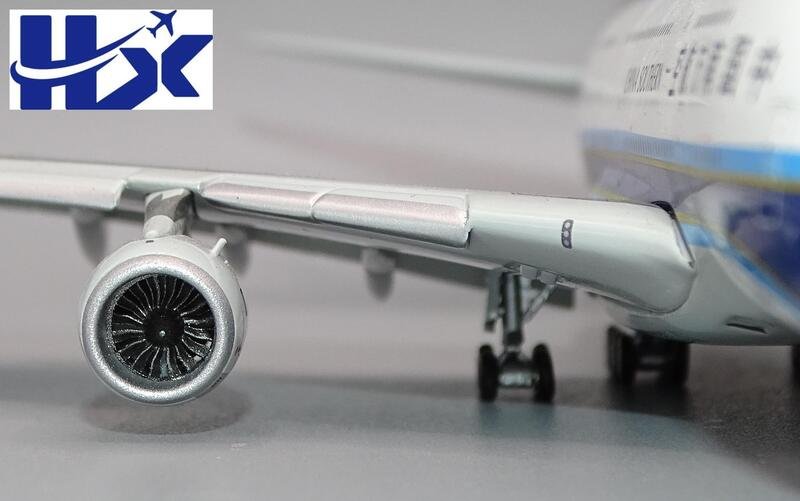
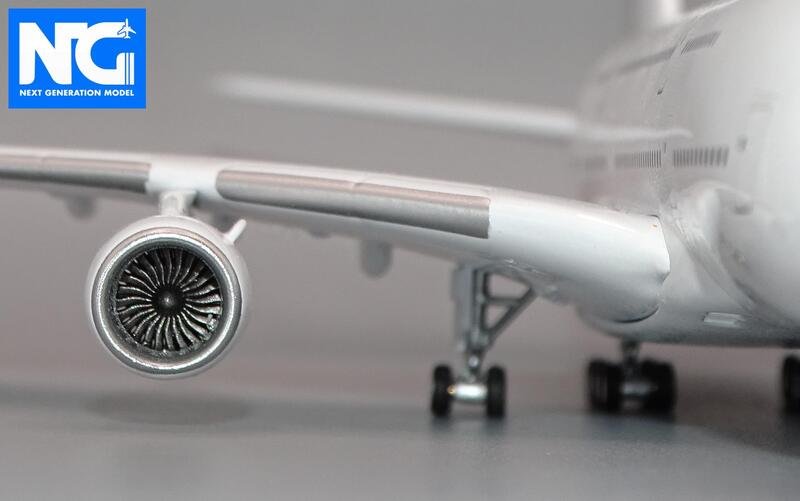
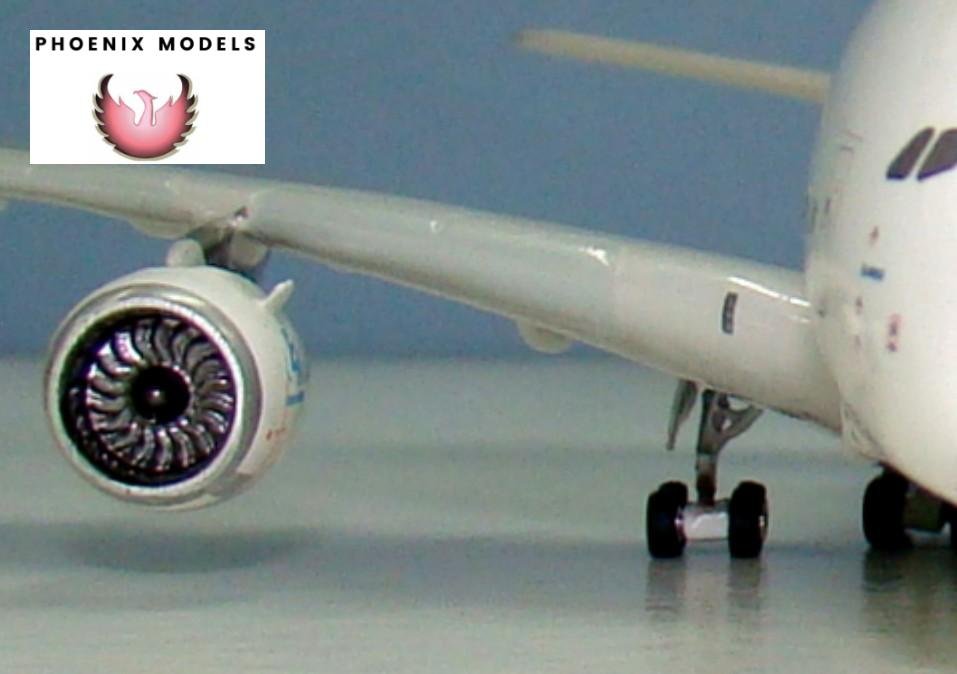
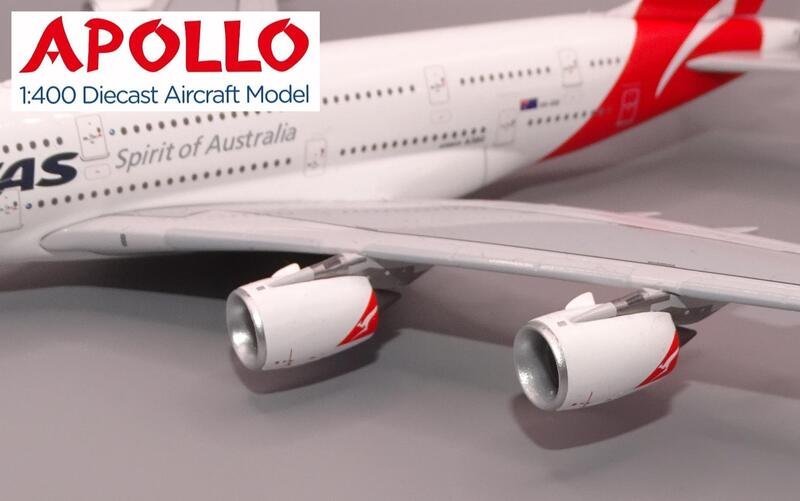
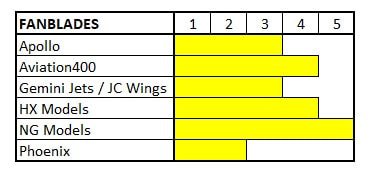
ENGINE FANS: There are 24 fanblades in the A380 engine. The two oldest moulds predate the concept of hollowcore engines so have solid fans, but that doesn’t necessarily lend itself to accuracy. The Phoenix has only 18 blades and a rather large central spinner. The Gemini has 24 blades but they often seem to have a rather odd bifurcated tip and lack detail moving towards the centre. The Apollo mould was one of the first to introduce hollowcore engines but does so at the expense of blade width and number (there are 18 not 24). The newer Aviation400 has better shaped fanblades but there are still only 18, as with the HX Models. The NG Models version has by far the most intricate and accurate fans with all 24 blades and excellent spacing and form.
WING DETAILS


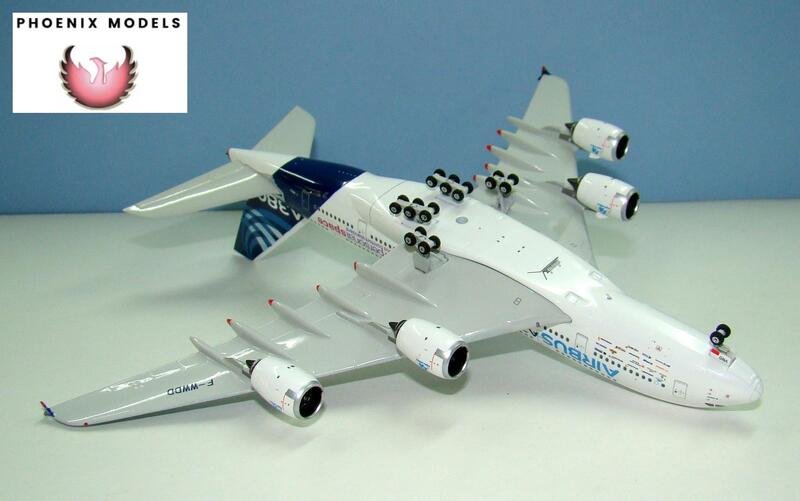
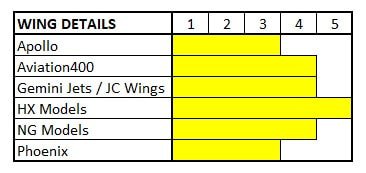
The shape of the flap track fairings on the Phoenix mould are too deep and not well shaped. The Apollo is better but not as good as the other moulds. This is an area where the Gemini scores well, although the fuel dump pipe is missing. The same pipe is on the wrong flap track canoe on the NG Models version. The AV400 and HX versions are both excellent in regards to flap tracks.
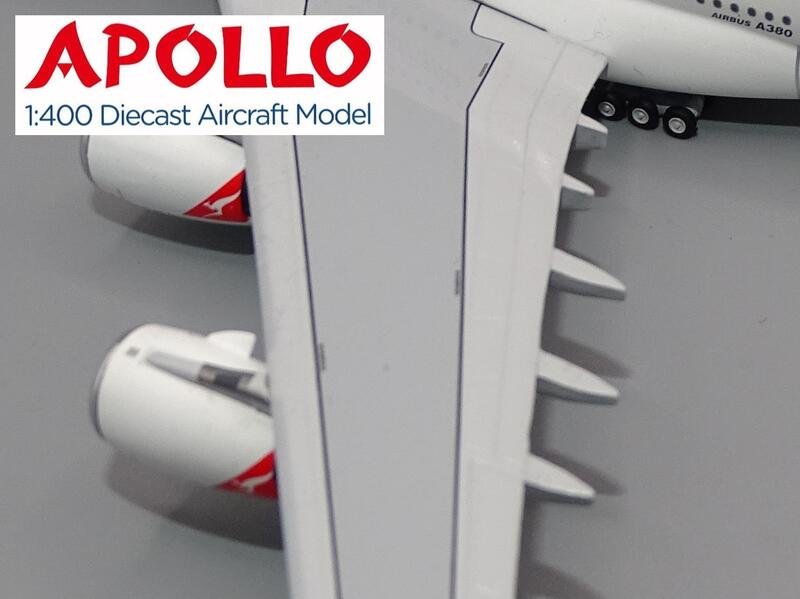

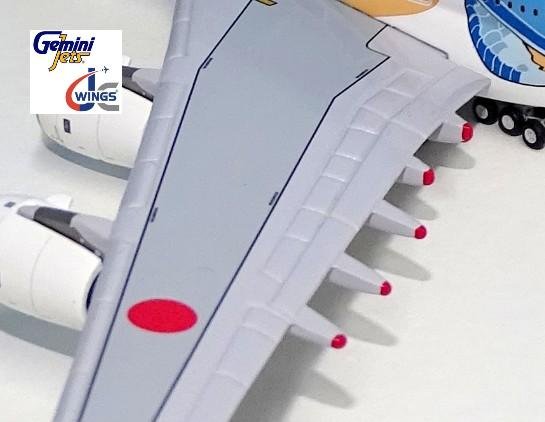
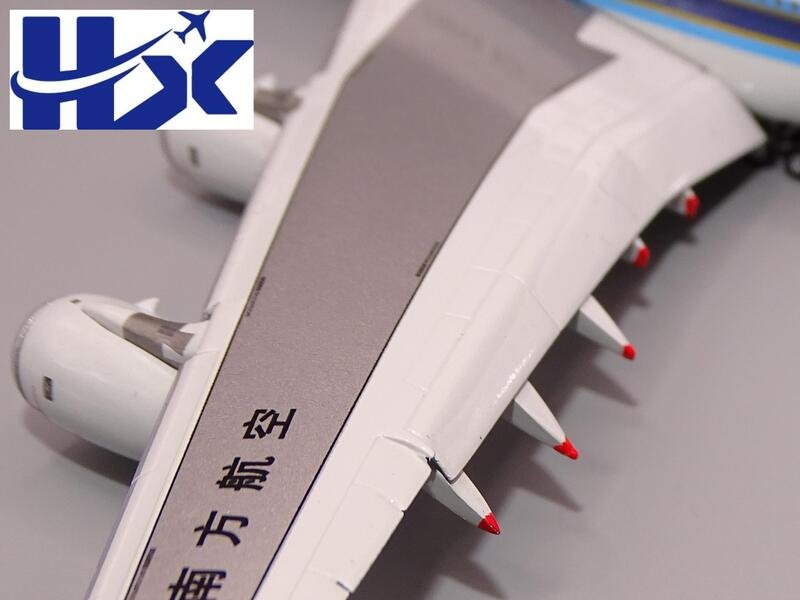
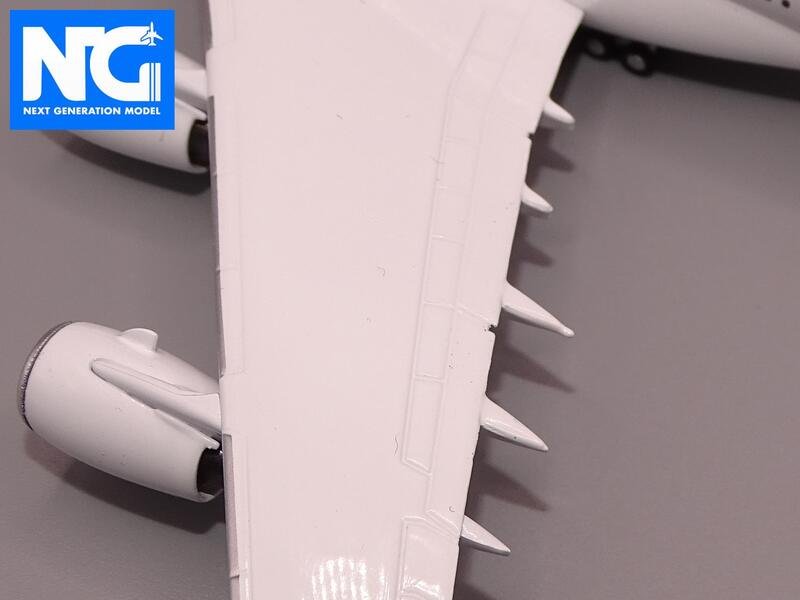
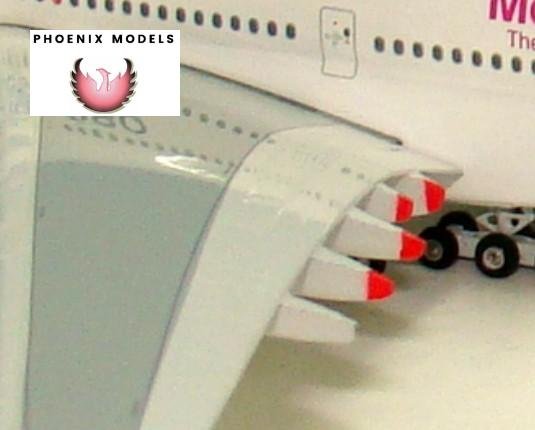
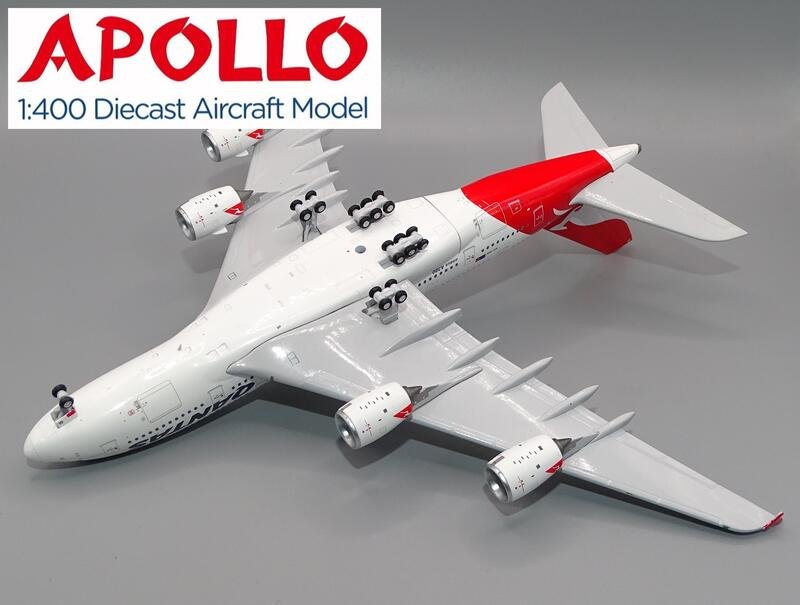
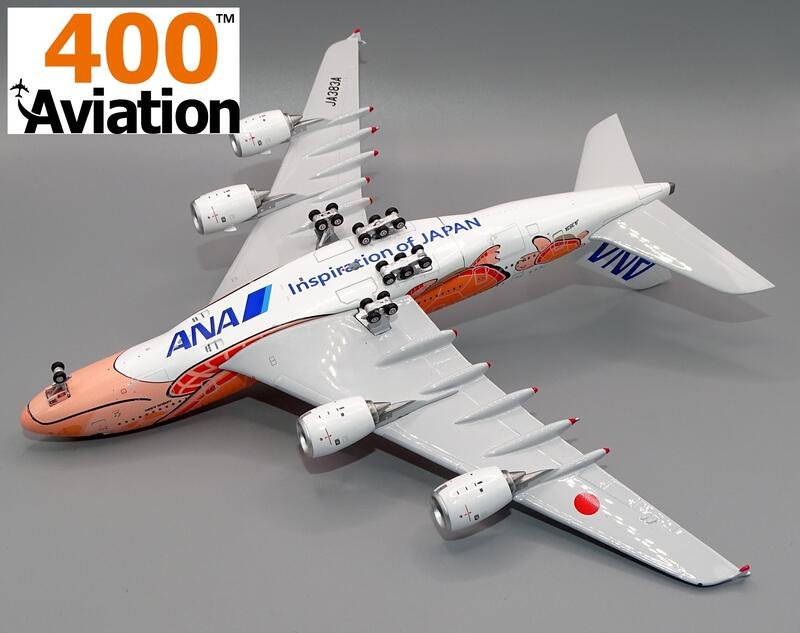
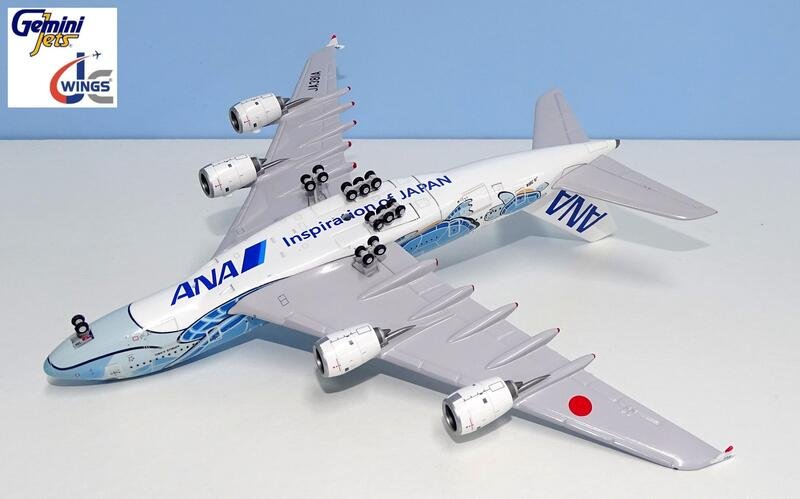
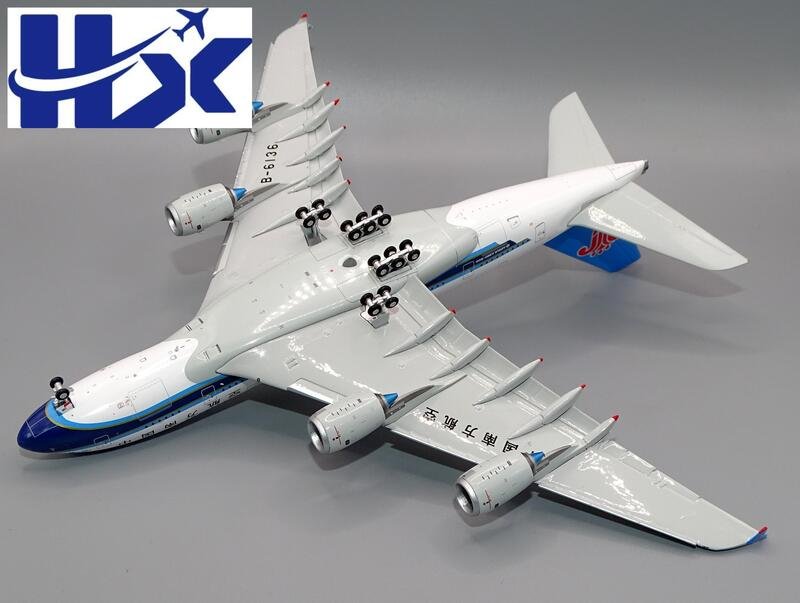
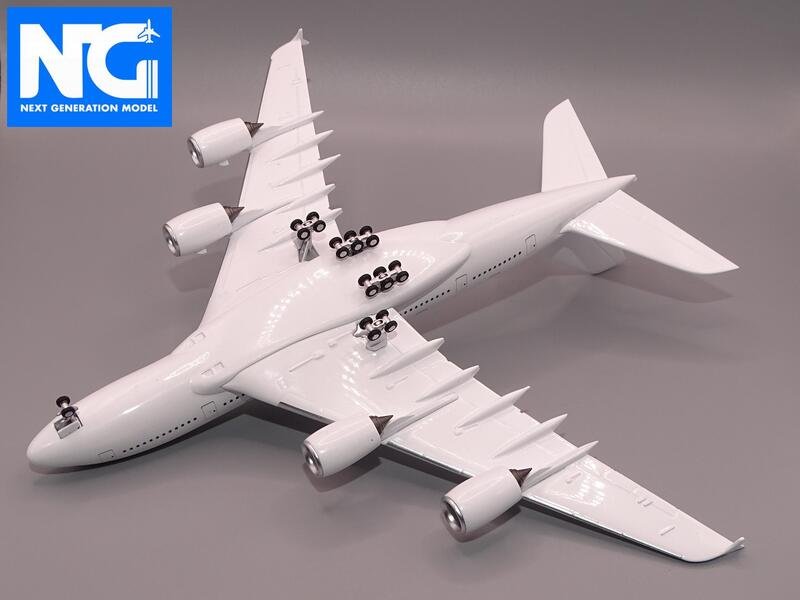
On the wing underside the NG and HX versions are the only moulds to model in the RAM Air Outlet doors and the other structural underside elements, with the NG being the better of the two. The other moulds print on the RAM Air Outlets and do not feature the 5 long strakes ending in squares. The Apollo also lacks the flap hinges on the outerwing flaps.
WING DIHEDRAL

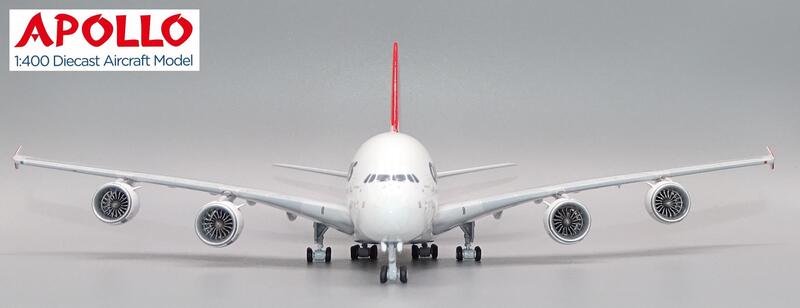
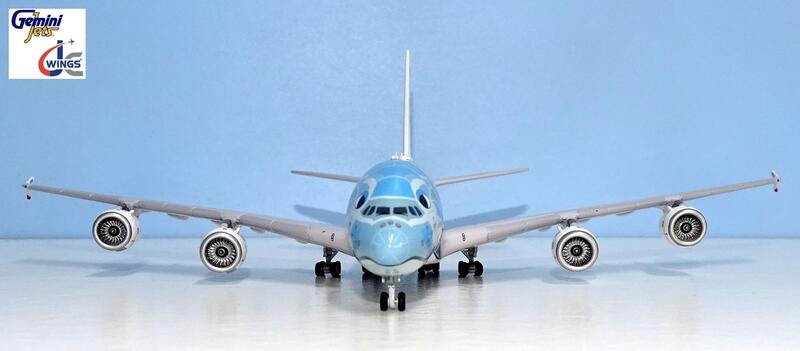
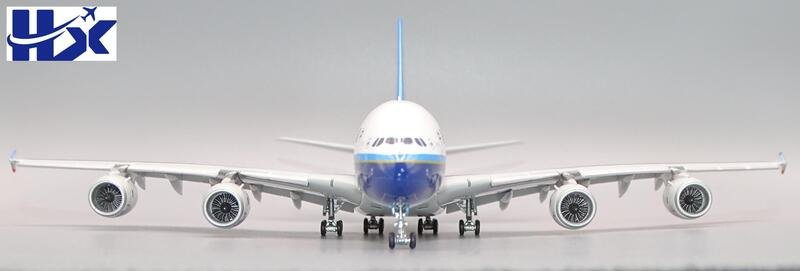
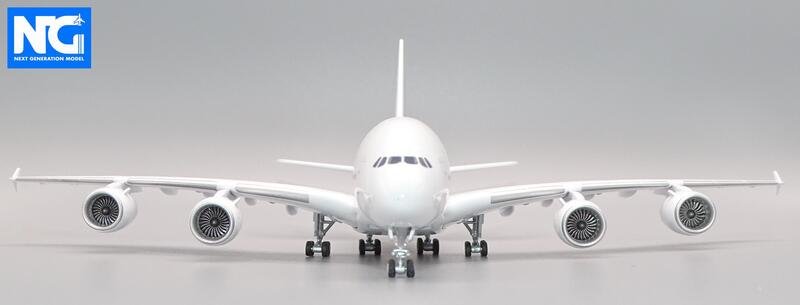
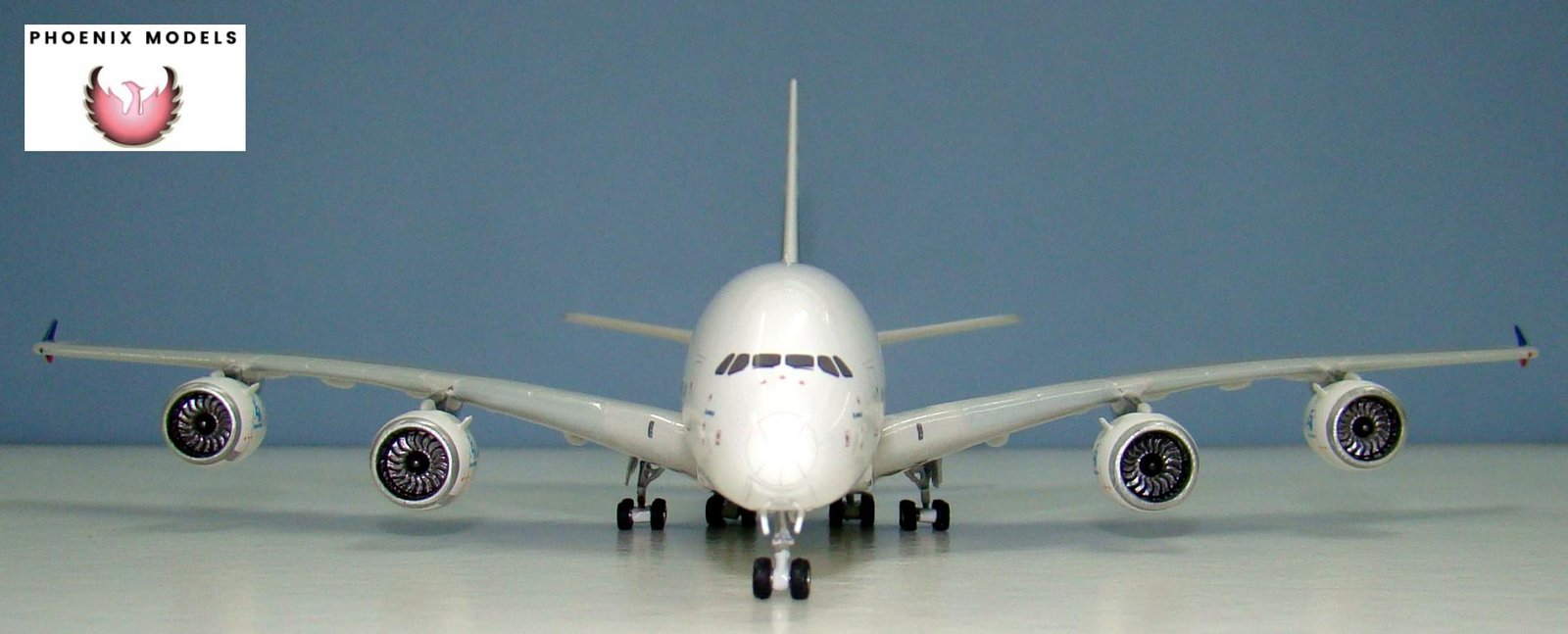
From the front the Gemini and Apollo moulds both fail to model in the correct curvature of the A380 as it is when on the ground. Both have wingtips that are too high since the wings do not curve enough. Wing dihedral on the other four moulds is not an issue.


WINGTIP FENCES

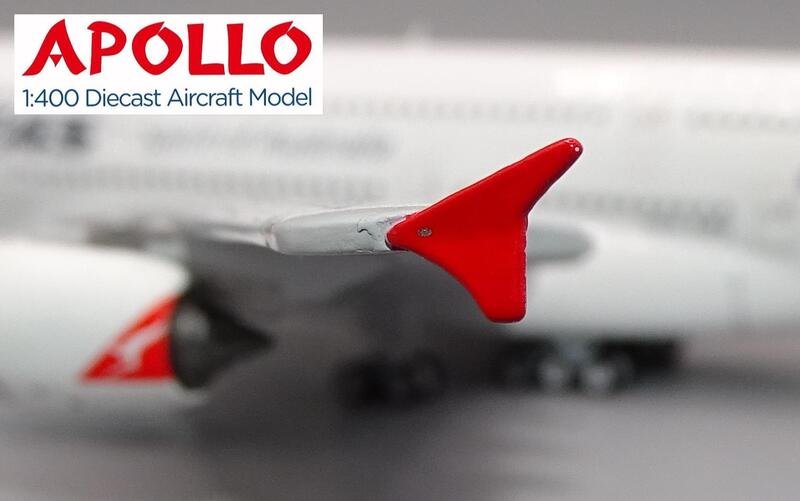
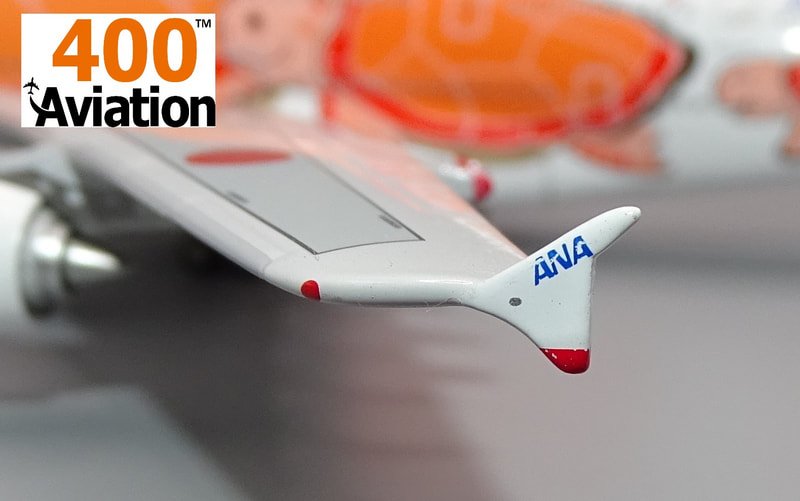
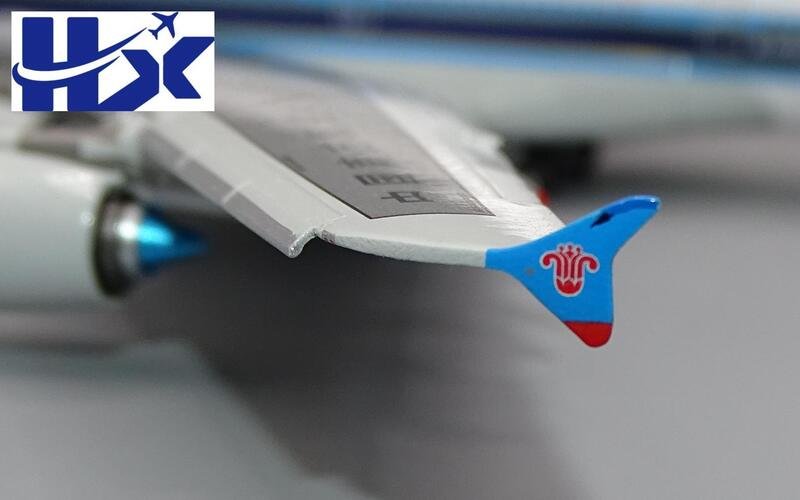
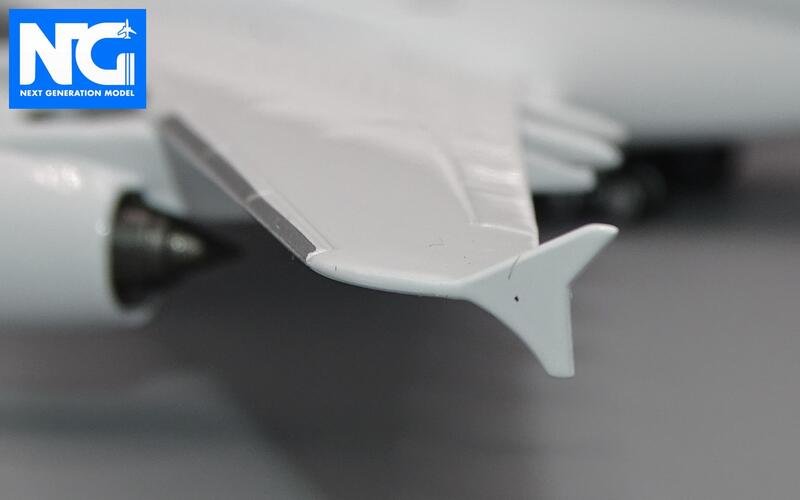
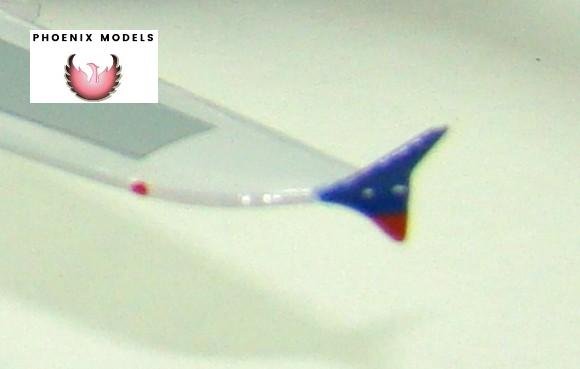
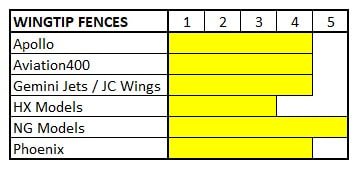
The best of the wingtips is the new NG Models version, which has a really well angled and angular upper portion and a nicely curved leading margin to the lower portion. The Phoenix also has a good shape, but the lower half is too pointed. The rest are all a little too curvy although the HX misses the correct curvature on the lower leading edge too. This is an area where the Gemini mould scores well.
MAINGEAR

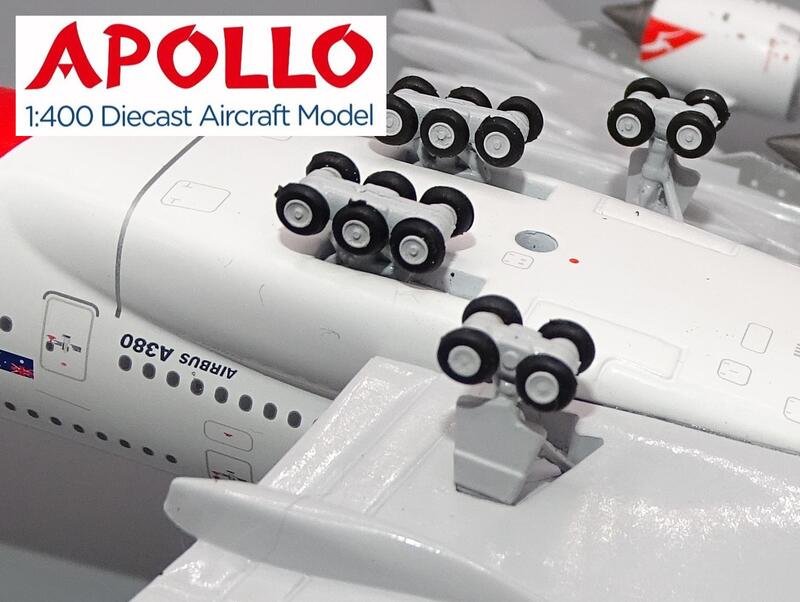
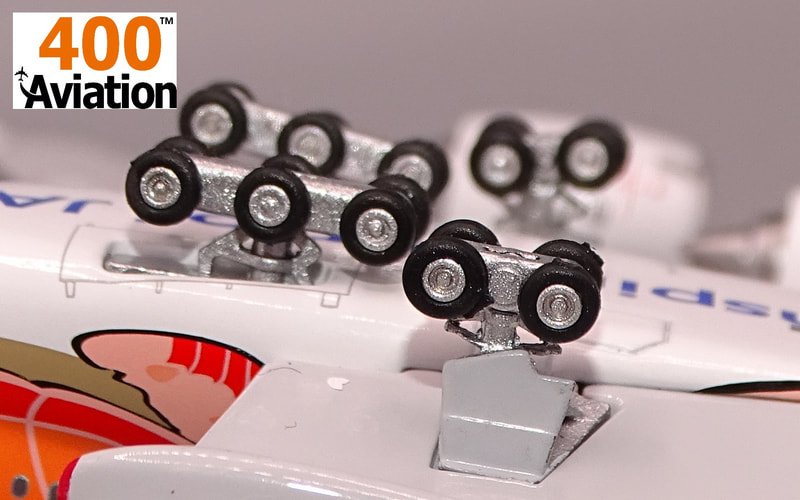
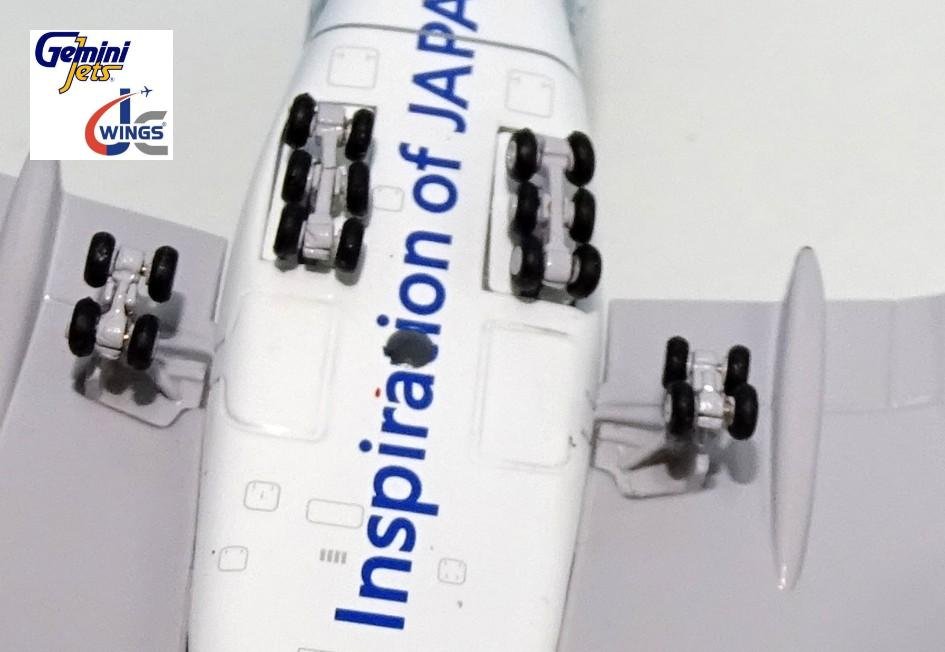
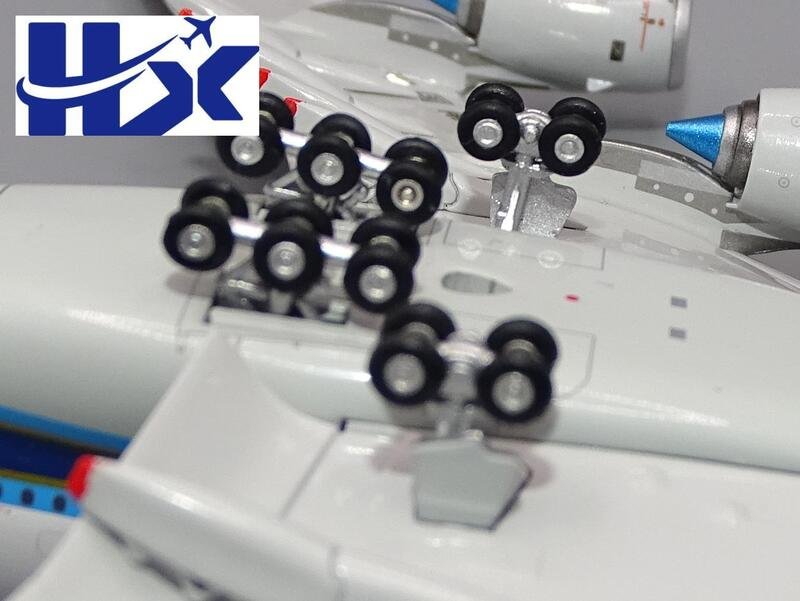
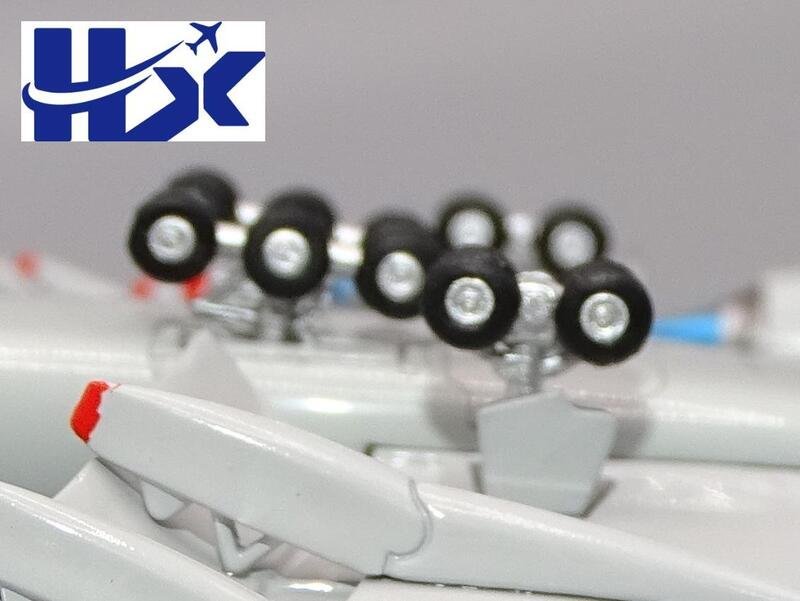
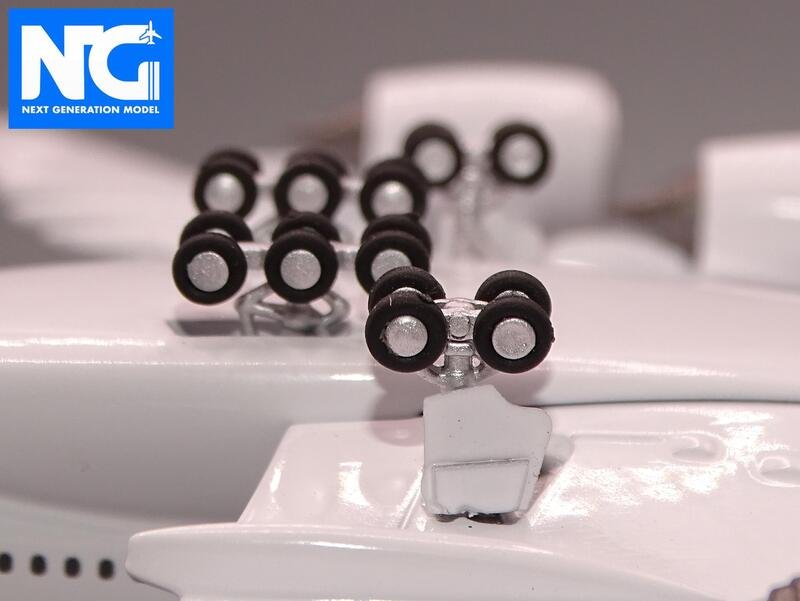
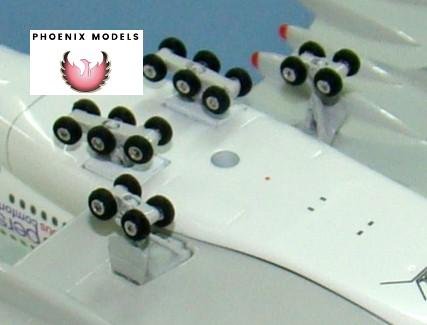
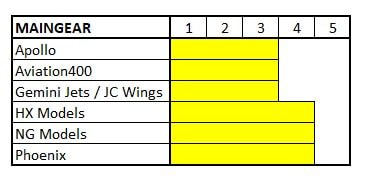
The maingear trucks on the A380 overlap with the inner about a half a wheel across the outer. None of the moulds are getting this spacing correct, but arguably the HX is the closest. The NG mould is an outlier in that its inner trucks overlap by too much, while the rest don’t overlap enough. Their hub detailing is often lacking too. The Apollo doesn’t overlap by the largest margin, although it is possible the maingear trucks have been fitted in reverse on this model. Wheel spacing on the Aviation400 is too wide. Gear truck detail is a weakness on the old Gemini.
TAIL & TAILCONE
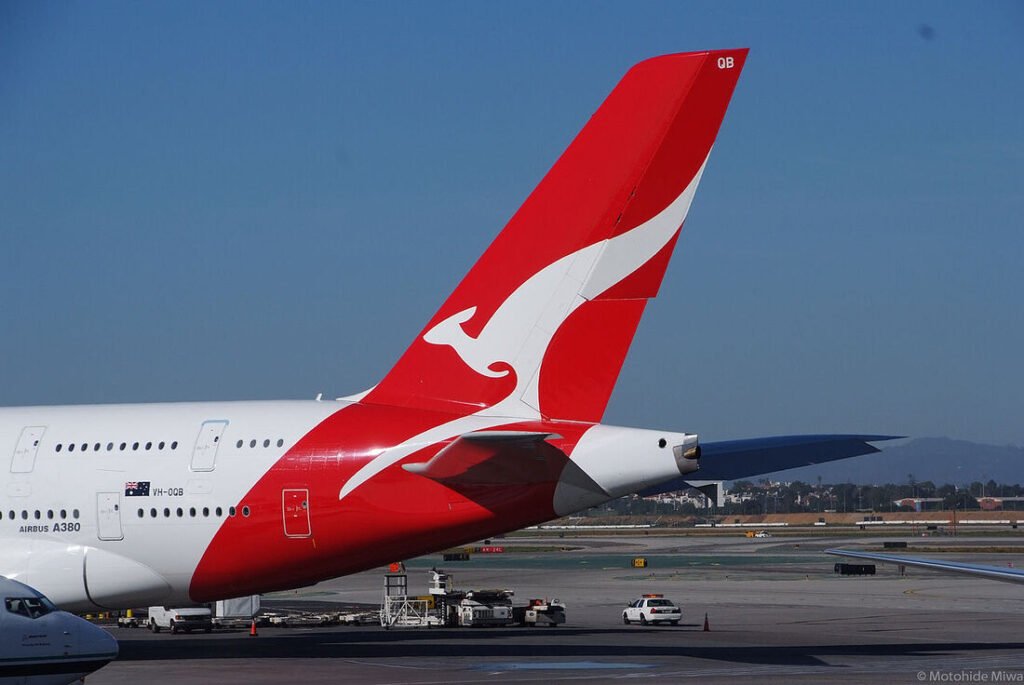
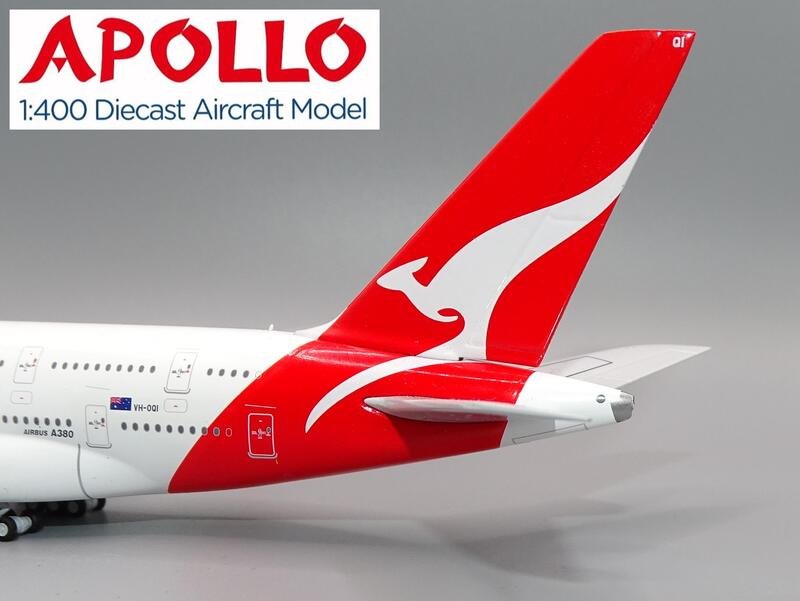
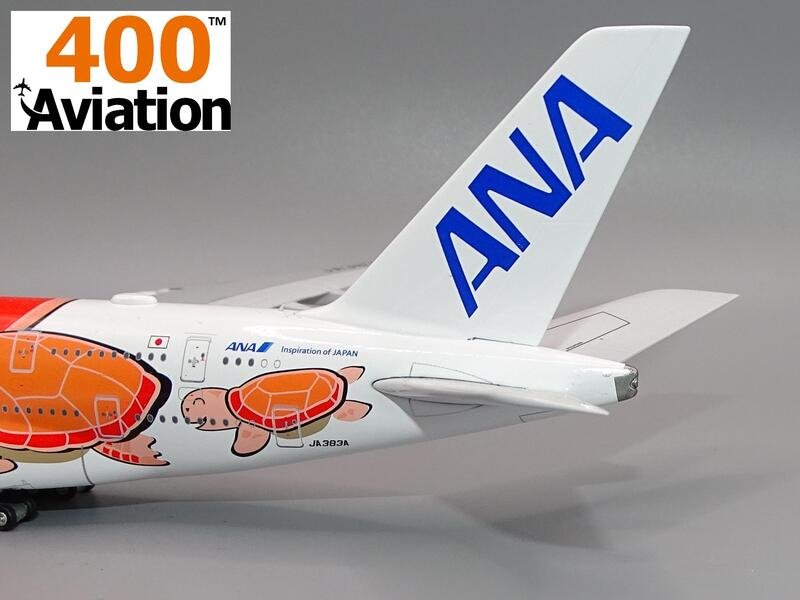
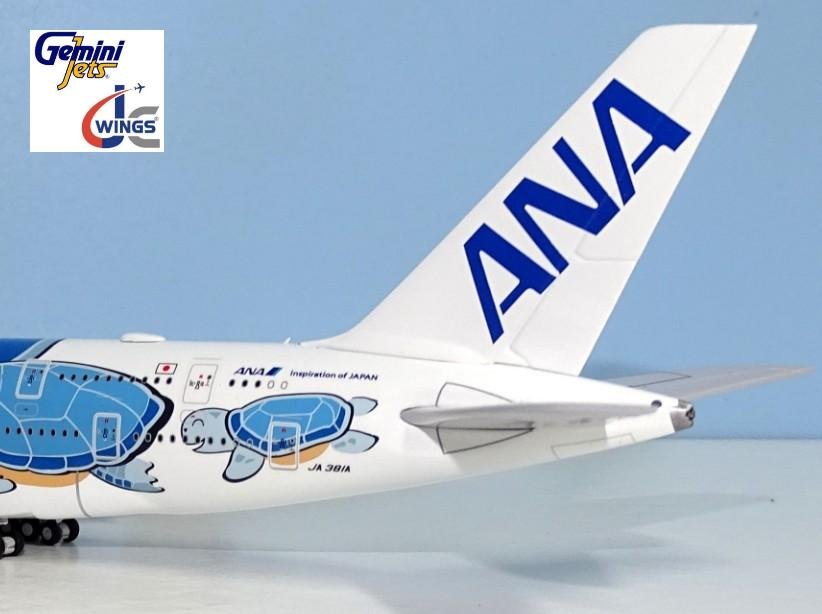
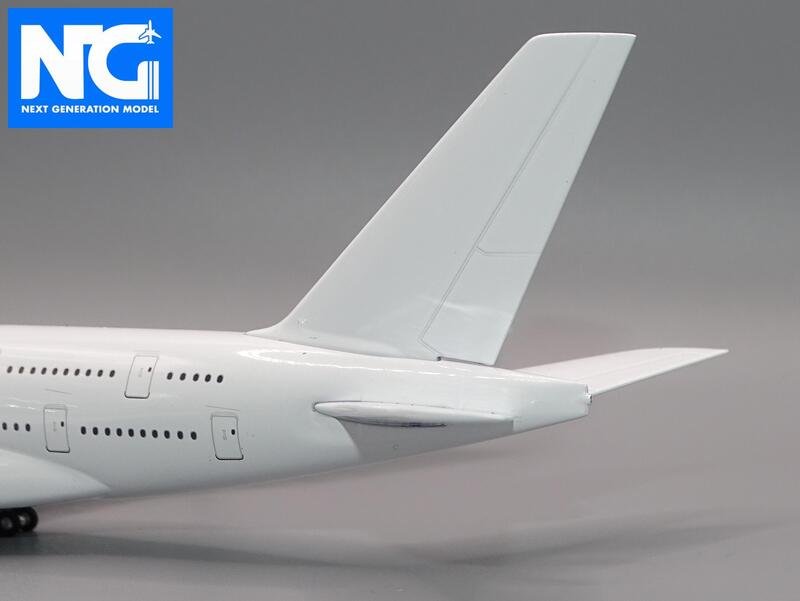
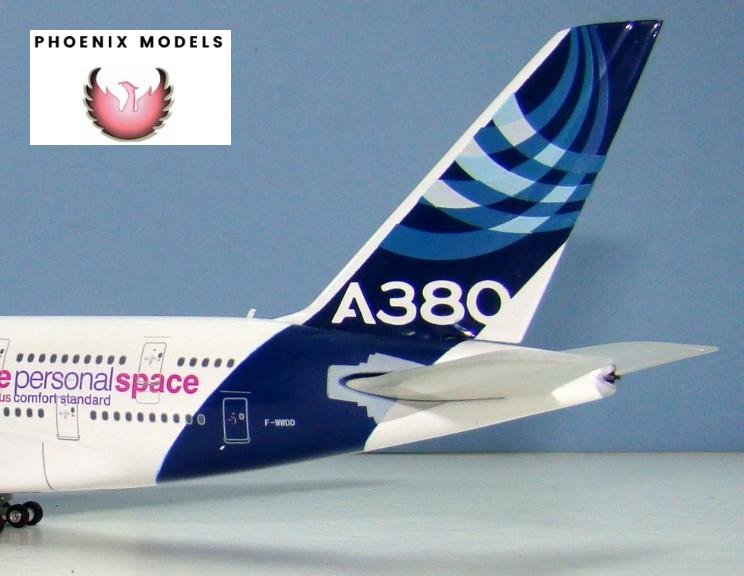
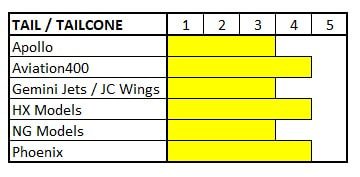
The vertical stabilisers are all good, but I’m not loving the tailtop of the Apollo or NG, which are rather curvy rather than straight topped. The tailcone blade is too narrow on the Gemini and too tall on the HX. On the flipside the APU exhaust pipe is wonderfully realised on the HX, good on the AV400 and less good on the rest. The Apollo almost lacks the APU pipe altogether.

FUSELAGE DETAILING

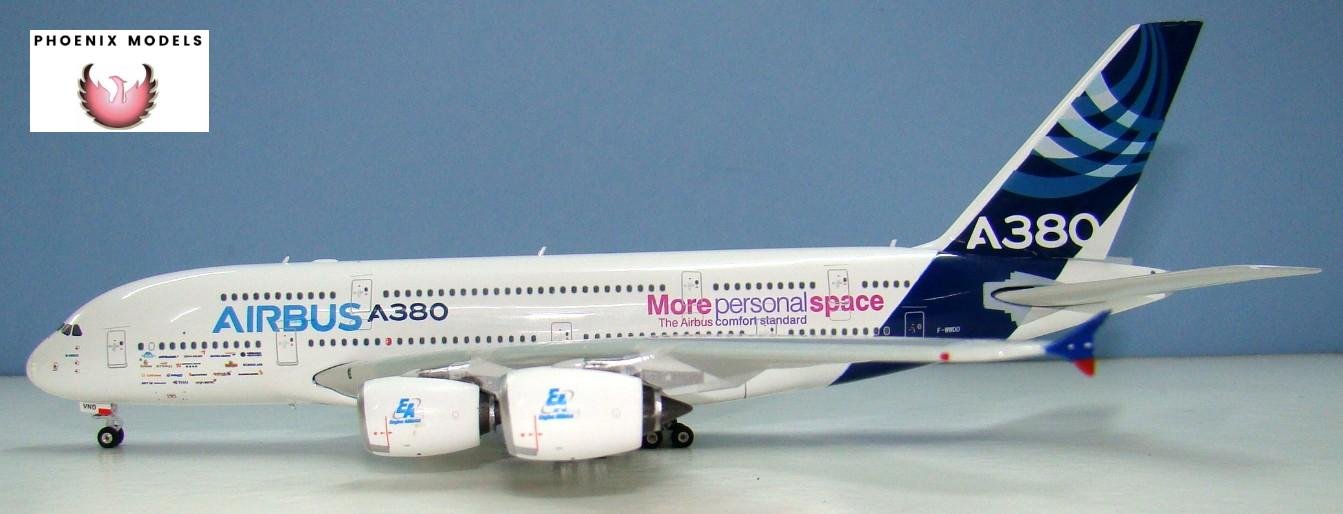
On the fuselage underside (see photos in earlier section) the Gemini is the odd man out with incorrectly shaped RAM Air Inlets near the wingroot. It is of course worth pointing out that the Aviation400 version includes their trademark beacon lights and the mould also has magnetic landing gear. HX Models offers a flaps down version (as shown here). The aerials on the Apollo and Gemini Jets moulds are a little more upright and less accurate than on the others.
This is probably a good place to mention that the Phoenix is not made of Zinc and is a lot lighter than the others. While not a problem in of itself it does tend to lead to the model sometimes not sitting without the nosegear being slightly off the ground.


Summary
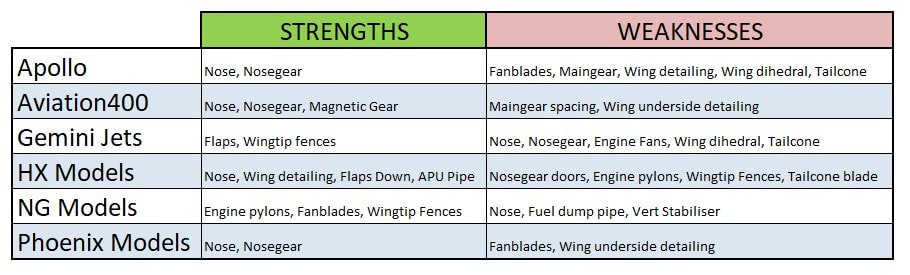
There are 3 really strong A380s in this set of 6 and even the 2007 Phoenix mould still scores well. Obviously, the Gemini Jets mould, which is well known for its weaknesses, is the worst by a large margin. That is no surprise. The rediscovered Witty Wings mould, now being used by the reborn Apollo, also doesn’t fare that well, but still looks like a decent A380 and if not for the wing dihedral would be giving the Phoenix a run for its money. It is also typically quite cheap to buy.
Looking at the 3 best scoring moulds and the Aviation400 just pips it, but the HX Models version and the new NG mould both do well also. There’s certainly plenty of options now for a modern A380 and for me any of those 3 moulds is the selection I’d make, with a slight favouring of the AV400 edition.