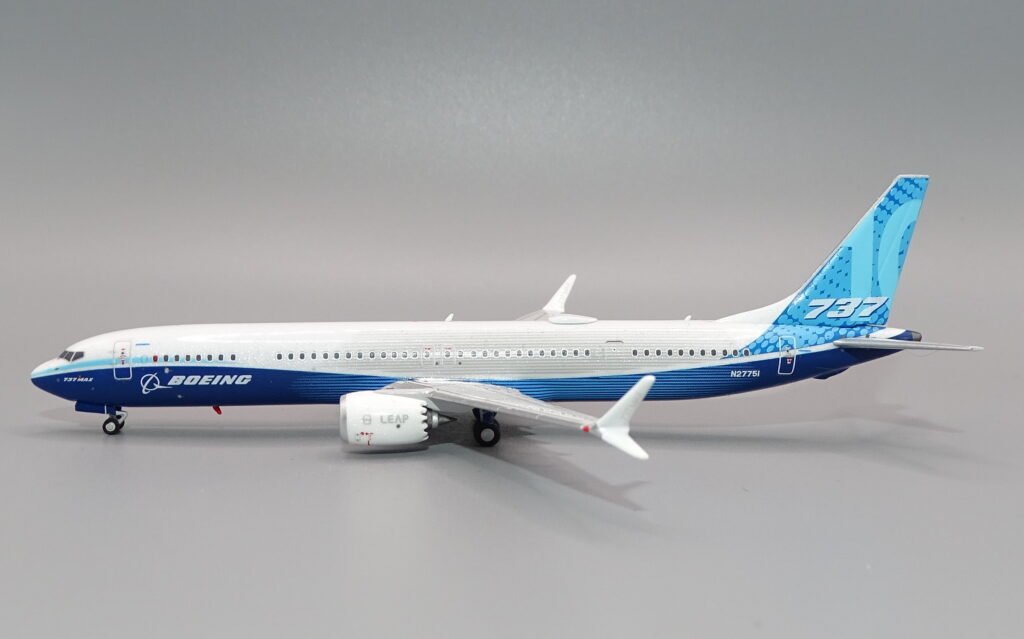
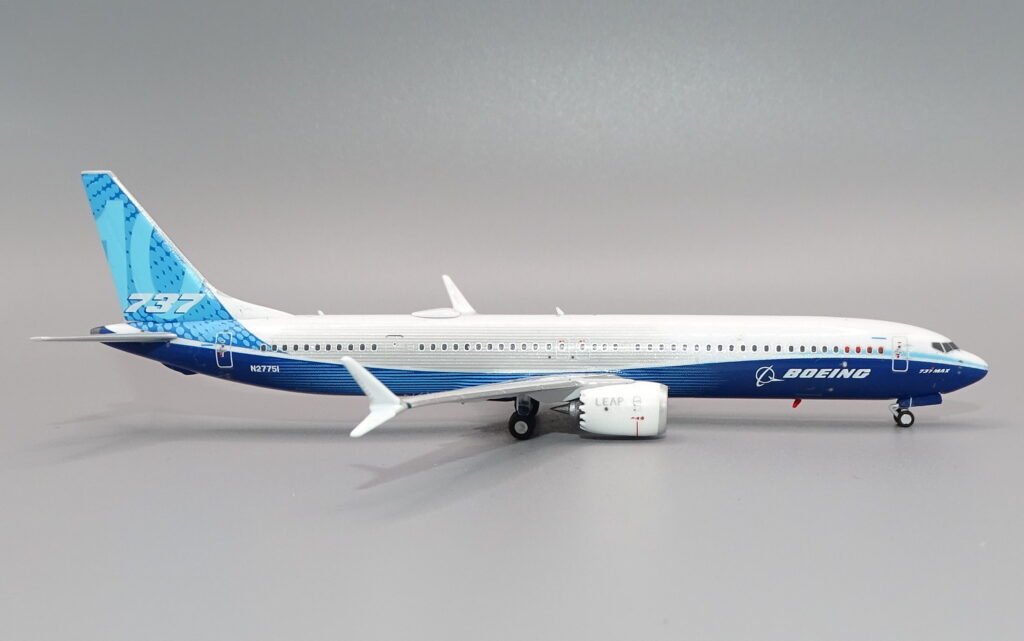
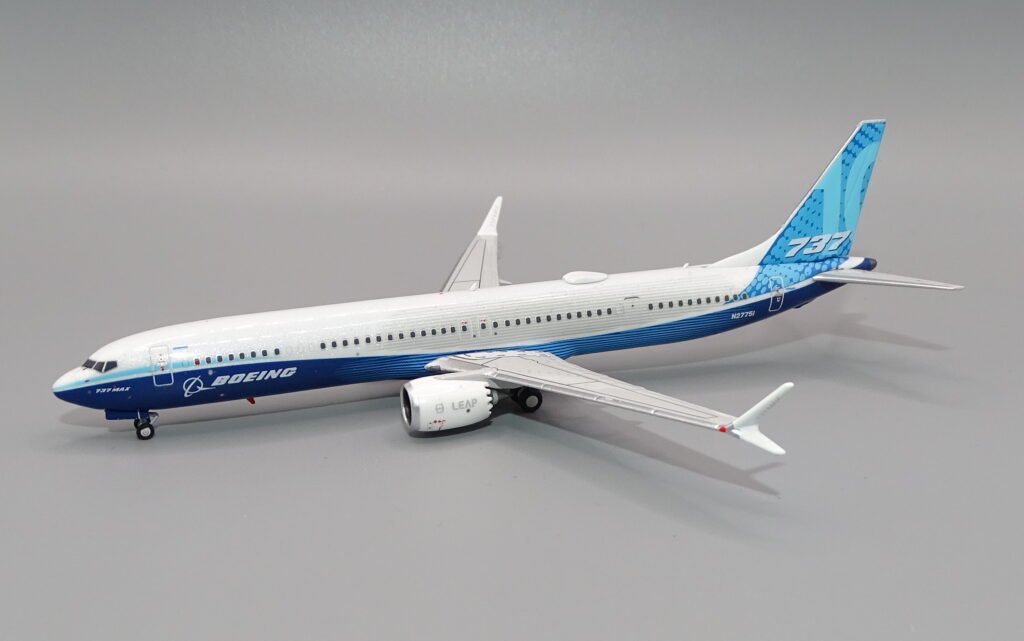
Nearly 9 years after the variant was launched, and 6 years after it was originally slated for service entry, the MAX 10 remains in development hell with entry into service now looking like it’ll be 2027. That has probably delayed the production schedules of several manufacturers in 400 scale, but not NG Models who went ahead and developed both the MAX 7 and MAX 10 in 2023. Of course, their ability to use them has been limited, but as of 2026 they remain the only game in town for both variants.
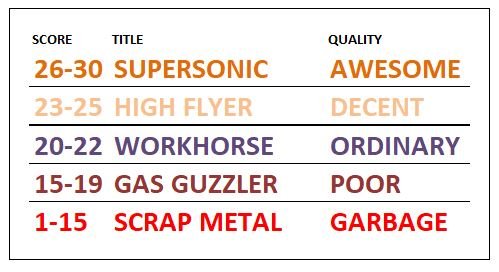
Each review is to split into three key areas:
The model mould
The paint and livery reproduction
Printing and quality control
Each section can get a maximum score of 10 for a maximum combined score of 30
This review is sponsored by Northeast Diecast. Check out their store for an excellent range of hard to find 200 and 400 scale collection sale models and get 15% off!
MOULD
NG produced their original 737 MAX 8 and MAX 9 moulds in 2022 and moved on to create the MAX 7 and MAX 10 versions almost immediately. By October 2023 both moulds were at the completed sample stage (part of that massive burst of new mould production at the time that still hasn’t fully born fruit).
Since both types are basically just fuselage length modifications of the intermediate variants they could exploit the excellence of the original MAX pair, which remain the best 737 MAX in 400 scale. Competition for the MAX 8 comes from JC Wings / Gemini, Phoenix and Aeroclassics.
The JC Wings mould is good, but not quite as nicely finished as the NG. The Phoenix has been improved and is now competitive, but still wouldn’t be my first choice. The Aeroclassics MAX is clunky, poorly formed and frankly a bit rubbish.
Of course they are all MAX 8s and this model is a MAX 10, which is an area where there is no competition for this NG version, although I would expect both JC and Phoenix to produce this variant as soon as the type enters revenue service by stretching their MAX 9.
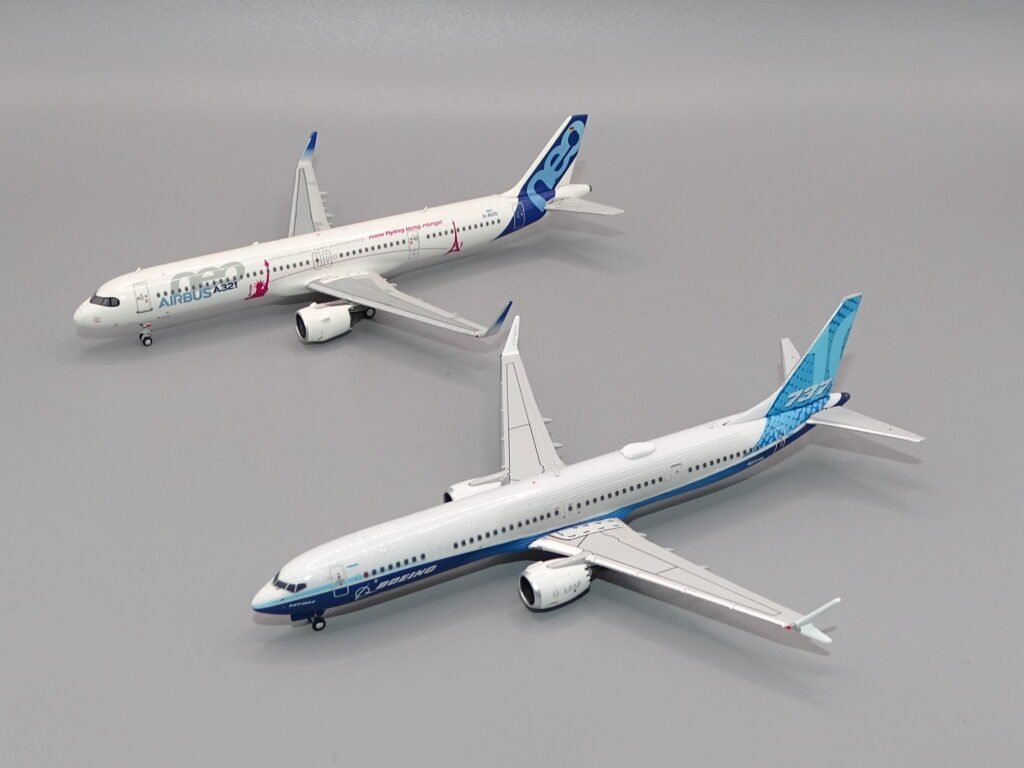
The MAX-10 becomes the longest 737 to date at a whopping 43.79m (143ft 8in) – only marginally shorter than the A321 which is 44.51m long. This increase allows seating of between 204 and 230. There have also been some modifications to the maingear leg, which is fitted with a telescoping oleo-pneumatic strut allowing the slightly taller gear to be shortened while retracting into the existing wheel well. I can’t see any obvious visual difference caused by this that would be visible on a 400 scale model.
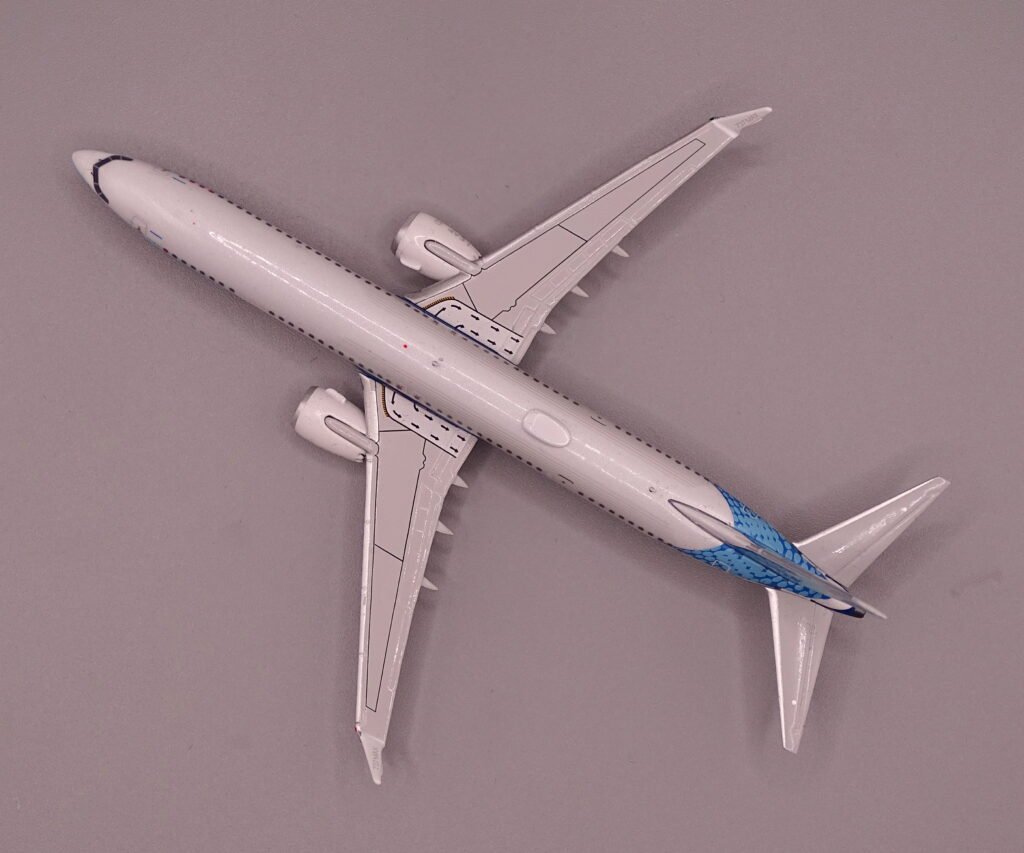
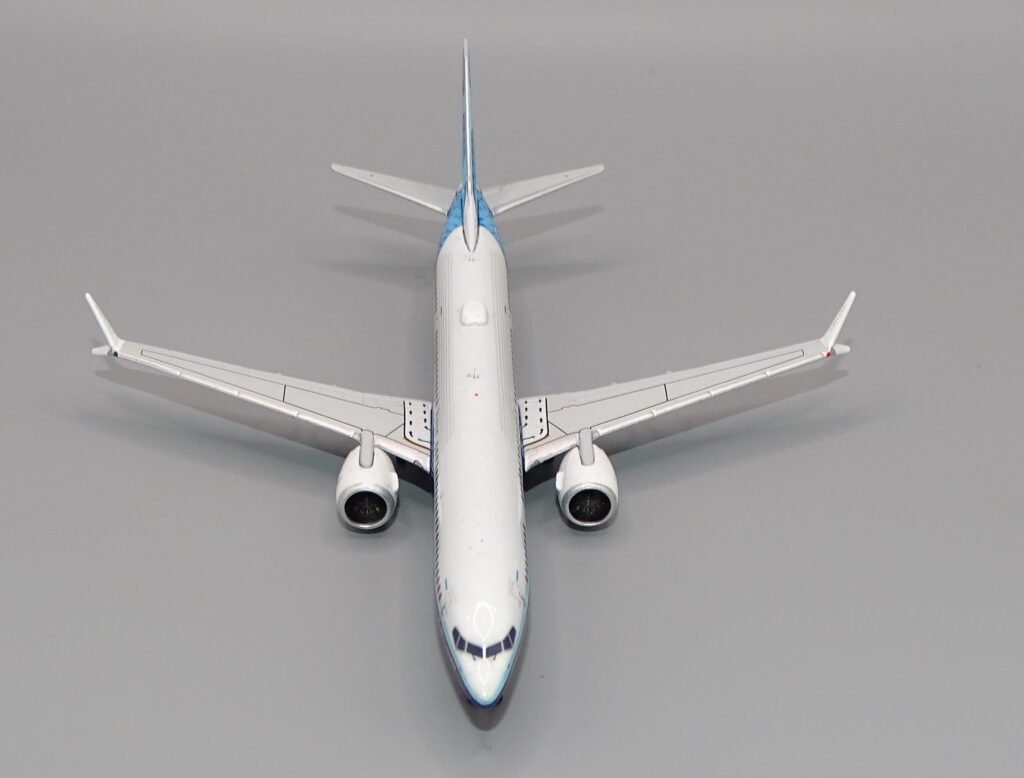
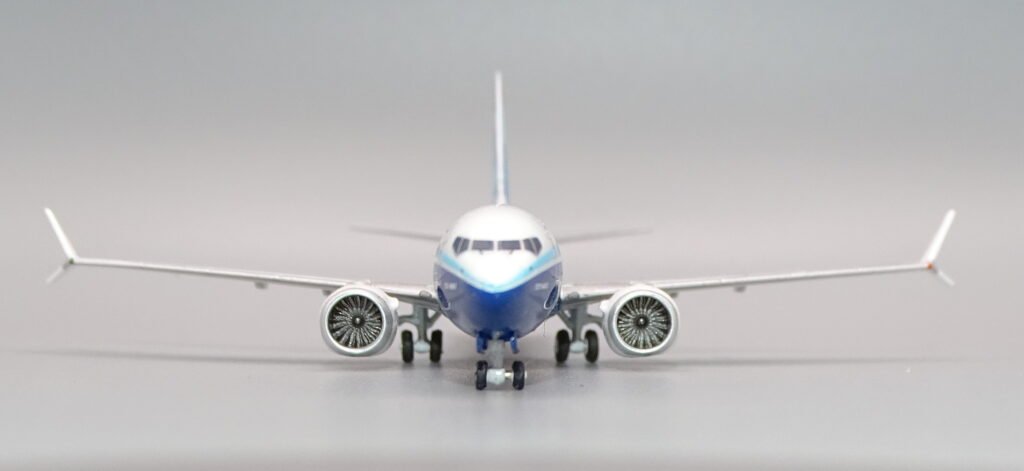
NG Models Boeing 737s have always been excellent and this MAX 10 continues that legacy. This mould has no real weaknesses. The fuselage barrel is exceptional and shows no issues.
Equally the wings, including the MAX winglets, are spot on. The pylons and engine nacelles likewise show a commendable level of accuracy helped by NG’s decision to go for solid core engines allowing a high level of fanblade detail and accuracy.
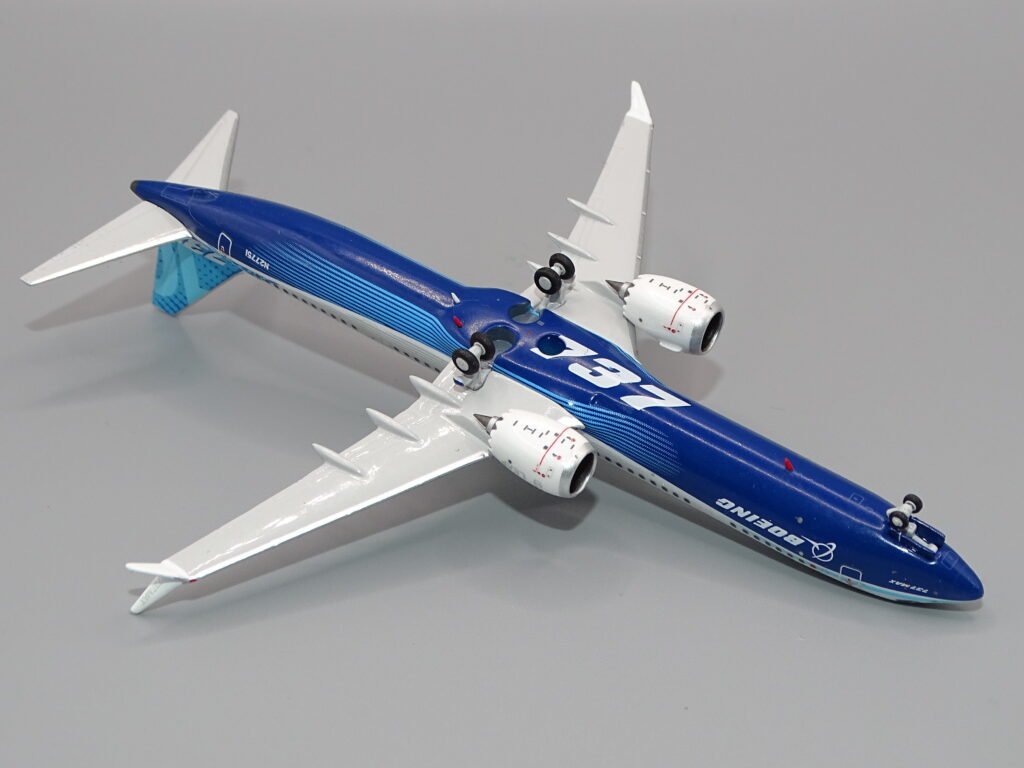
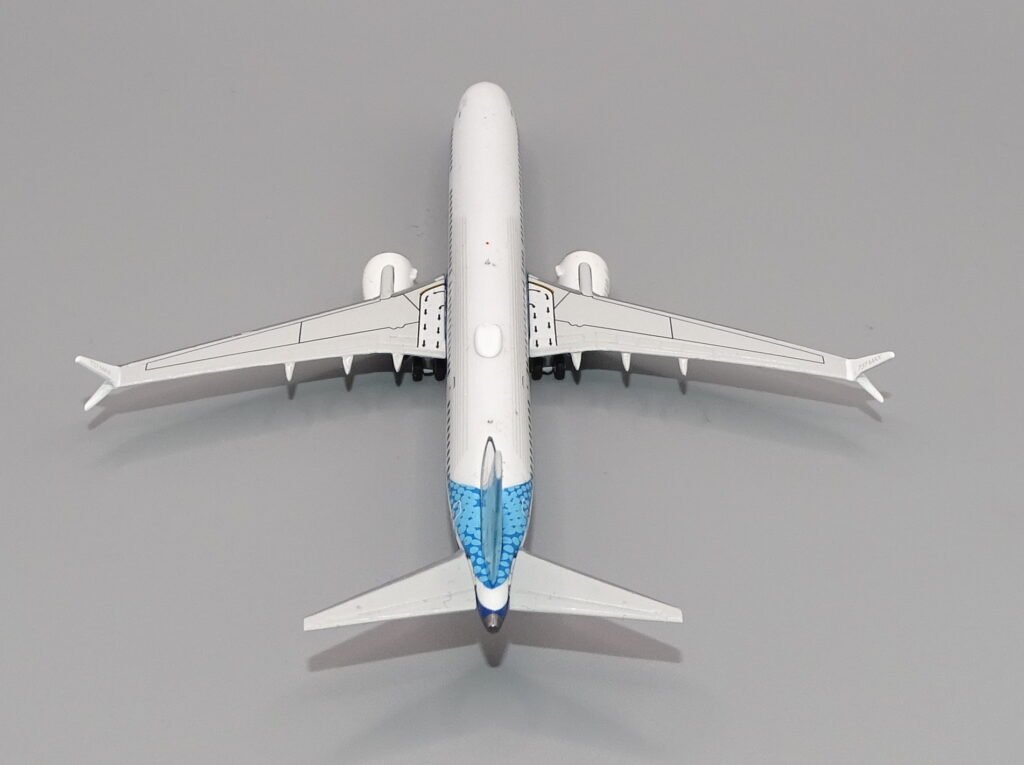
The undercarriage does the job well, although the nosegear could probably be very slightly taller. The model has five aerials and a well-shaped teardrop rooftop dome. Curiously, unlike the older MAX moulds, this version also comes with a standhole. Its addition was no doubt made prior to NG’s change towards ‘over the wing’ stands. I would expect to see that standhole being removed from the mould in the coming months.
NG’s 737s have always been effortlessly great and only in recent times has the Aero Polaris version (basically a copy) and the Panda moulds come to match them. However they are Next Generation variants not MAXes. In the MAX arena the JC Wings mould provides some competition, but does not have the finesse of the NG.
SCORE – 10
PAINT & LIVERY
The modern Boeing house livery is very attractive and utilises the real estate of the fuselage very well. It was only in June 2024 that NG last reproduced it on the MAX 7, but there are some differences both in the actual scheme and the NG versions.
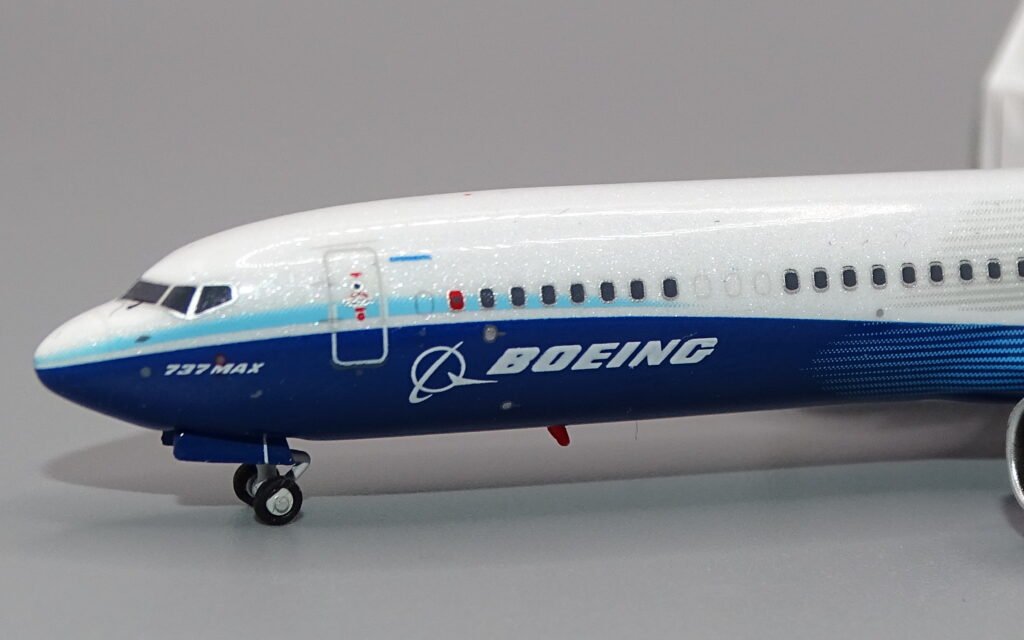
One of the real differences is that the graded area at the nose is blue here and greyer on the MAX 7. NG hasn’t always been able to manage the grading of this scheme well (I recall the Lion Air example) but here it is fine. Less good is the sparkly effect of the fuselage.
It isn’t especially obvious in hand but shows up on macro photos. The effect is that the roof of the model is quite a bit darker, almost greyish, compared to the MAX 7 release. It certainly is a lot darker than the real thing, which curiously doesn’t really seem to have any metallic look to it in photos – see here and here.
The rest of the livery is executed well. The blues on the belly and tail are good, as is the fuselage striping. Details, such as the LEAP lettering on the engines, 737 MAX titles on the winglets and tail titles are nicely done. The very small ‘EXPERIMENTAL’ titles by the doors aren’t especially well defined, another side effect of the sparkles I think.
SCORE – 8
PRINTING & QUALITY CONTROL
I’ve already talked about the sparkliness on this model and it does impact the print fidelity a little. Broadly however the print detail is as good as NG’s is usually.
A nice touch is the offset underside aerial being painted red. In real life this is actually striped), but I understand why that would be a challenge given its size in 400 scale.
Quality control appears fine across the board. No issues.
SCORE – 10
CONCLUSION
NG has deservedly received some criticism for not using all the moulds it developed back in 2023 – especially the A340s, 767s and MD-80s. With the MAX 7 and MAX 10 they have made about as much as they can without going down the A350F fantasy route, which I’m glad they have avoided. NG 737s remain top of the class and the MAX 10 is a fine addition. I’m sure there’ll be more competition for it when the type eventually gets into service, however frankly I suspect this might be the only MAX 10 I ever buy unless Chinese airlines start ordering them. I don’t see any need to wait for a second version.