Updated: July 2026
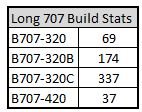
The stretched 707-320 Intercontinental represents the beginning of a series of versions of the 707 that most people associate as the standard aircraft, as opposed to the earlier 707-120 (and its later variants the 720 and 707-120B/138/220). The type certainly outsold the DC-8 and was responsible for a lot of passenger’s first jet experience, not the least due to the huge fleet built up by Pan Am. The longer 707 series also acquired by far the highest sales numbers with 617 civilian sales out of just over 1000 true 707s (so not KC-135s) built. In fact airline 707s were still being delivered as late as 1977 by which time the type was really obsolete.
Long 707 Variants
As is typical with 707s across the board the series 300 was updated continuously through its manufacture and there are multiple variants. For any discussion of the complicated differences between marks of 707 I recommend David Hingtgen’s masterful ‘Ultimate Boeing 707 Guide’ which can be found here.
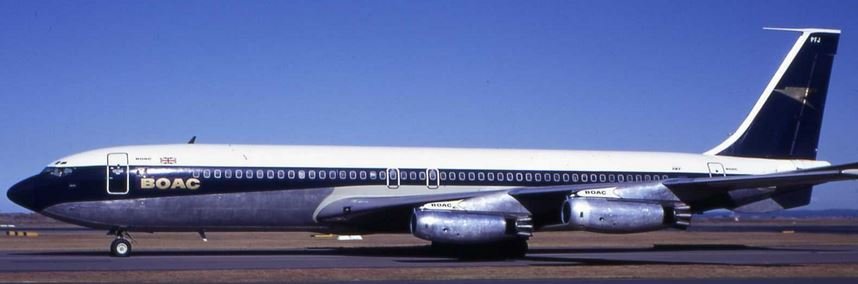
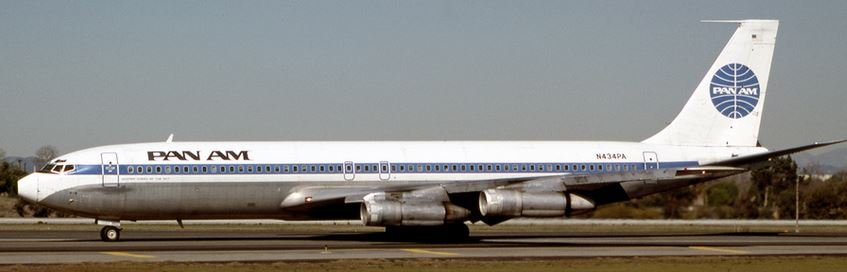
Above: a 707-420 with Conway engines, turbocompressor on engine 1, a ventral fin and the early style nosegear doors.

Below: a 707-320B Advanced with turbofans, no turbocompressor on engine 1, no ventral fin and the new style nosegear doors.
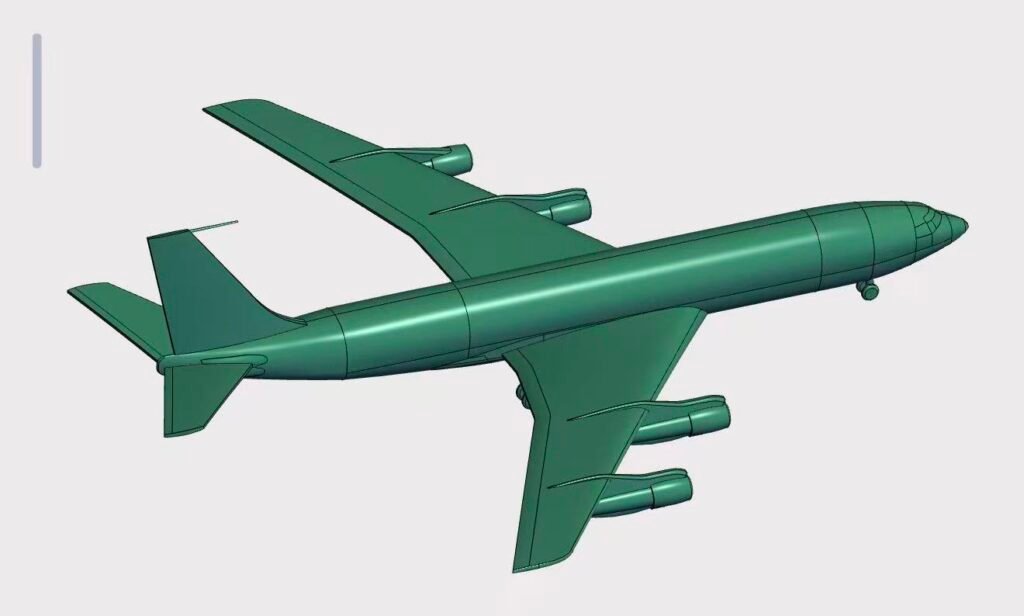
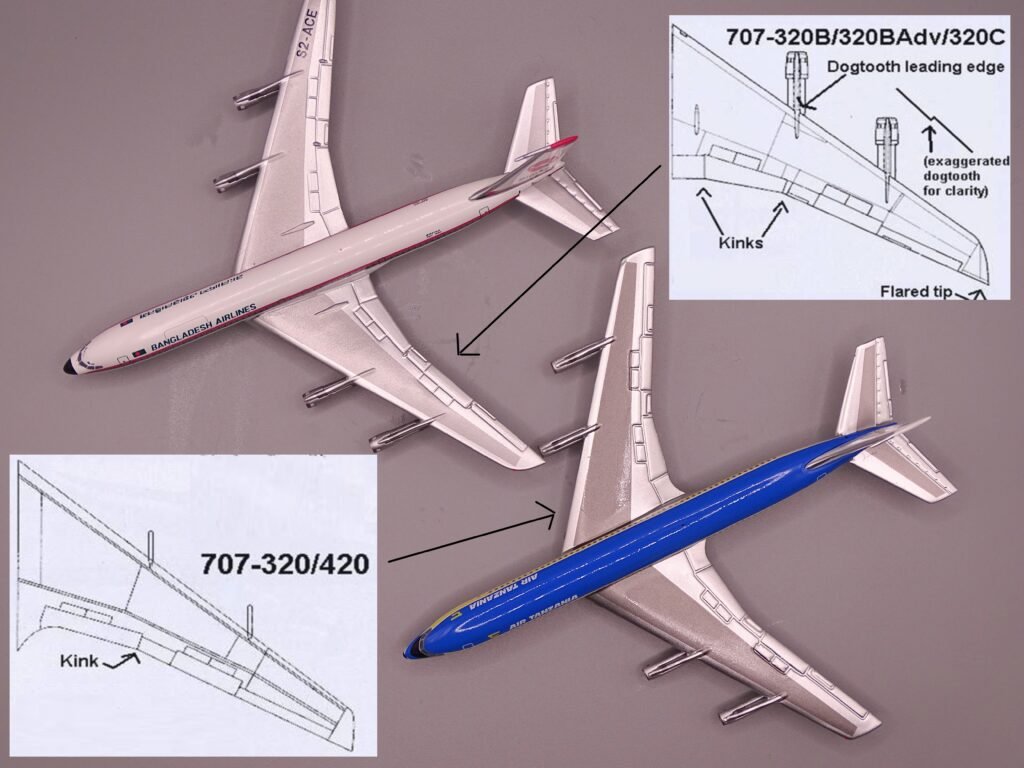
The below image shows the major differences between the 707-320B/C and the original 707-320/420:
Boeing 707-320/420 in 1:400 Scale
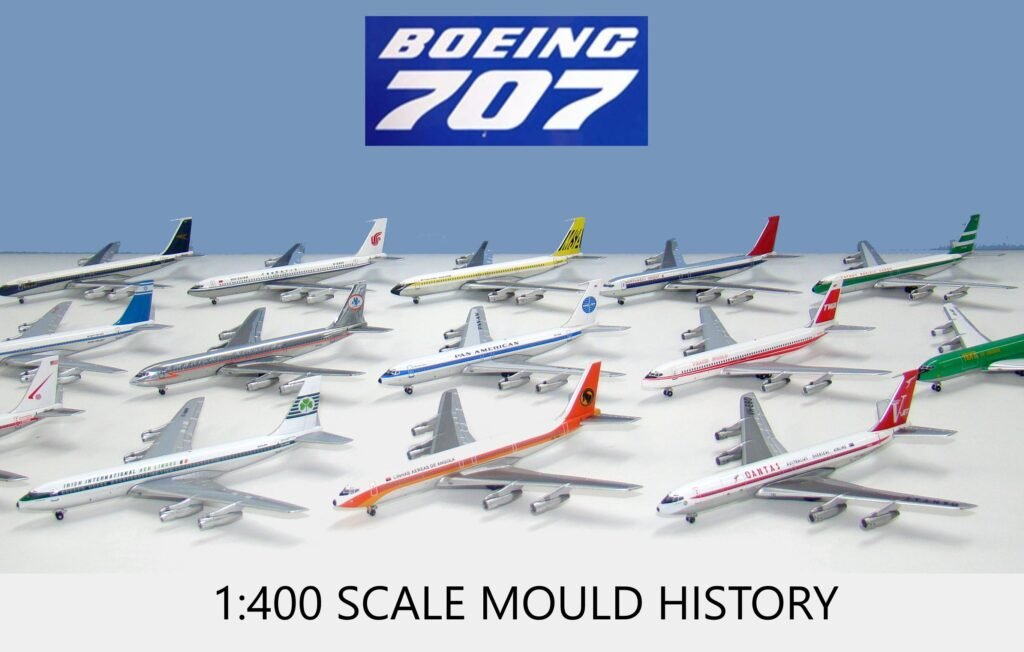
The long 707 has had a decent representation in 1/400 scale but as you’d expect the majority of the models have been made by Aeroclassics. The manufacturers have also paid only lip service to the different variants as well so that nobody has ever made an original 707-320B with a ventral fin. The vast majority of models released represent the 707-320B Adv and 707-320C models so there is a substantial hole in the representation of the type. Only Aeroclassics has made a turbojet 707 at all.
In addition, a lot of the moulds are very old and from a time when more detailed undercarriage was not common in this scale. Here’s the breakdown of the 8 moulds that have been used as of July 2026, with the new Patriot mould on the horizon:
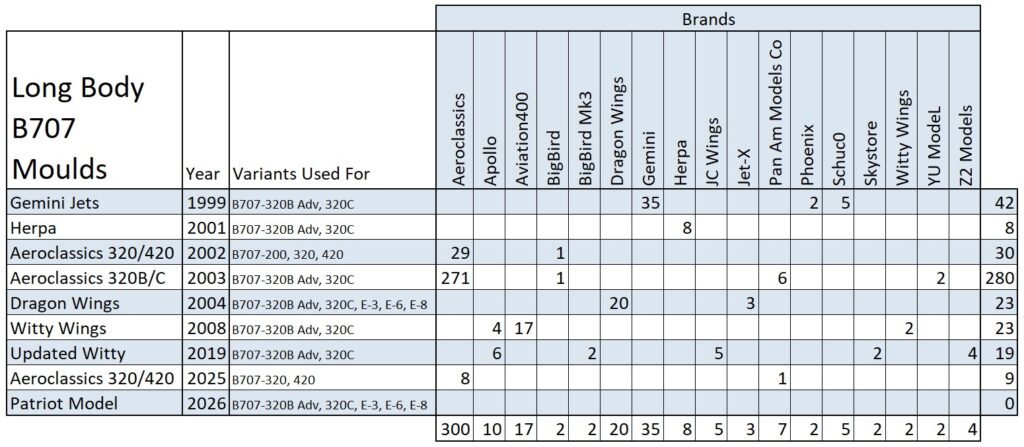
The Moulds
Gemini Jets Mould (1999-2011)
The Gemini Jets 707 is one of the earliest 1:400 scale moulds and although it carries off the general shape of a 707 reasonably well it has aged poorly and is no competition to the Aeroclassics moulds. Even so, it is still superior to the Dragon and Herpa moulds so shouldn’t be totally discounted. The fuselage shape is good but as with all first generation Gemini moulds it has a seam at the horizontal stabilisers. The vertical stabiliser is too small and has a rather clumsy tailtop aerial. The wings are very thick and the engine pylons hang too low. Lastly the undercarriage is very simple. There are no gear doors on either main or nosegear. Gemini released a 707 as recently as 2011, by which time the mould was hopelessly outdated. There are few models Aeroclassics haven’t made on their much superior mould so there is little reason to own many of these old Gemini 707s anymore.
Herpa (2001-2009)
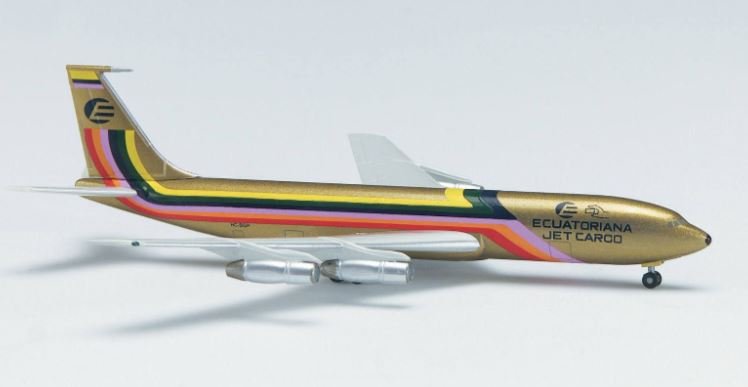
Sometimes I’m grateful that Herpa produce so few 1:400 scale models because some of their moulds are abominations. This 707-320B/C is perhaps their worst mould, mainly because of the ludicrous position of the nosegear. It ruins the entire aircraft and oddly their 500 scale mould doesn’t have this issue. This is one of the few moulds in 400 scale I won’t go near. Fortunately, it was only used eight times – half of which were exclusives for Cathay.
Aeroclassics 707-320/420 (2002-2004)
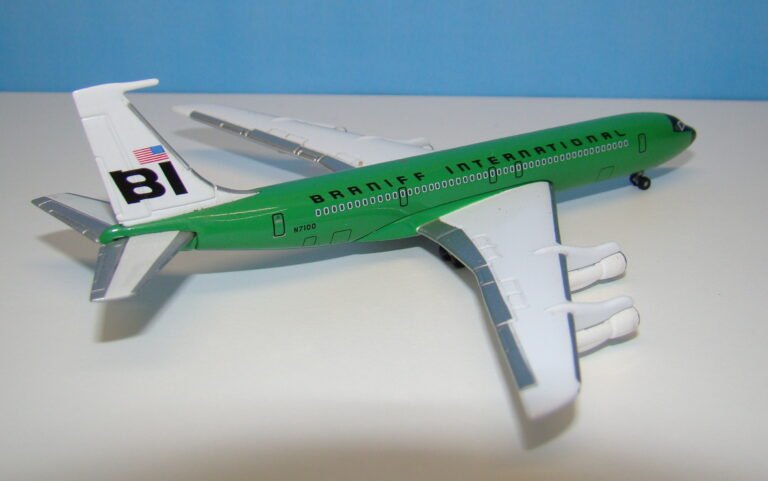
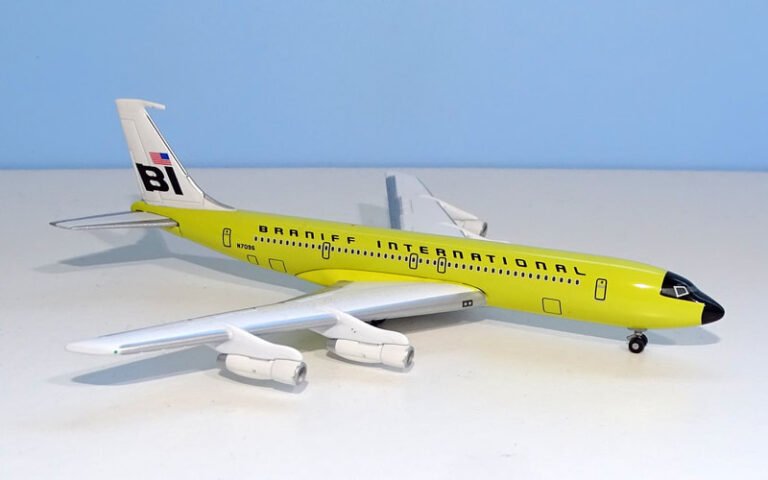
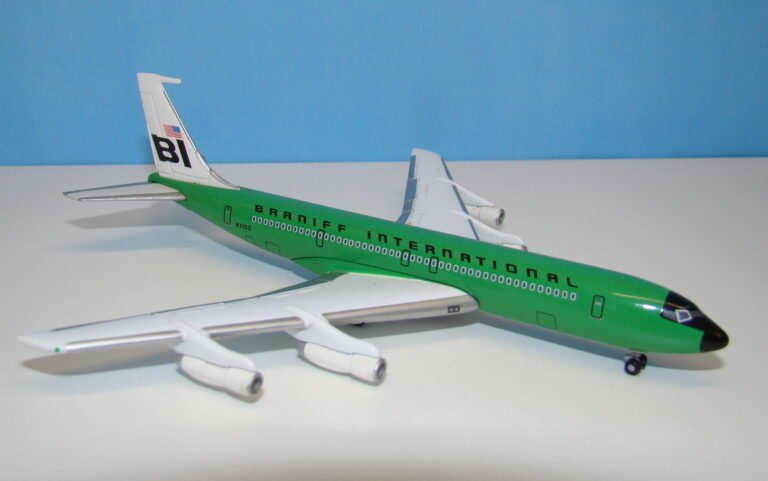
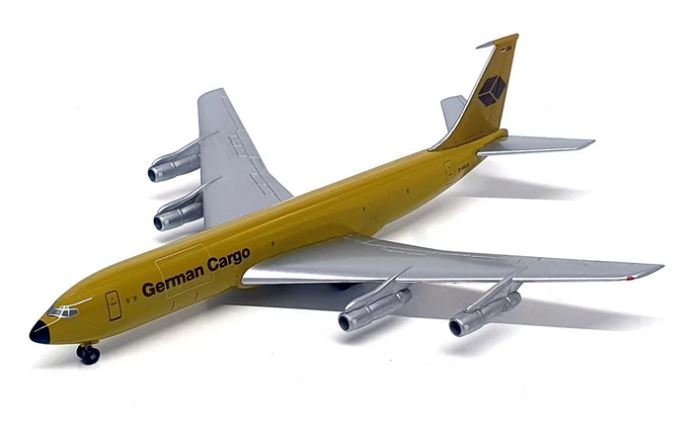
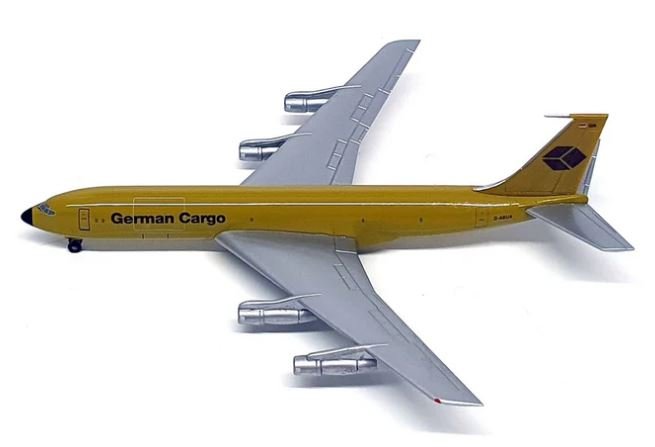
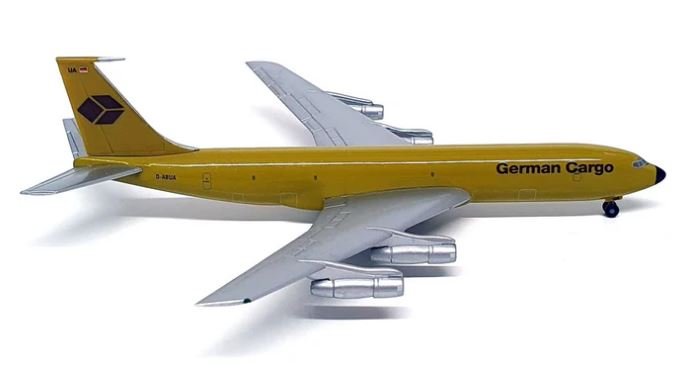
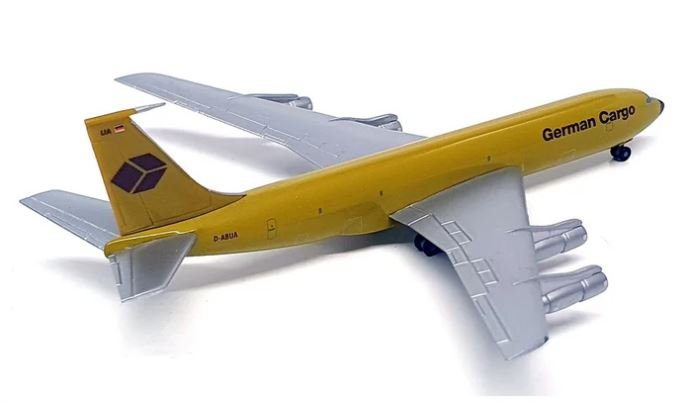
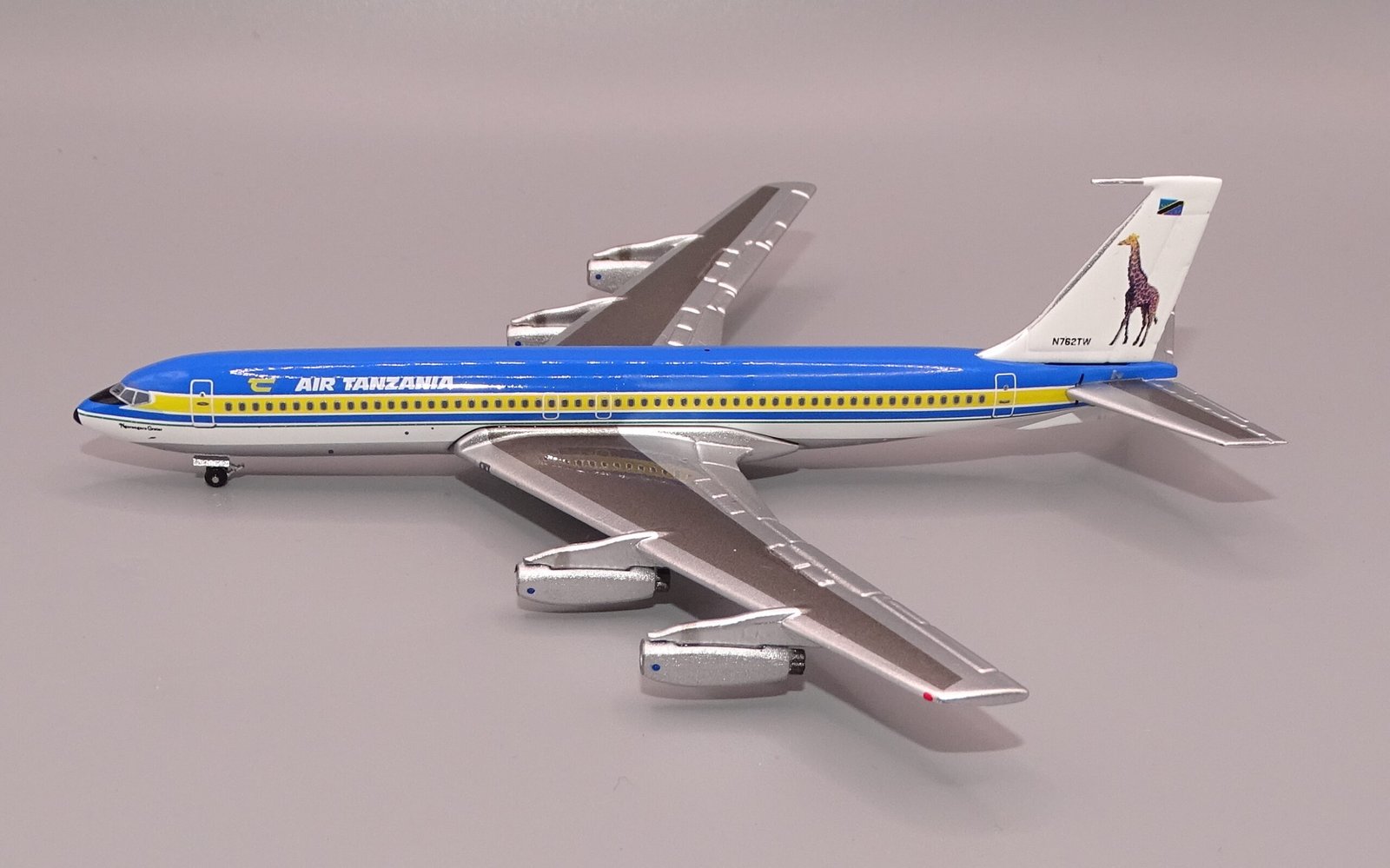
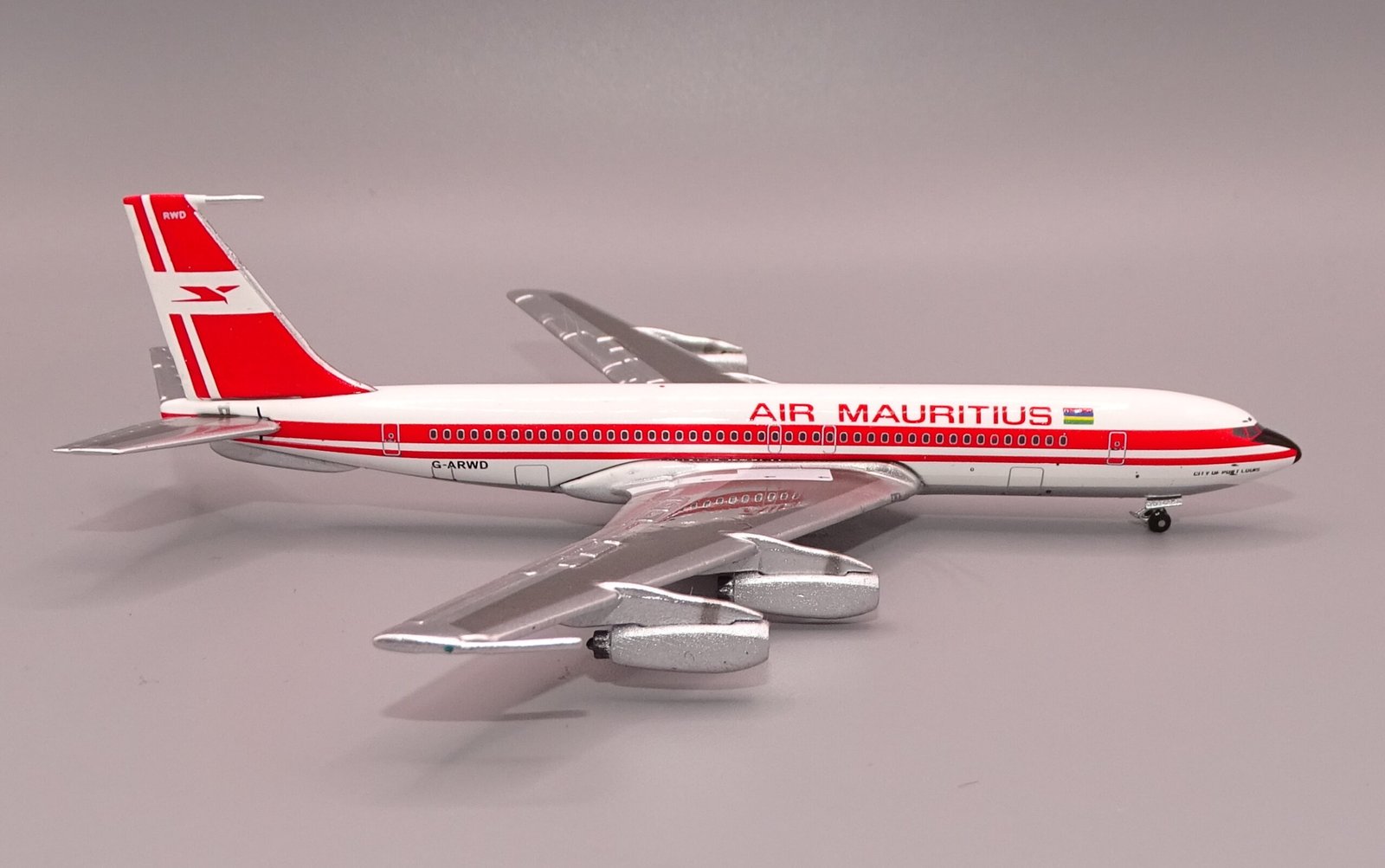
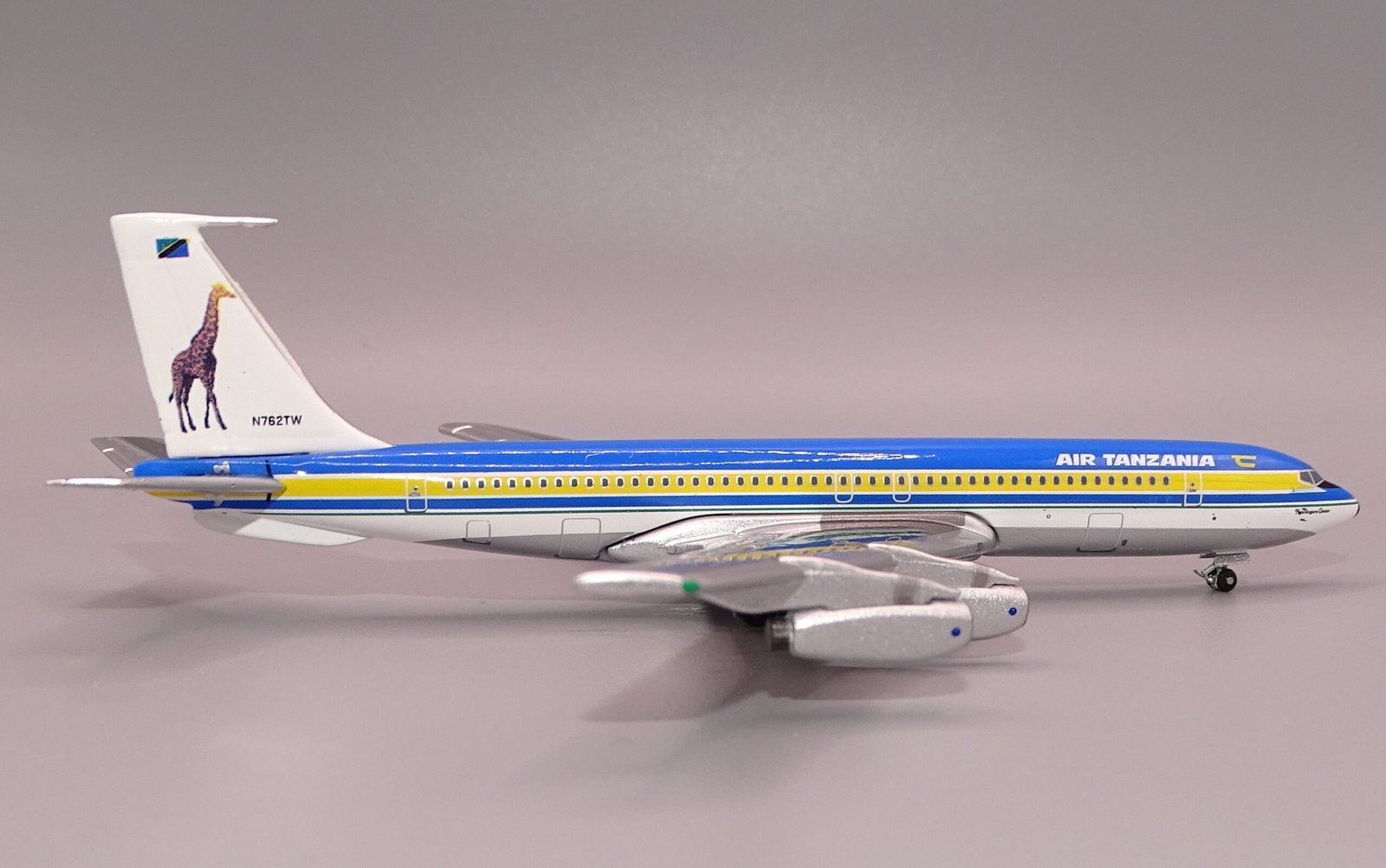
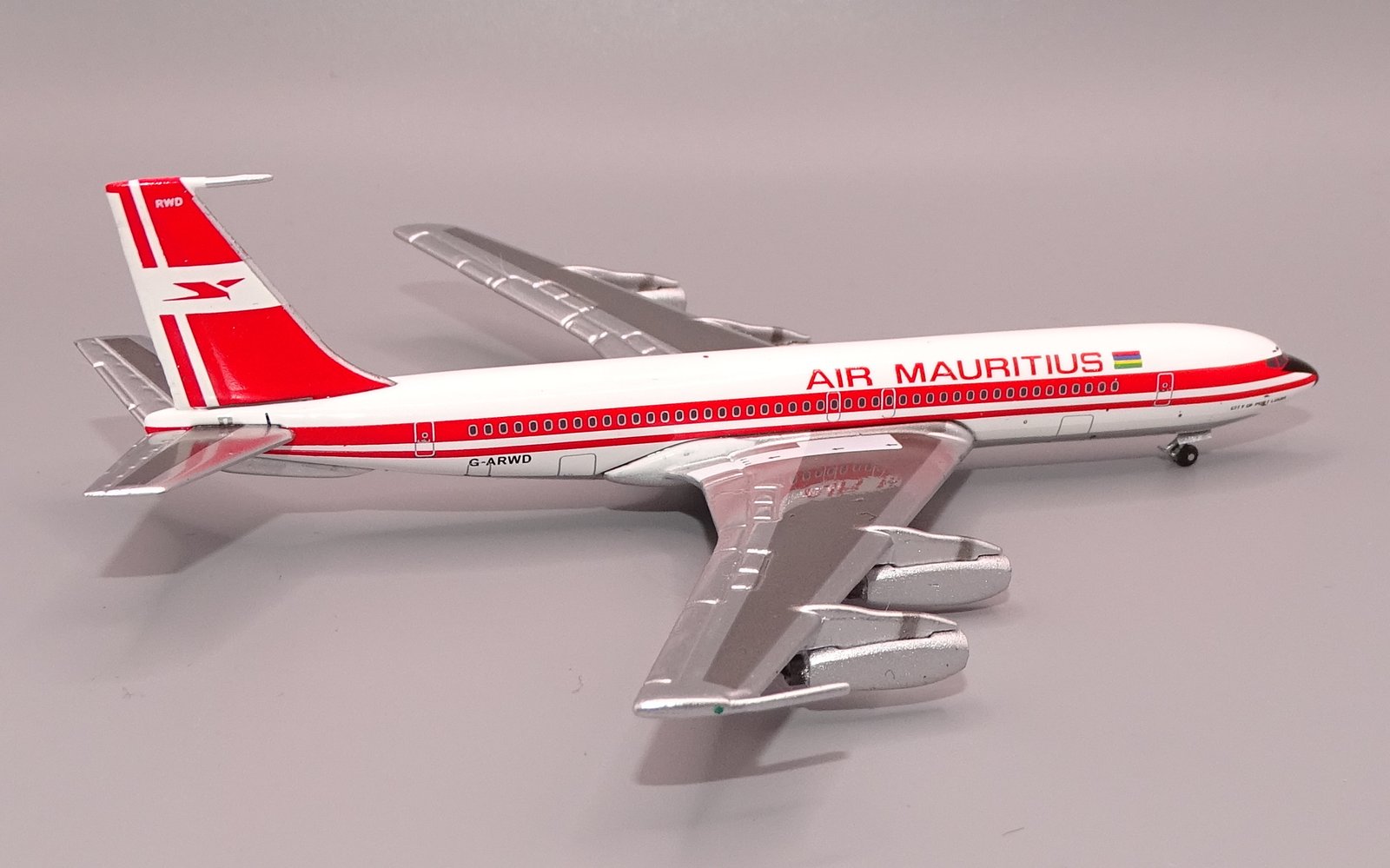
Aeroclassics are the only manufacturer to have tried creating a turbojet version of the long 707 and it is one of their earliest moulds. As such like the Gemini 707 it is definitely showing its age. The wing shape of the early 707 with its straight tips and curved rear edge is well realised as are the engine pylons and turbojet engines. The fuselage is the mould’s weakest area. There is a well hidden seam at the horizontal stabilisers and the nosecone isn’t quite long and tapered enough. The HF antenna on the tail is a bit chunky and lastly the nosegear is a simple stalk and fitted a little too far forward on the mould. Early 707 nosegear was quite simple, with a small rear facing door, so the simple nosegear is not entirely inaccurate. Nonetheless it remains a decent early 707.
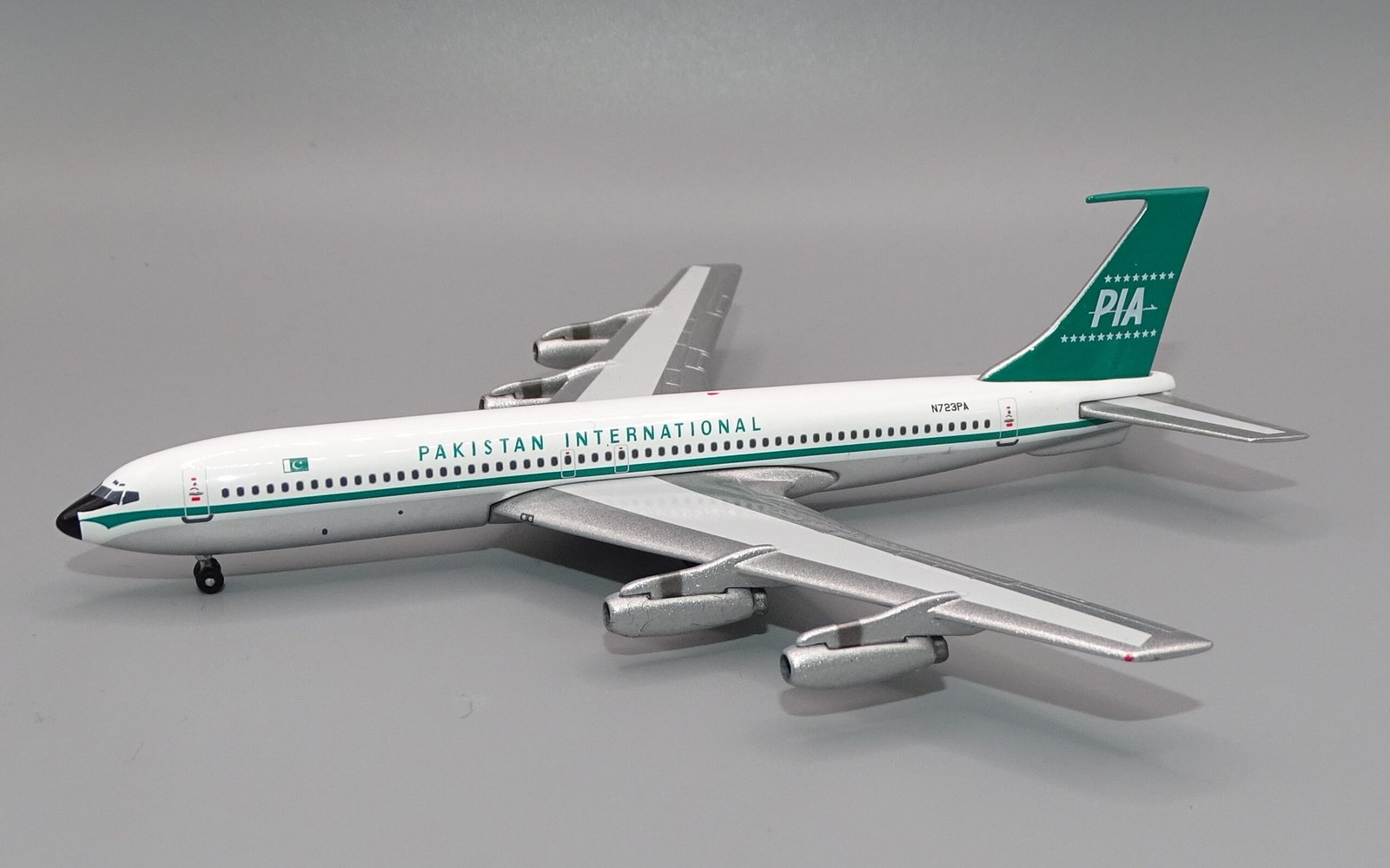
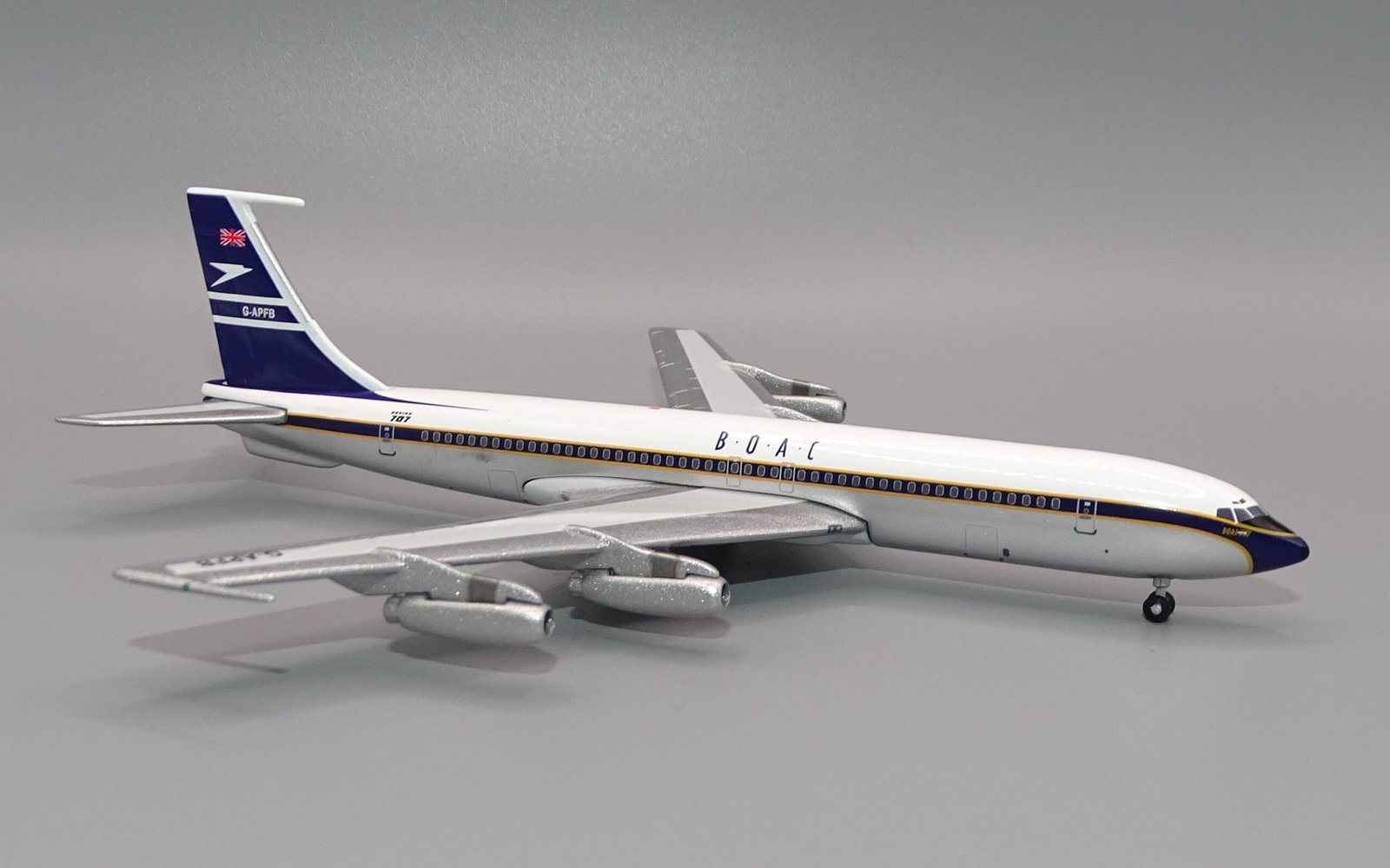
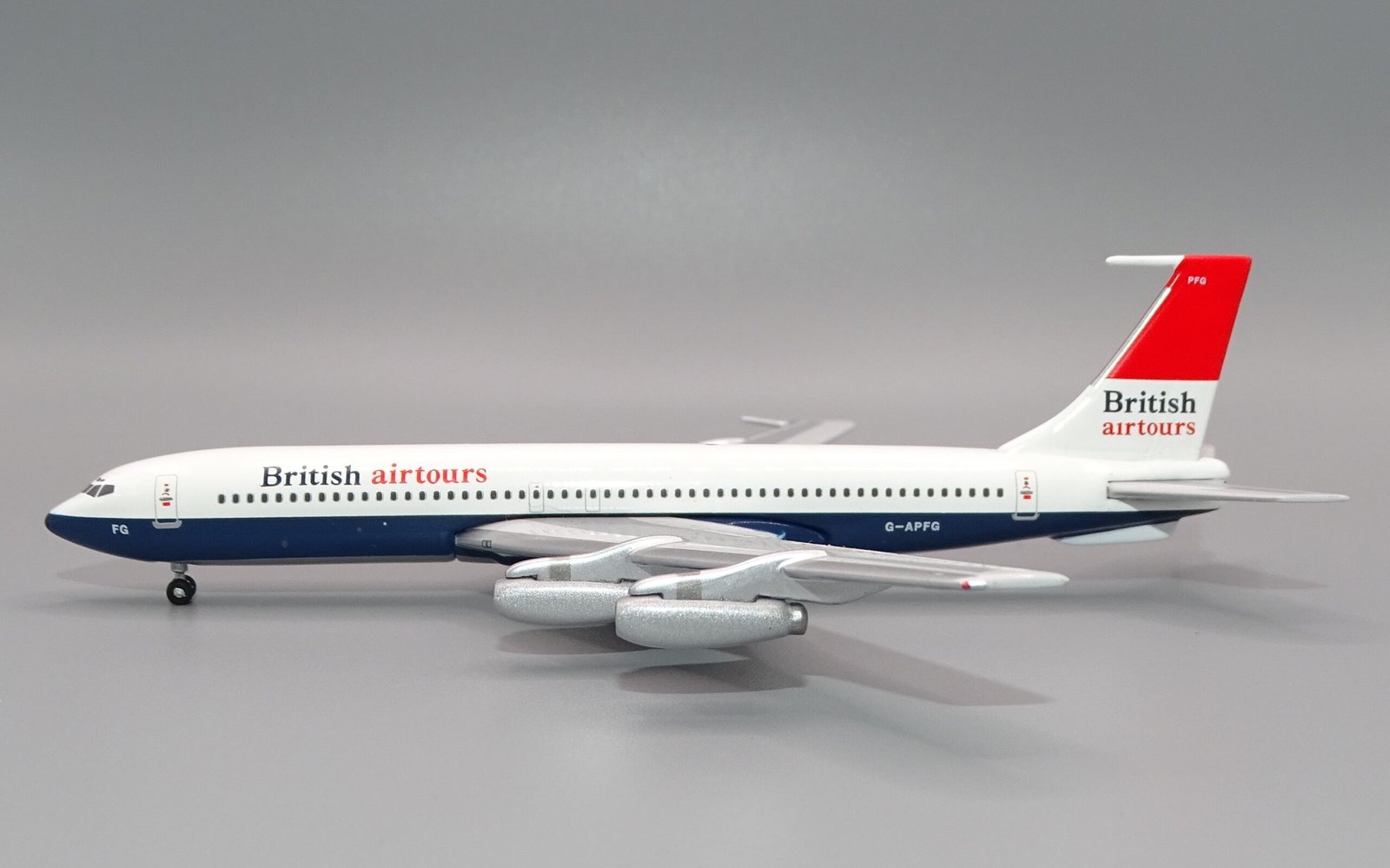
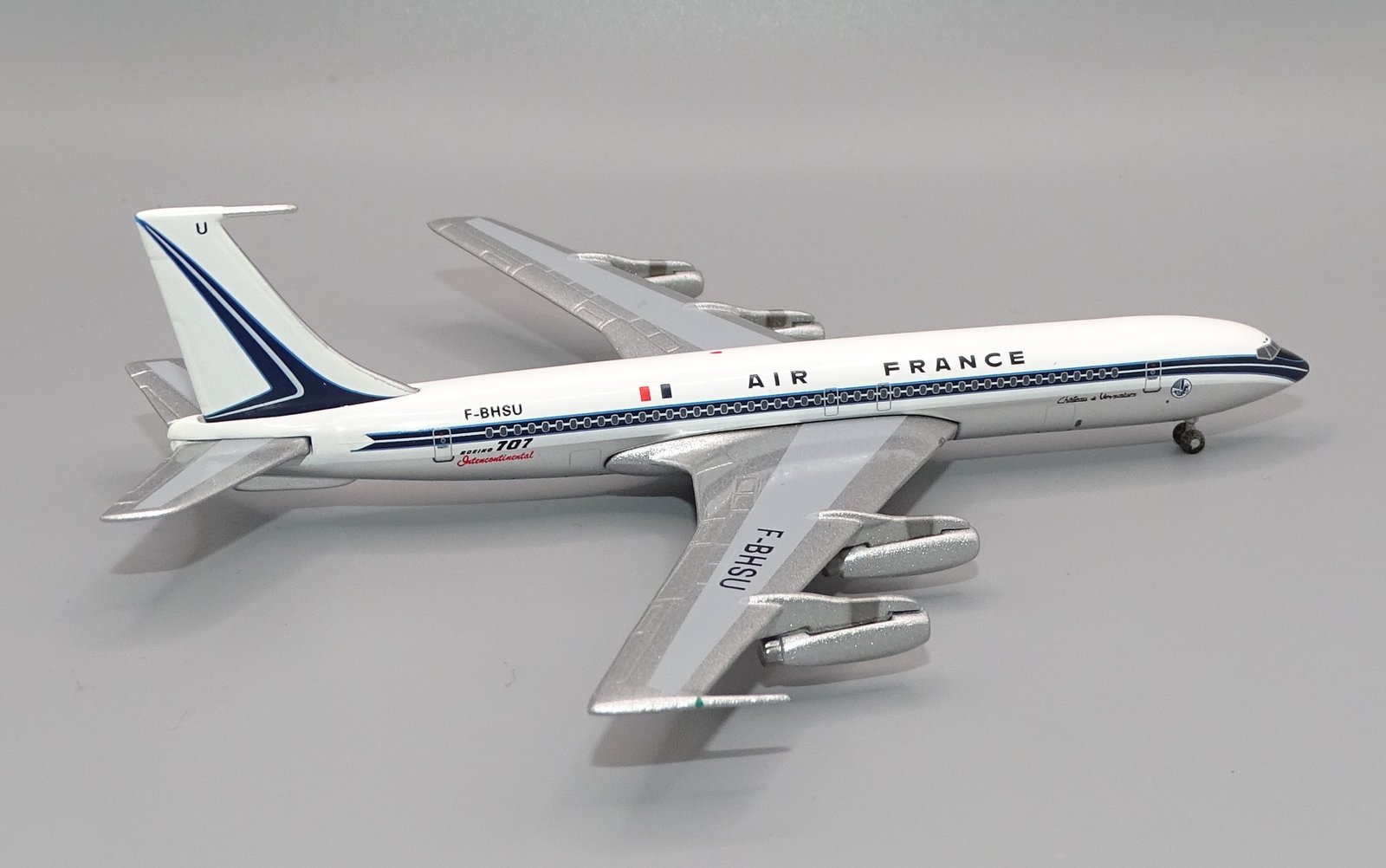
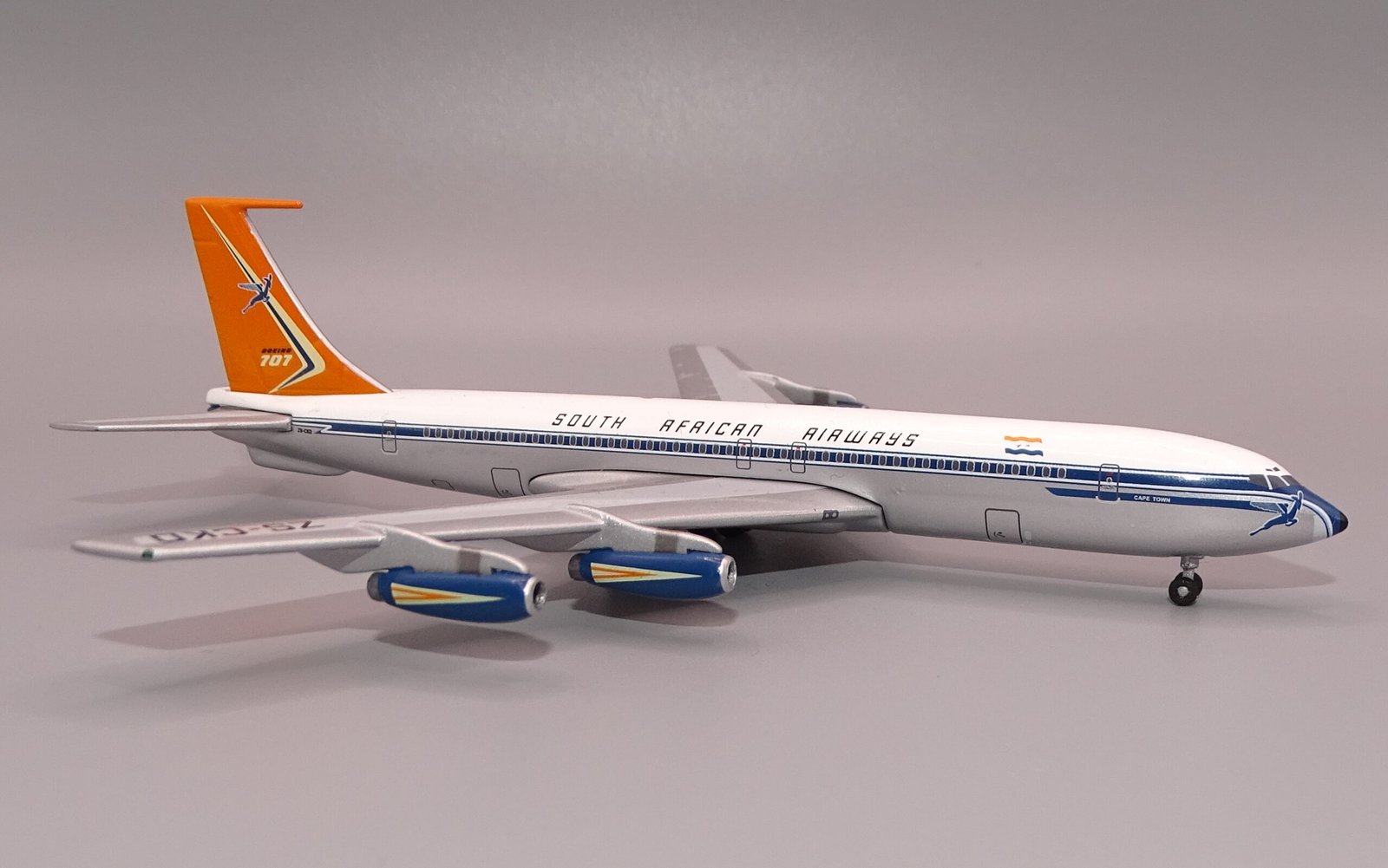
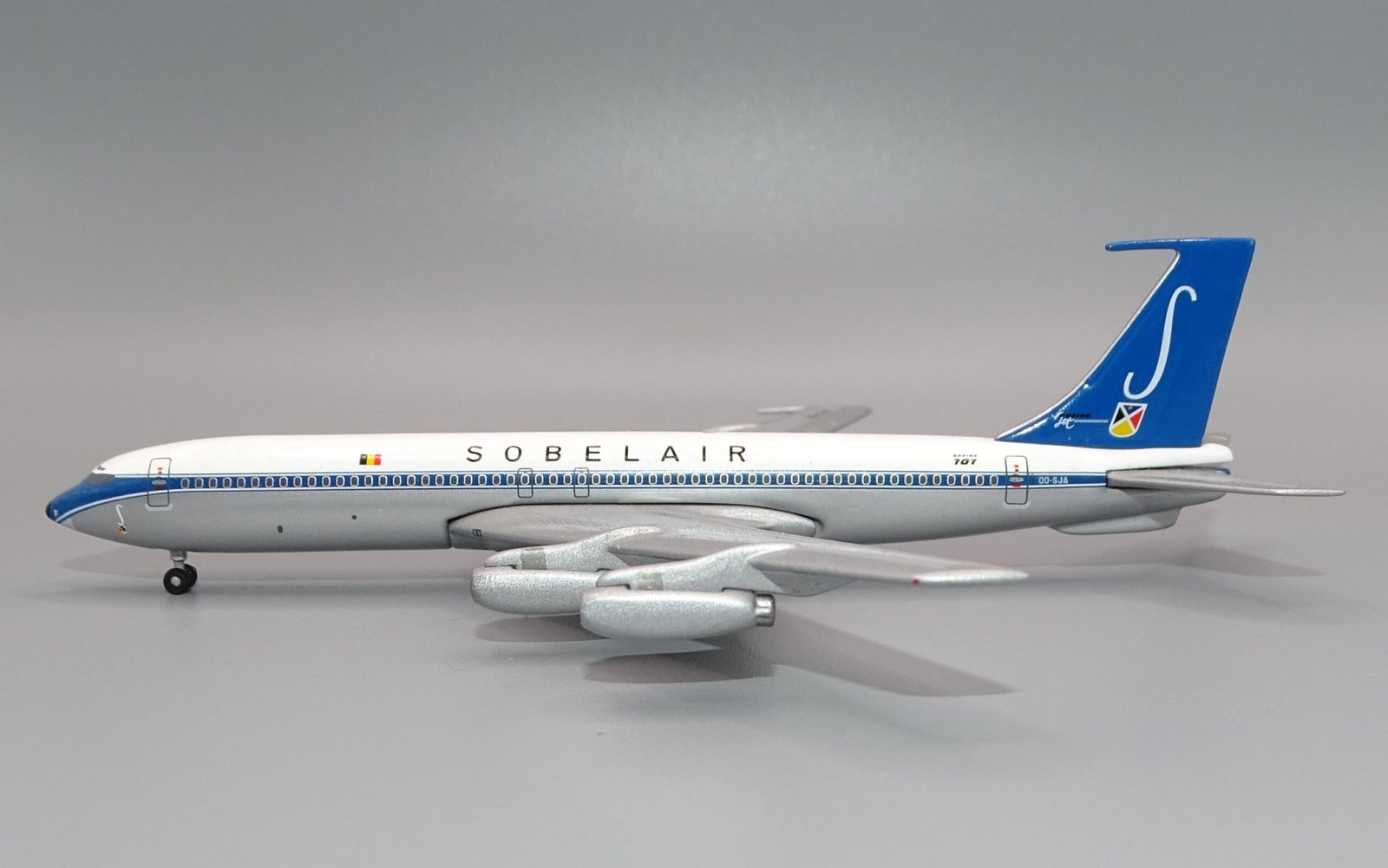
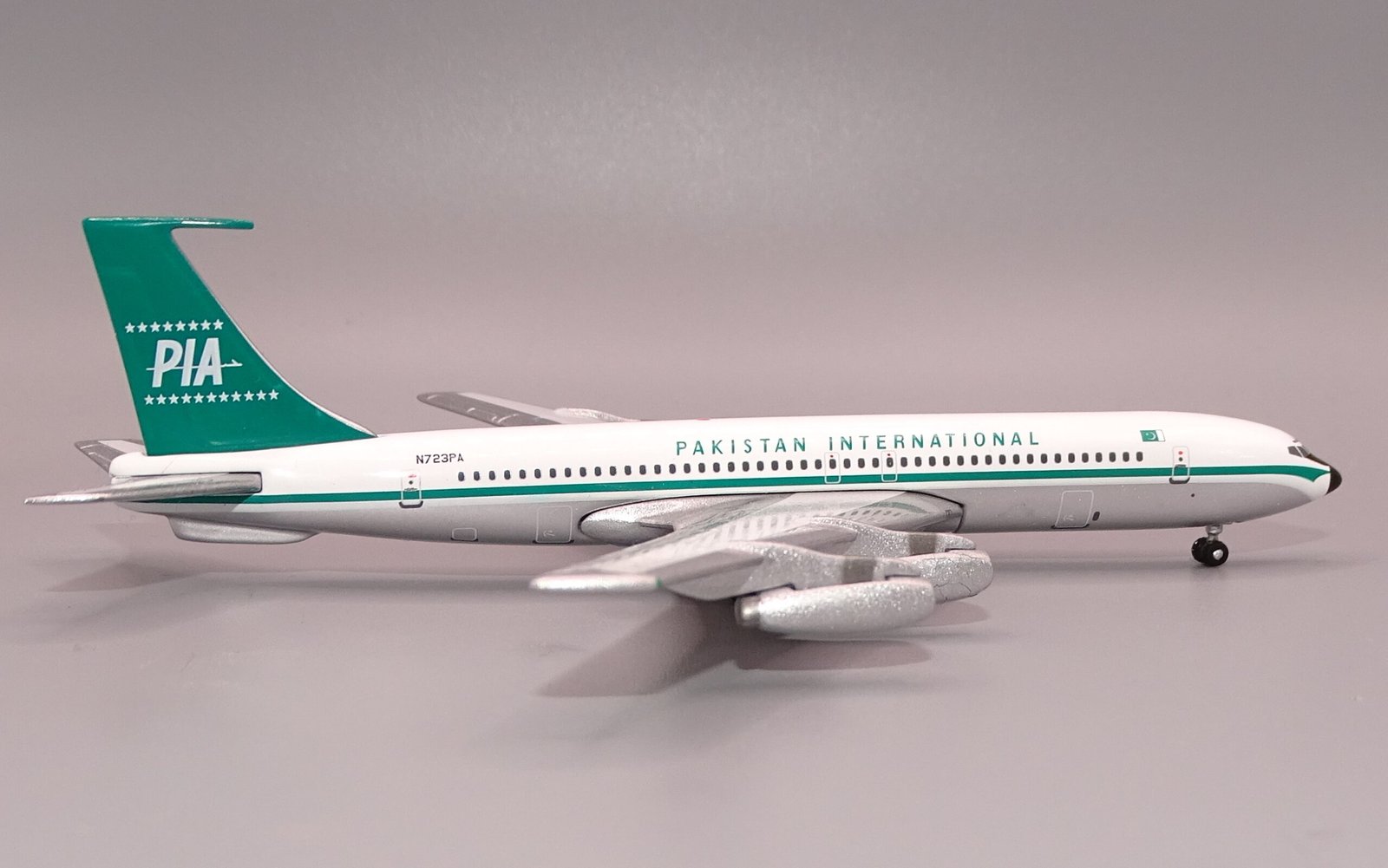
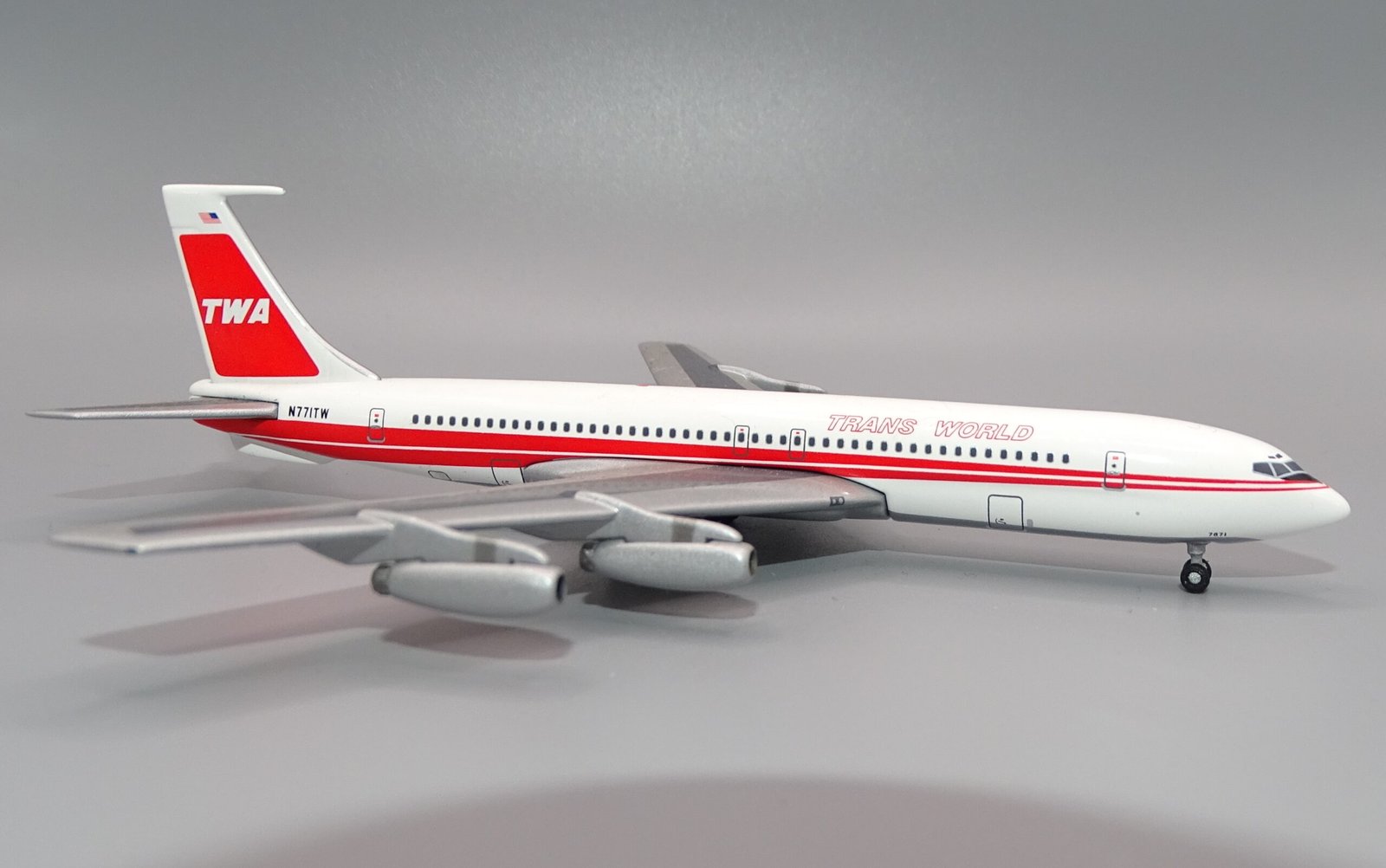
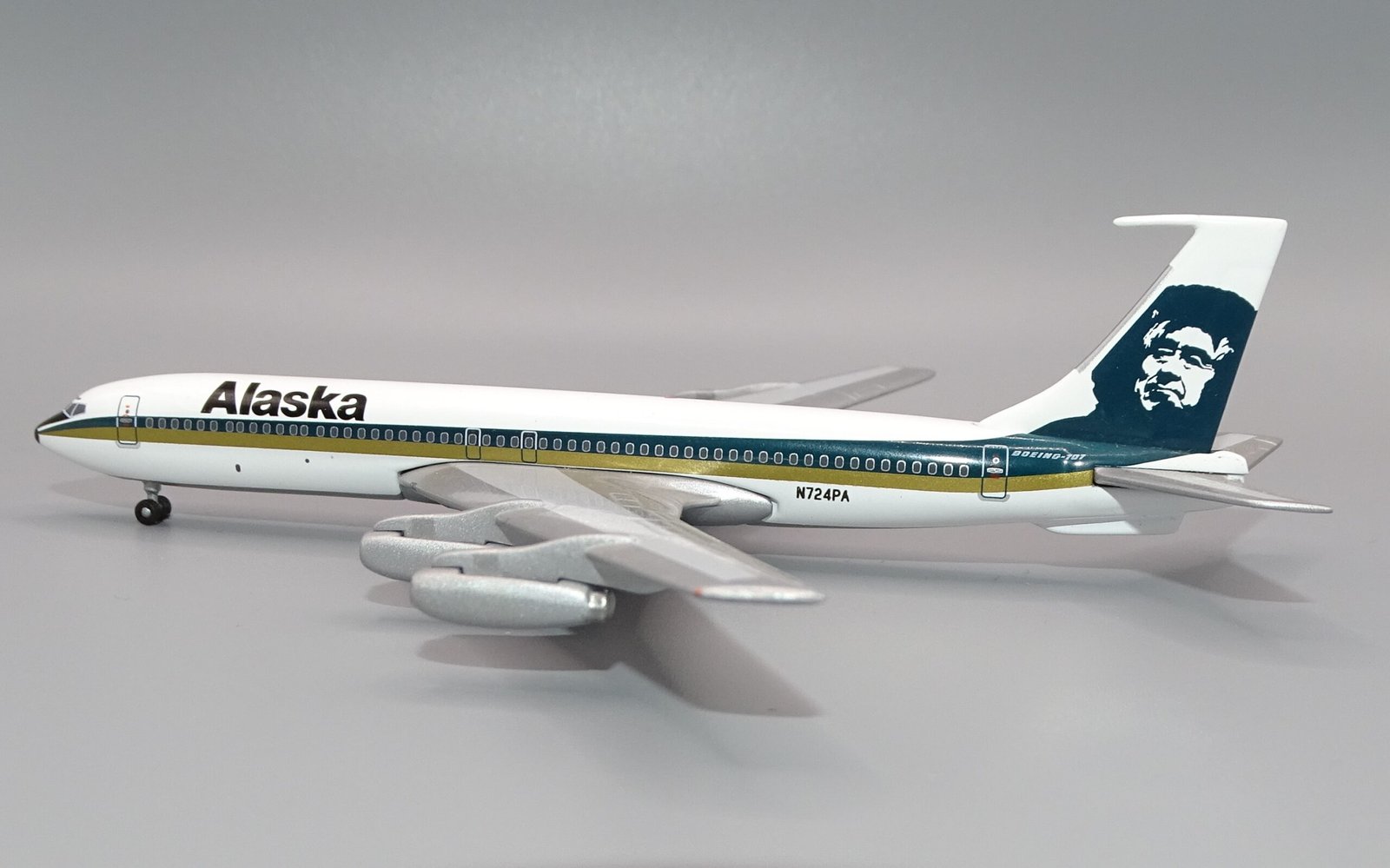
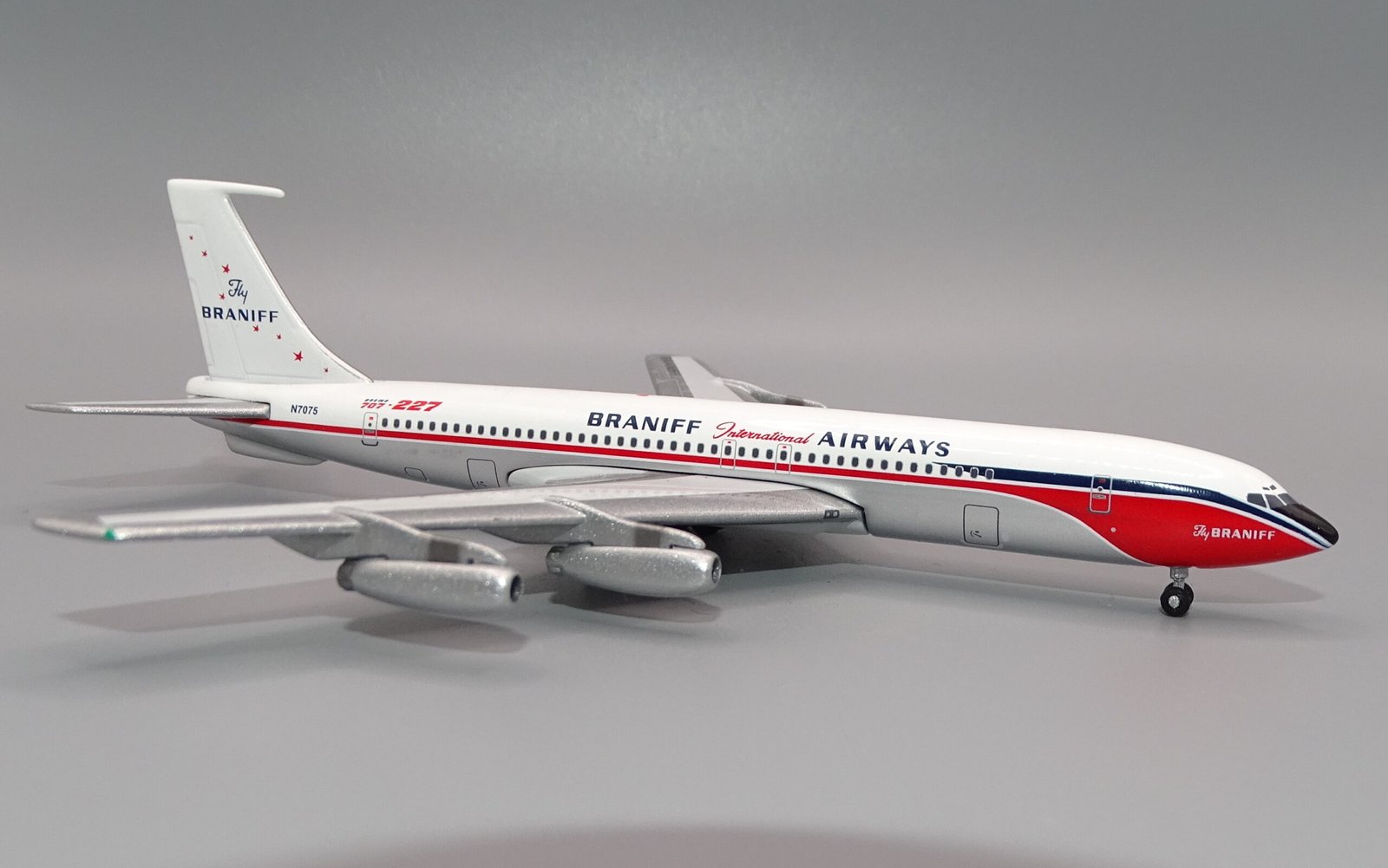
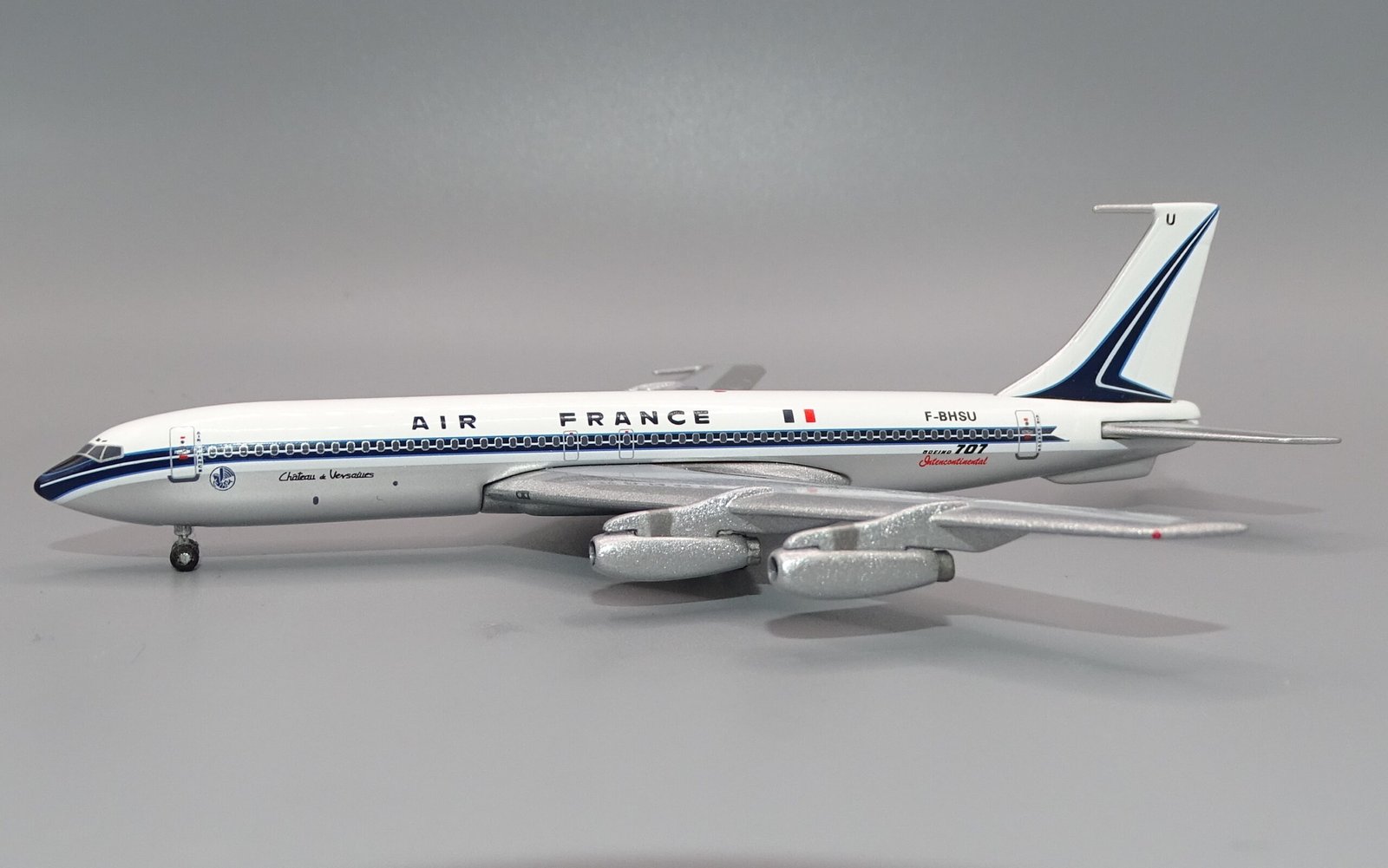
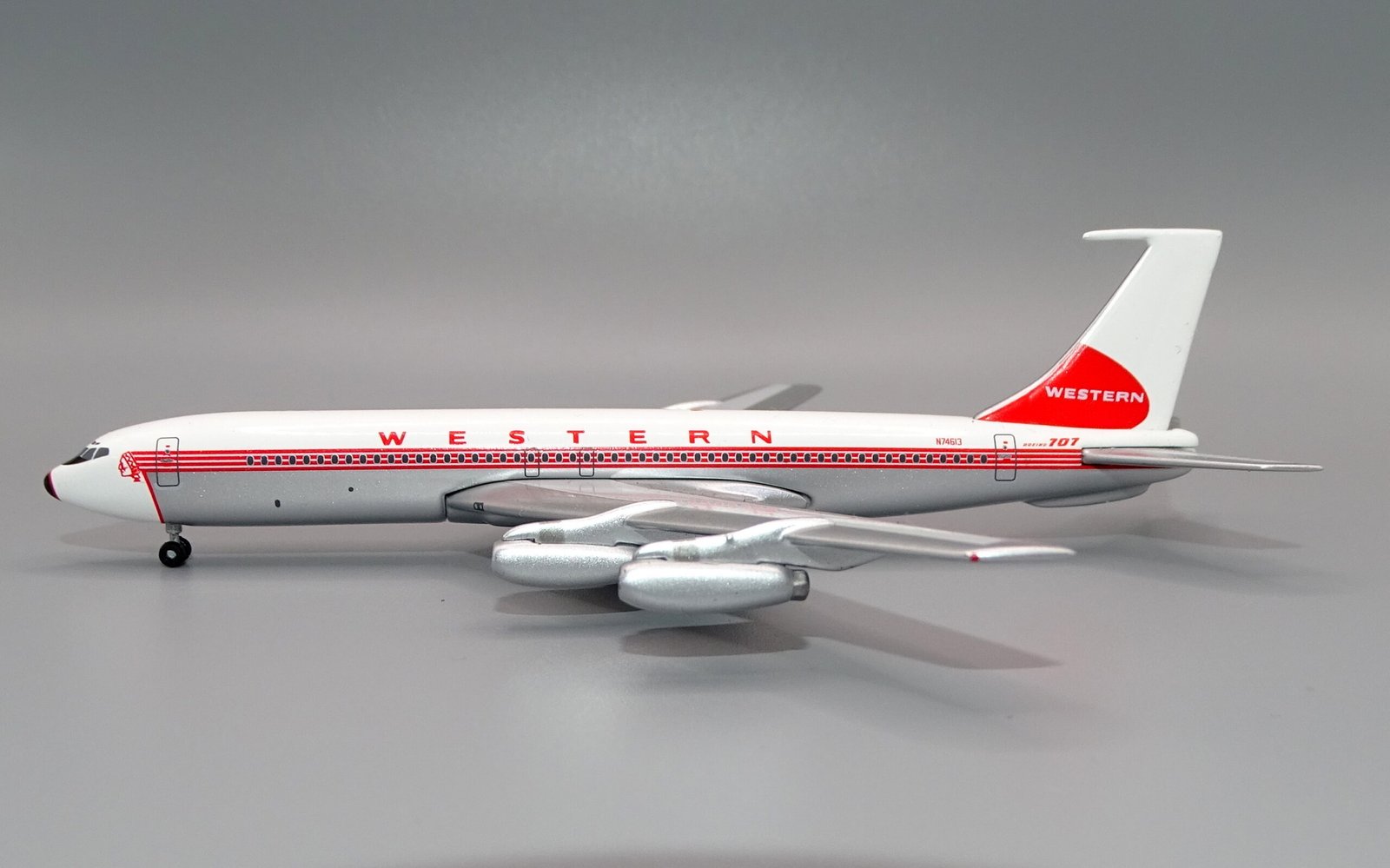
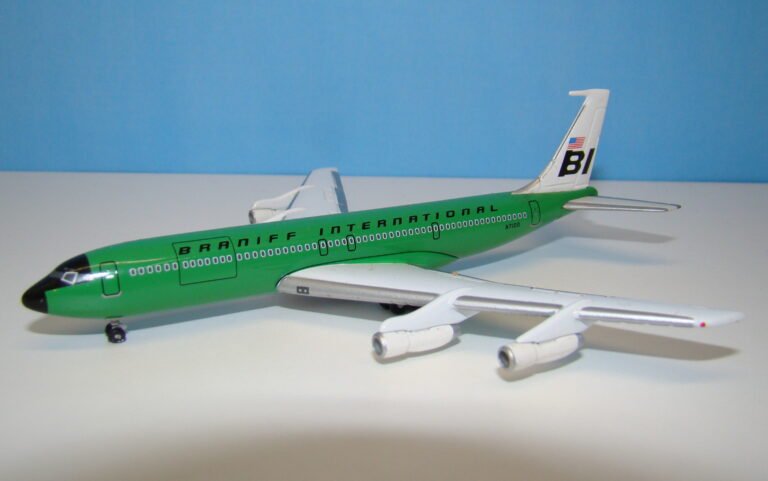
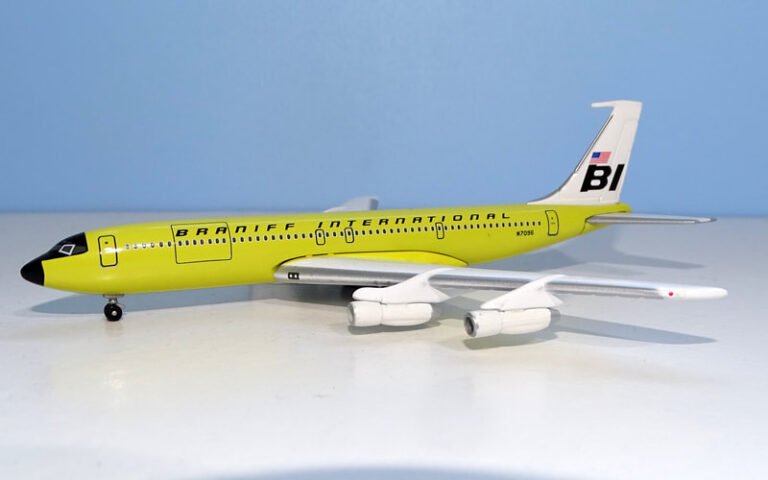
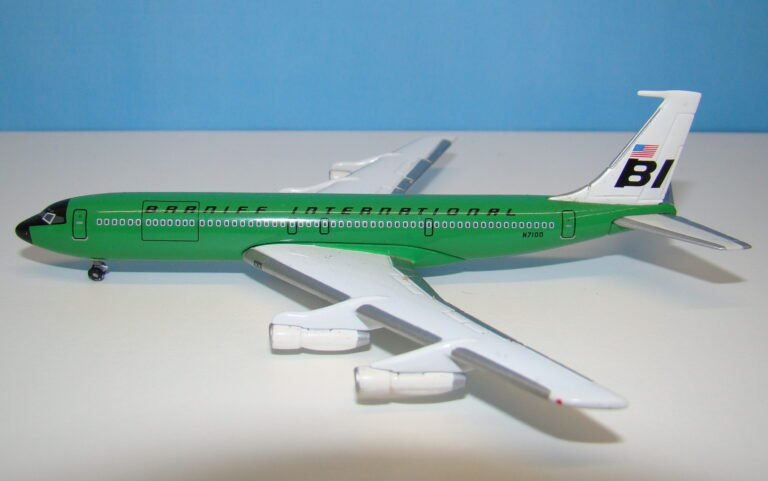
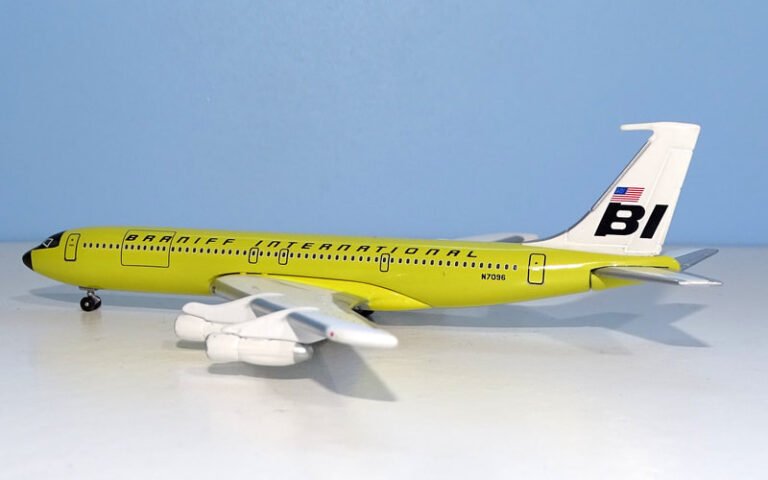
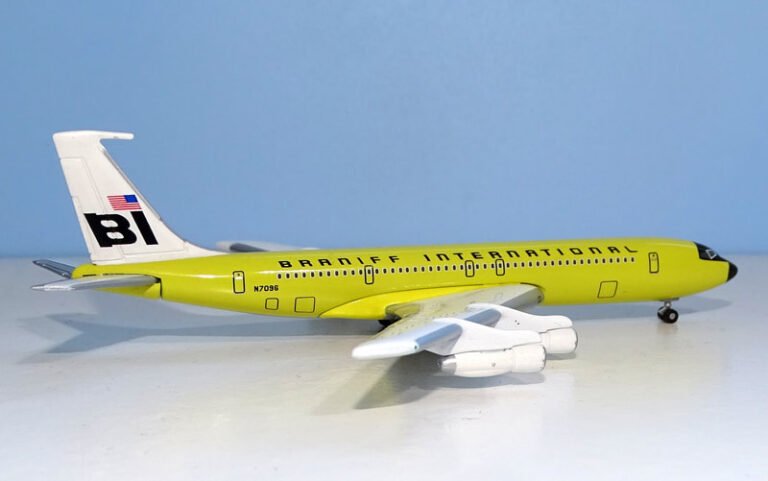
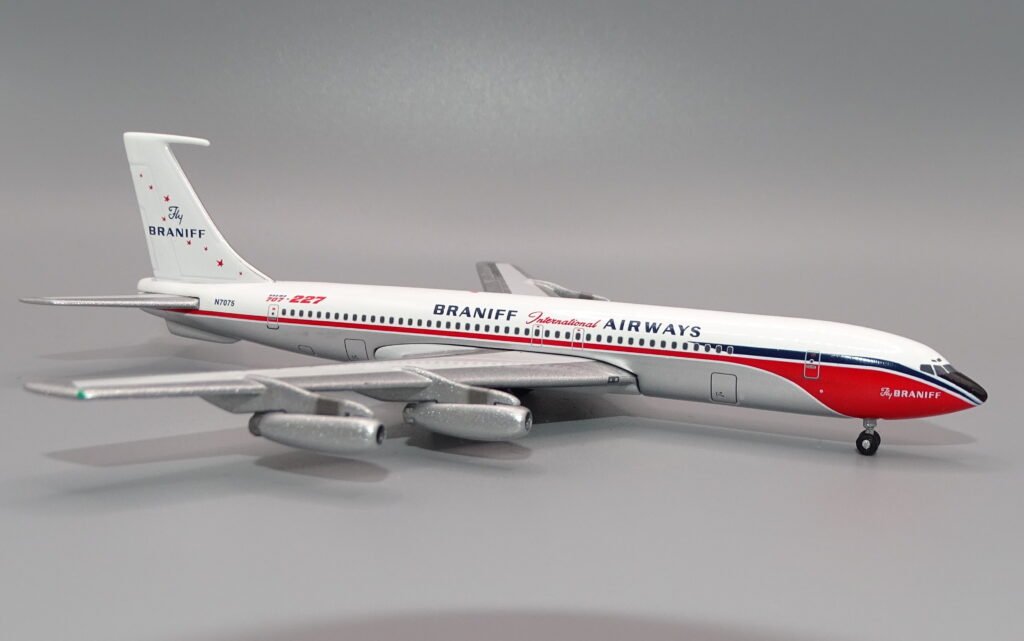
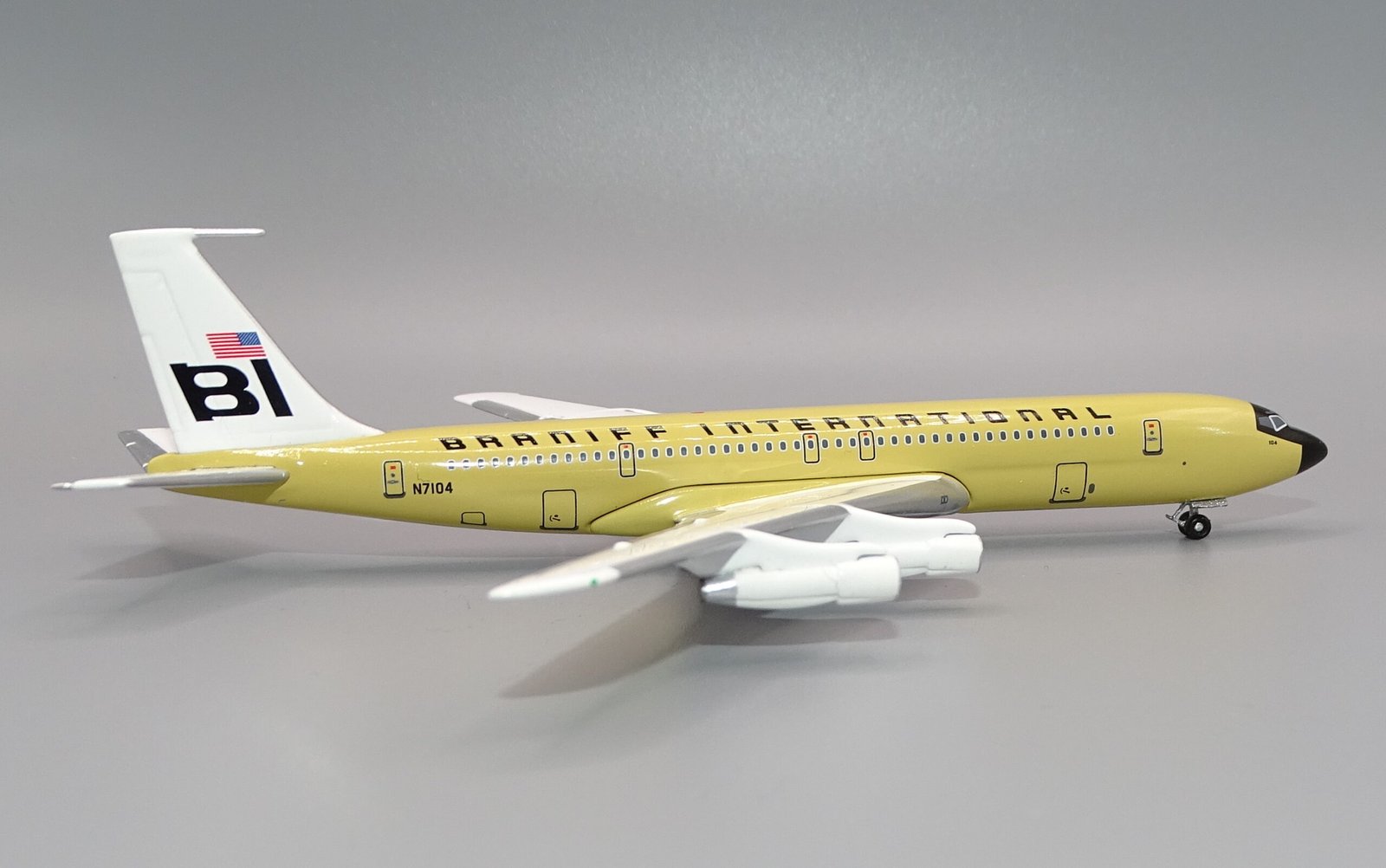
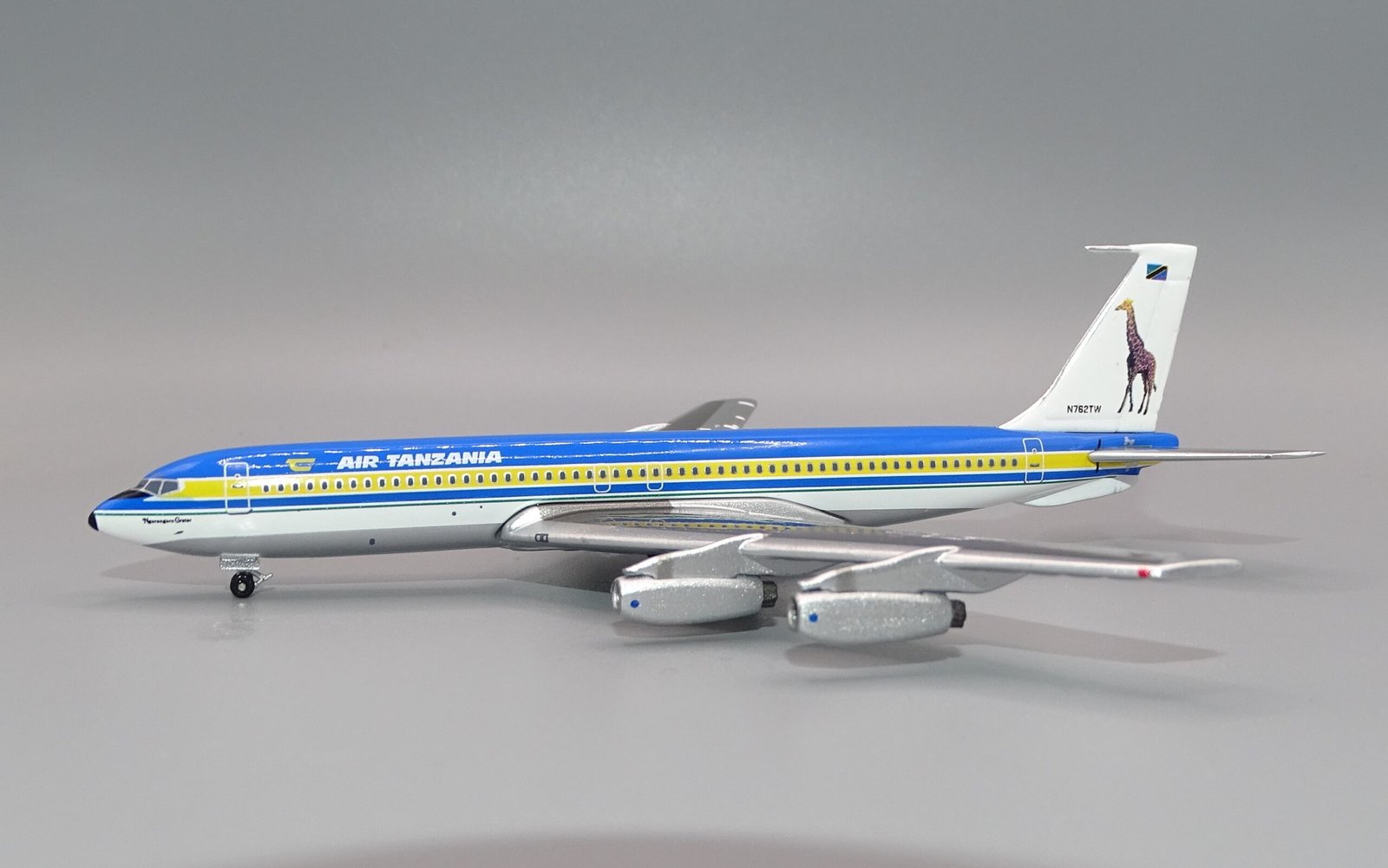
Aeroclassics did use this mould for the shorter 707-100 and 200 (see the Braniff example below which is posing as a series 200) for which it is not suitable, but also produced a small range of 707-320 and 420s. Excellently, when they made the 420 the wing is fitted with the extra HF antenna. This mould seems lost nowadays and the early generation 707s remain one of the most under-resourced areas of 1:400 scale models. This mould’s usge between 2002-2004 also corresponds with the Zinc Rot period and this mould is one of the most heavily impacted with several of the releases (Air Tanzania for example) having effectively all self-destructed by now.
Aeroclassics 707-320B/320C (2003 – In Use)
By 2003 Aeroclassics were really learning their craft and this 707 mould remains one of the finest they have ever made. The mould is near perfect and is the first to illustrate accurate nosegear, with the later side by side gear doors of the 707-320C and 320B Advanced. The only real criticsm of the mould is that it is a cradle mount, however the seam line follows the natural line of the wing join and on the real thing there is an obvious connection. Below are some of the early versions prior to the change to rolling gear:
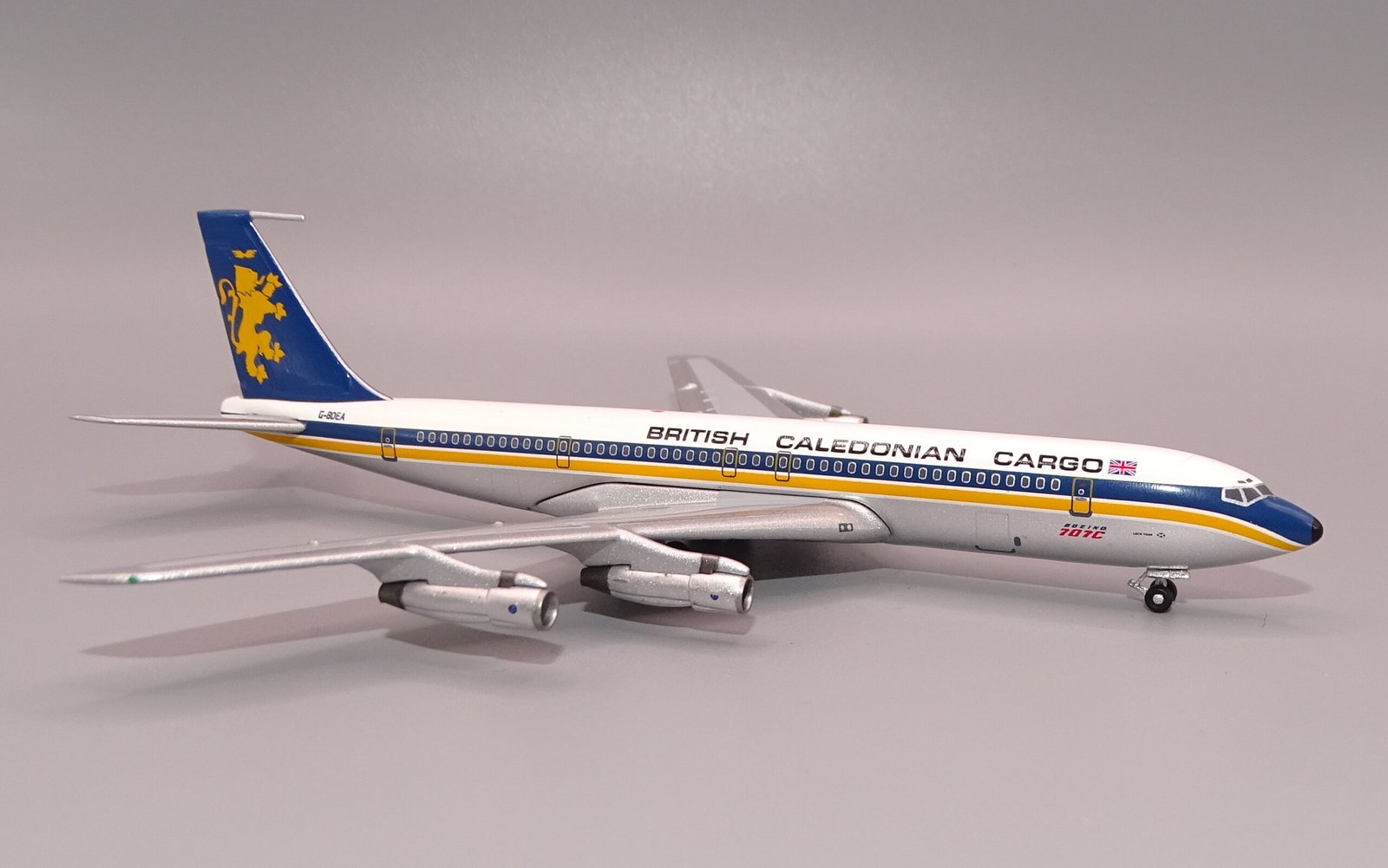
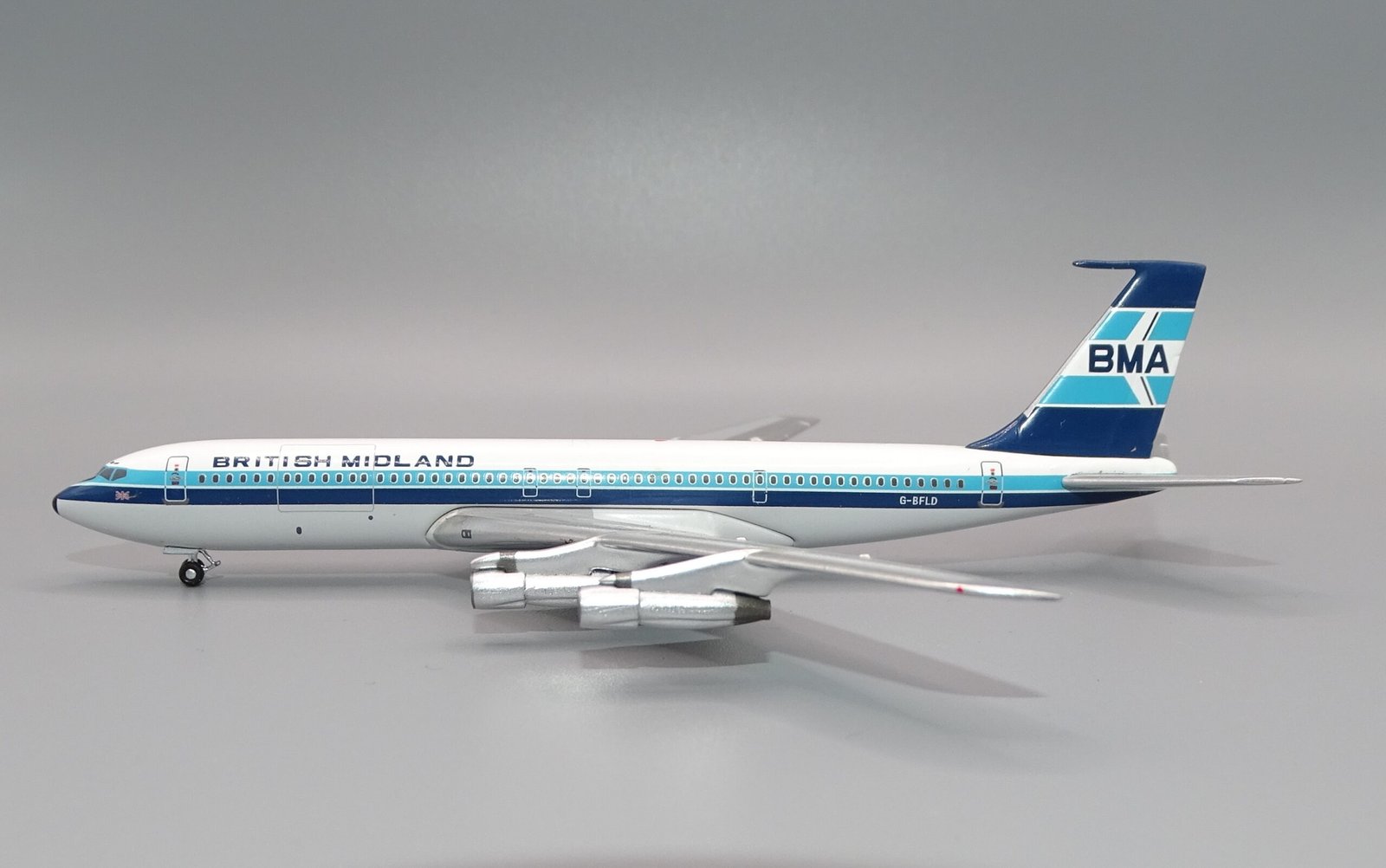
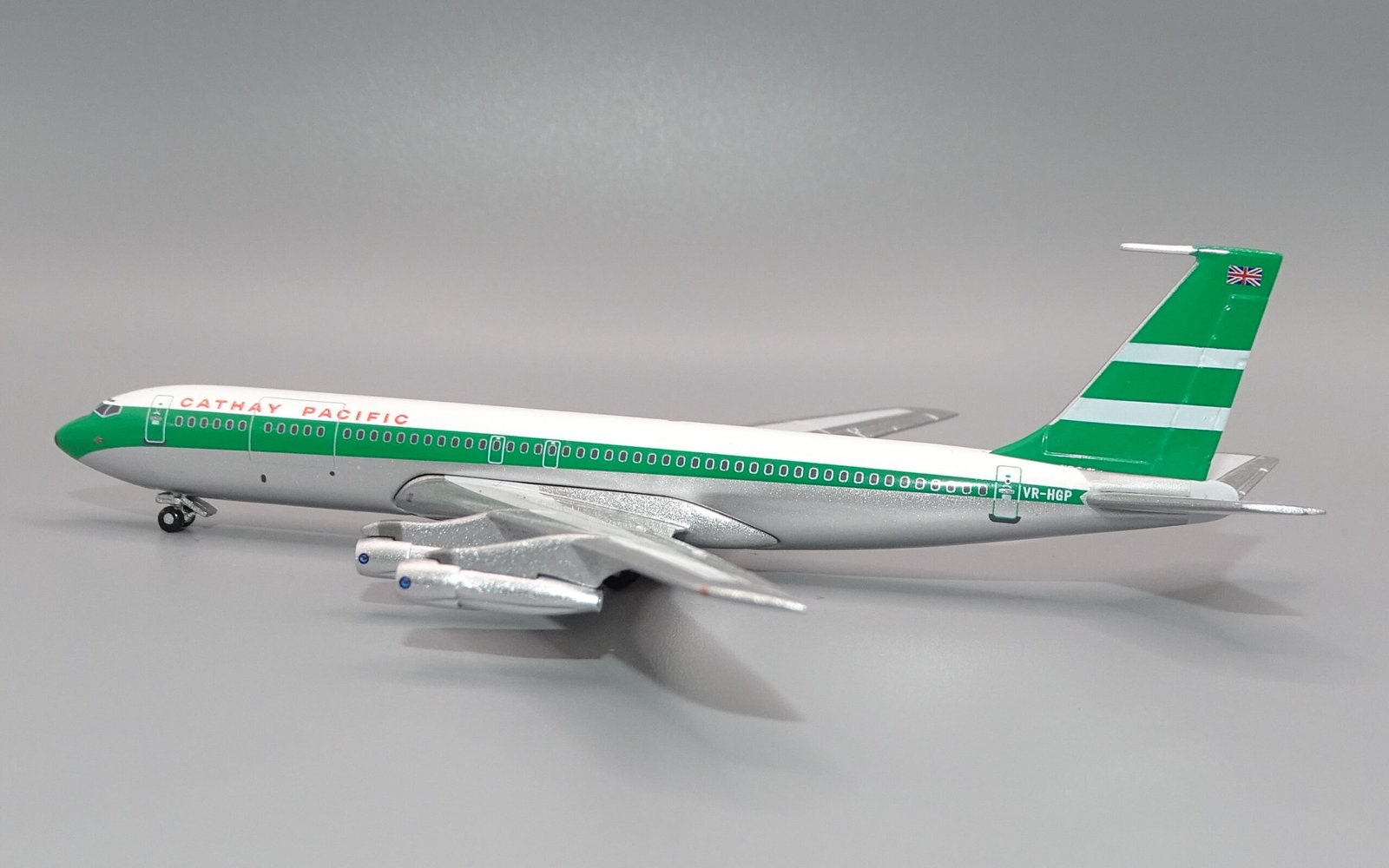
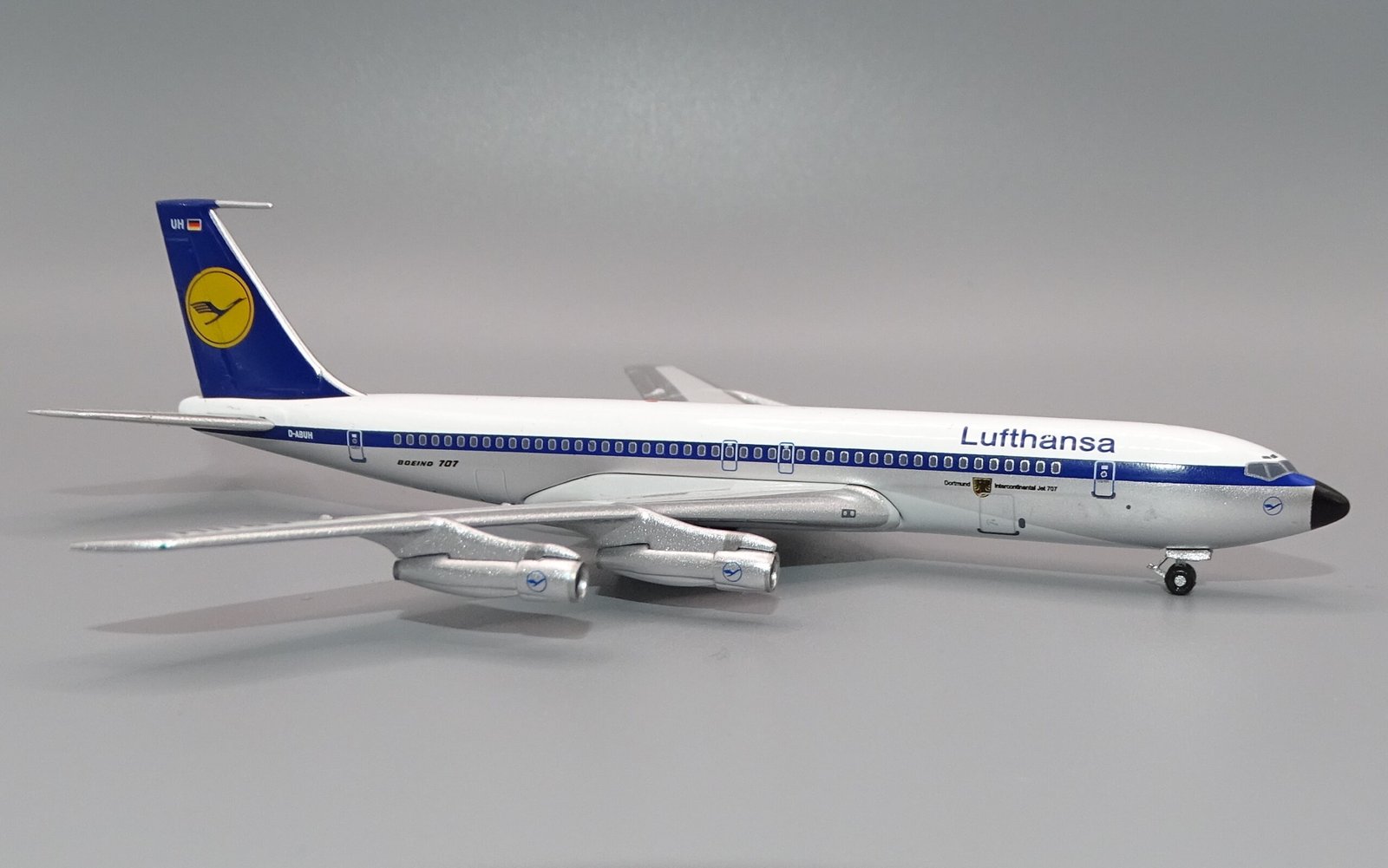
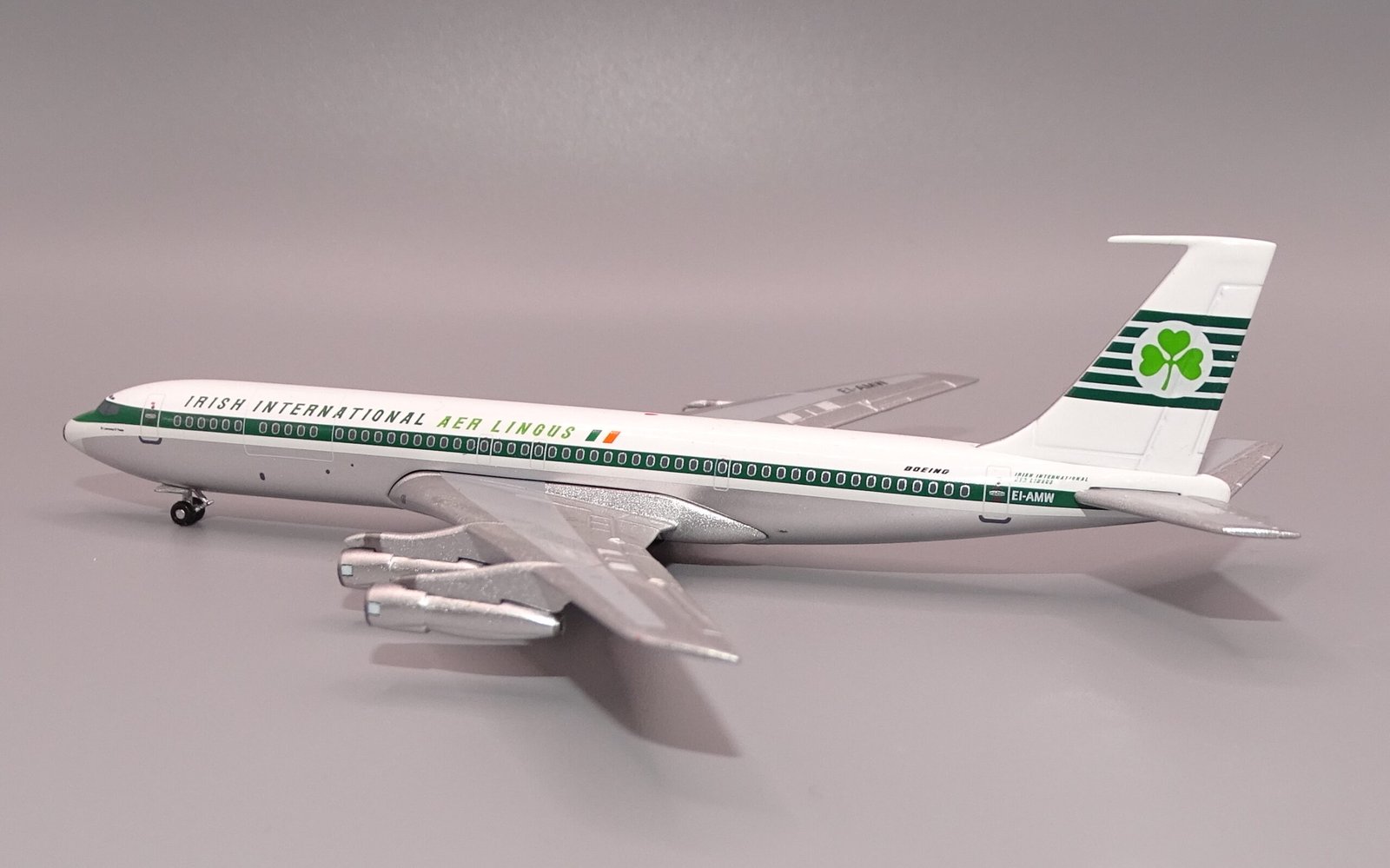
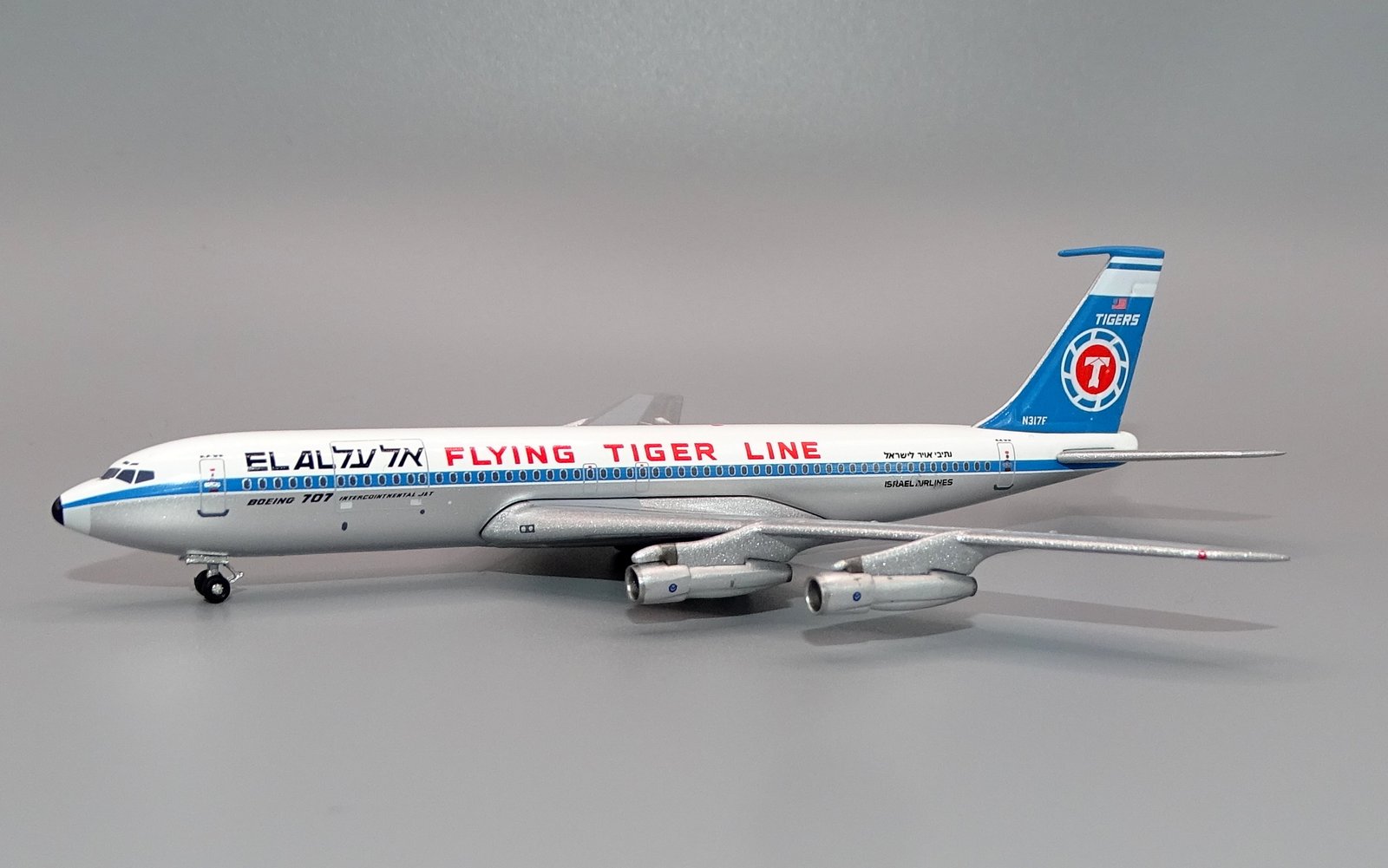
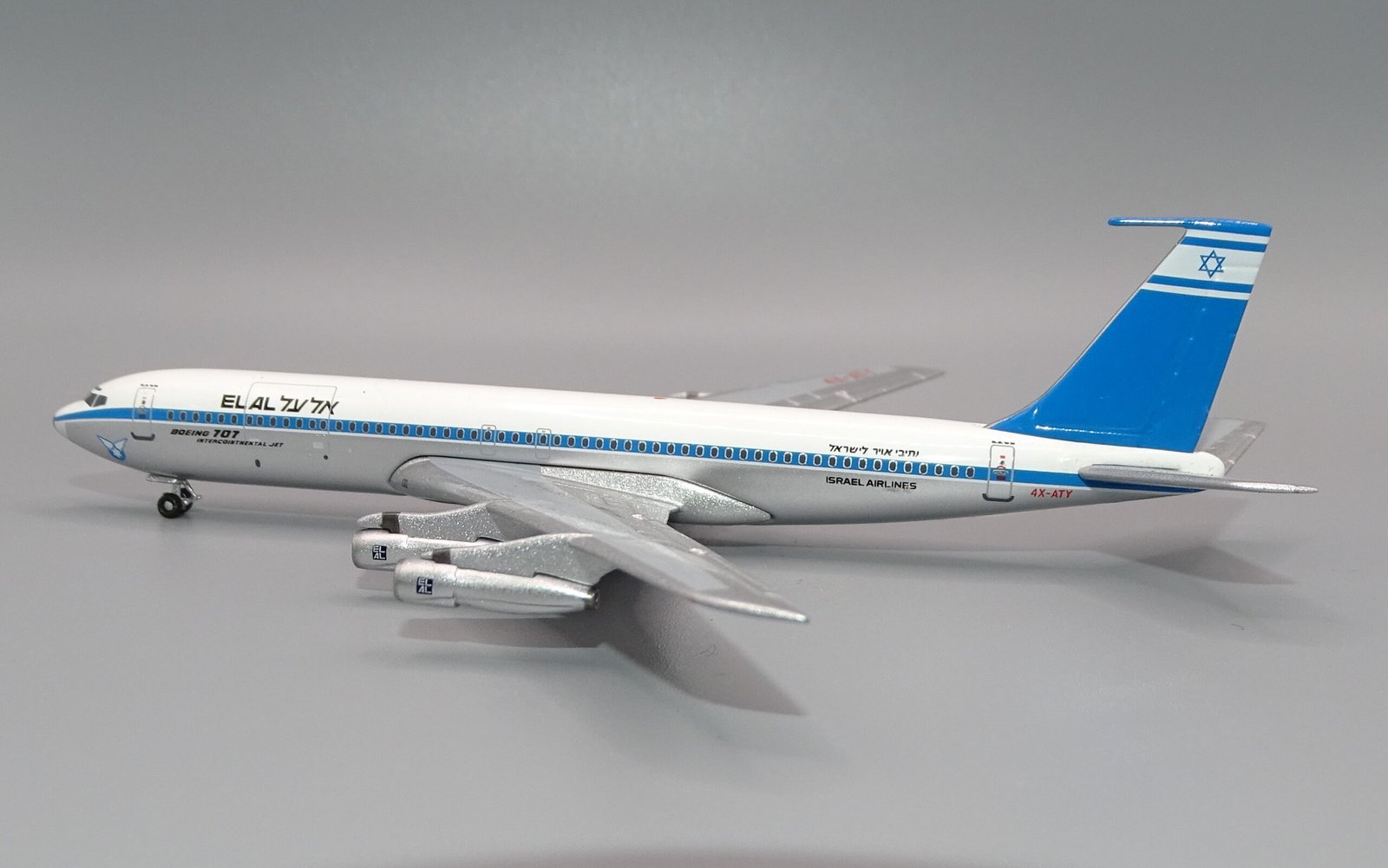
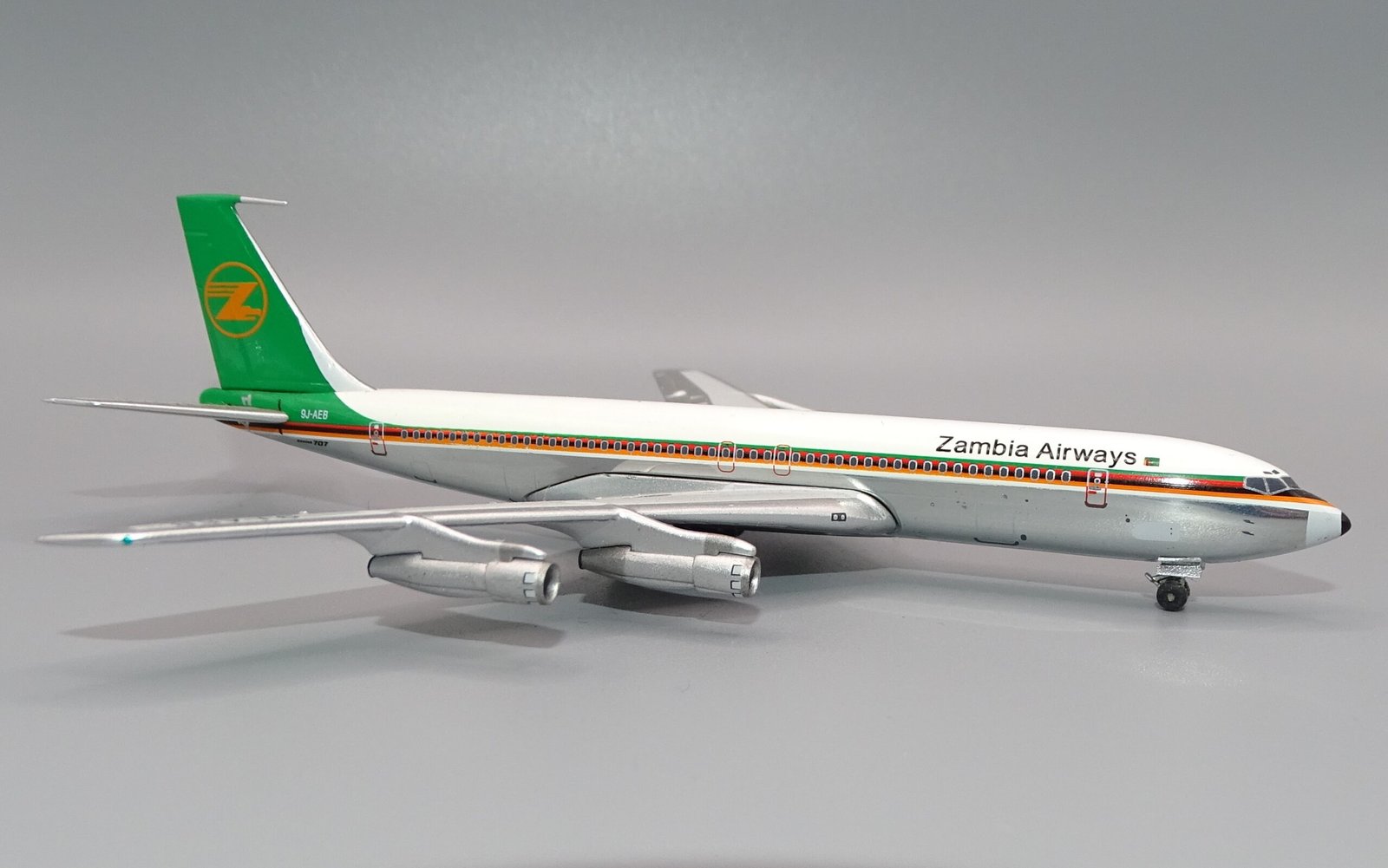
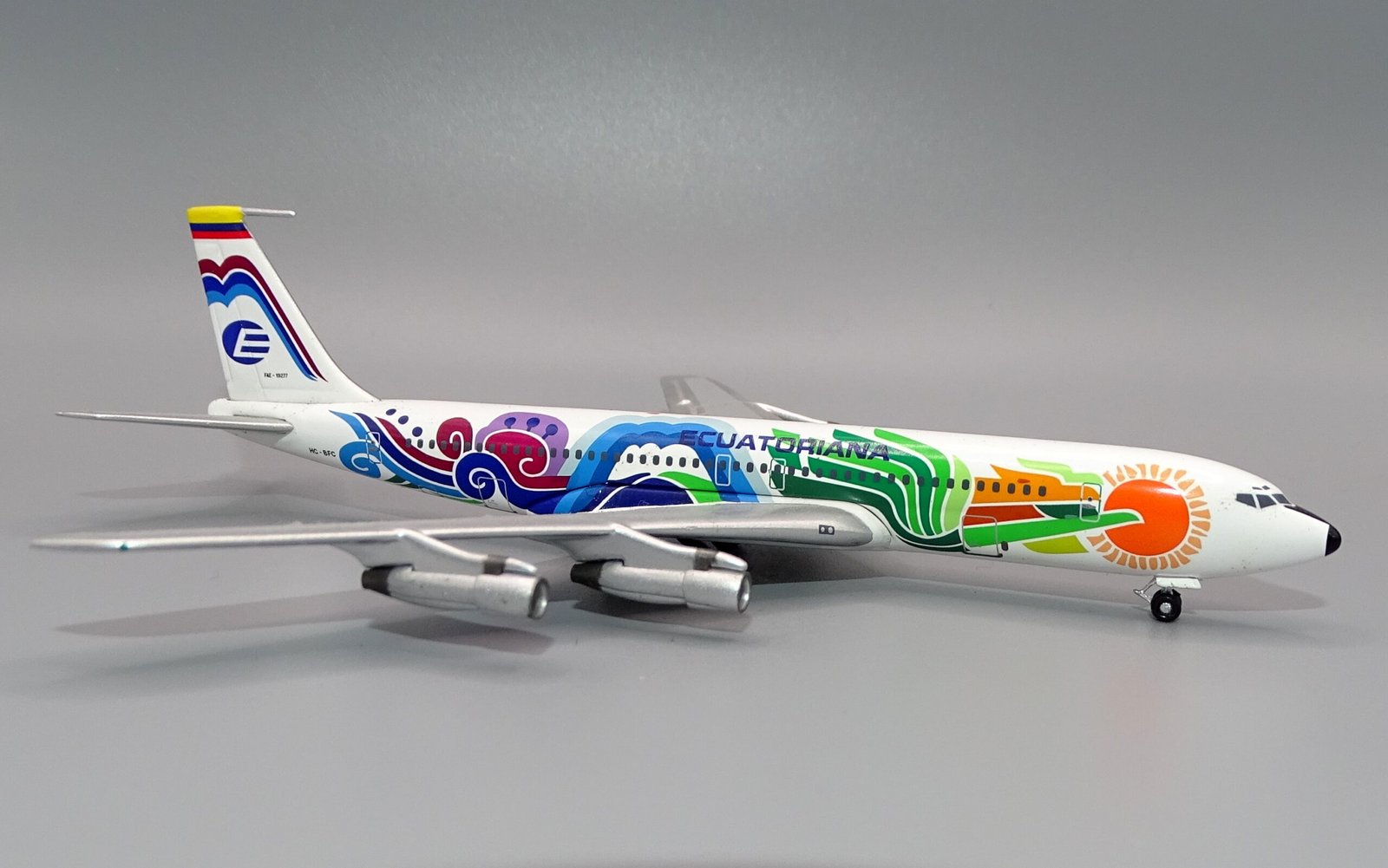
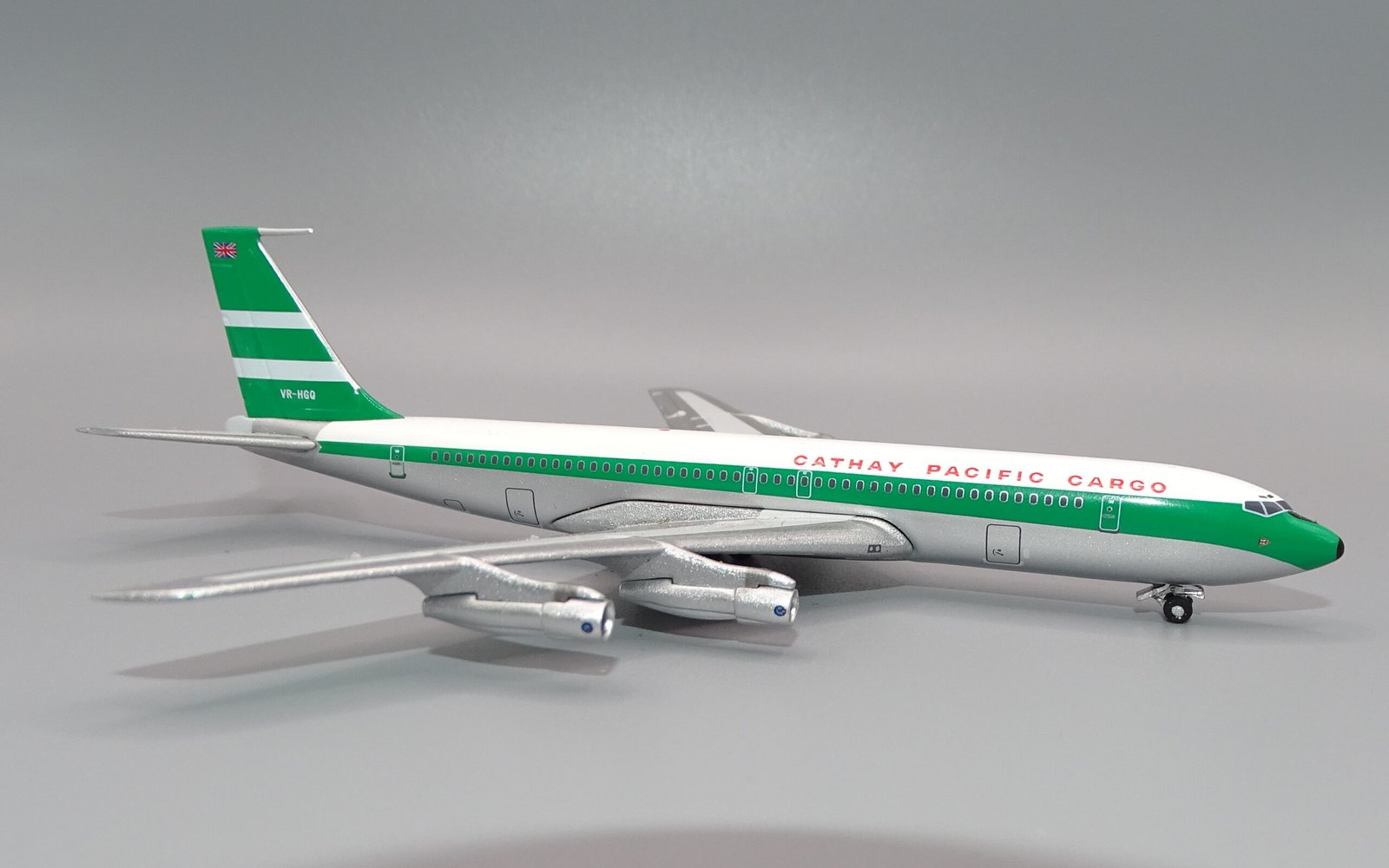
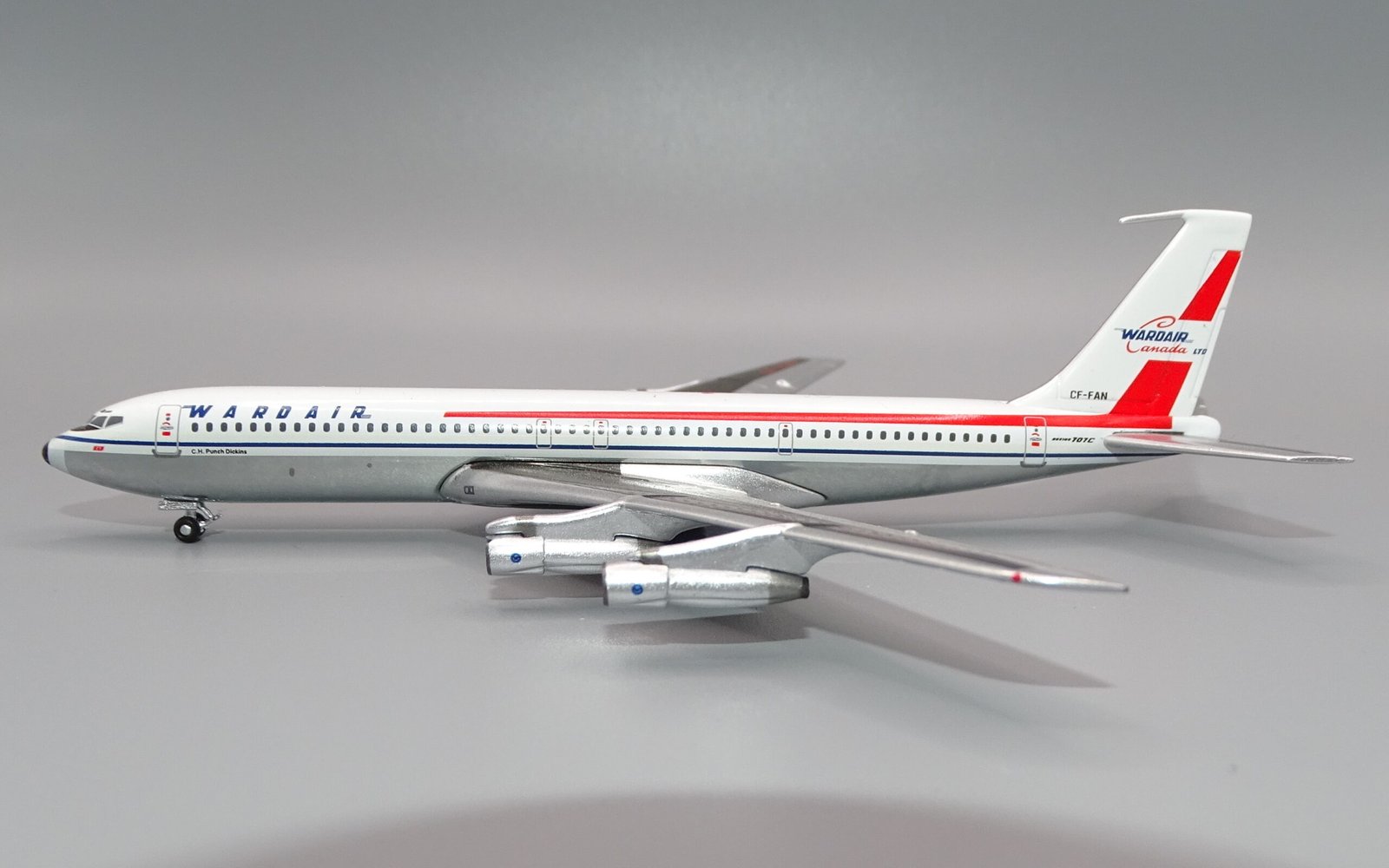
The original mould had static gears but was updated in 2007 with excellent rolling gear. The mould has been used widely and regularly and is still getting good use today. Below are a selection of 707s with the updated rolling gear:
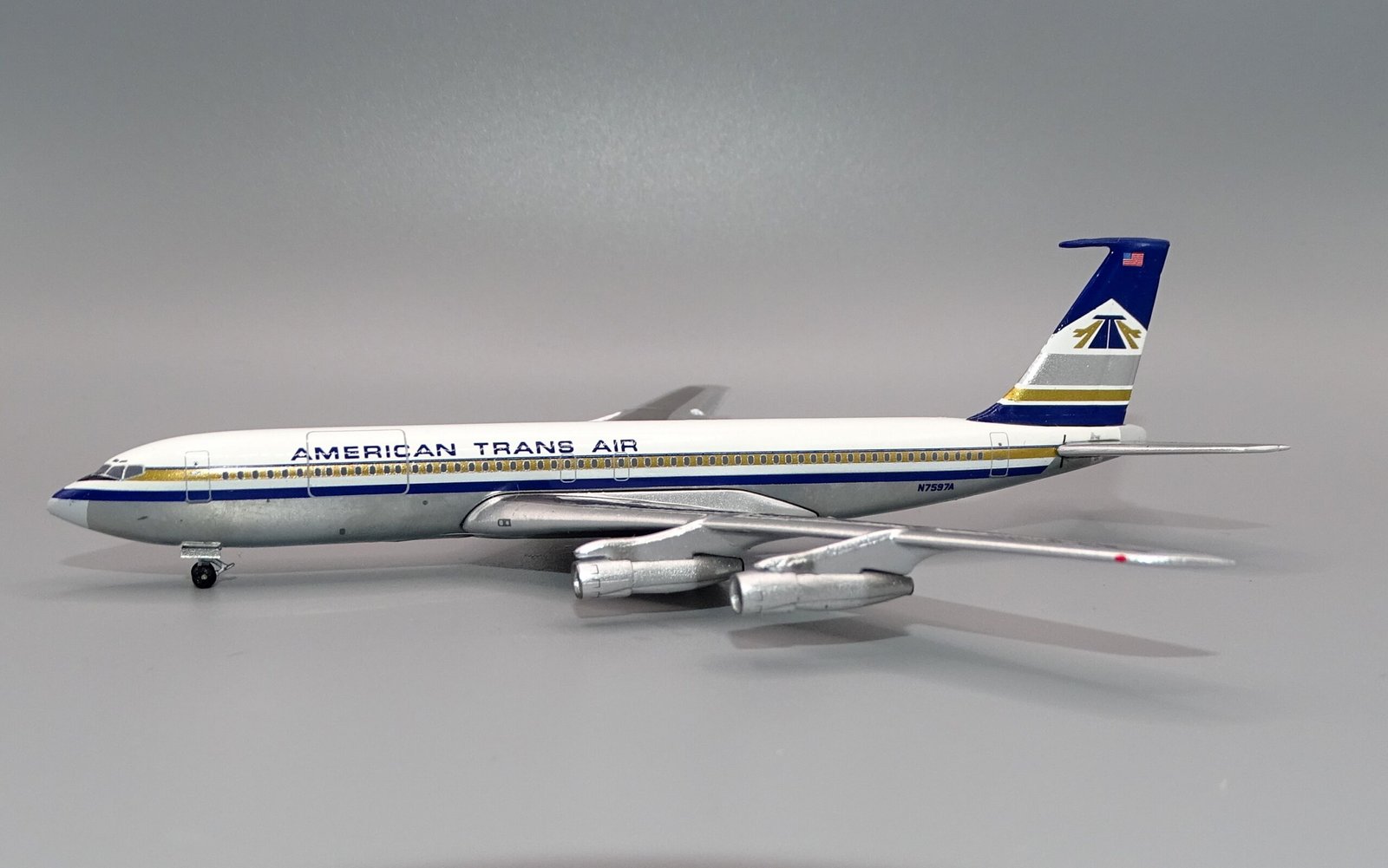
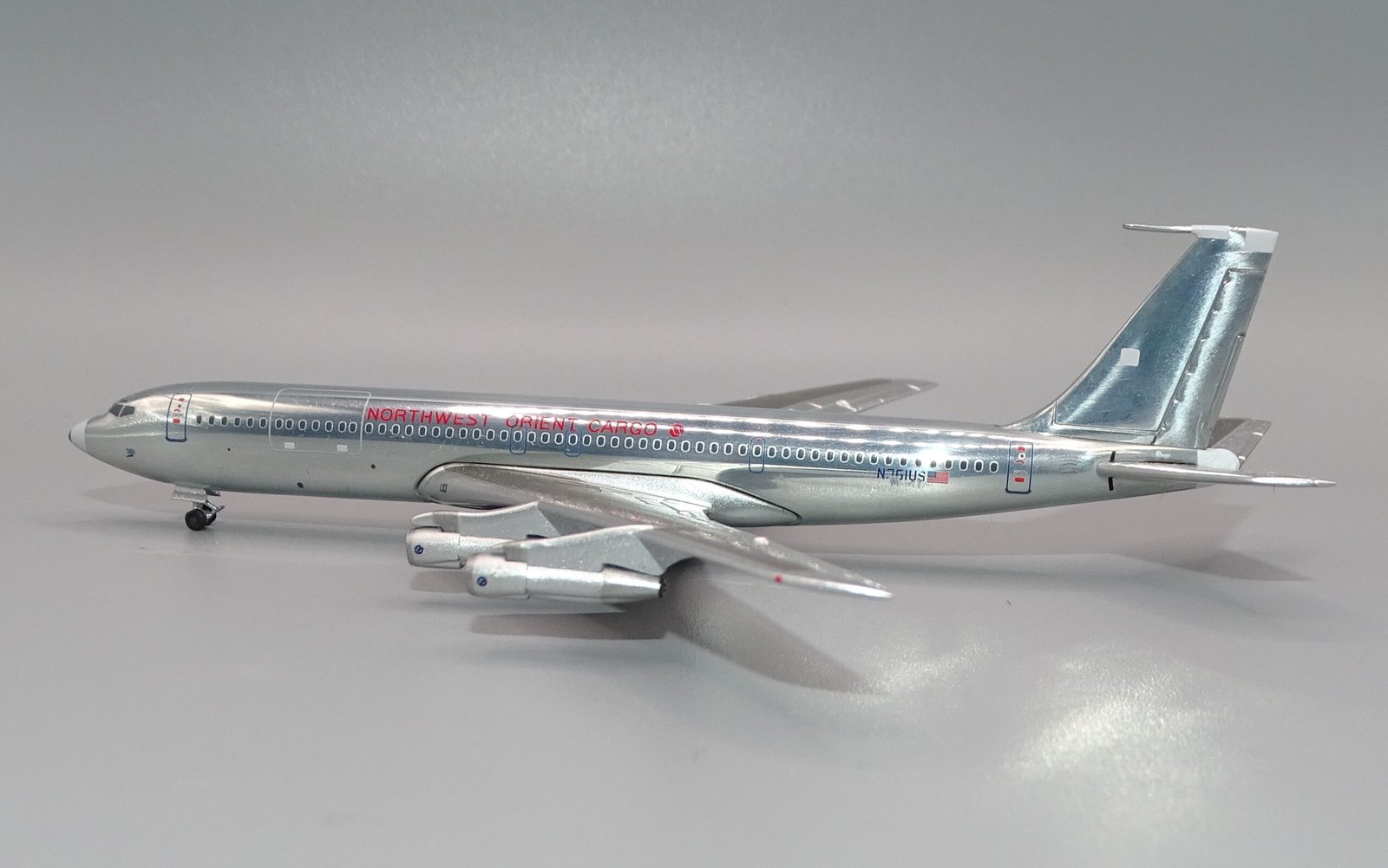
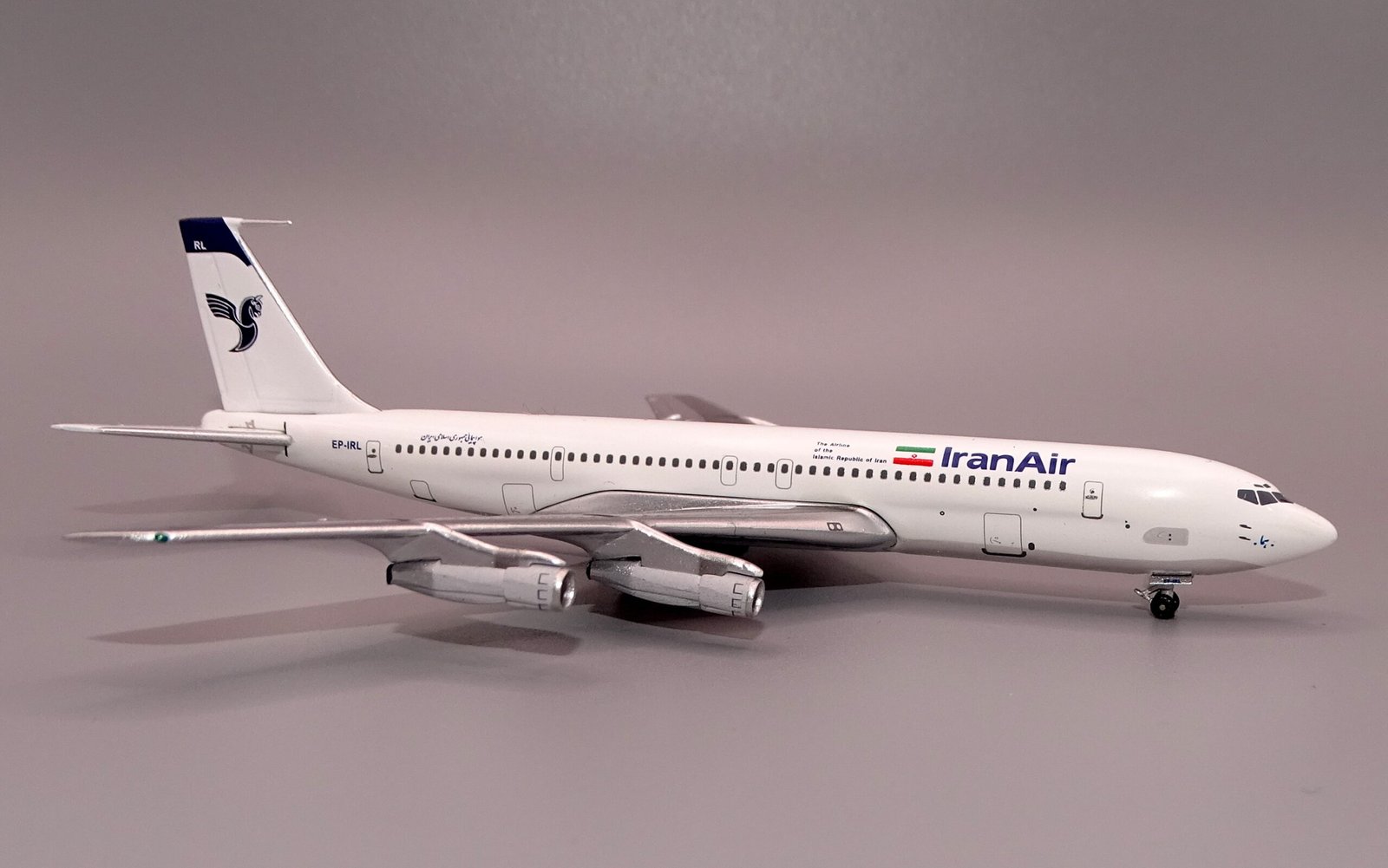
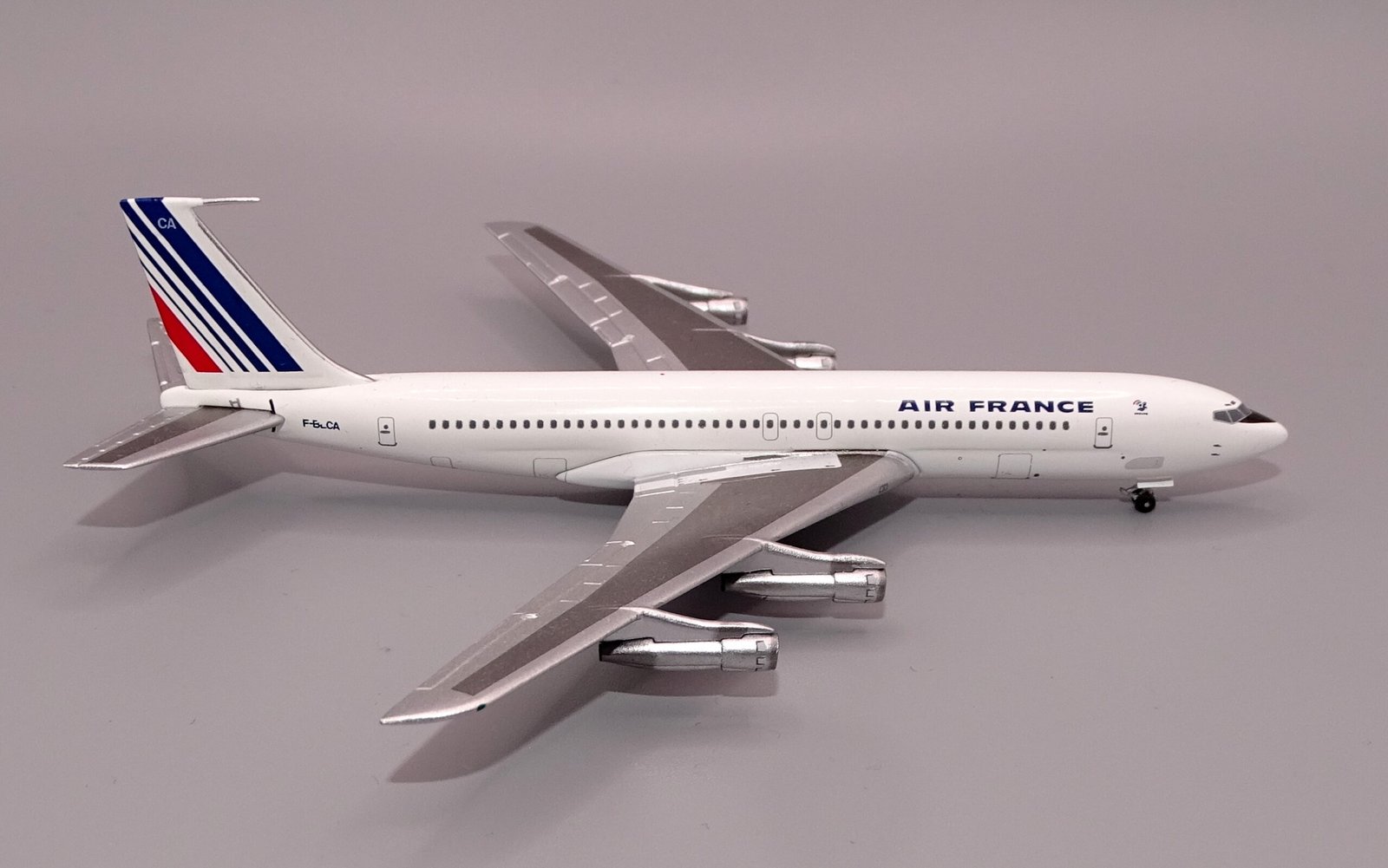
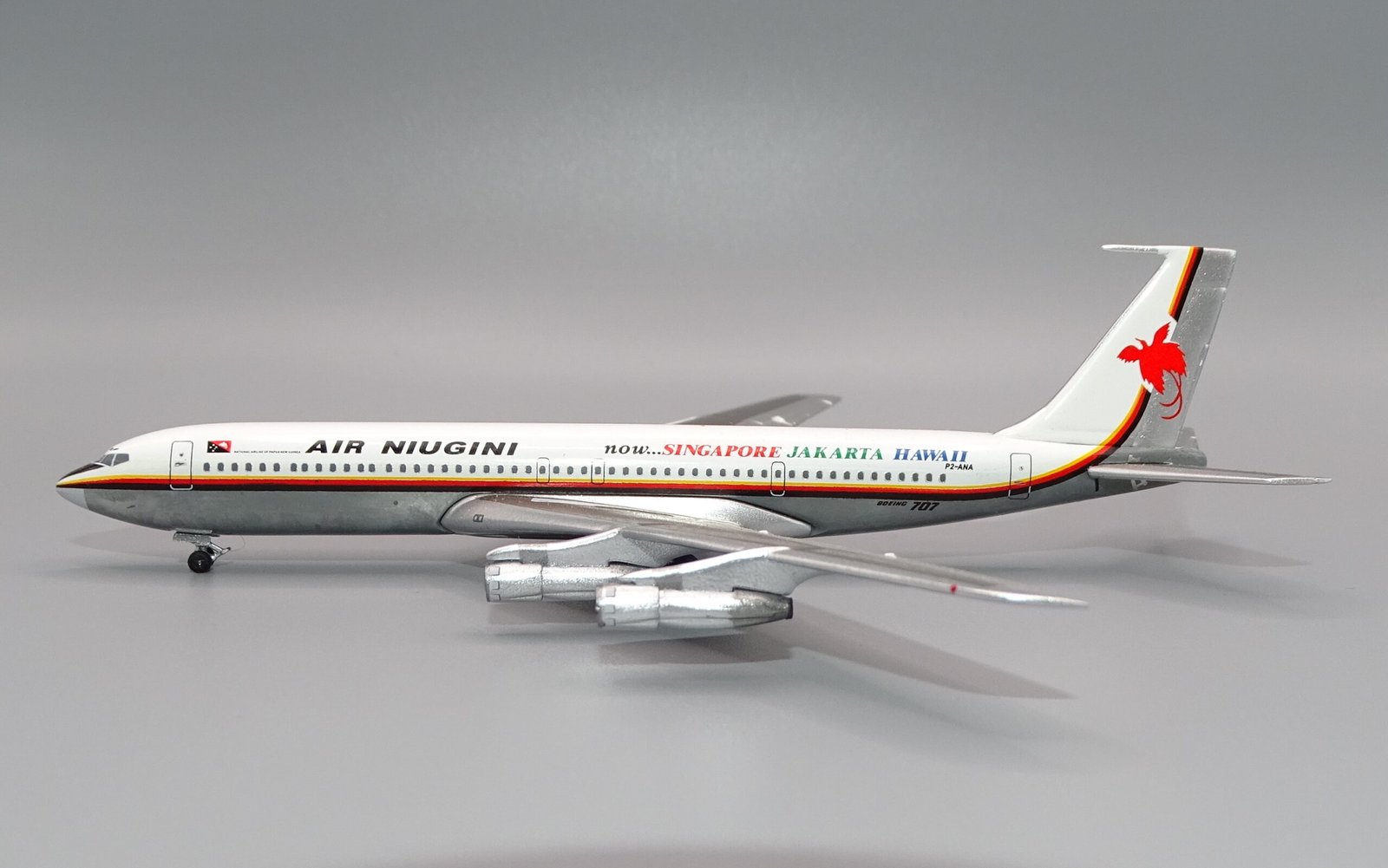
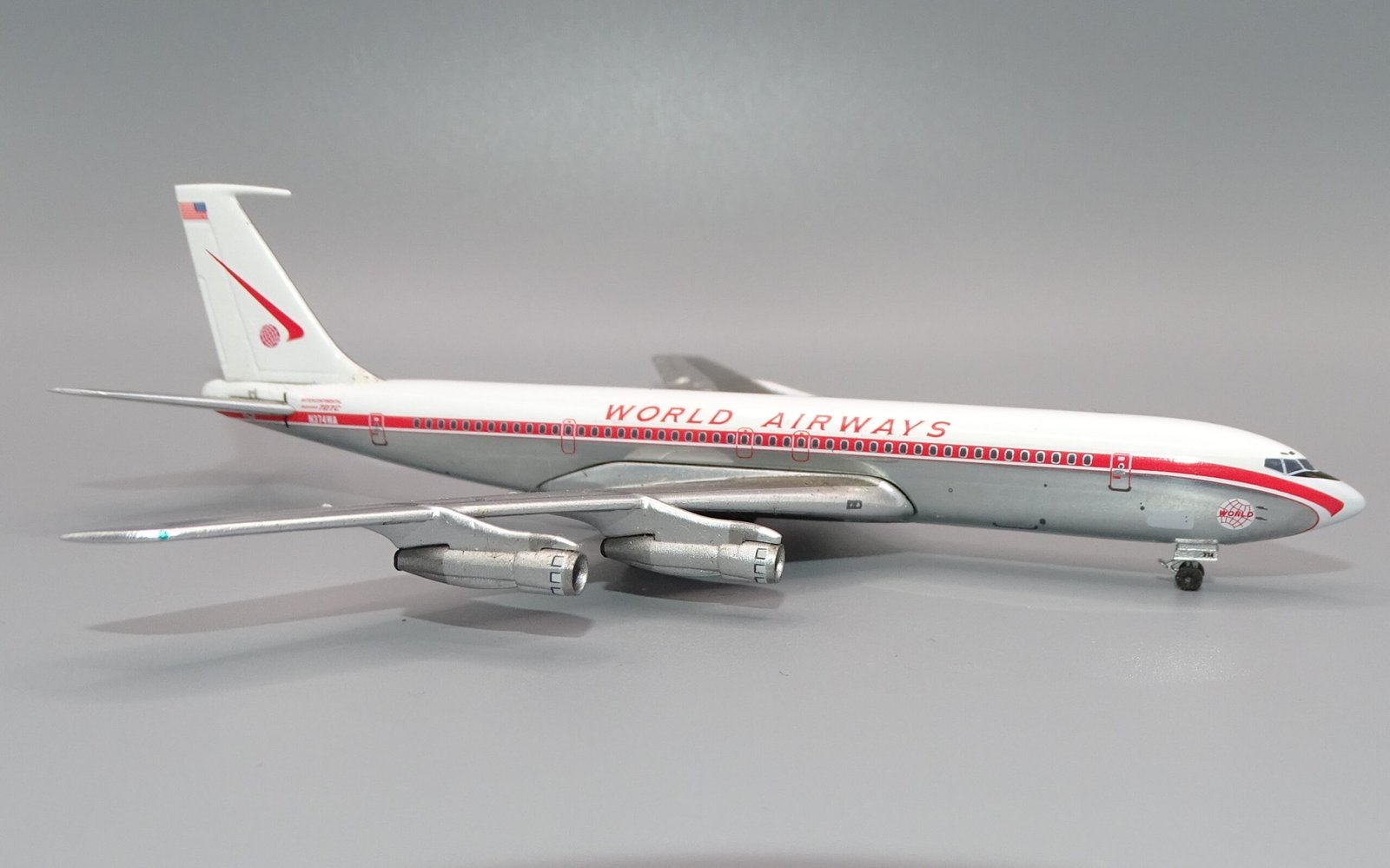
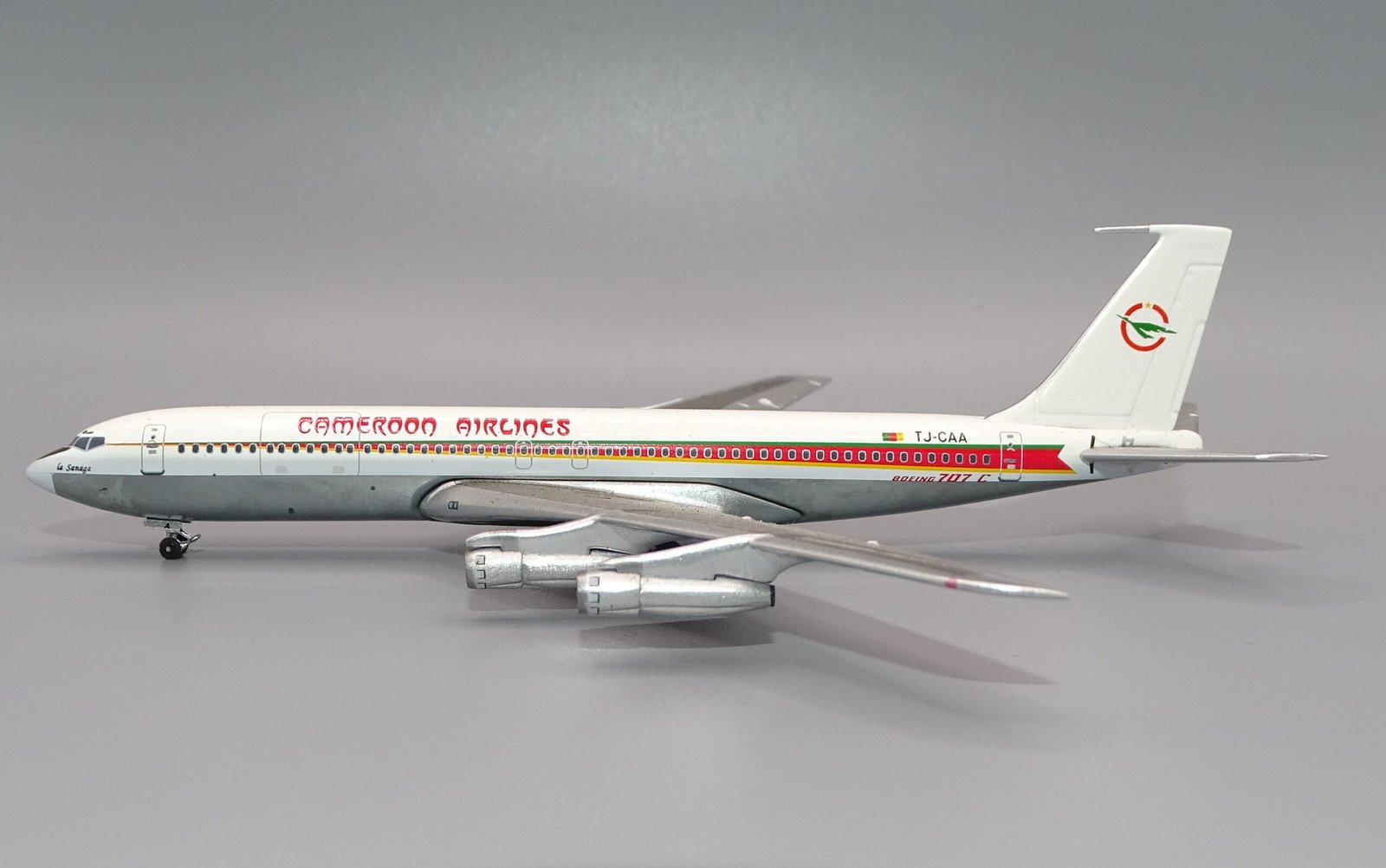
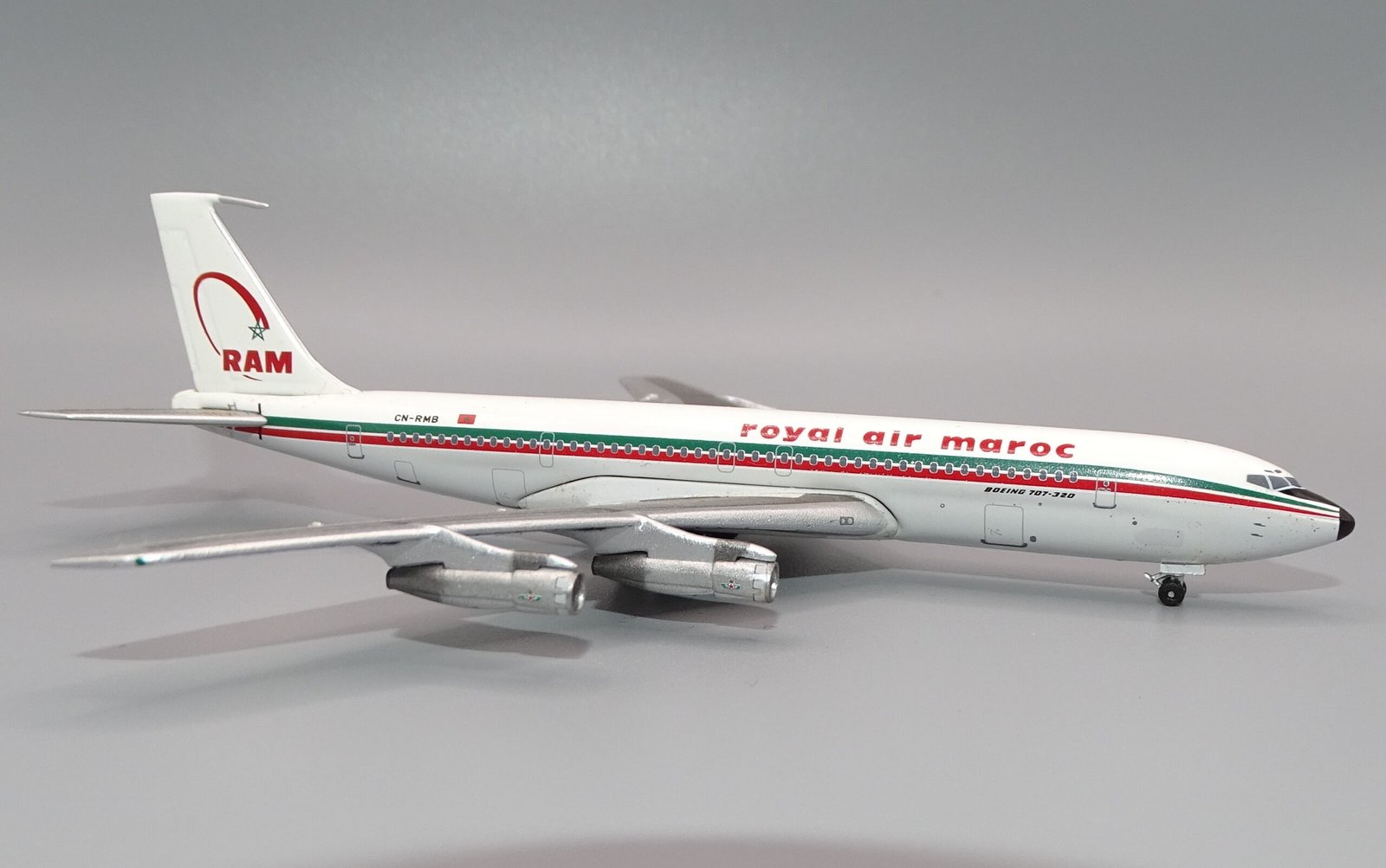
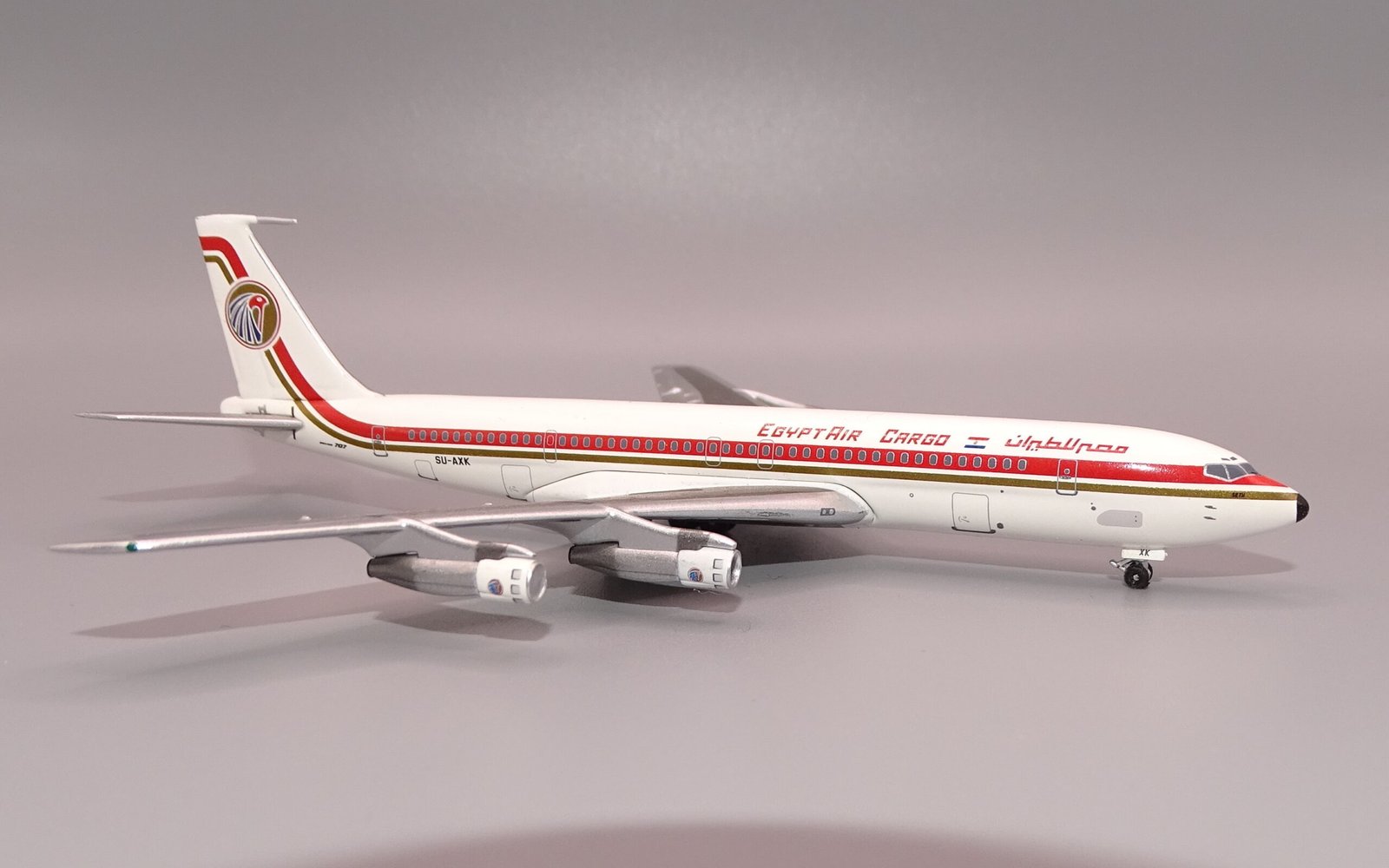
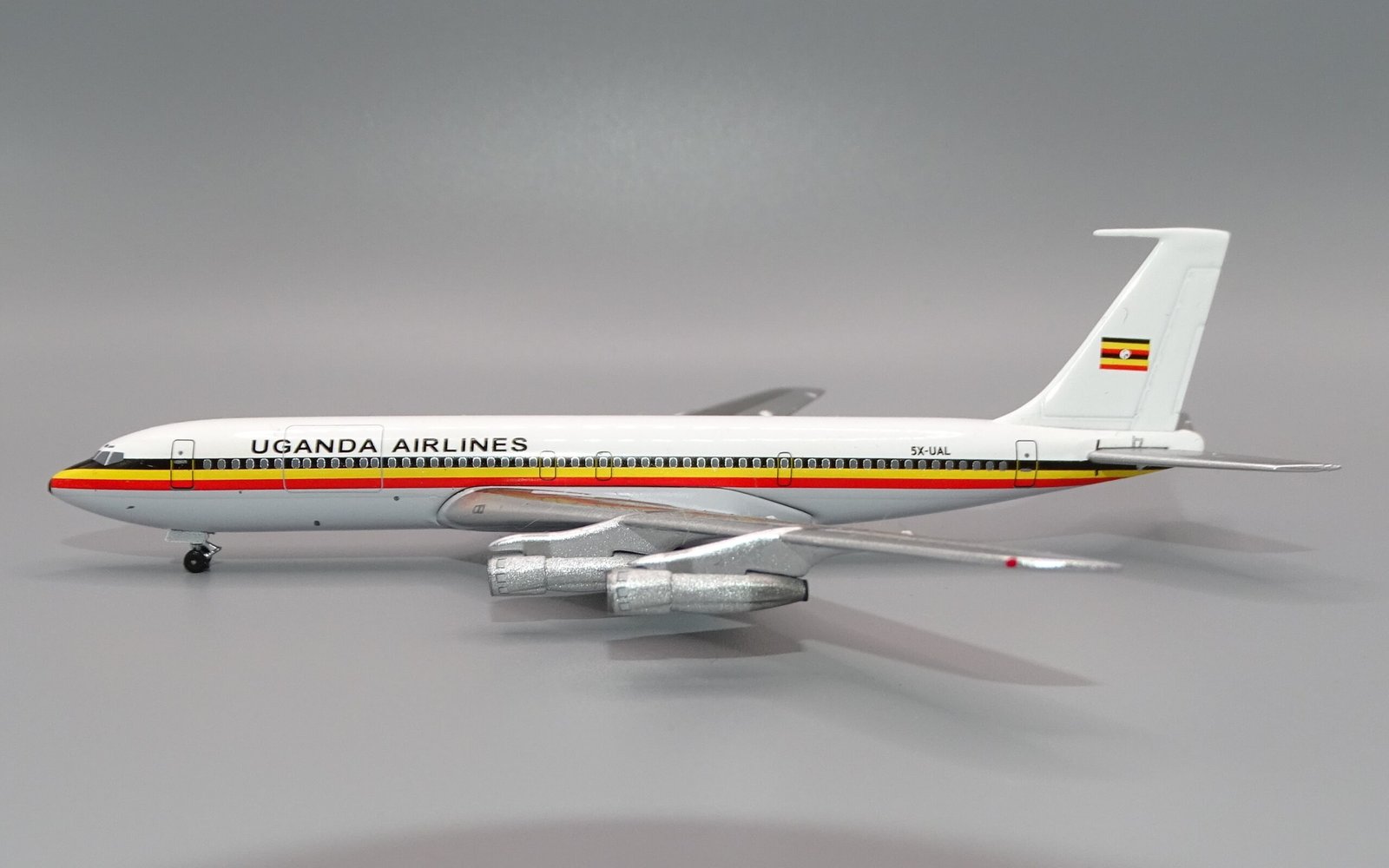
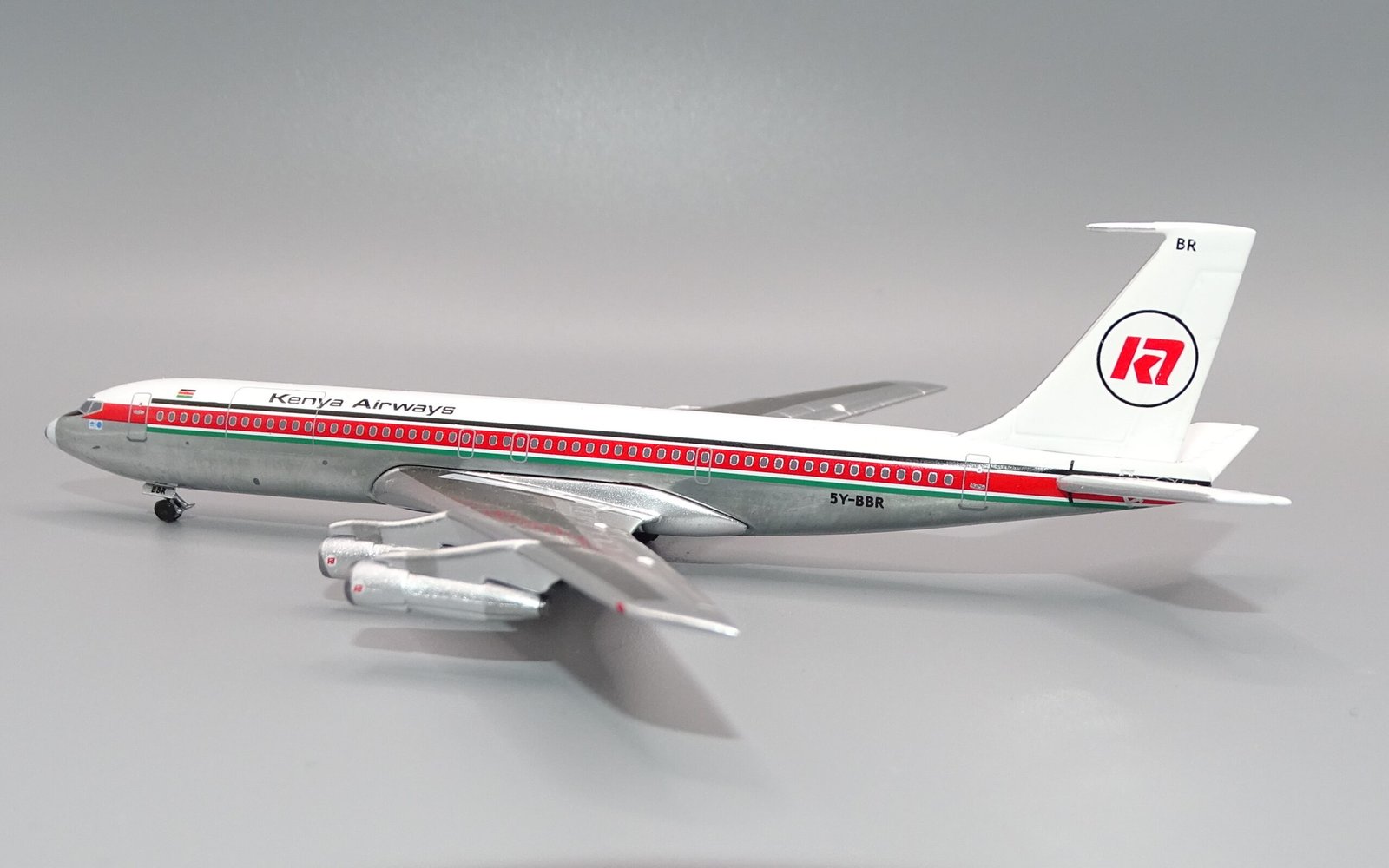
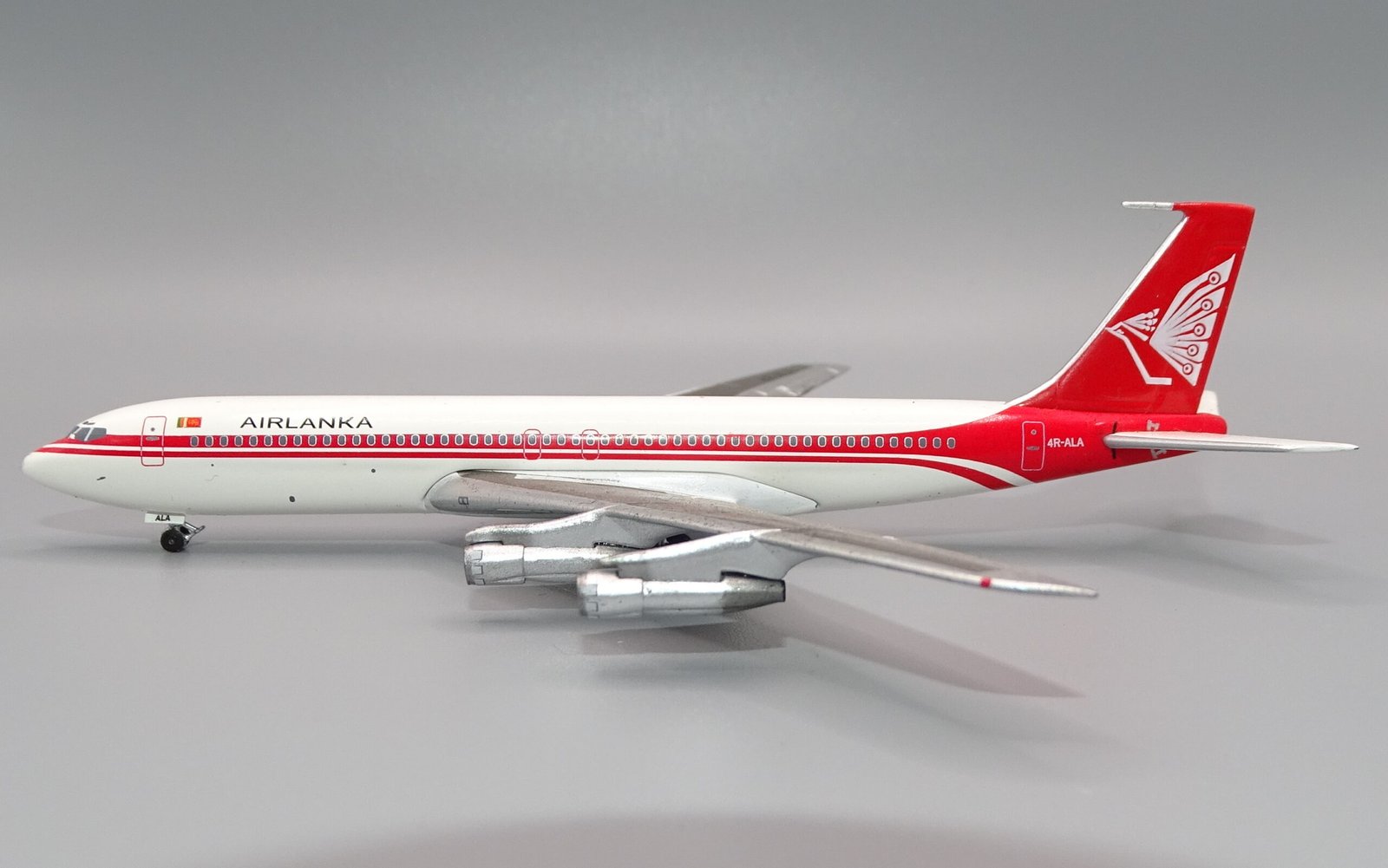
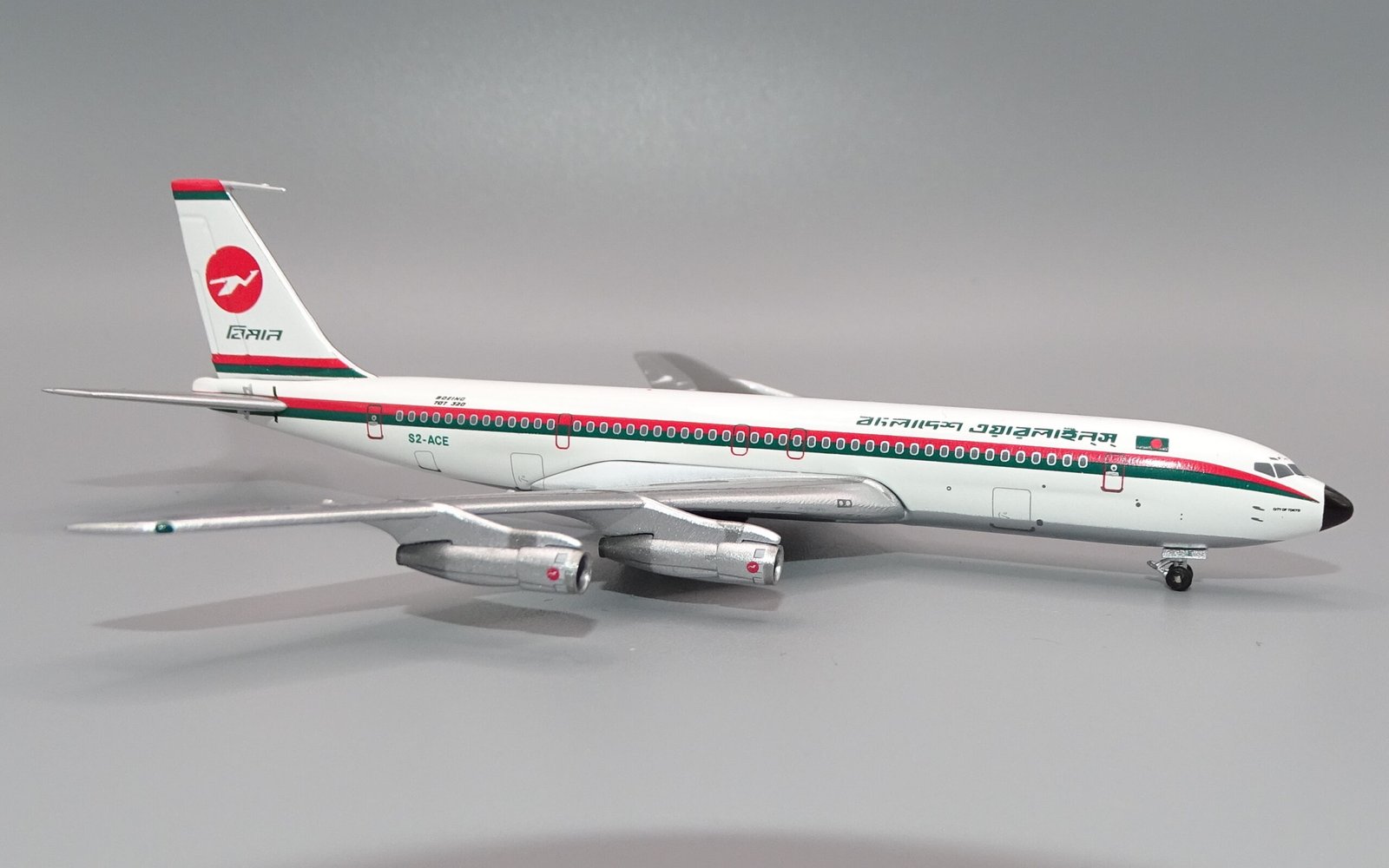
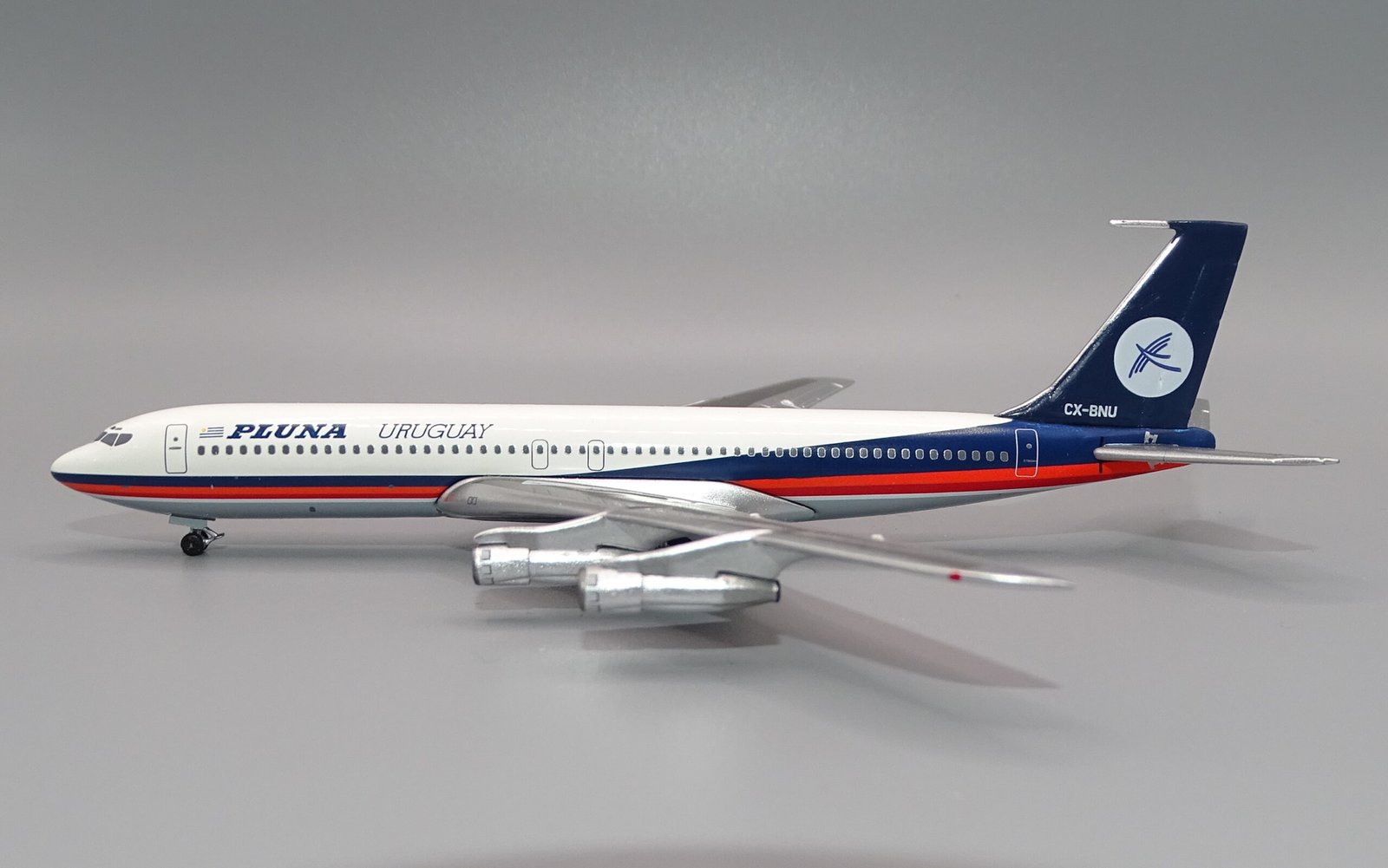
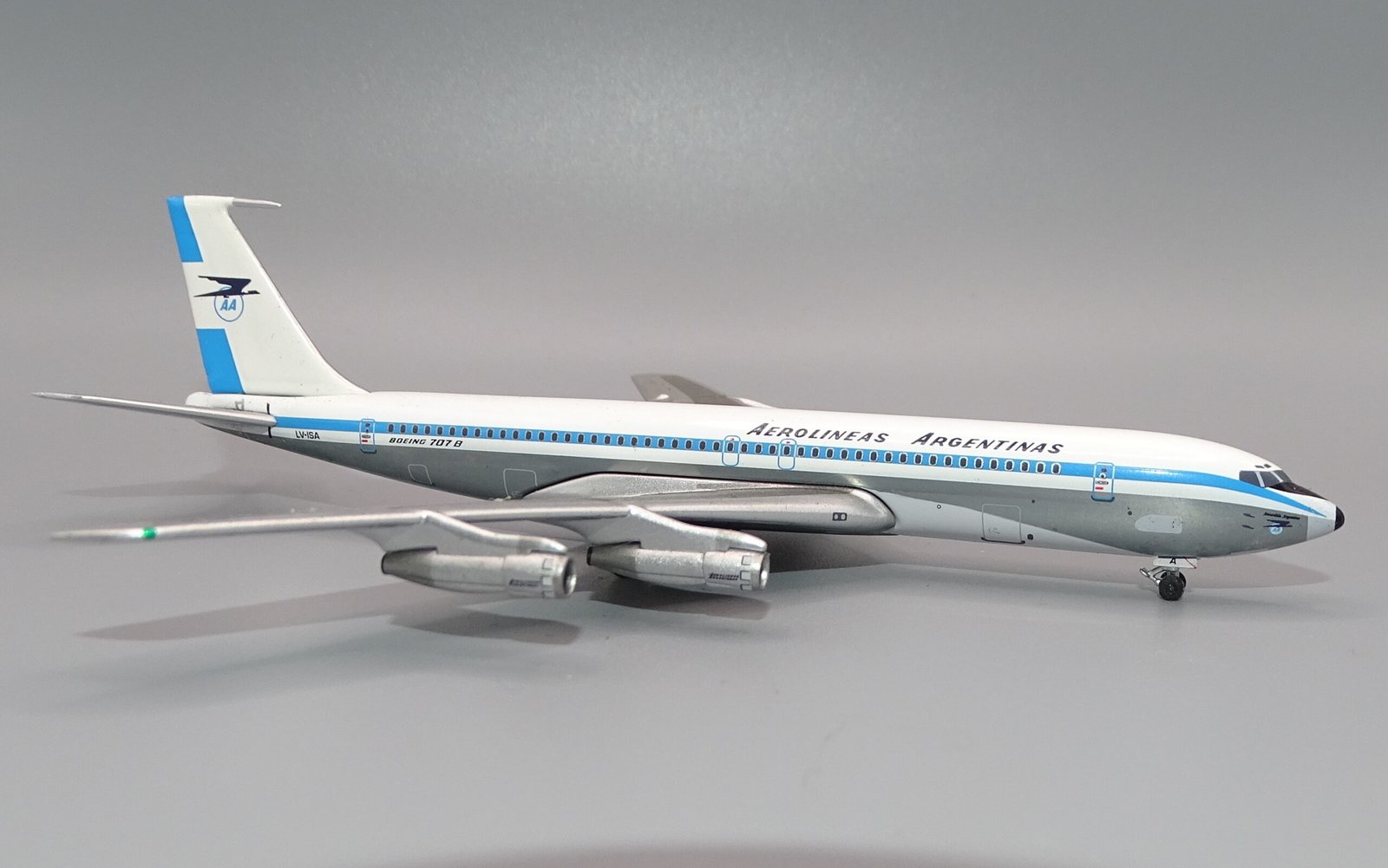
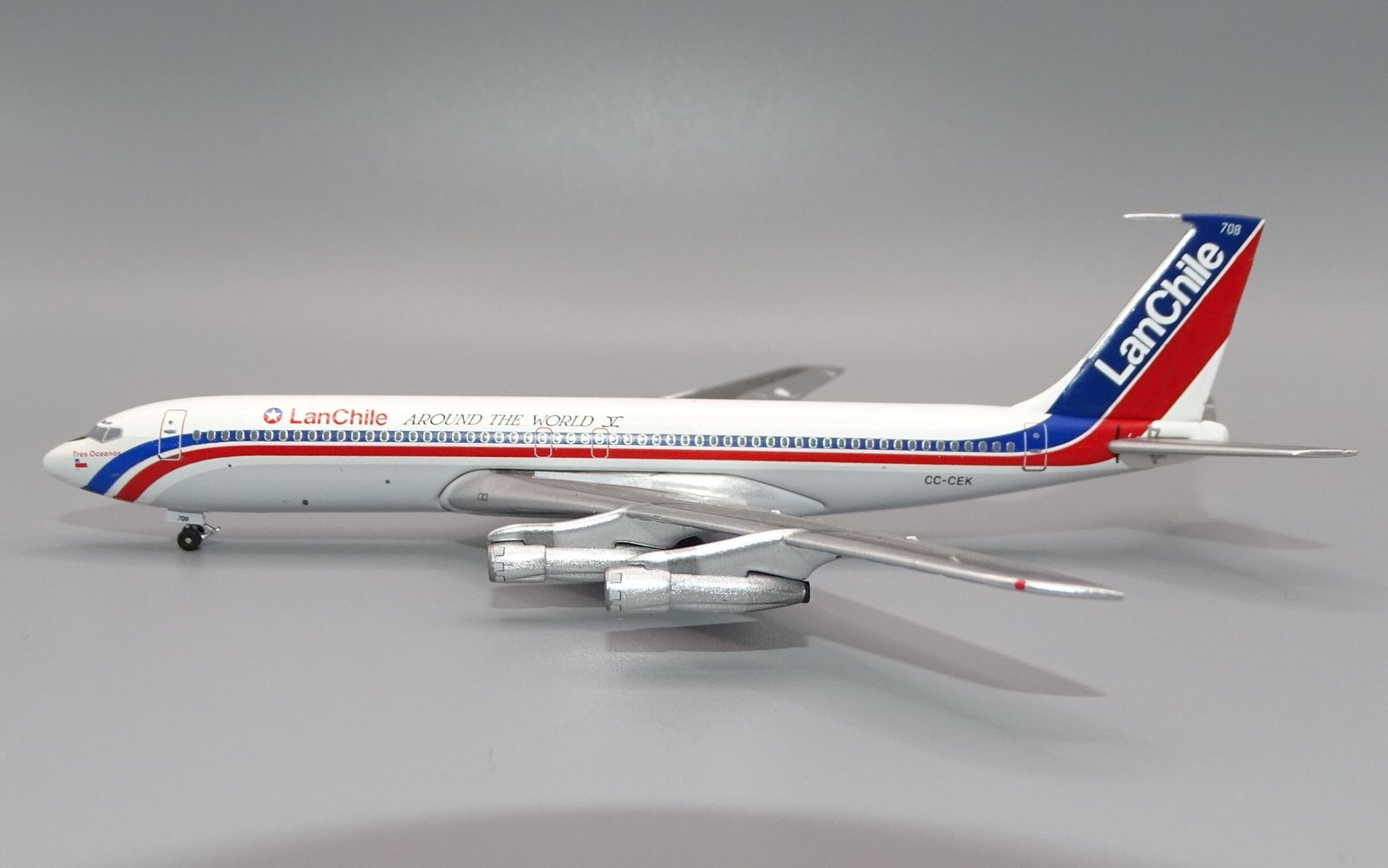
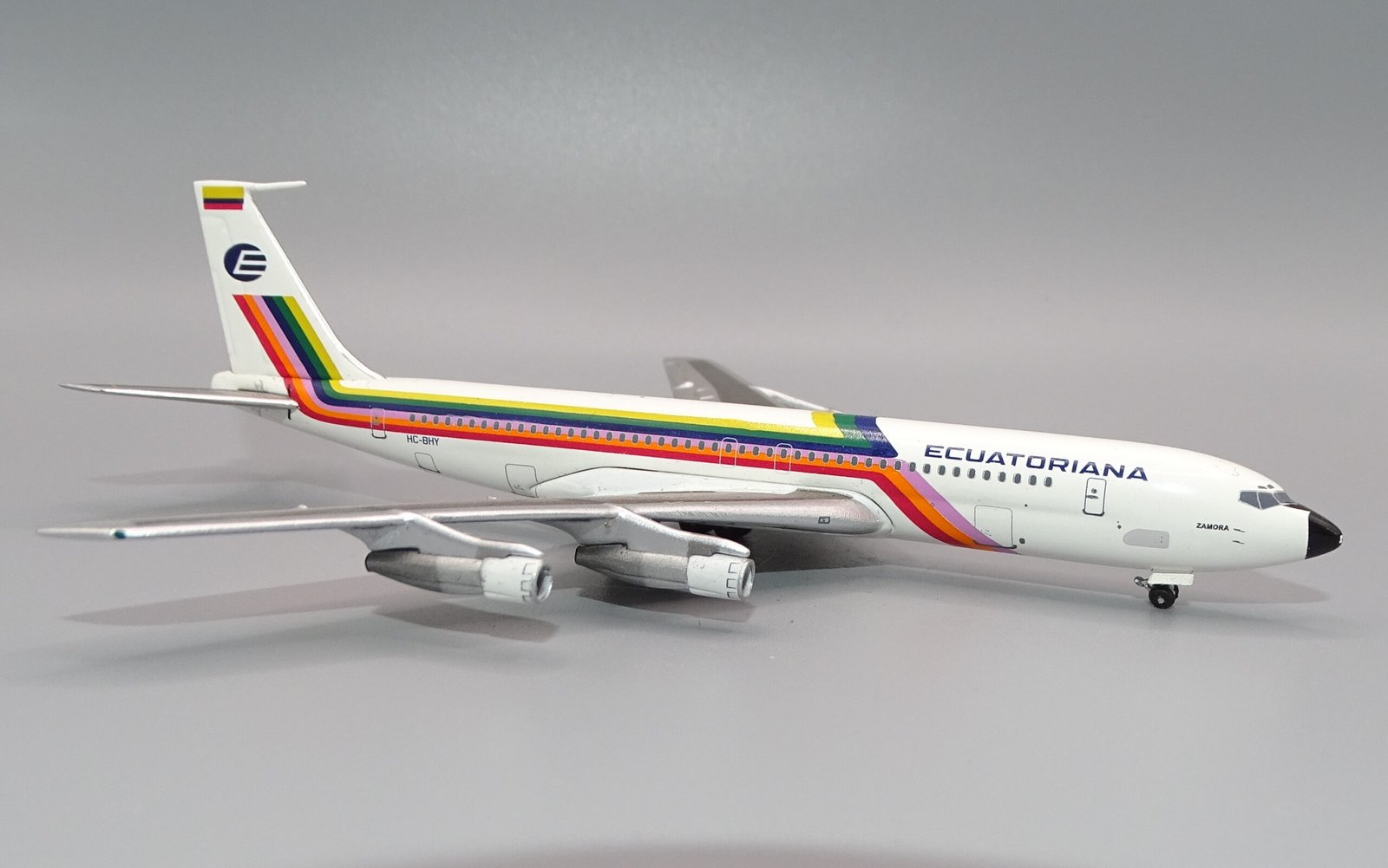
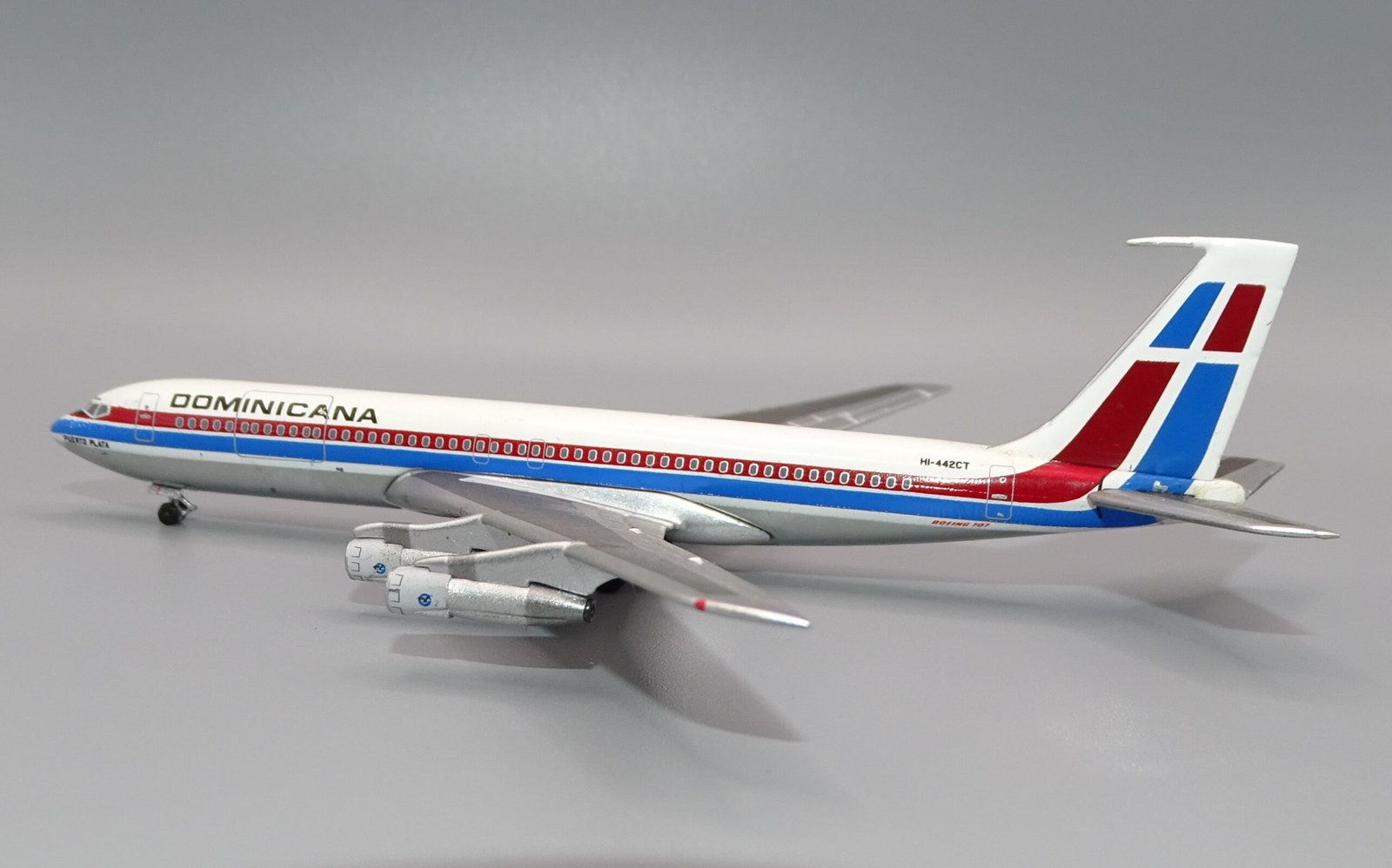
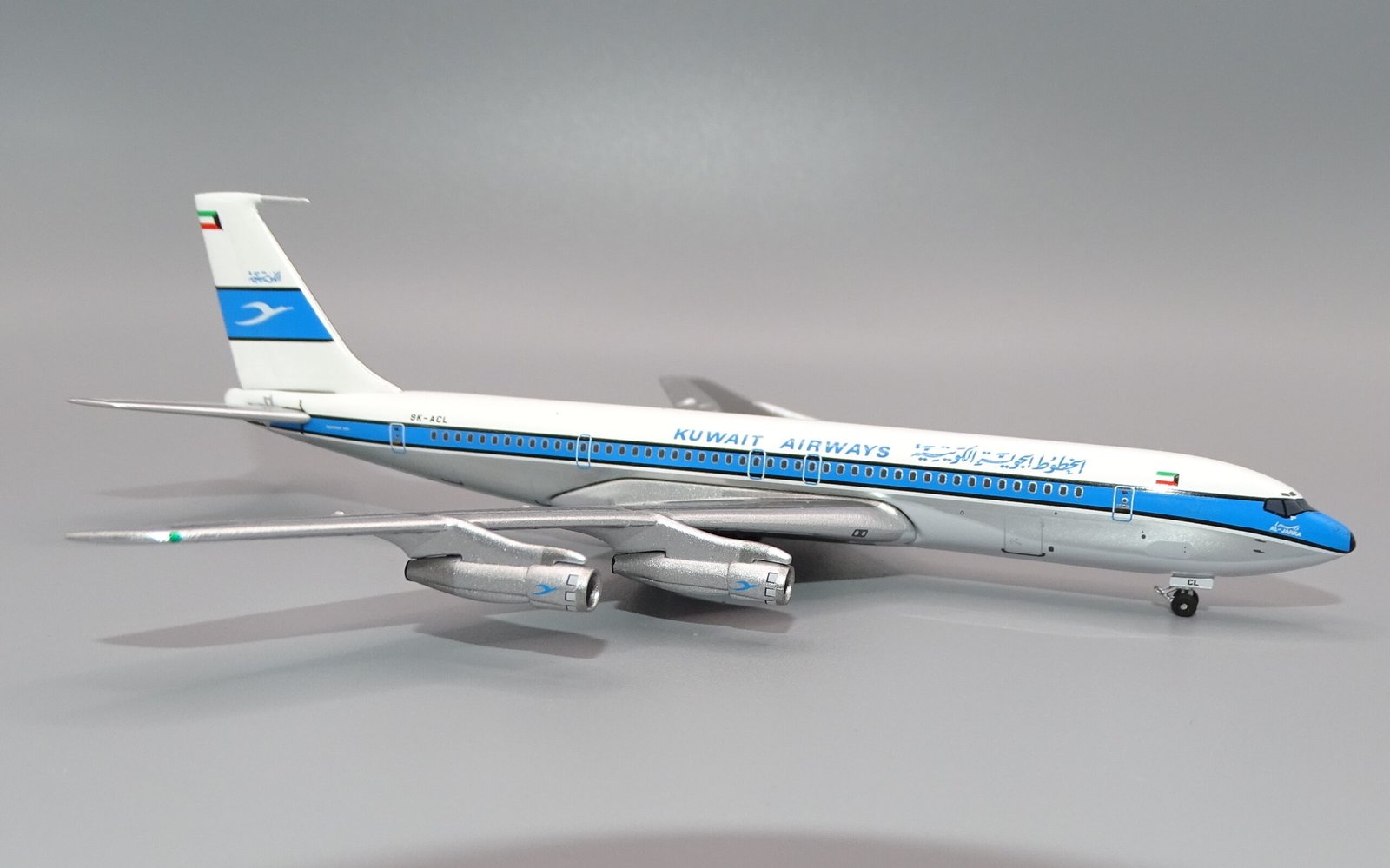
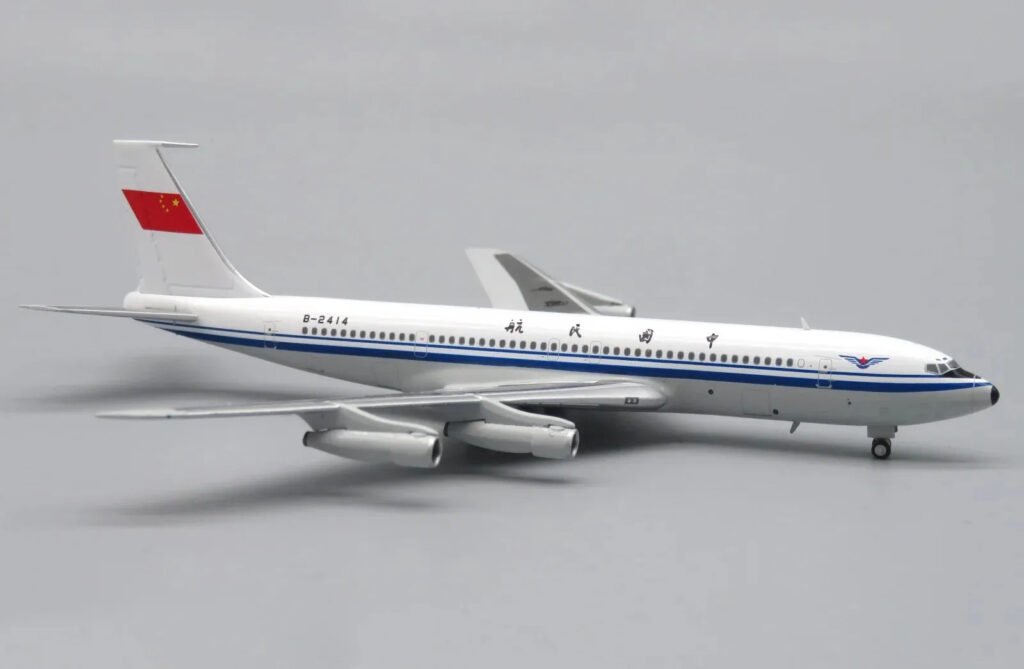
In late 2024 the Aeroclassics mould was also used by YU ModeL for a pair of CAAC 707s:
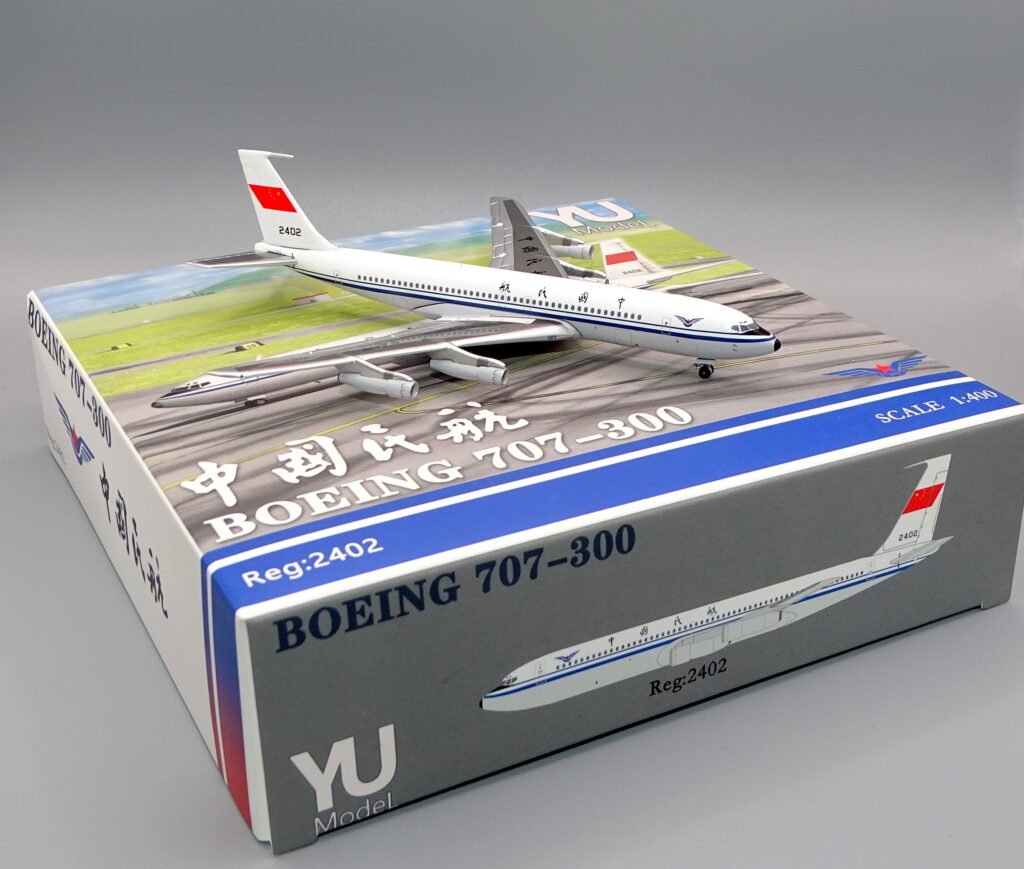
Dragon Wings (2004-2006)
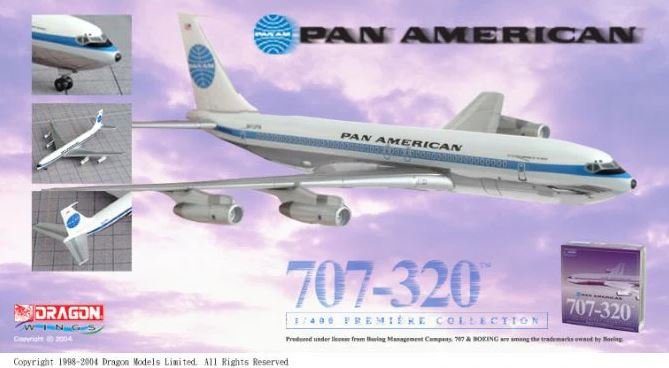
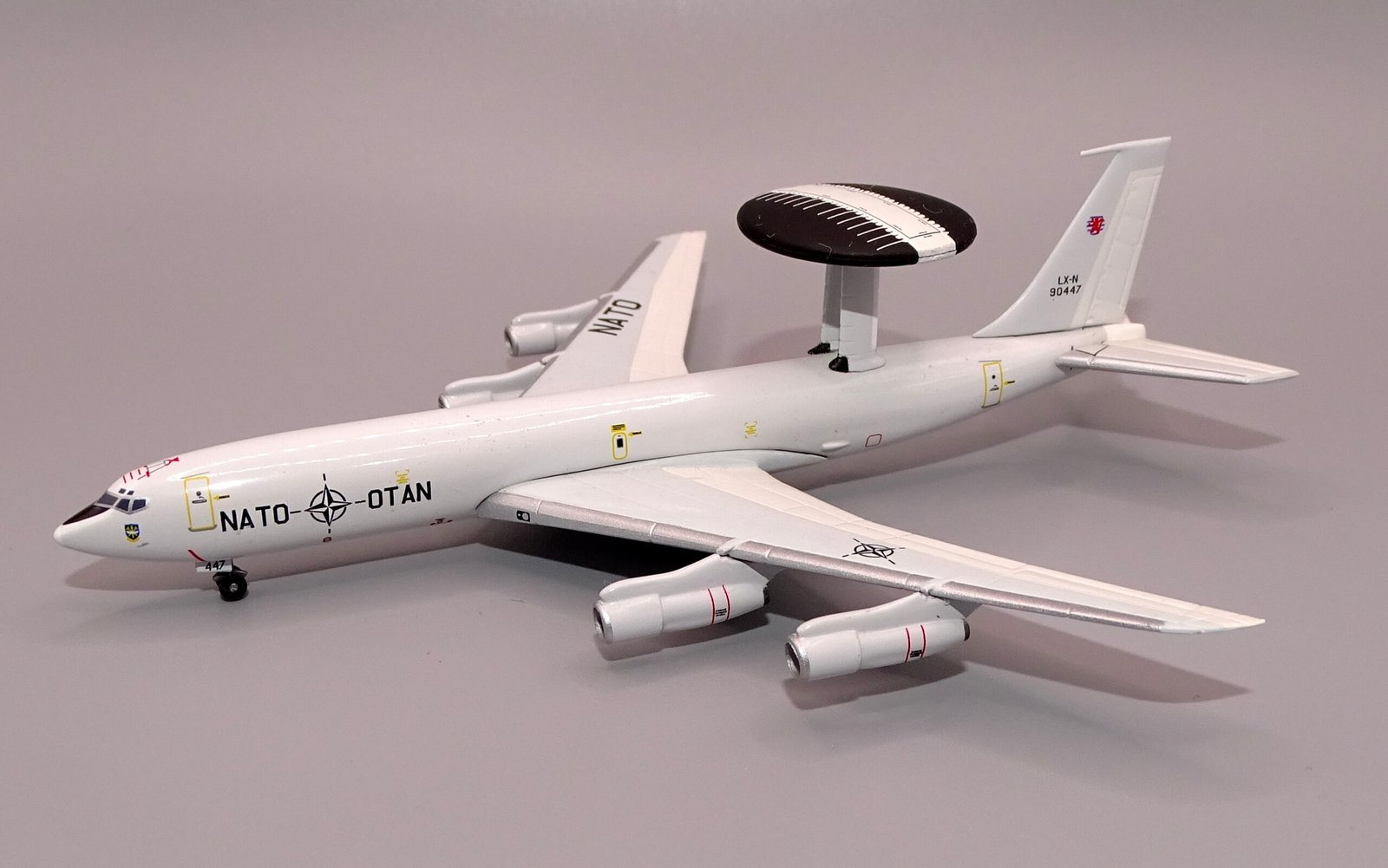
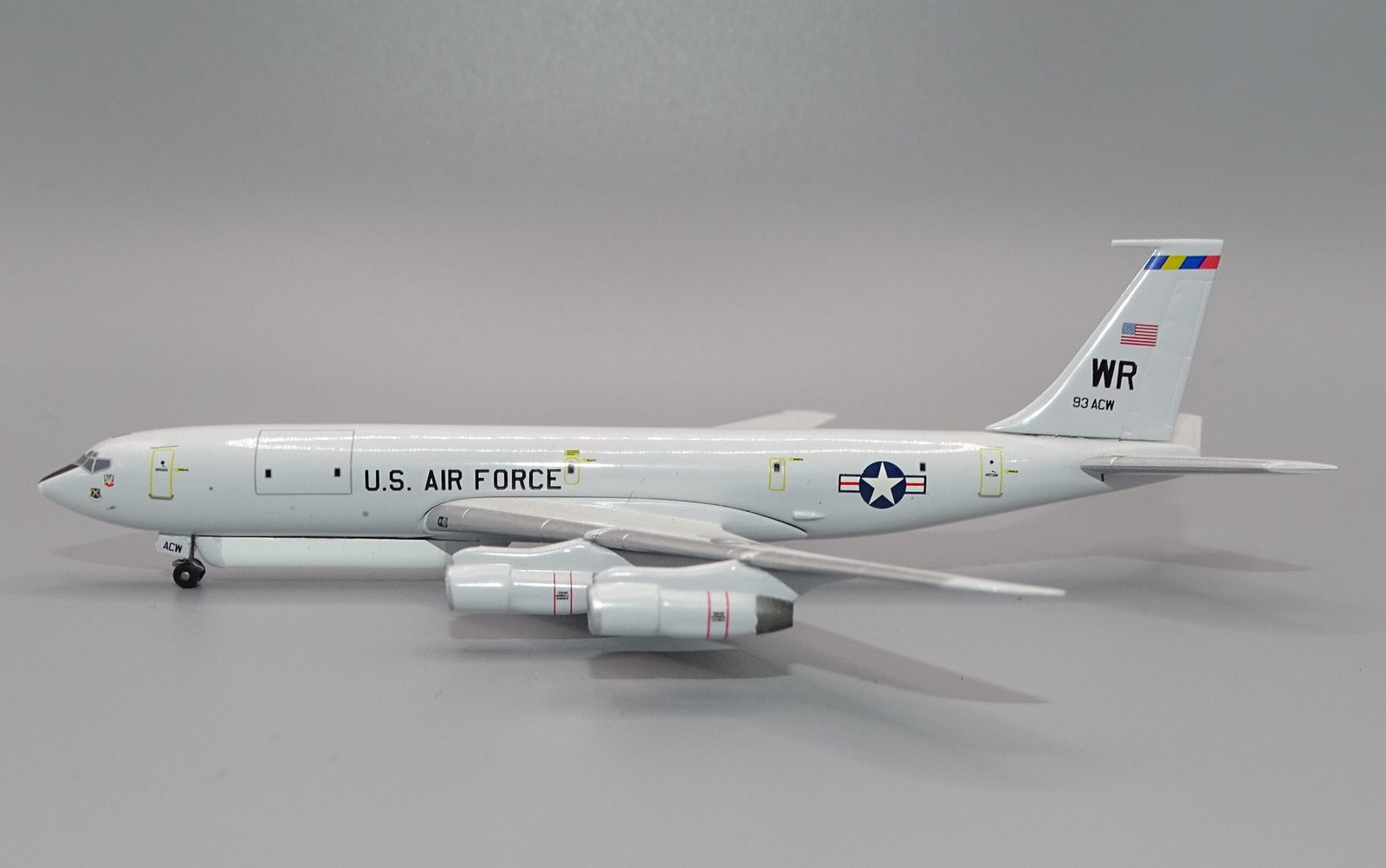
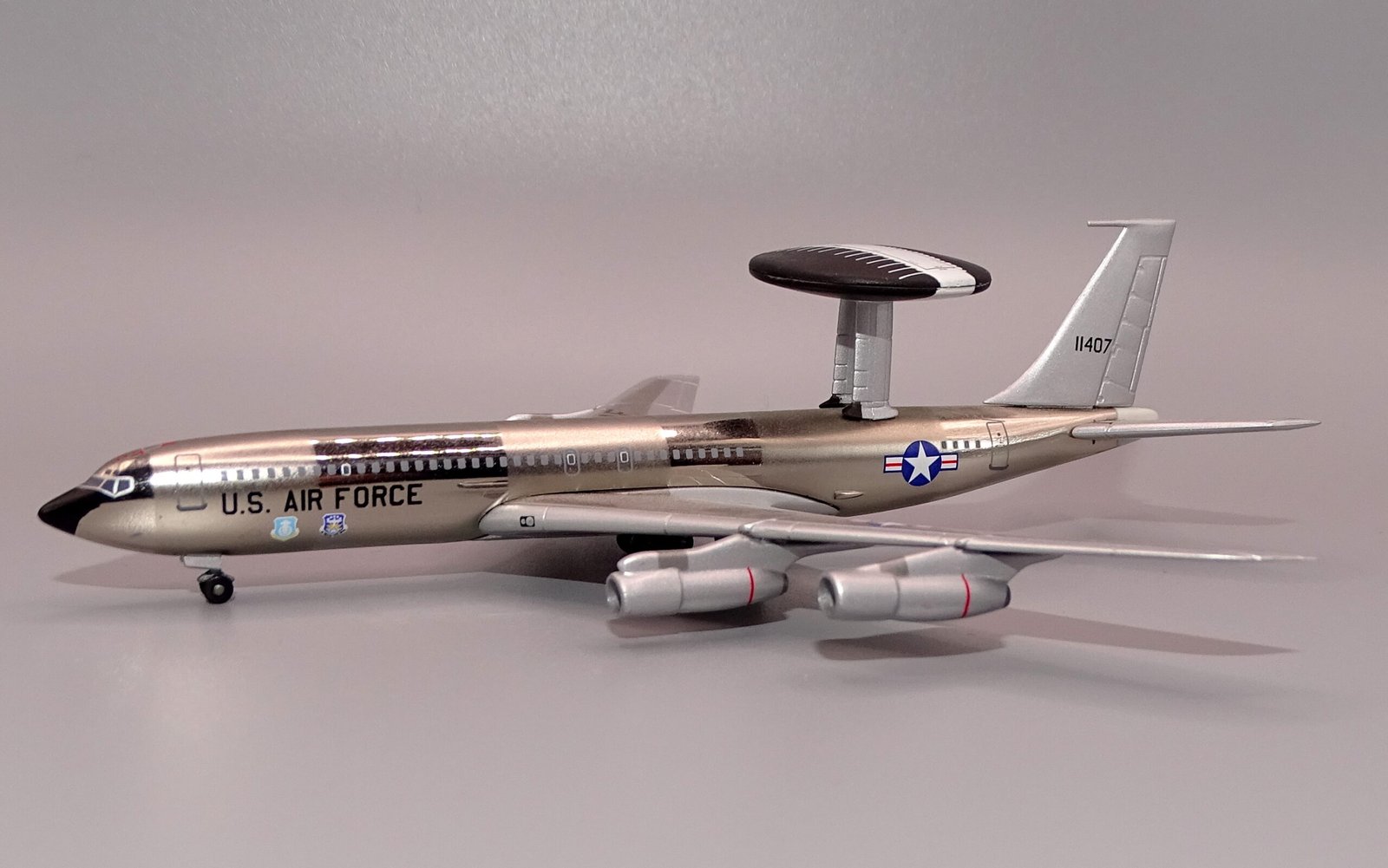
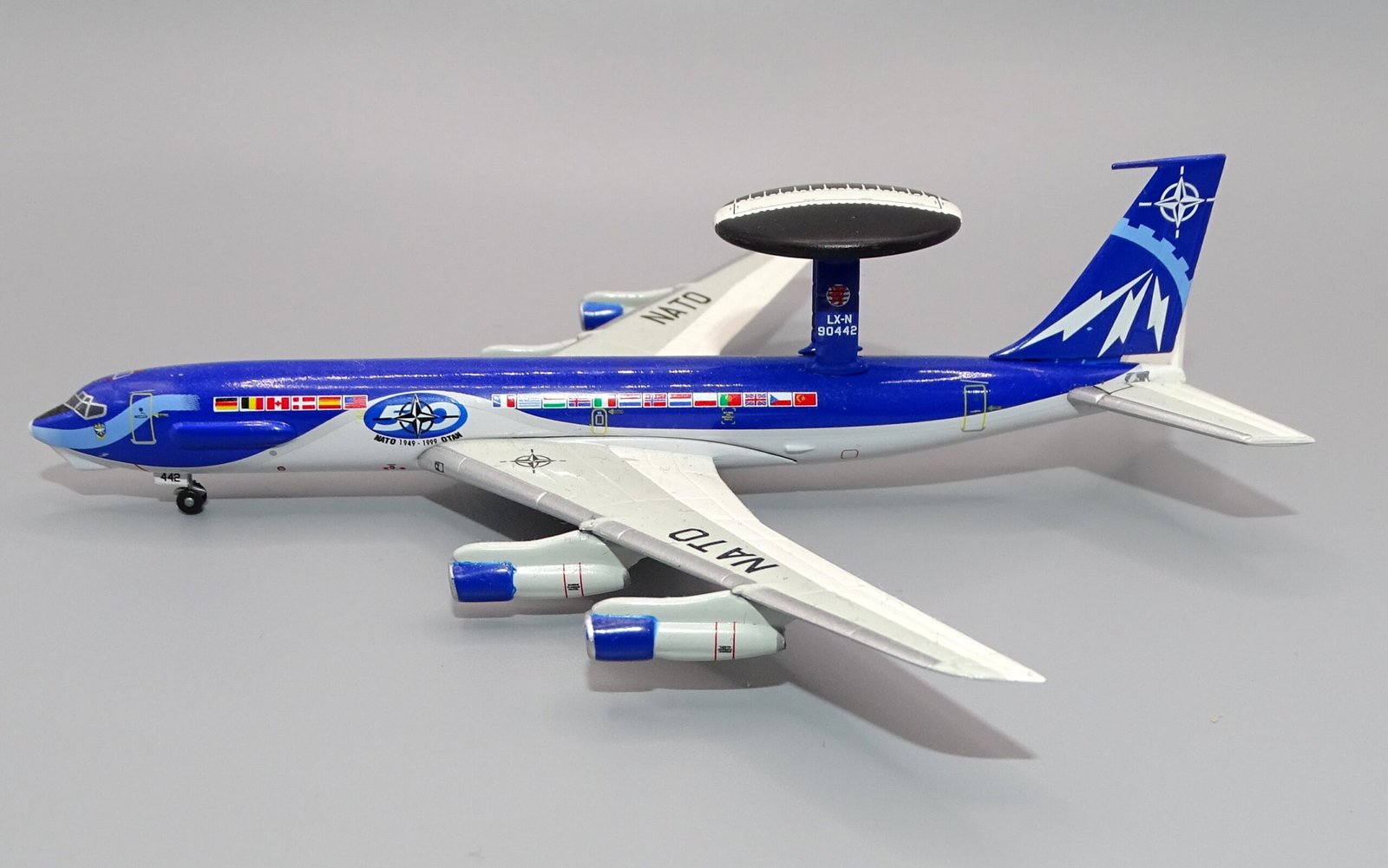
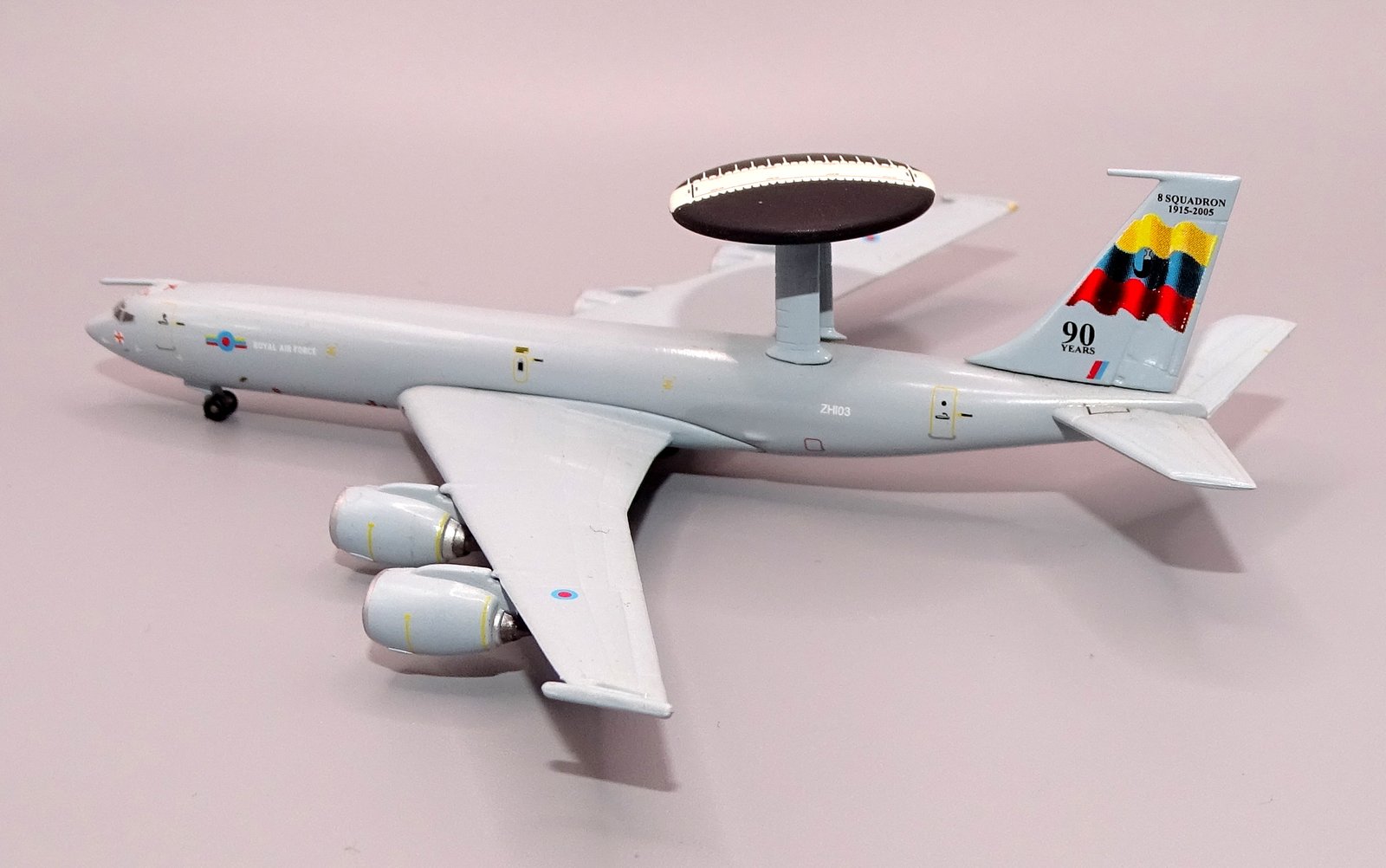
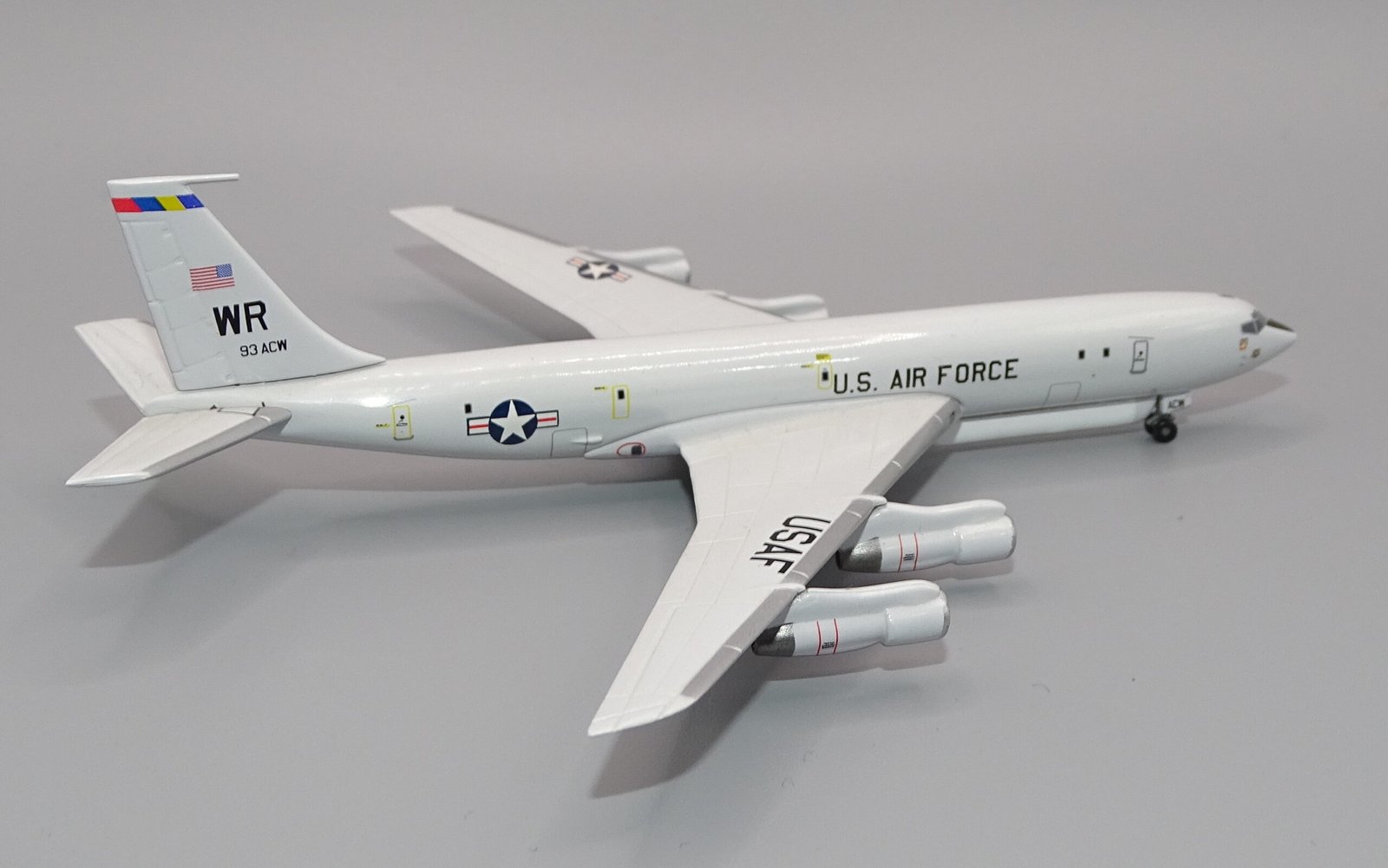
Dragon were surprisingly late to the 707-320C and although without the landing gear it can look ok with it it is far from the best. They only ever made a few civilian versions but made a variety of military types representing E-3 Sentry AWACs, E-6B Mercurys and E-8 J-Stars. The 707 mould has the common Dragon faults – bad nosegear and poorly fitted vertical stabiliser but also has a weird assymetrical nose which is a lot more upturned underneath and gives the aircraft an odd pointy profile. Their previous 707-120 and 720 noses were fine so I don’t understand why this isn’t better, however some of the military versions can still look quite good.
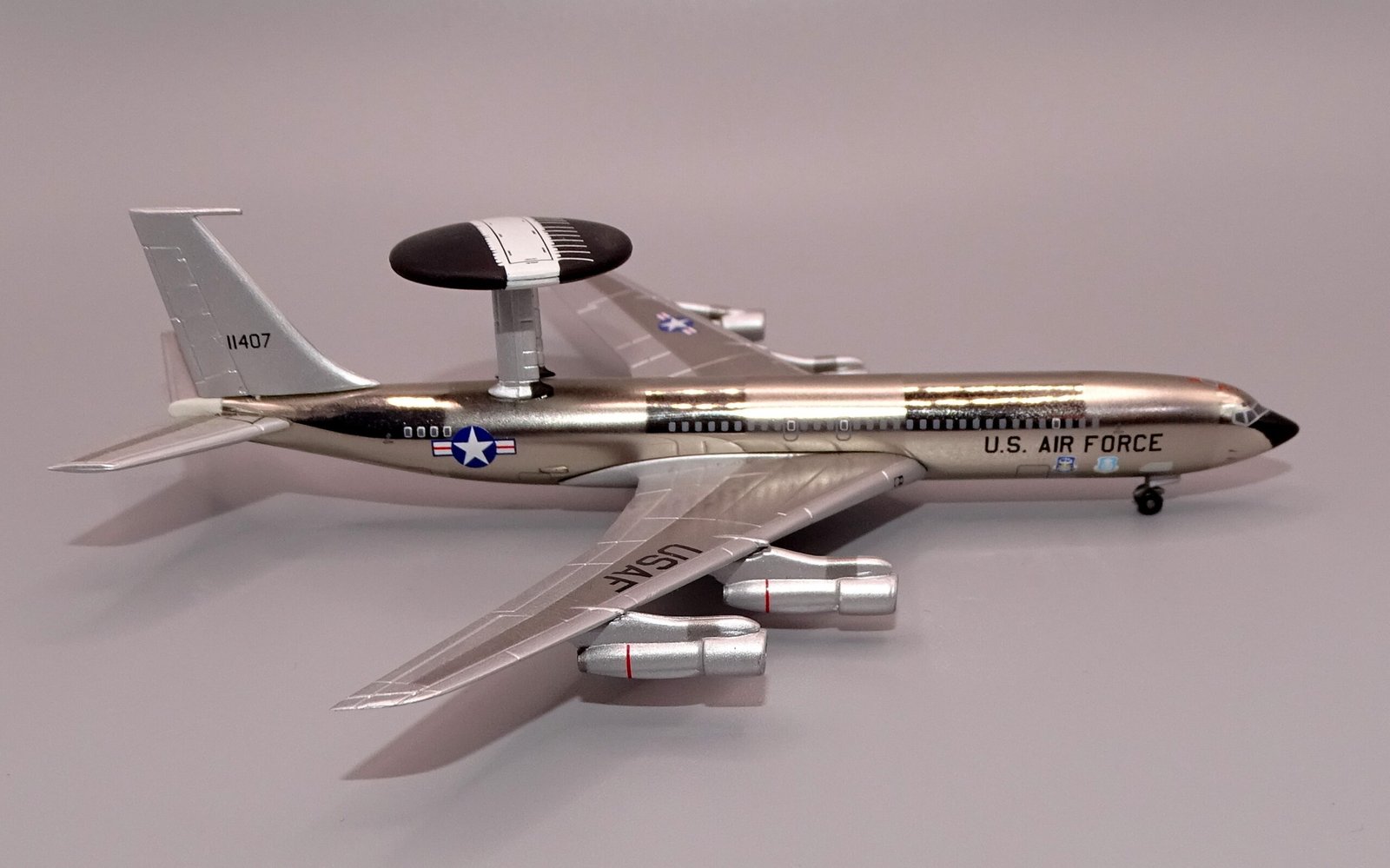
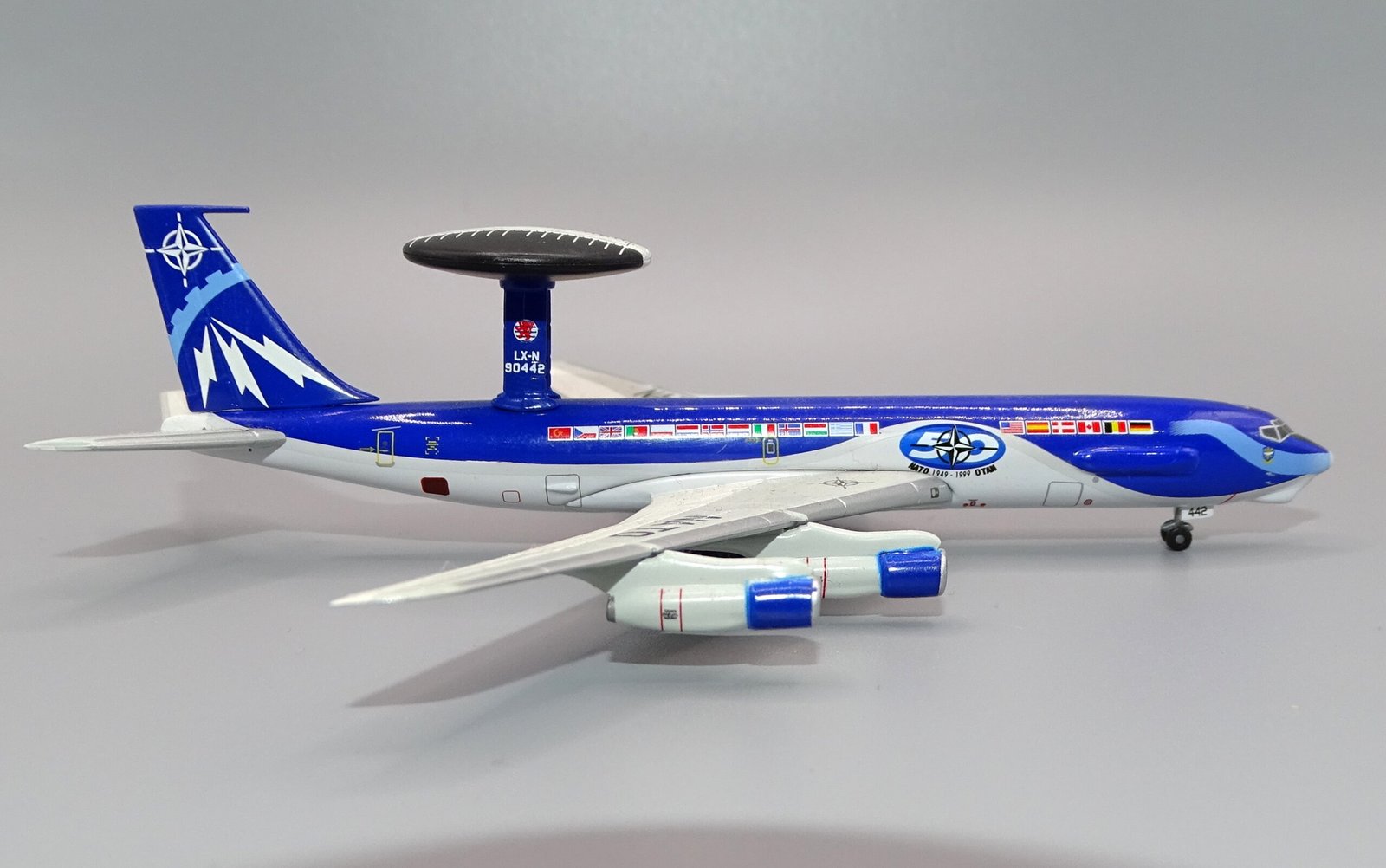
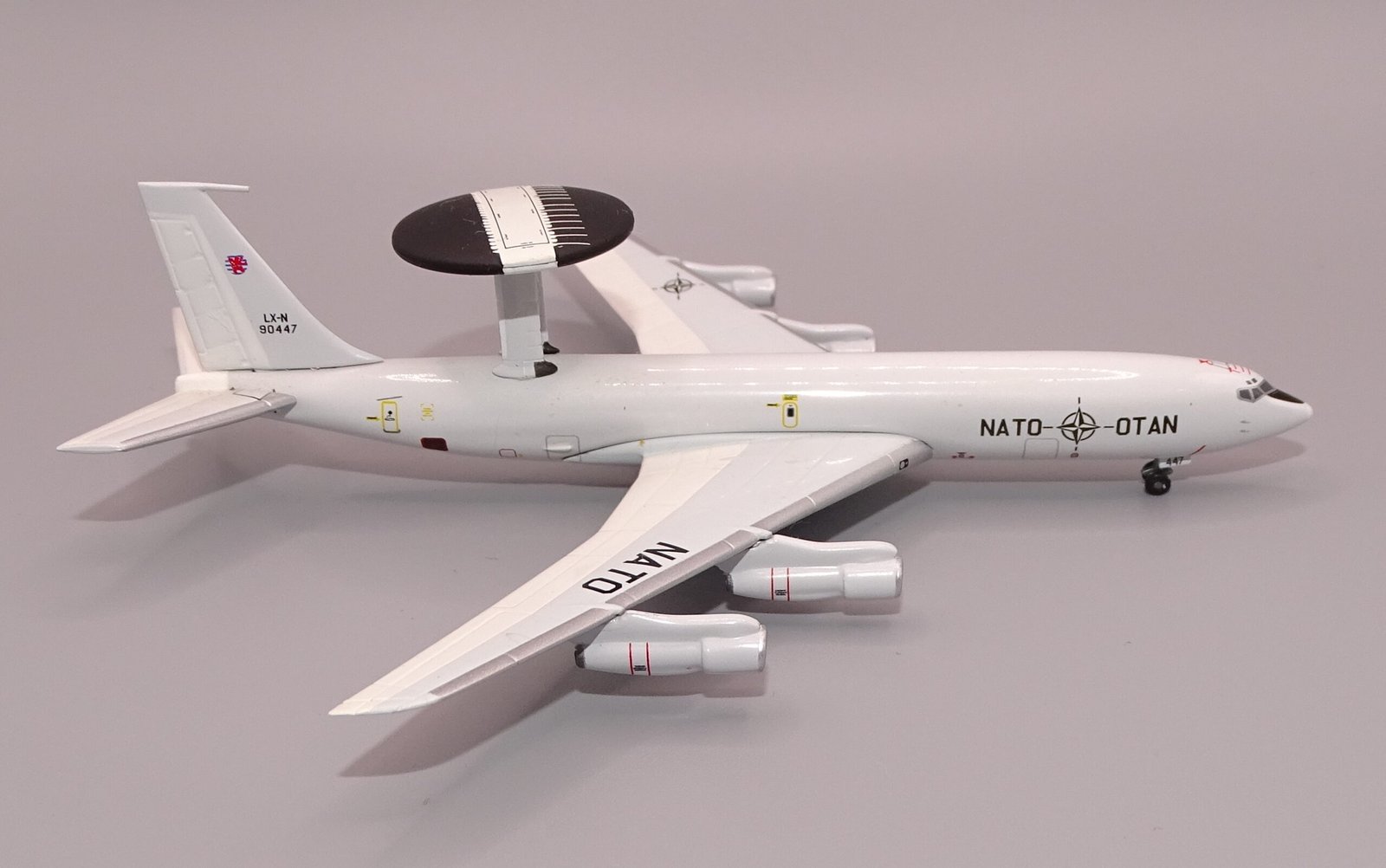
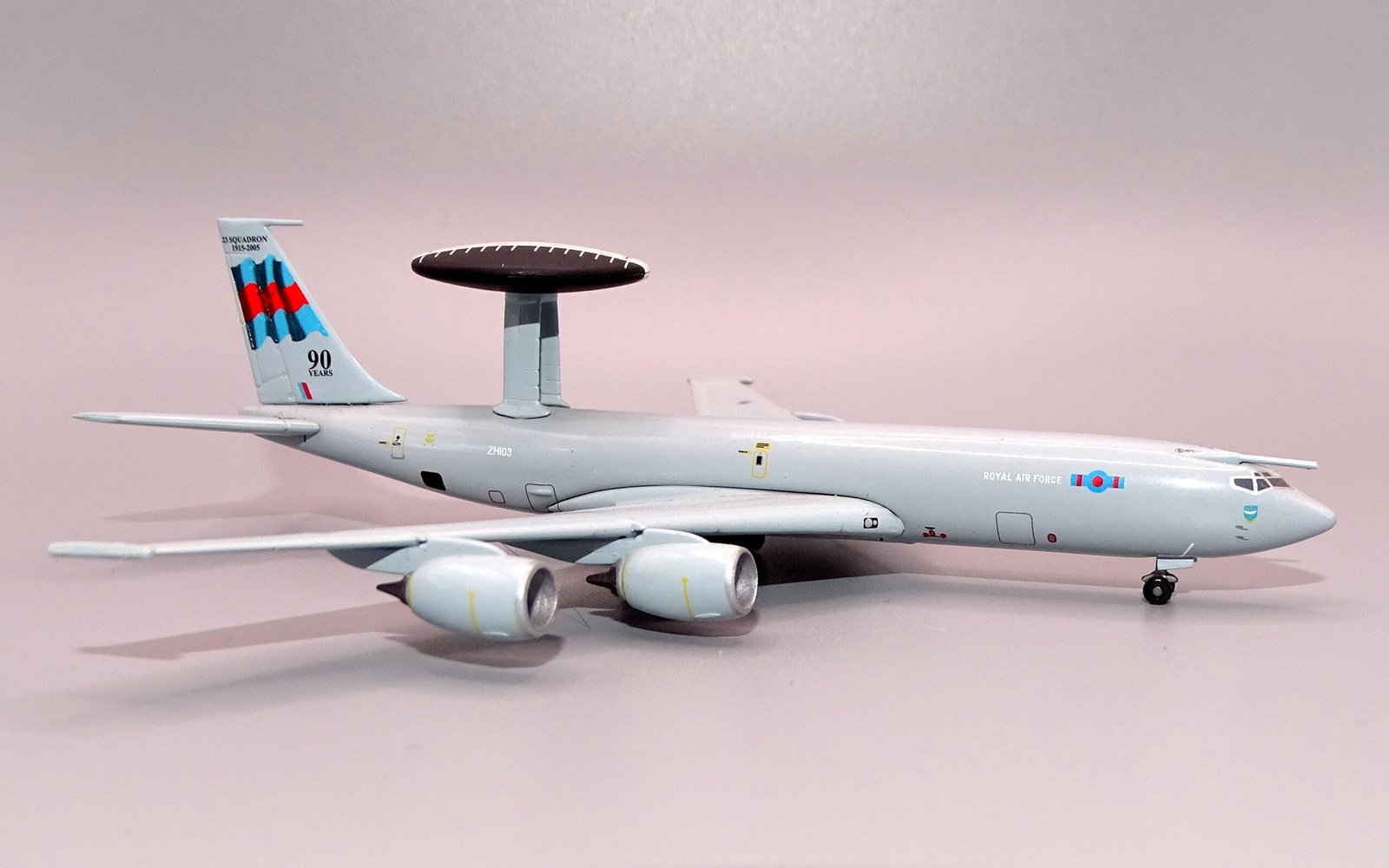
Witty Wings (2008-2014)
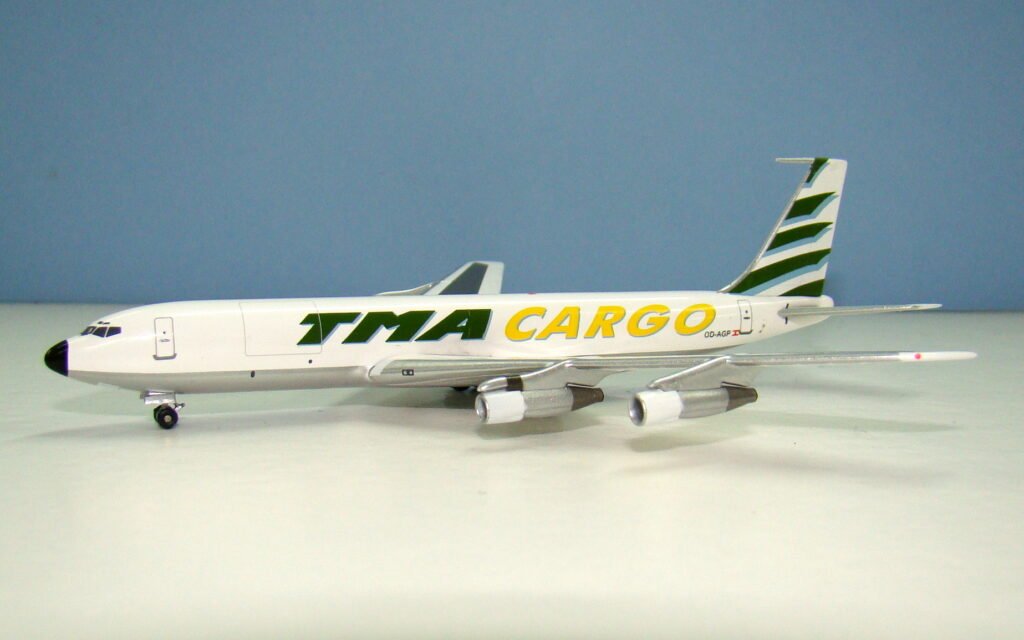
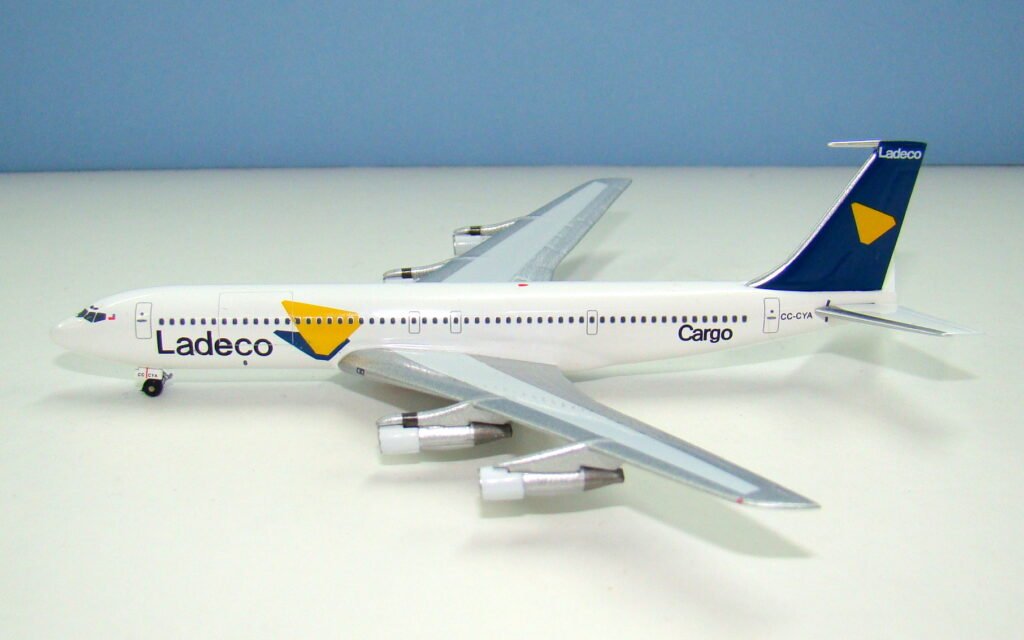
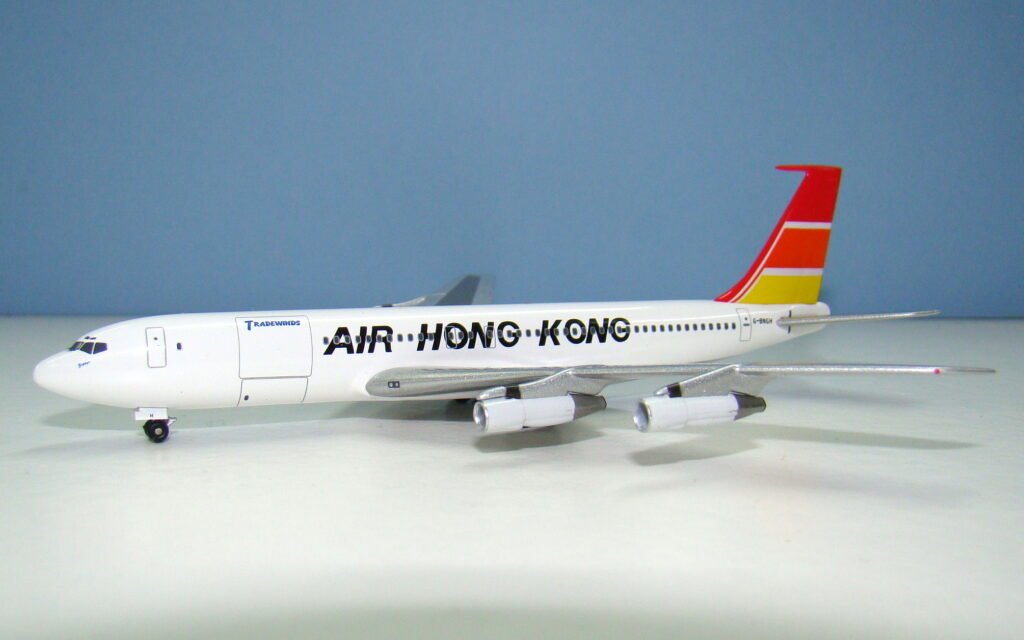
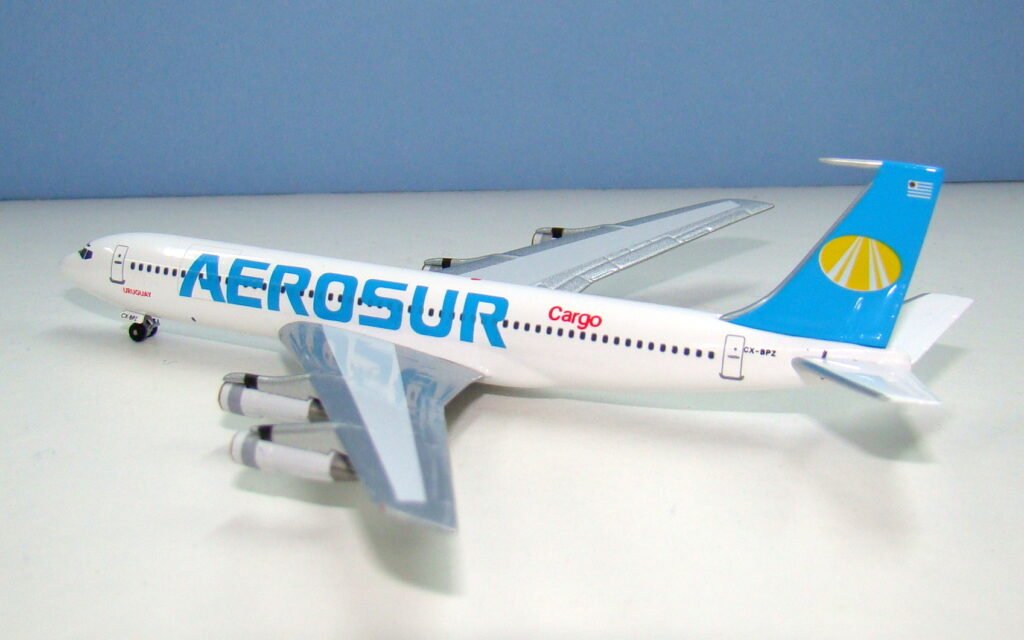
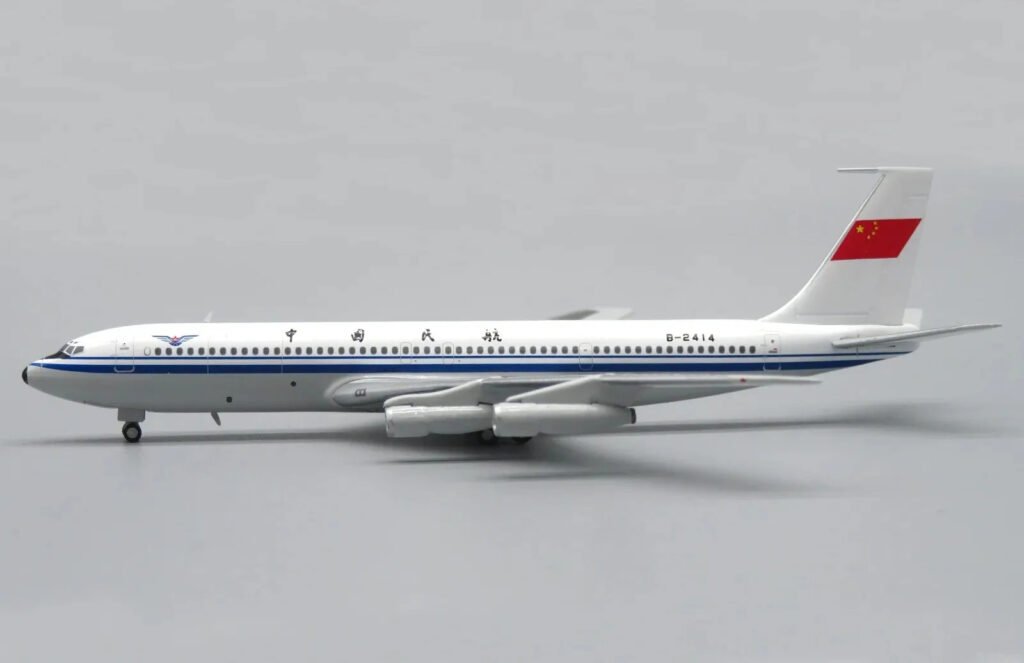
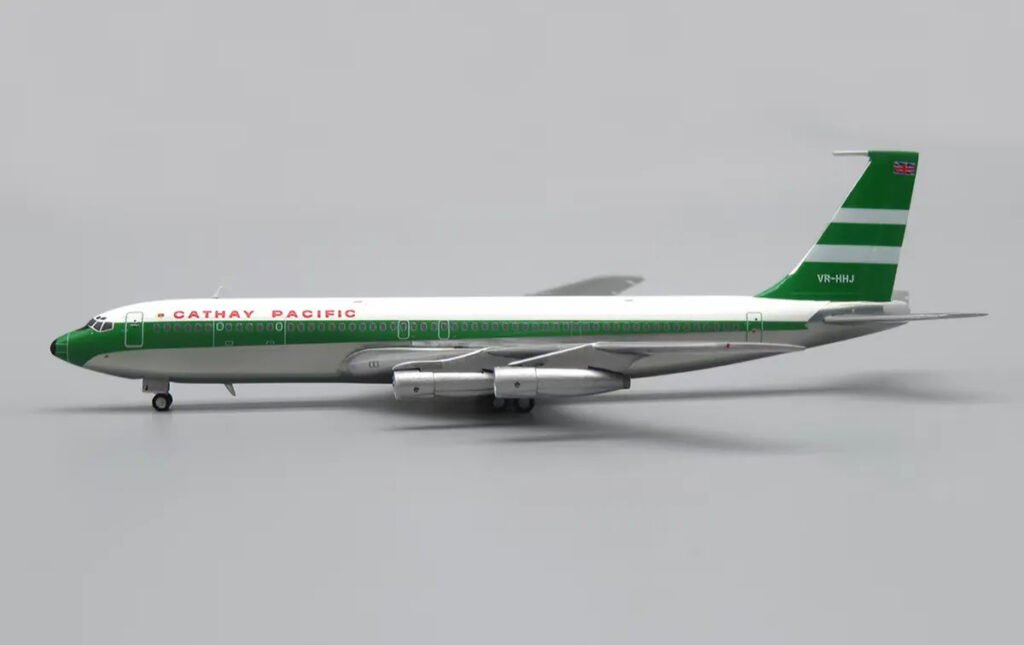
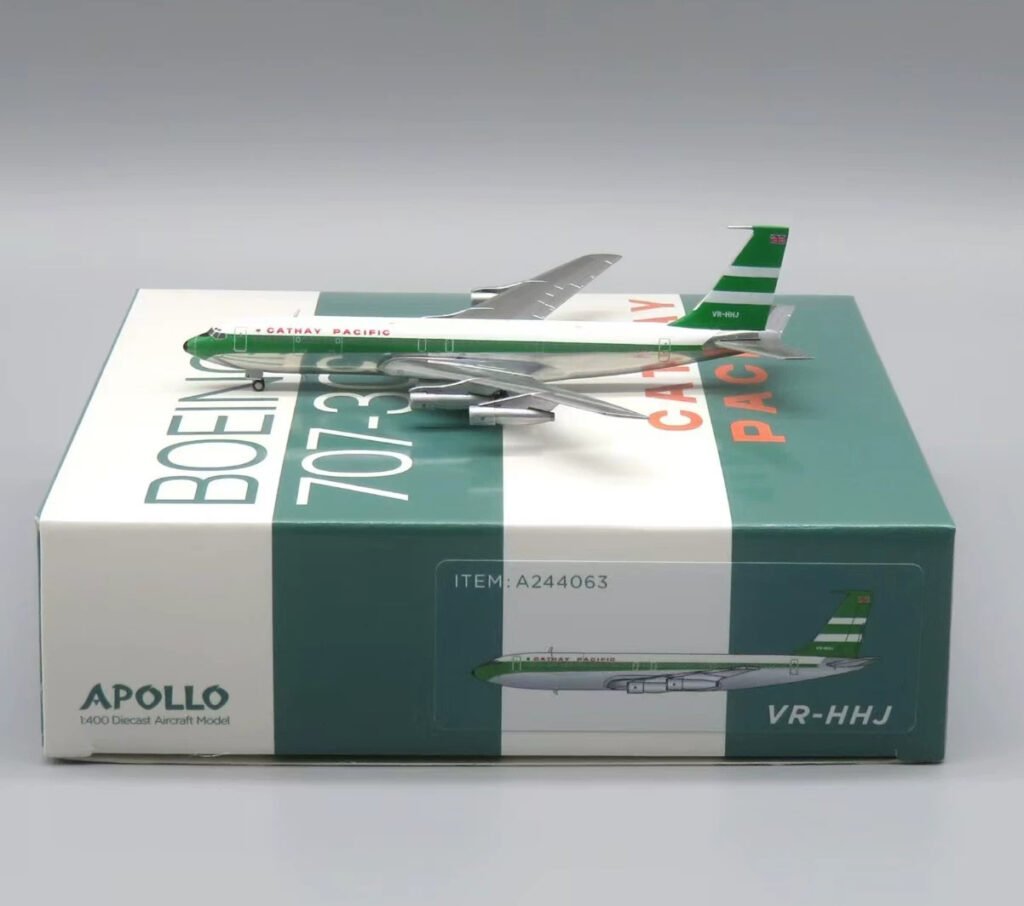
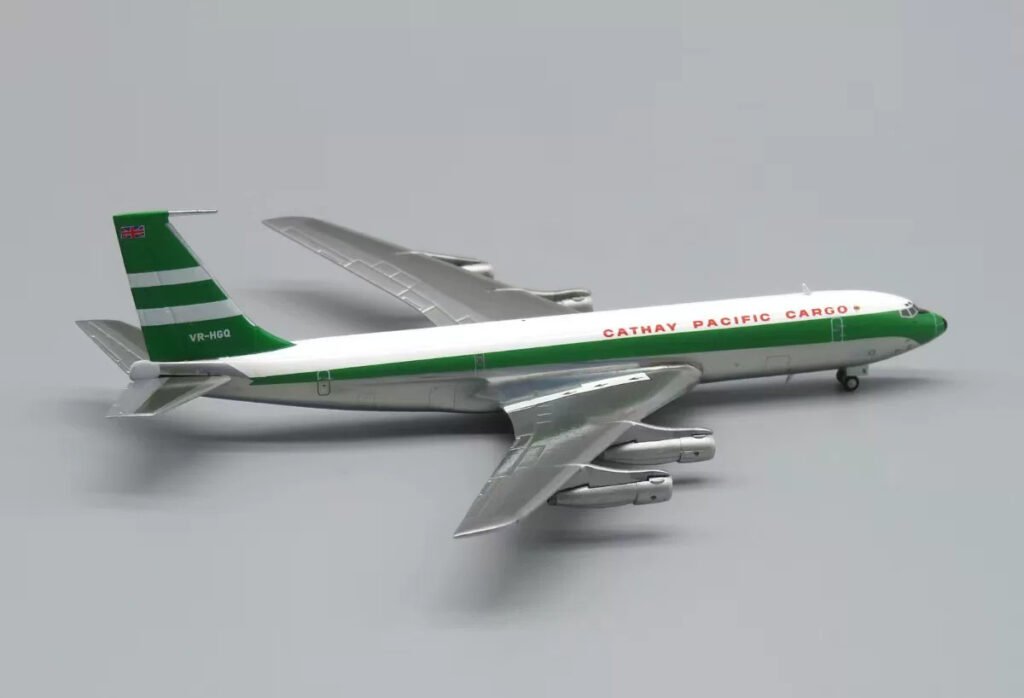
Witty started making 707-320B/Cs in 2008 with a mould that was a copy of the Aeroclassics mould but heavily modified to make it seamless. Witty mainly made a series of cargo 707s under their Aviation 400 brand as well as a few Pan Am passenger aircraft under the Apollo brand before their bankruptcy in 2014. The mould passed to JC Wings when they acquired Witty’s assets and it wasn’t expected that it would ever be seen again.
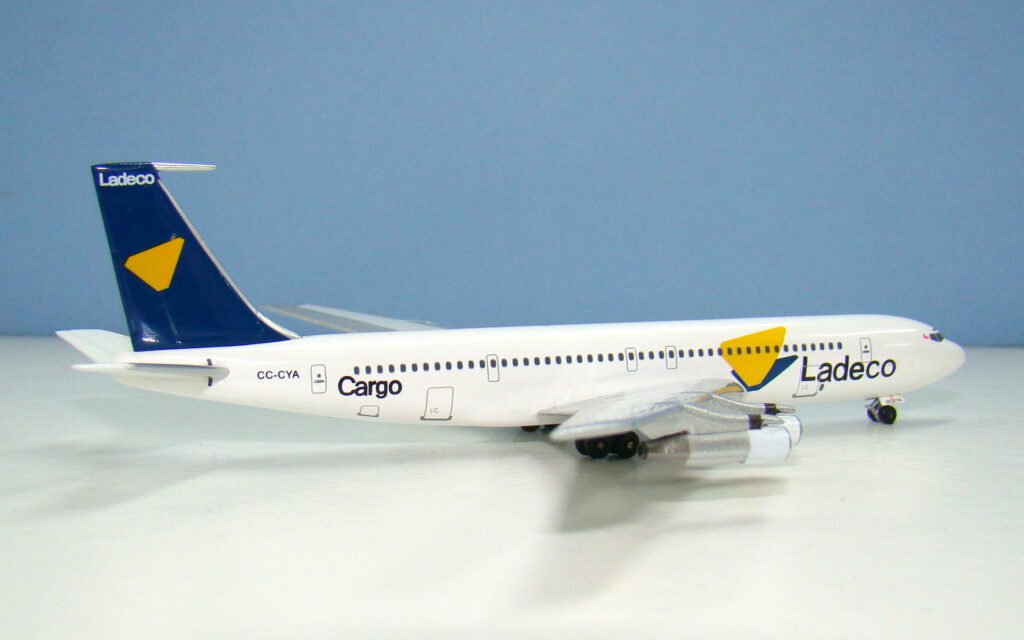
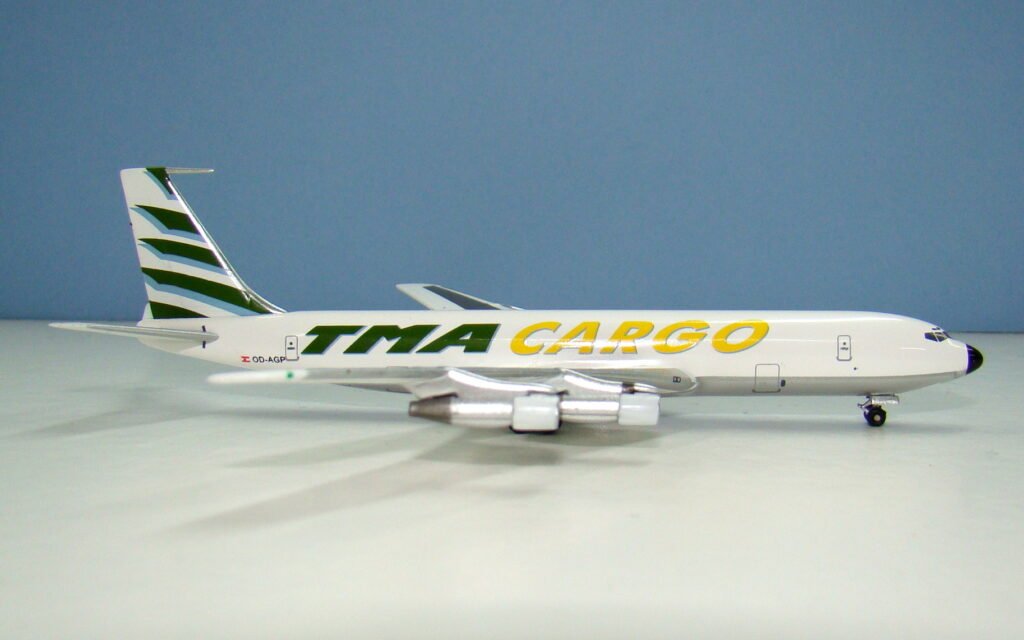
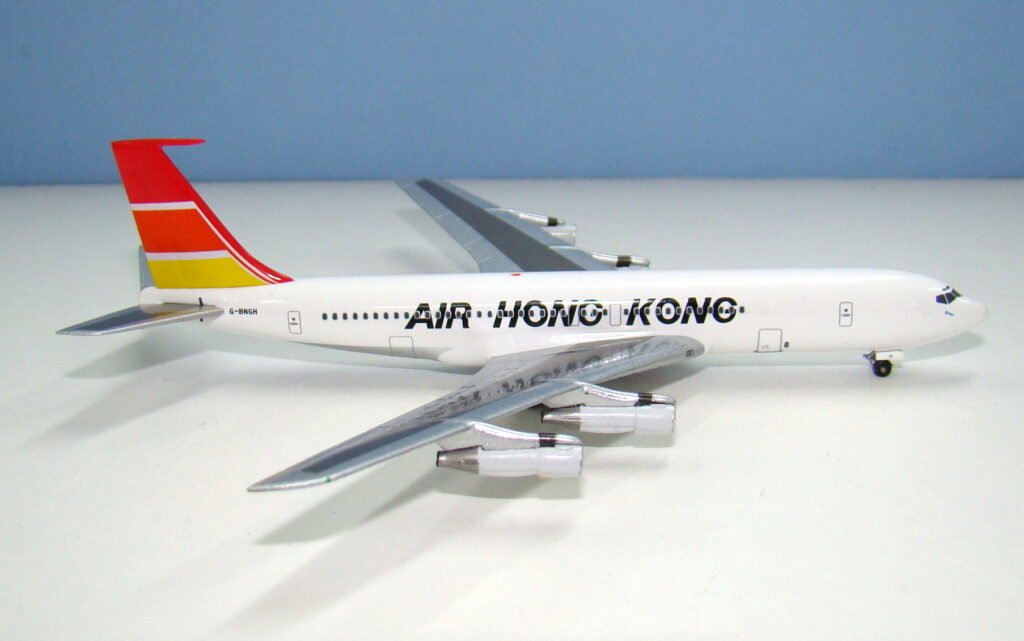
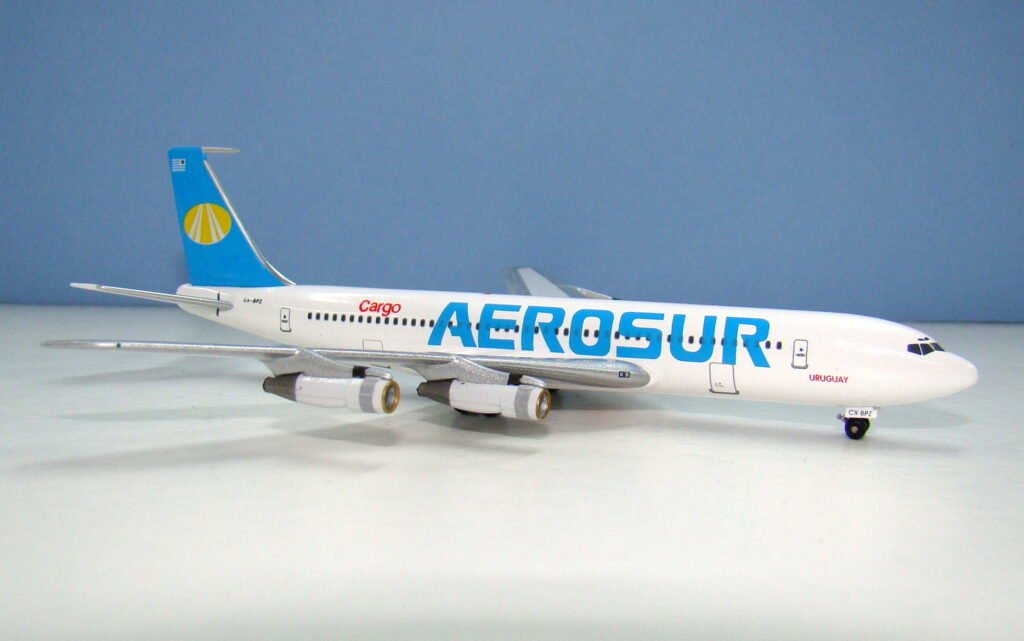
Updated Witty Wings (2019 – In Use)
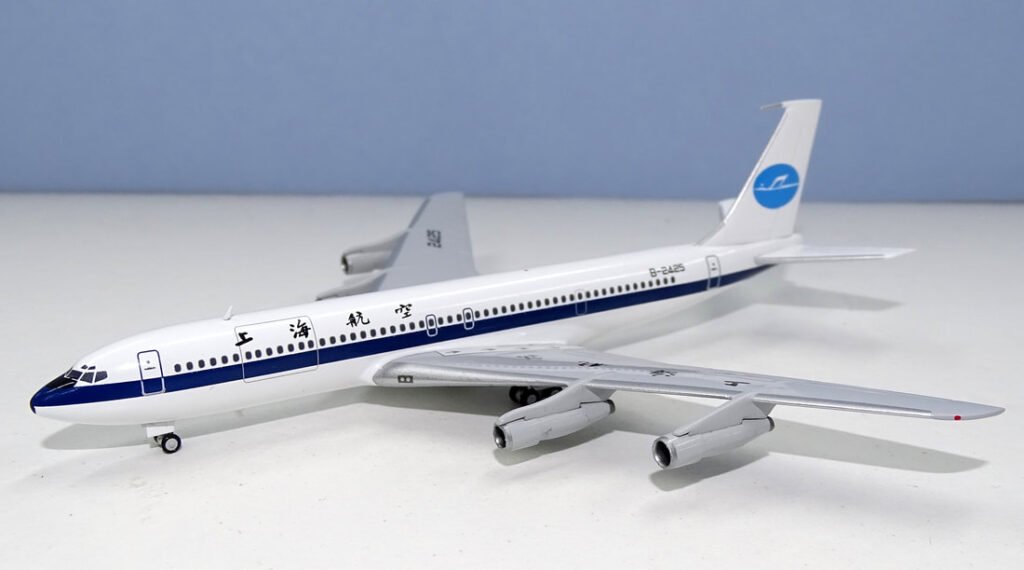
Out of the blue in 2019 the Witty Wings 707 reappeared for a single JC Wings release in the colours of Shanghai Airlines. The mould had been updated with new rolling gear and aerials. The new nosegear was less accurate than the original, with a too large and too short nosegear door, but it was good to see the mould re-emerge. It vanished again soon after and stayed hidden for another 5 years only reappearing in 2024 for a pair of BigBird Mk3 releases in the colours of Pan Am and Aer Lingus.
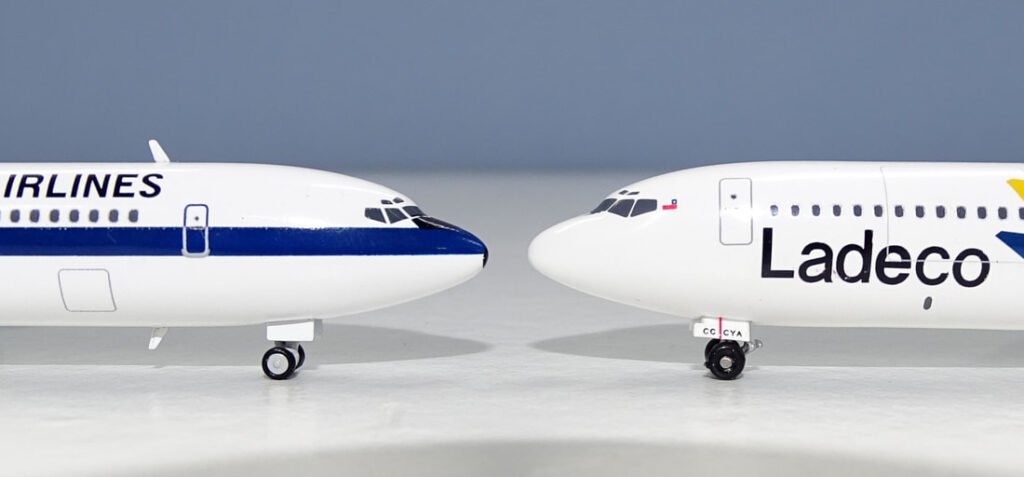
See my review of the 2024 Pan Am example at the site here:
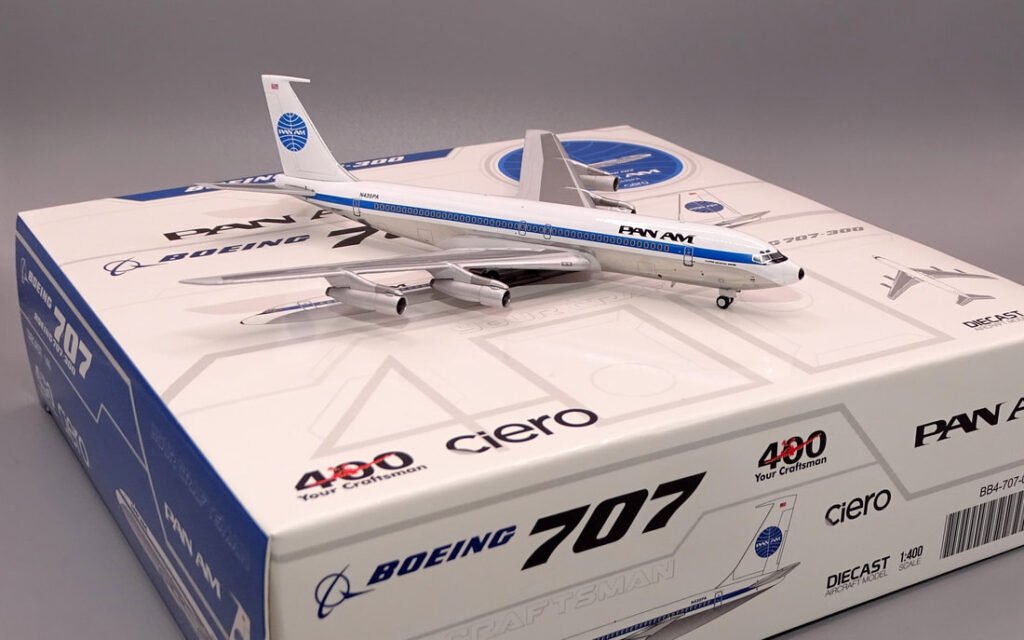
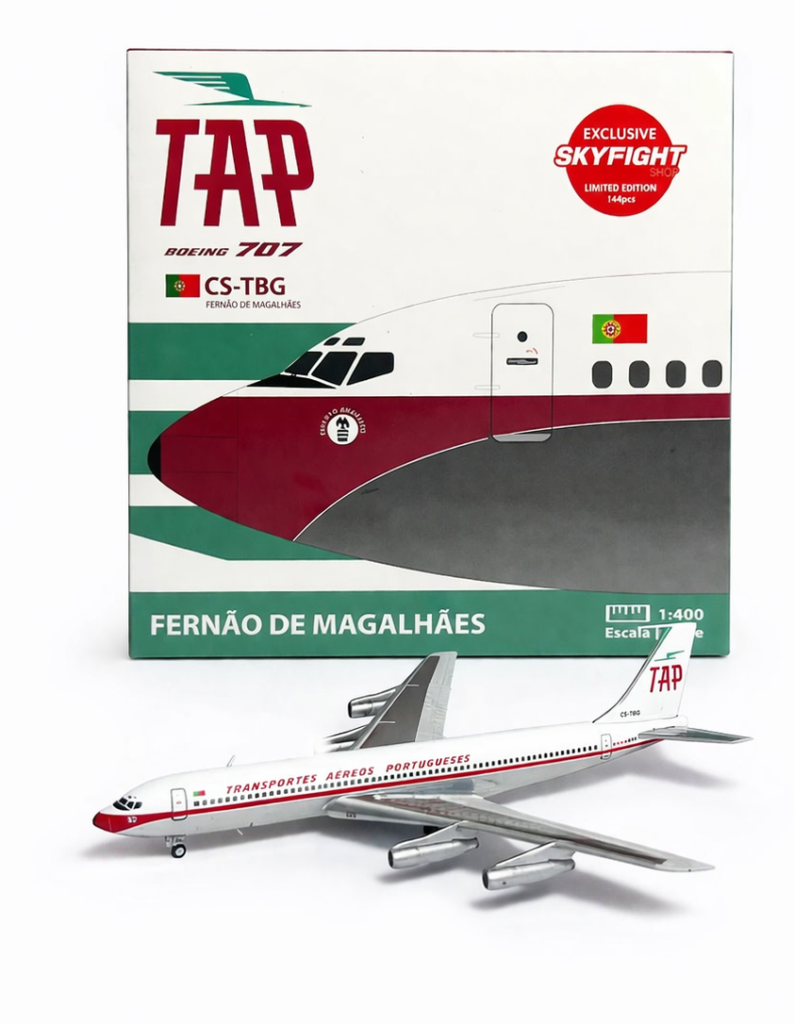
Late 2025 saw the mould appear once again and there have been a selection of models announced for an array of brands. These have included JC Wings themselves but also Z2 Models, a pair of TAP exclusives for the Portuguese store Skyshop and Apollo Models.

Aeroclassics 707-320/420 Turbojet (2025 – In Use)
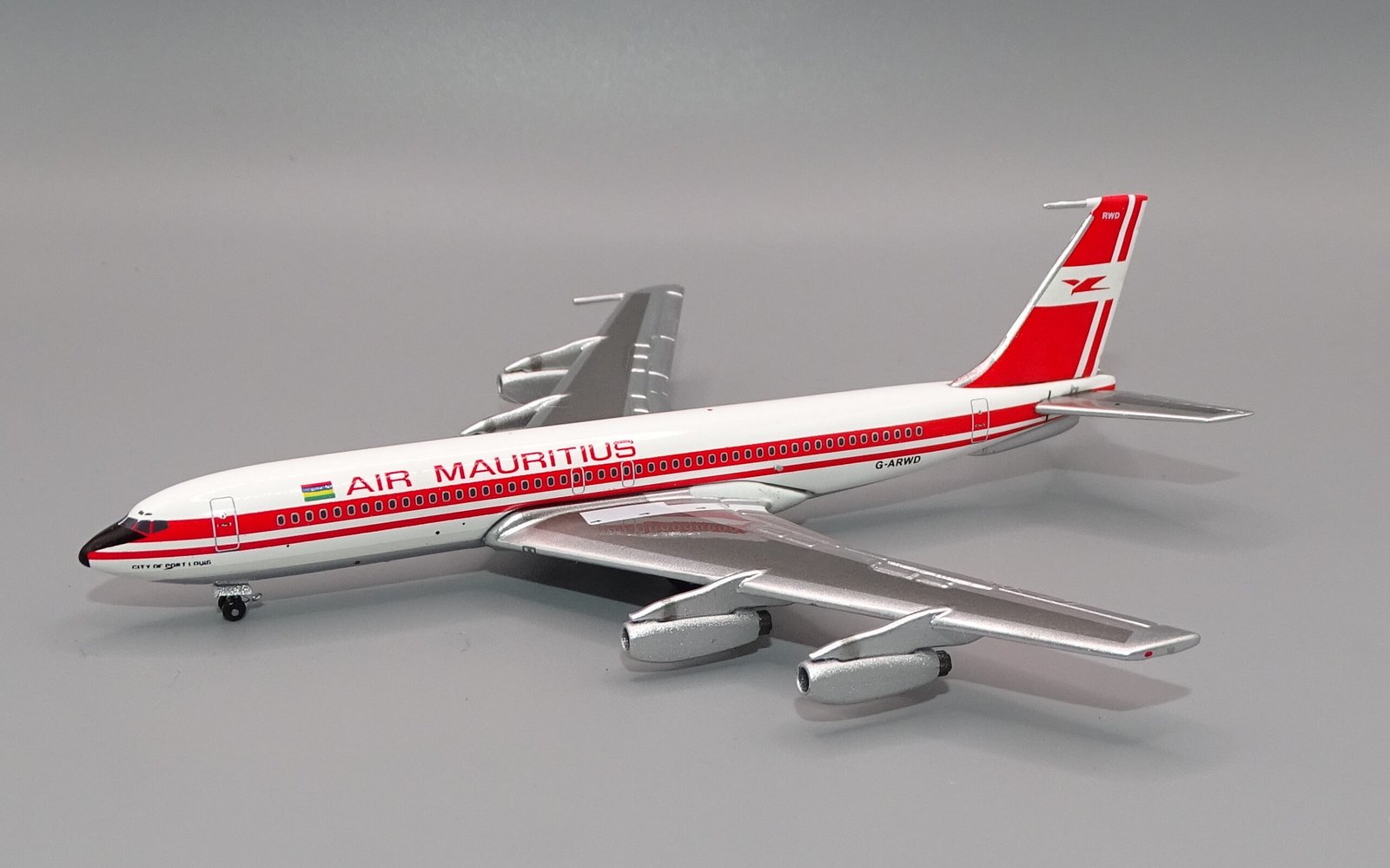
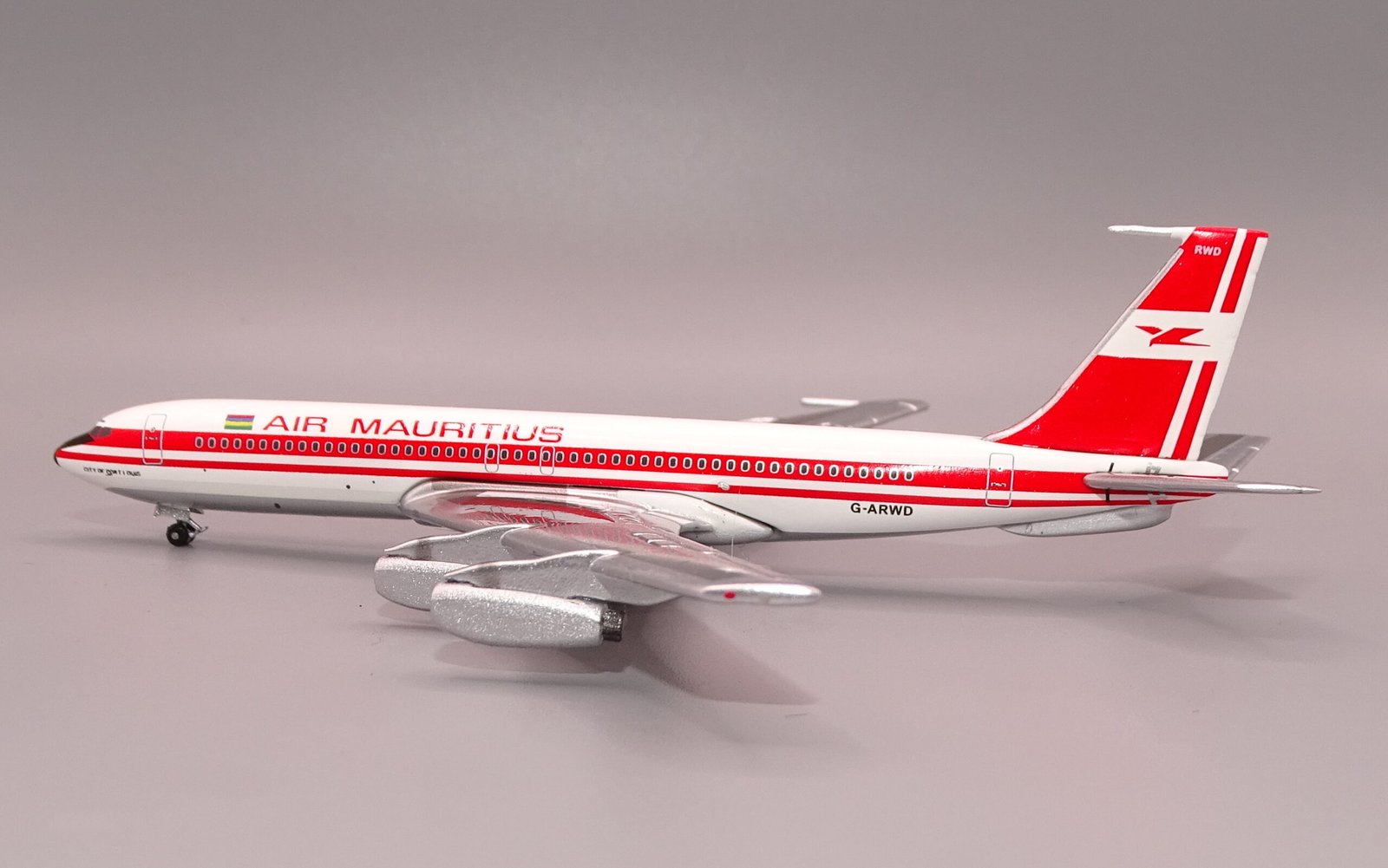
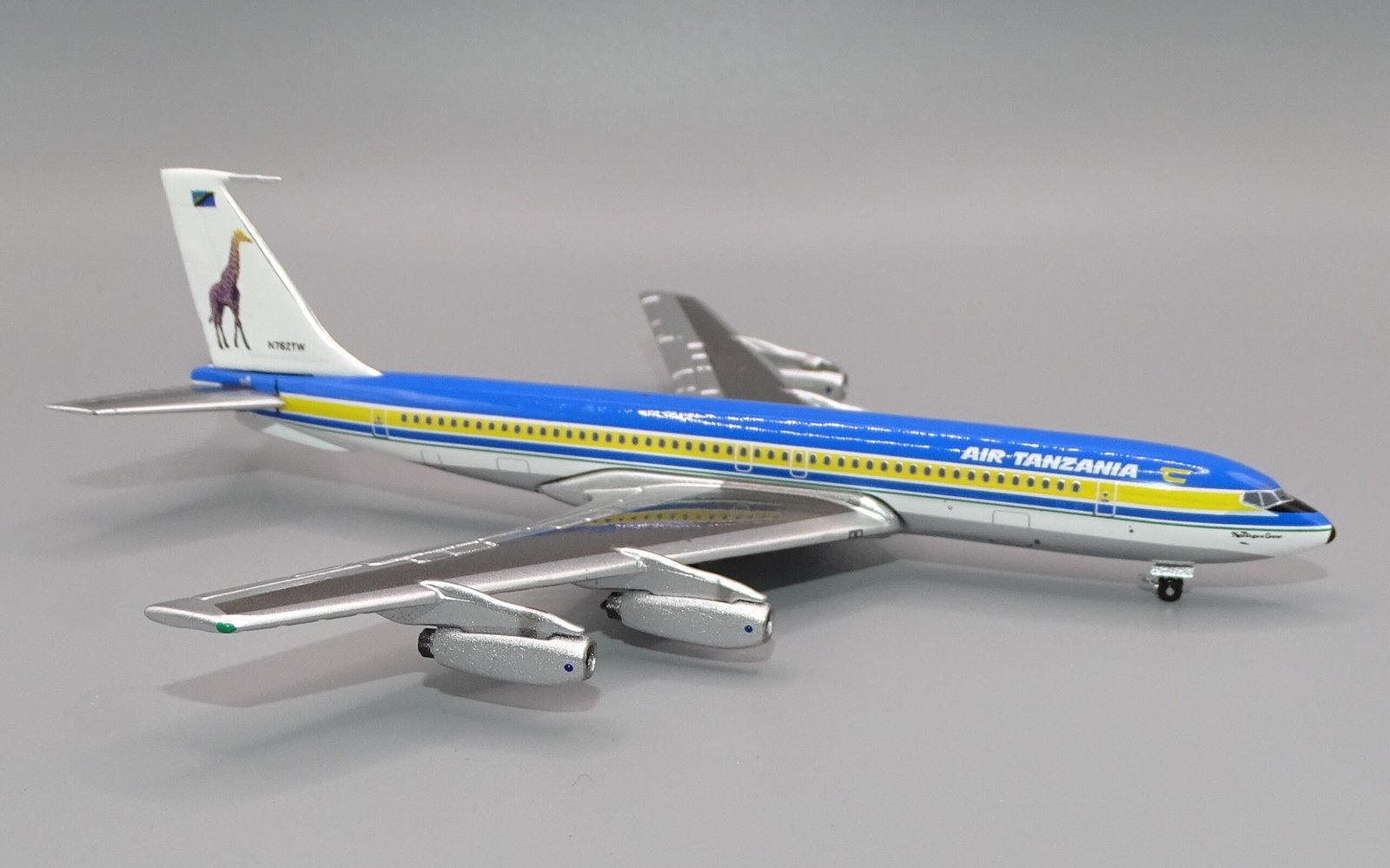
It took nearly 23 years but Aeroclassics finally developed a turbojet 707 from their 707-320B/C mould in late 2025. That means that unusually for such a new mould it remains cradle fit, however that isn’t its worse feature. Six of the first seven releases feature the wrong nosegear assembly and the engines are poorly shaped and oversized. The ventral fin is also not well shaped. It is rather symptomatic of Aeroclassics ability in the 2020s but given it is unlikely anyone else will ever make a turbojet 707 it will have to suffice. I reviewed the Air Tanzania example here at the website – see:
Patriot Models (2026)
Patriot Models just announced they are making a range of Boeing 707-320B/C moulds, however it is highly likely that the focus of these will be on military variants such as E-3 Sentries rather than commercial operators. The mould is still in development as of mid-2026.